יום ראשון, כ״ד אלול תשפ״וSunday, September 6, 2026



Follow Us


The philosopher Theodor Adorno famously wrote in 1949, “cultural criticism finds itself with the final stage of the dialectic of culture and barbarism. To write poetry after Auschwitz is barbaric.” This statement posited that the Holocaust exposed the unredeemable rotten underbelly of Western culture and therefore the very notion of creating beauty and sensitivity was at an insurmountable impasse. Alas, as cultural history has shown, he was wrong. Strikingly, it might be said that one of the few ways still provocatively available to speak about the Holocaust is in fact through poetry.
“Hyman Bloom: Paintings and Drawings (1940 – 2005),” currently at White Box (the cutting edge international art space on Broome Street), is a rare opportunity to observe the creative process of one of the most important practitioners of 20th century Jewish Art in America.
The “book” is a mighty big place these days and the current exhibition at MOBIA, “As Subject and Object: Contemporary Book Artists Explore Sacred Hebrew Texts,” is no exception. Highly mobile ebooks compete with online publications and traditionally bound volumes, scrolls, accordion-style tomes and folios that present equally exciting options for contemporary artists to interact with image and text in one unifying medium.
Today is the 407th anniversary of the birth of Rembrandt Harmenszoon van Rijn. Google is celebrating it with a Goodle Doodle of the Dutch artist's 1659 oil on canvas self portrait.
At the Chassidic Art Institute one artist, Harry McCormick, has rather amazingly fathomed the authentic heartbeat of the individual Jewish life. This exhibition, running until July 25, shows a mere 16 paintings, but six of them reveal a deeply perceptive and sensitive chronicle of Yiddishkeit.
Judaica Auctions and the exhibition that precede them at Kestenbaum & Company are always a cornucopia of aesthetic delights. The sheer variety and overall quality of the ceremonial objects and works of art make the exhibition and catalogue a museum-like experience. The current exhibition is no exception.
Whether it is the disastrous report of the 12 spies or the furious condemnation that doomed an entire generation to die in the wilderness, the Torah narrative in Bamidbar turns terribly grim after the glorious inauguration of the Mishkan in the second year after leaving Egypt. With this in mind, just imagine my surprise at an encounter with two artists who address these (and other Biblical) themes right around the corner.
Not far from Amsterdam, in the village of Ouderkerk on the River Amstel, lies the Portuguese-Jewish cemetery called Beth Haim. Here in this pastoral necropolis repose the remains of Jews who fled the Iberian Peninsula in the wake of the Inquisition, exiles who chose banishment over baptism, who had fortuitously managed to survive the torture chambers or dodge the stake in the relentless drive by the Roman Catholic Church to cleanse the land of heretics.
I have always had a problem with the Omer. Doing the mitzvah of counting the Omer was of course pretty easy. Remembering to start the second evening of Passover and remembering to stop the day before Shavous took a little concentration but somehow I always managed. No, for me the nagging problem was always why was I doing this in the first place, other than the fact it was a biblical (according to the Rambam) commandment.
The megillahs beg to be illustrated. Each is associated with a notable holiday and each presents an idiosyncratic view of Jewish history and experience. Those that are not overtly narrative cry out to be narrated while the others present the most compelling stories imaginable. Song of Songs is scandalous until tamed by rabbinic interpretation; Koheles equally assaults a pious worldview, Eichah tears our hearts out, while Esther fills us with fear and pride. And finally Ruth causes us to examine the very foundations of the Messiah. Alas, their pictorial history is uneven.
By Gilit Cooper
An exquisite collection, across generations.
Michael and Judy Steinhardt are putting their magnificent Judaica collection up for sale at Sotheby’s in New York on April 29. The results of 44 years of diverse collecting will be on view from Wednesday April 24 and simply must be seen by anyone interested in Jewish visual and material culture.
Two masters of modern photography are on view at the International Center of Photography; Chim (Szymin) aka David Seymour and Roman Vishniac. They are both Jewish and just happen to bring astute but radically different visions to Jewish photographic subjects. These brilliant, exhaustive exhibitions help us examine the fundamentals of what it means to create a Jewish Art in photography.
There is a special class of Jewish artists who toil in the rich fields of Tanach and Jewish practice for years and years, quietly establishing a foundation of visual and intellectual markers for generation of artists to come. Ruth Weisberg is clearly one of these founders. Her seminal work articulates an approach to the Jewish narrative deeply informed by a Jewish feminism.
A Documentary Produced and Edited by Avi Angel Based on “Three Mothers for Two Brothers” by Izhak Weinberg 54 minutes: Quad Cinema March 1 – 7; soon on Amazon and iTunes What is your earliest memory? Itzik Weinberg’s earliest memory may be of him and his younger brother, Avner, fleeing the invading Germans in Cracow, […]
Bezalel, oh Bezalel, what company you keep! Your parsha, Ki Sisa, takes us from humble devotion to God’s commandments to the utter collapse of Israel’s faith. God-inspired creativity morphs into pernicious communal idolatry that expresses gnawing doubt and a desperate need for the mechanics of teshuvah. Yet in the midst of tragedy, drama and redemption, one quiet man and his assistant, Bezalel and Oholiab, were chosen by God to become the alleged ancestors of all Jewish artists.
Through her work "The Divine Within," artist Shira Gabriela highlights a literary parallel that exists between Megillat Esther and the Book of Zechariah.
One way to understand the Biblical is through contemporary eyes, literally. And so artist Elke Reva Sudin has recast biblical figures through contemporary portraits. The juxtaposition is revealing.
John Bradford’s paintings span over 40 years of intensive exploration of the joys of the Biblical narrative. He has explicated its myriad passionate moments from almost every narrative in Genesis, Exodus, and Numbers to stories from Nach such as Ruth and Naomi, David and Bathsheba and Mordechai and Esther.
By JTA
A panel of experts advised the Dutch government to return only one painting out of 189 claimed by relatives of a Holocaust-era art collector.
Rock music festival Lollapalooza, which was scheduled to take place August 20-22 at Tel Aviv’s Yarkon Park, has been cancelled.
By JTA
The Israeli former bodyguard of teen idol Justin Bieber reportedly sued the pop star for assault.
The recent works of David Gelernter, artist, author and professor of computer science at Yale University, compel us to listen and really see. His statements in the gallery video are riveting and his images, especially the Kings of Israel series are revelatory. It is in the dialectic between these two distinct approaches that we can understand his insight into the past and be guided into a present appreciation of Jewish Art.
Jewish law prohibits carrying an object from a private domain to a public domain (or vice versa) or within a public domain on the Sabbath. One who intentionally carries, knowing the prohibition on the Sabbath is libel to the death penalty by a Jewish court. The creation of an eruv establishes, where possible, an extended private domain in which such carrying is permissible.
The North American and English aliyah organization Nefesh B’Nefesh, the Jewish Agency, and the Jewish National Fund have teamed up with the Ort Braude Academic College of Engineering in Karmiel to feature the artwork of immigrants from English-speaking countries to northern Israel.
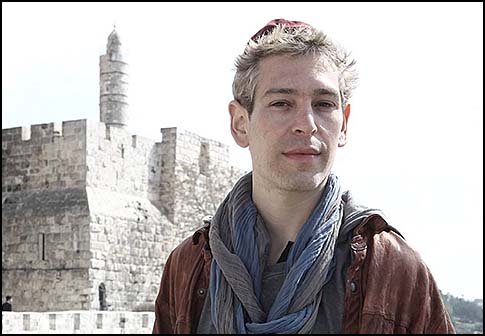
Formerly Hasidic reggae star Matisyahu participated in a candid interview with CNN, discussing his departure from observant Jewish life and his connection to his religion.
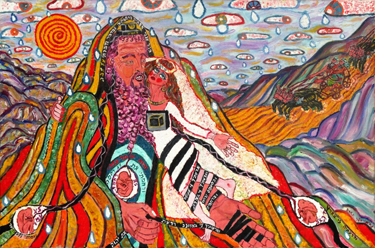
The rather large grasshoppers all have different human faces. The trees have human bodies with branches sprouting out of their heads. The animals in the Peaceable Kingdom garden seated at Isaiah’s feet are painted purple, pink, blue and red. Welcome to the visionary world of Nahum HaLevi’s Latter Prophets.
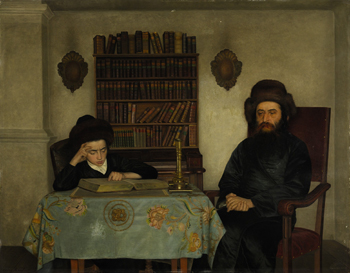
Silence. There is an overwhelming silence that dominates the Isidor Kaufmann masterpiece, Rabbi with Young Student (catalogue #93) offered for sale at the Sotheby’s December 19th auction. Kaufmann’s most engaging paintings for me are the deeply psychological portraits, usually of Hasidic men, young women and youths. It is noteworthy that Kaufmann (1853 – 1921) and Freud (1856 – 1939) were contemporaries and both lived in Vienna during the same period.
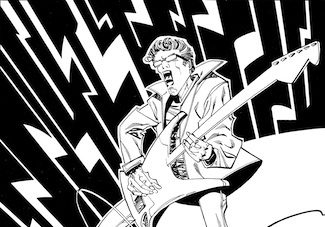
Heeb Magazine Publisher is looking to promote his tribute to his late brother and his fight with cancer.
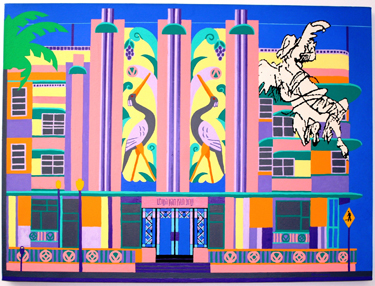
For most observant Jews, the eruv is invisible. Each week we prepare for Shabbos: ready our food, conclude our mundane affairs, shower, dress and put the house keys in our pocket and check the web that the local eruv is up. Unless there has been a storm or other physical disaster, we can assume everything is okay. Just like the Shabbos calm that descends for 25 hours, the eruv operates for us in the background: essential but unnoticed.

Joel Silverstein is a comrade-in-arms. We share many ideas about the creation and nature of contemporary Jewish Art, as well as a commitment to the growing Jewish Art community, exemplified by the Jewish Art Salon of which we are both founding members and curators. This exhibition of his recent work at the Kraft Center for Jewish Student Life at Columbia/Barnard gives us the crucial opportunity to examine the complex richness of his artwork.
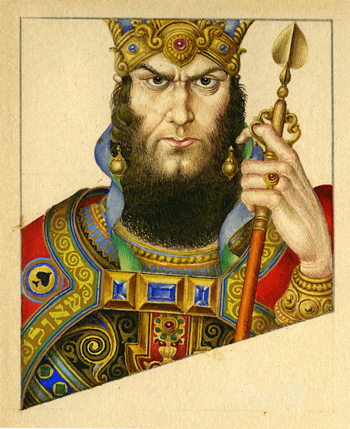
Arthur Szyk (1894; Lodz, Poland – 1951; New Canaan, USA) was a driven man determined to serve his people through his art. A passionate supporter of Jabotinsky’s Revisionist Zionists from at least the mid-1930’s, Szyk’s art almost always had a political edge. As we noted on these pages arch 12 & 19 2010, the Szyk Haggadah (1934 -1936) was originally an explicitly anti-Fascist creation. Therefore the recent publication by Historicana of “Heroes of Ancient Israel: Playing Card Art of Arthur Szyk” is notable for its lack of overt political content. Indeed, its strength lies in a subtler affirmation of Jewish sovereignty and wisdom.
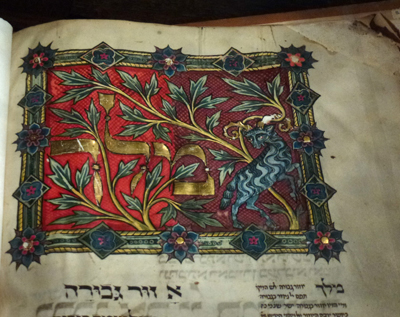
In the eyes of the ram lies the artist’s commentary on the Rosh Hashanah piyyut “The King Girded with Strength.” From the Tripartite Mahzor (German 14th century), this illumination simultaneously echoes the piyyut’s praise of God’s awesome power and expresses the terror of actually being a sacrifice to God. The ram is but a reflection of Isaac. It is all in the eyes.
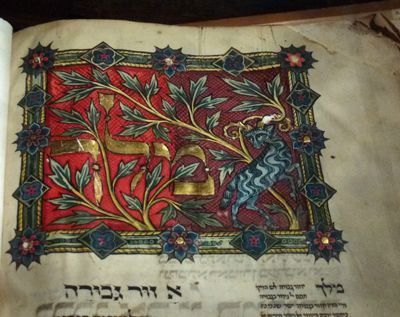
In the eyes of the ram lies the artist’s commentary on the Rosh Hashanah piyyut “The King Girded with Strength.” From the Tripartite Mahzor (German 14th century), this illumination simultaneously echoes the piyyut’s praise of God’s awesome power and expresses the terror of actually being a sacrifice to God. The ram is but a reflection of Isaac. It is all in the eyes.
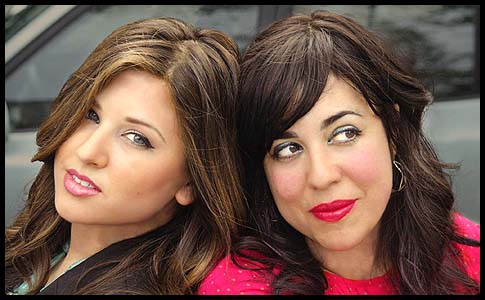
Rocking custom sheitels and opaque tights, and walking the sidewalks of Crown Heights, Brooklyn, Dalia Shusterman and Perl Wolfe have the Hasidic world talking – and singing along to the tunes of their Hasidic alternative rock girl band, Bulletproof Stockings.

Chagall’s reputation needs no burnishing and yet refinements are always welcome. Indeed the Nassau County Museum of Art has mounted a wonderfully extensive survey of Chagall’s works with a unique emphasis on his 1957 Bible series of hand-colored etchings that significantly casts many aspects of his work as uniquely Jewish. Amid the complexity of Chagall’s entire oeuvre, this is deeply significant in the exhibition history of non-Jewish institutions.

Passion of belief can certainly lead to passion of expression, especially for an artist. Rosa Katzenelson’s paintings and digital artwork, currently at the Hadas Gallery in Brooklyn, could easily define the very essence of religious expressionism. As a Chabad devotee, every aspect of her work exudes a passion for both the chassidic subjects she depicts and the visceral act of making a painting. Nonetheless, upon closer inspection her work yields considerably more complexity.
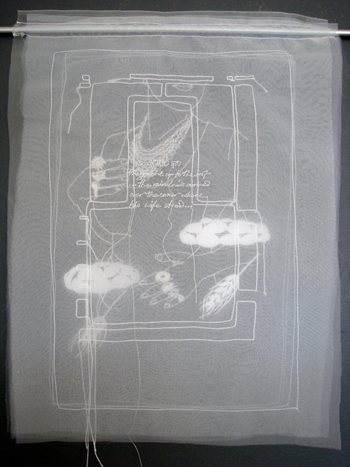
Jacqueline Nicholls, a Jewish artist from England, presents us with a formidable challenge. Namely, what is the role of a contemporary Jewish Woman artist and how does one confront patriarchal dominance? She presents her response to both queries in her current exhibition at the JCC Manhattan, beautifully curated by Tobi Kahn and organized by Tisch Gallery director Megan Whitman. The results are breathtakingly forceful, subtle and insightful.
As the year draws to a close we have the book of Deuteronomy before us week after week, reviewing many of the halachos and reminding us of our harrowing trek through the wilderness. Moshe Rabbeinu is the stern narrator, guiding us to the very edge of the Promised Land, a final step he will never take. He pleads with God to let him enter the Land to no avail. Finally, “Moses, servant of Hashem, died there, in the land of Moab, by the mouth of Hashem. And He buried him in the depression, in the land of Moab, opposite Beth-peor, and no one knows his burial place to this day. (Deut. 34: 5).” We complete our reading of the Torah with tears in our eyes for our faithful teacher, prophet and leader, whose life seems to end in angst and frustration. What was the inner life of our brave and tenacious leader?
By JTA
The “Red Hot Chili Peppers” performed in Tel Aviv on Monday night, a decade after they canceled their show due to security issues. It was the group’s first visit to Israel, and to make the most of it, the members went to the Western Wall in Jerusalem straight from the airport. The band talked about Hillel Slovak, one of their founding members, who died from a drug overdose in the early 1990s.

Photographs seems like cruel slices from the past, frozen images of what will never be again. Since we assume the photographic image is, by and large, a factual view of some reality, it is inherently believed and trusted. But now be forewarned. It ain’t necessarily so. Bill Aron’s new images at the 92nd Street Y betray and beguile so as to force us to reassess the meaning of what we see.

Reaching back in time to reclaim a family for herself and, in a yahrzeit moment, to rekindle lives snuffed out, Diana Kurz’s paintings stand as testaments to victims of the Holocaust. After a successful 20 year career as an artist and teacher, (with a strong feminist bent), in 1989 Kurz happened upon a few surviving photos of her own relatives “who disappeared during the war.” Suddenly her past opened up and possessed her. This spring (April 4 – May 2, 2012) a series of these paintings was shown at the Art Gallery at Kingsborough Community College, CUNY.
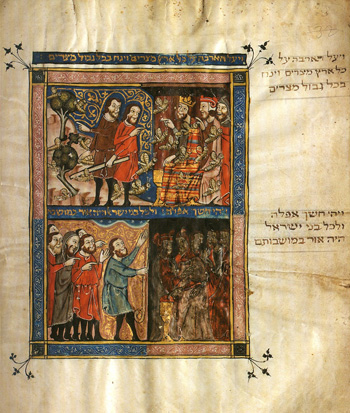
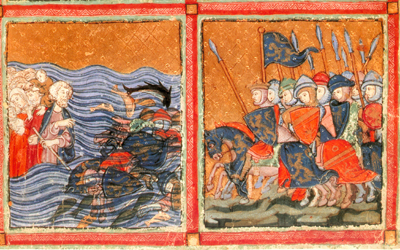
The Rylands Haggadah, created in Catalonia Spain sometime around 1330, is a towering masterpiece of Jewish Art. In addition to pages of piyutim surrounded by ornate decorative and figurative micrography, richly decorated Haggadah text and blessings, there is a 13 page miniature cycle depicting the Exodus story from Moses at the Burning Bush to the Crossing of the Red Sea.
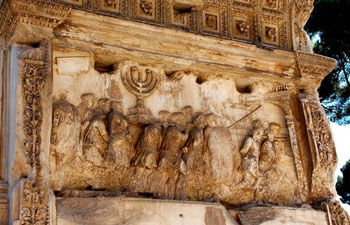
In 1974 Mark Podwal, noted author, illustrator and physician created a spare, illustrated Book of Lamentations. This complete English translation is graced with 28 black and white illustrations, or more correctly, reflections, on the tragic text. Podwal maintains Jeremiah’s alphabetical acrostic of each chapter containing 22 sets of lines, reflecting aleph to tav, denoting each English set with the appropriate Hebrew letter.

Examining a choice selection of drawings done by Itshak Holtz over 30 years ago is a rare pleasure that allows for the appreciation of his unique sensitivity and insights. I was afforded that pleasure at the inaugural exhibition of the Betzalel Gallery in Crown Heights this past May. Although this modest selection of 25 drawings and watercolors of this paradigmatic frum artist ranges from 1963 to 1999, the majority of the works is from the 1970s and reveals a special aspect of his inner artistic soul. The selection of images could easily narrate the fabric of ordinary Jewish life.

Earlier this year I was presenting my survey of Jewish art, “A Jewish Art Primer,” in a West Hartford, Connecticut synagogue and during the intermission a local artist, David Holzman, introduced himself to me. He relayed his rich and fascinating artistic background and then produced a portfolio of 8 black and white prints that he generously gave to me as a gift. As a tantalizing glimpse into recent work, they are truly amazing and I would like to share them with you.
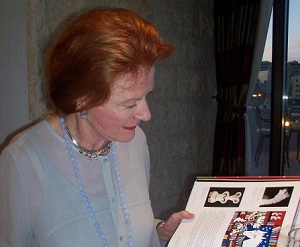
By Anav Silverman, Tazpit News Agency
Edwina Sandys' planned sculpture for Israel will be comprised of a circle of upright stones, in black and white, cast in the shapes of women, connected by a lintel across the top. Sandys explains that Israel is one of the most suitable places in the world for such a sculpture. “Israel is at the forefront of women being treated equally, relative to other areas of the world.”

Now, only months after the artist’s death, is no time to be coy. Moshe Givati’s work is a revelation: dynamic, throbbing with life, pulsating with meaning. The exhibition “Equus Ambiguity – The Emergence of Maturity,” is up for only a few more days but I urge you to hurry to the Jadite Gallery and familiarize yourself with this under-recognized artist.
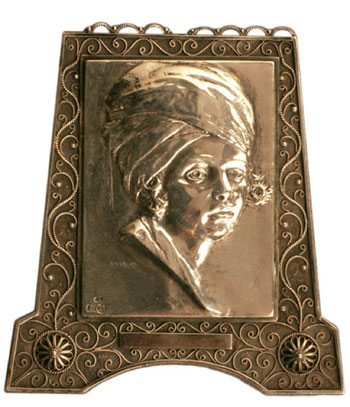
Boris Schatz (1866 – 1932) had a revolutionary vision. He believed that the creation of a new modern Jewish visual culture would become a major force to both articulate a Jewish national identity and sustain the Zionist enterprise. In 1904 he approached Zionist leader Theodor Herzl with the proposal to establish a national arts and crafts school in Palestine and got his blessing. Tragically Herzl died later that year, but the Zionist leadership in Vienna assumed responsibility for the project and its funding.
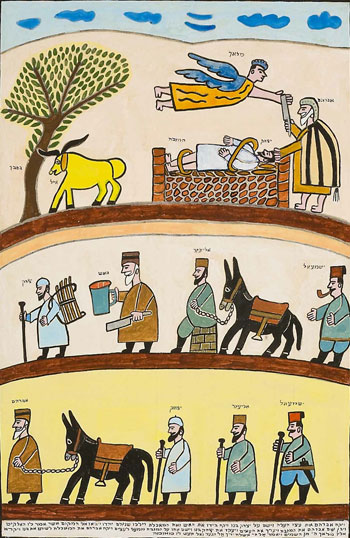
The exhibitions that precede Judaic auctions are rather special events for anyone who has a feeling for the fabric of Jewish life as it has been lived for the last 500 years. Not only is one afforded the opportunity to see a wide variety of Judaica, books, manuscripts and Jewish art of considerable historic importance, but if something strikes your fancy; intellectually or acquisitively, you can actually handle the objects. For most artwork the thrill is in seeing it up close and judging the brushstrokes and details of a painting or watercolor. One stands in the exact proximity as the creator did.

Everybody reads comics. From the New York Times to the Post there is hardly any periodical published that doesn’t sometimes feature a cartoon or comic; some kind of drawn image with text to entertain or provide commentary. Even the Jewish Press. When most people think of comics they immediately think of fictional comic books that kids read or the comic strips in the daily newspapers for adults.
It all started at an art and education conference at the Yeshiva University Museum. When one of the speakers misidentified a Goya painting at the Frick Collection, both the gentleman sitting next to me and I turned to each other and corrected the error simultaneously.
Follow Me: The Yoni Netanyahu Story is a documentary about the life of a true Israeli hero. But the film is not a mere recounting of the famous Entebbe Raid, it is an honest retrospective of the life of the young, academic, passionate and poetic son, brother, friend, boyfriend, and husband Lt. Col. Yonatan Netanyahu. And it shows a side of Israel that a 'Hasbara' campaign can't capture.

The auction at Christie’s in Paris this May 11 of a Tuscan Mahzor, created and illuminated in the 1490’s, will be an extraordinary event. This rare example of illuminated Jewish art has not been seen publically in over 500 years and, aside from tantalizing internal suggestions, lacks conclusive identification of the scribe and illuminators. Because the gold-tooled goatskin binding was made about 50 years after the manuscript and has a different coat of arms than those found in the machzor, it is assumed that this prayerbook may have quickly changed hands.
Maurice Sendak, winner of numerous literary awards for children’s book writing and illustration, and author of classic children’s book Where the Wild Things Are, passed away Tuesday at the age of 83. Born in Brooklyn to Holocaust survivors Sadie and Philip Sendak, Maurice gained acclaim at the age of 35 for authoring and illustrating Where […]

"Edouard Vuillard: A Painter and His Muses, 1890-1940" has opened at the New York Jewish Museum and will run through September 23. The exhibition offers a fresh view of the French artist Edouard Vuillard’s career, from the vanguard 1890s to the urbane domesticity of the lesser-known late portraits.
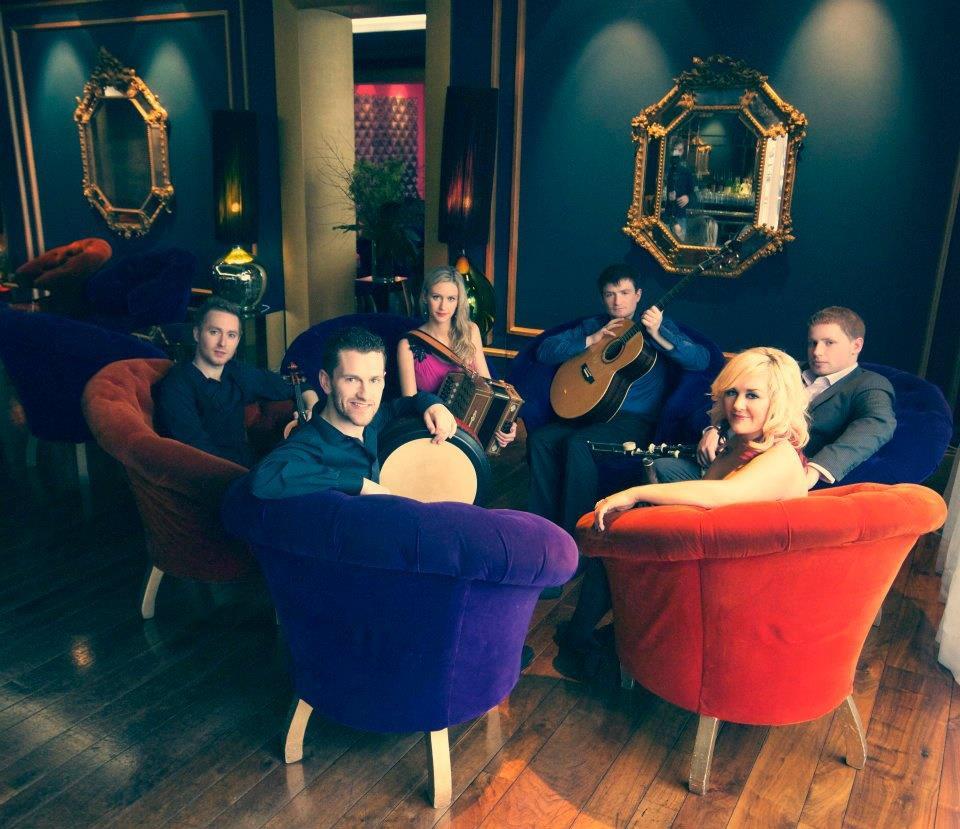
Two Irish bands scheduled to play highly-publicized concerts in Jerusalem, Tel Aviv, and Nahalal in June have cancelled, citing an overwhelming international uproar over their refusal to join the boycott against relations with Israel. Dervish and Fullset both published apologies on their Facebook pages, explaining that a mutual friend of theirs, Israeli musician Avshalom Farjun, […]

One of my favorite places when I was growing up in Boston was the used bookstore on Beacon and St. Mary’s streets. Boston Book Annex could play a used bookshop on television; it was dimly lit and cavernous, crawling with cats, and packed with a dizzying array of books, many of which sold three for a dollar. But used bookstores of this sort, however picturesque and inviting, are a relatively modern phenomena. In the Middle Ages, for example, I would never have been able to afford even a single used book unless I had been born into an aristocratic family. (Full disclosure, I was not.)
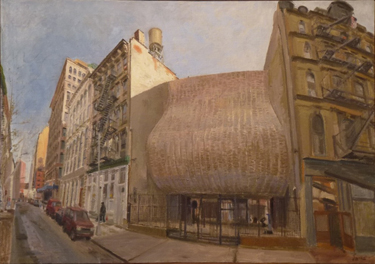
One thing is certain about Robert Feinland - he has shuls on his mind. His career has spanned over 40 years, exploring landscape, cityscape, sculpture and abstraction. For many of those years he has focused on the relentlessly changing urban landscape of New York, feeling the necessity to document and, in some way preserve, the physical fabric of the city he loves. A selection of recent paintings, most concentrating on the Crown Heights community, is currently at the Chassidic Art Institute. Many of the images are of shuls.

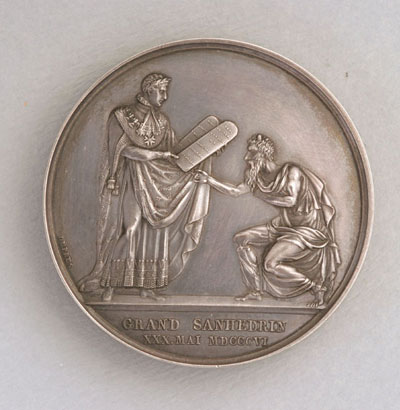
Jewish medals, several with Hebrew inscriptions and provocative imagery, were among the gems at The European Art Fair (TEFAF) in Maastricht, Netherlands, as I wrote in these pages two weeks ago. Another mini-trend at the fair, which will interest Jewish art aficionados, was an abundance of works by Marc Chagall.
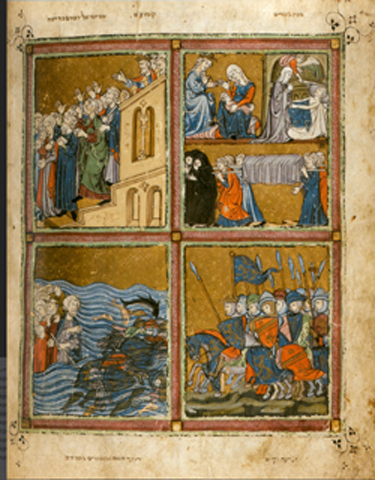
The Golden Haggadah was created in Catalonia, Spain sometime around 1320. So named because all the illustrations are placed against a patterned gold-leaf background, it is a ritual object of incredible luxury and expense. In light of Marc Michael Epstein’s analysis found in his recent book The Medieval Haggadah, this tiny masterpiece of Jewish art easily ranks among other towering works of complex narration including Giotto’s Scrovegni Chapel in Padua and Michelangelo’s Sistine ceiling in Rome.
It’s virtually impossible to ignore the financial aspects of TEFAF Maastricht, the annual arts and antiques fair in the historic city about two hours south of Amsterdam. More than 250 dealers from nearly 20 countries sell their wares—which span from Greek and Roman antiquities to contemporary sculptures—in the halls of the Maastricht Exhibition and Congress Centre, whose corridors are adorned by nearly 65,000 tulips.
Bird’s Head Haggadah Revealed The Medieval Haggadah: Art, Narrative & Religious Imagination By Marc Michael Epstein, Yale University Press, New Haven and London 2011
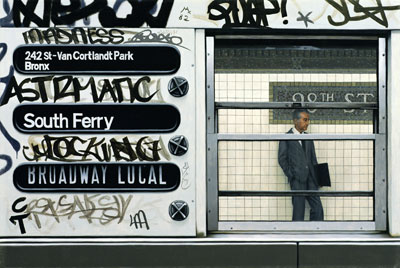
Max Ferguson’s 1993 painting Katz’s may be the second most iconic representation of the kosher-style delicatessen after the 1989 Billy Crystal and Meg Ryan film, When Harry Met Sally. Ferguson’s photorealistic painting depicts the deli from an interesting perspective, which is simultaneously inviting and hostile—in short, the dichotomy of deli culture.
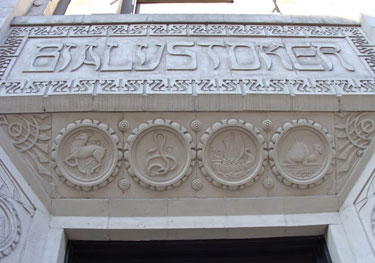
A quiet monument to the courage and determination of hundreds of thousands of Jews sits vulnerable on the Lower East Side of New York City at 228 East Broadway. This location was the former home of the Bialystoker Center, built in 1931.
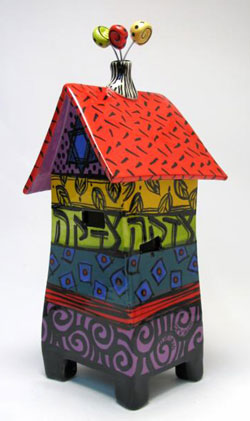
The whole idea of an artful pushka (tzeddakah or charity box) is almost a tease, if not an outright mockery. Isn’t there something pretty backward about investing time and money in an ornate container to hold alms for the poor?
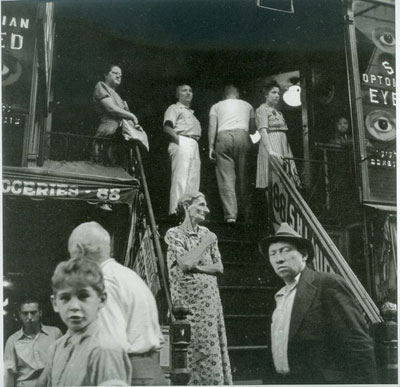
The Jewish Museum’s “Radical Camera” is a thrilling, beautiful exhibition that documents the development of socially conscious photography, primarily in New York City. It was a time of great challenges and great change, uptown, downtown and all around. These intensely creative, sensitive and insightful photographers all had a hand in capturing a time when New York and its people were entering the turbulent heart of the 20th century. Isn’t it interesting that the vast majority of them happened to be Jews?

Located about nine miles north of Madrid, the Palacio Real de El Pardo (Pardo Palace) dates back to the early 15th century. Devastated by a March 13, 1604 fire that claimed many works from its priceless art collection, the Pardo Palace and its vast gardens were used as a hunting ground by the Spanish monarchs.
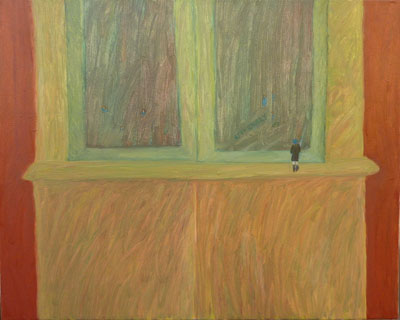
We live in a wonderful time for Jewish art. The orthodoxy of 20th century High Modernism has given way to a chaotic but liberated postmodernism willing to try anything, even serious “ethnic” art.

Red By John Logan; directed by Robert Falls; starring Edward Gero and Patrick Andrews Jan. 20 – March 11, 2012 Arena Stage, 1101 6th Street, SW, Washington, D.C. http://www.arenastage.org One morning, Ken, Mark Rothko’s studio assistant, comes into the studio to fulfill his daily duties of stretching and priming his employer’s canvases. When he […]
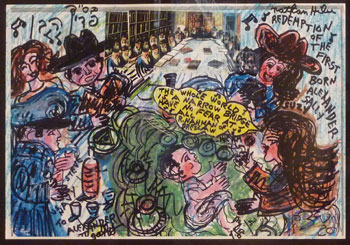
“Man must make the Torah manifest” in every action, speech and creative act. That is clearly the credo of Nathan Hilu, master-artist of the Lower East Side, Torah, Tanach, midrash, Gemara and beyond.
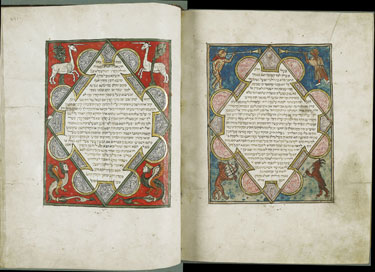
Within Shakespeare’s worldview, an assassination like Macbeth’s of King Duncan upset the so-called Great Chain of Being, or the cosmological organizational chart, in which power structures that were clearly articulated could only be disrupted at a cost.
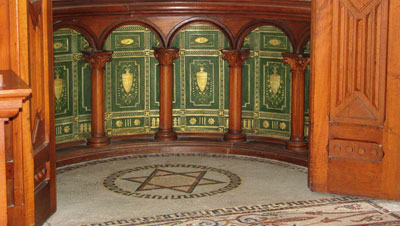
I went to the South African Jewish Museum in Cape Town with high hopes of seeing how South African Jews uniquely approached the fine arts and Jewish ritual objects.
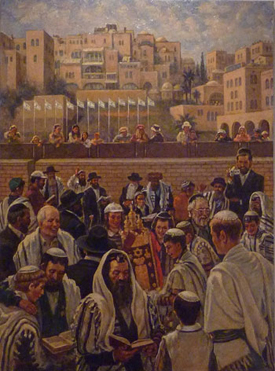
Jewish artists do the darndest things. The Chassidic Art Institute, expertly directed by Zev Markowitz, is currently showing the works of Venyamin Zaslavsky, a Ukrainian Jewish artist who has devoted the last 20 years to depictions of pious Jewish life in Jerusalem and the Holy Land.
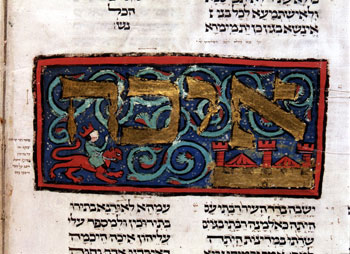
“Despite the fateful part he played in Judah’s history, Nebuchadrezzar [Nebuchadnezzer is sometimes referred to this way] is seen in Jewish tradition in a predominantly favorable light,” wrote Henry W. F. Saggs, the late Assyriologist, toward the end of his Encyclopedia Britannica entry on Nebuchadrezzar II (c. 630—c. 561).
 September 4, 2026