 September 18, 2026
 Categories: Halacha & Hashkafa
Skylight Rain


The Sorschers were excited about their long-awaited, two-week, end-of-summer family vacation.
Before leaving, they packed their luggage, unplugged appliances, and double-checked that everything was in order.
“Did we forget anything?” Mrs. Sorscher asked as they loaded the last suitcase.
“I don’t think so,” replied Mr. Sorscher. “Let’s hit the road! It’s been years since we took a real family vacation!”
The weather was beautiful as they pulled away.
A week later, however, an unusually fierce thunderstorm swept through the area. Powerful winds lashed the neighborhood, and torrents of rain pounded the rooftops for hours.
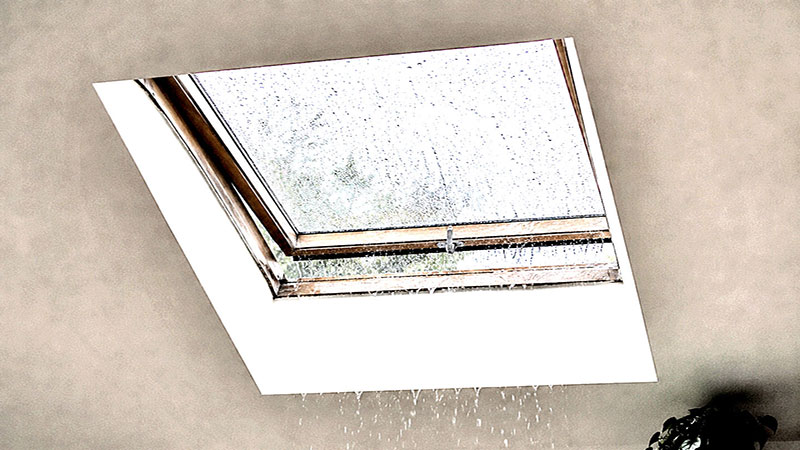
Only after returning home did the Sorschers discover what had happened: A skylight in their attic apartment had been left half open. Rainwater had poured inside, pooling on the floor for days. By the time the water finally dried, much of the hardwood flooring had warped beyond repair.
Mr. Rubin, the landlord, arrived later that afternoon to inspect the apartment. He stood silently for a few moments, then slowly shook his head.
“This isn’t just a few damaged boards,” he said. “The entire section of flooring will have to be replaced. You’re liable for the cost.”
Mr. Sorscher looked genuinely distressed.
“I can’t believe we overlooked the skylight,” he admitted. “It was sunny when we left, and the thought never even crossed my mind.”
“But you were away for two weeks!” replied Mr. Rubin. “Leaving a skylight open that long is negligence, not an unavoidable accident. And our lease specifically states that the tenant is responsible for damage resulting from negligence.”
“I learned, though, that the Torah exempts guardians of real estate from liability,” answered Mr. Sorscher. “Since a renter is like a shomer, perhaps that applies here.”
“Maybe in theory,” Mr. Rubin replied, “but does that exemption apply when someone is careless? And even when there is a clause in the lease?”
The two came before Rabbi Dayan and asked:
“Are the Sorschers liable for the damage to the flooring?”
“A renter (socher) is parallel to a paid guardian (shomer sachar),” replied Rabbi Dayan. “He is liable for theft and loss, but exempt with an oath from oness, uncontrollable circumstances (B.M. 80b; C.M. 307:1).”
“Nonetheless, Chazal derive from verses that the Torah excludes karka’os (land) from a guardian’s liability to swear or pay for damage that befell the property (B.M. 56a, 57b; C.M. 301:1).
Many Rishonim maintain that this Scriptural exemption extends even to damage ensuing from negligence (p’shia). Rambam (Hil. Sechirus 2:3), however, posits that a guardian (or renter) of real estate is liable for negligence, since negligence is tantamount to active damage by him.
Shulchan Aruch (C.M. 66:39) cites both opinions, preferring that of most Rishonim. Rema (66:39) also exempts the renter. Shach (66:126; 301:3), however, rules like Rambam. Later Acharonim consider this issue an incompletely resolved dispute, so that we cannot extract payment from whoever possesses the money (Sha’ar Mishpat 66:34; Pischei Choshen, Pikadon 1:21[51]).
Rema (C.M. 95:1) cites a further dispute as to whether movable items affixed to the ground are included in this Scriptural exemption. Shach (95:8) maintains, though, that a house is certainly included in karka’os, perhaps because it is rented along with the ground it stands on; others refute the Shach’s proofs. This discussion is relevant also to the flooring of the house. Again, due to the unresolved dispute, we cannot extract payment from whoever possesses the money (Pischei Choshen, Sechirus 6:4[10]).
Nonetheless, Machane Ephraim (Hil. Shomrim #8) posits that p’shia is at least grama, so that if the renter accepted liability for damage resulting from negligence, he is liable even without a kinyan. All the more so if the signed contract stipulates liability for such damage, as is common.
Moreover, although the Torah exempts a guardian of karka’os, some maintain – following Machane Ephraim – that there remains a heavenly obligation for p’shia, like other cases of grama (Imrei Binah, Pesach #5; Pischei Choshen, Pikadon 1:21[51]).
“Therefore, due to the Scriptural exemption, the Sorschers cannot be made to pay even though the damage resulted from their negligence. Nevertheless, some maintain that there is a Heavenly obligation,” concluded Dayan. “However, since they signed a contract which holds them responsible for any damage resulting from negligence, they are indeed liable in this case.”
Verdict: A renter is required to guard the rented property carefully. However, if damage occurred, even resulting from negligence on his part, based on a Scriptural exemption he cannot be made to pay, unless the contract stipulates liability.