 October 23, 2026
 Categories: Analysis
Sudan: Expanding the Tent of the Abraham Accords


The Geo-Strategic Importance of Normalization of Relations between Israel and Sudan
Significant progress has been made toward signing a peace agreement between Israel and Sudan. In his February 2, 2023, meeting with the Sudanese ruler, Abdel-Fattah al-Burhan, in Khartoum, Israeli foreign minister Eli Cohen finalized the text of a formal agreement between the two countries. While Sudan formally joined the Abraham Accords following the UAE, Bahrain, and Morocco, relations were frozen due to domestic opposition and political instability. The al-Burhan government, which finds itself in a transitional phase, has decided that the groundwork has been laid and the timing is appropriate to move forward to a peace agreement. The significance of this development should not be overlooked or minimized. The bilateral benefits for both countries contain huge potential, and the geo-strategic ramifications for the entire region and beyond are likewise considerable.From “No” to “Yes” in Khartoum
For decades, Sudan was known not only for its civil wars and political unrest but also as the capital of Arab and Muslim rejectionism. In what became known as the Khartoum Resolution of September 1, 1967, the Arab League, which convened in the Sudanese capital following the Six-Day War, declared the “Three Nos”: “no peace with Israel, no recognition of Israel, no negotiations with it.” The resolution meant only one thing: Israel had no right to exist, so war was the only legitimate way to contend with it. This attitude remained at the bedrock of Arab attitudes toward Israel for decades and was only partially mitigated by the peace treaties with Egypt and Jordan over the years. Yet, because the peace remained formalistic and cold, the phantom of Khartoum continued to lurk. With the Abraham Accords, though, the dark Khartoum clouds began to dissipate, with tourism, joint business ventures, and strategic and military cooperation flourishing. Then – with an approving nod from Saudi Arabia – Bahrain, the UAE, and Morocco crossed out “no” and said “yes,” reversing a policy they had pursued for so many years to their own detriment. This development was violently opposed by the Palestinian leadership, the Palestinian Authority, as well as Hamas and Islamic Jihad, as they felt the “Palestinian Centrality” illusion being pulled out from under their feet. Suddenly, it was out in daylight that Israel was not responsible for the absence of regional peace but rather Islamic radicalism led by Iran, spreading chaos and instability. Sudan’s full entry into the Abraham Accords is a powerful symbolic statement of the rejection of Arab rejectionism. It is a fuller and more comprehensive casting of the Khartoum calumny of 1967 to the wastebasket of history.The Sudanese Decision Is Not Just Symbolic
The Sudanese decision does not just remove a symbol of Palestinian-dominated rejectionism from the Middle East equation. Sudan has for years been a transport depot for weapons sent by Iran to Hamas and Islamic Jihad terrorists in Gaza. Arms shipments sent by Iranian intelligence make their way from Iranian and Houthi-controlled Yemeni ports in the Gulf of Oman through the Arabian Sea, the Gulf of Aden, and the Bab-el-Mandeb strait into the Red Sea and onto Port Sudan and Port Sawakin. From the Sudanese ports, the Iranian arms take two routes to Gaza. Some are transported onto boats that take them north to Sinai, where they are then smuggled into Gaza by Hamas combat divers. Most are loaded onto trucks that carry them through the desert on a 1,000-kilometer journey to Egypt, where smugglers cross the Suez Canal and then use tunnels dug to Gaza with the help of Sinai Bedouins. Growing normalization with Israel will significantly augment military cooperation between the two countries. It will strengthen intelligence-gathering and sharing capabilities and empower the Sudanese military to contend with and ultimately curtail the arms trafficking running through its ports and territorial waters. Such collaboration can potentially cut off one of the primary sources of weapons from the Iranian-backed terrorist groups of Gaza. The sustained depletion of weapons in the hands of Gaza’s warlords has the potential of forcing them to focus on economic development for the Strip and raising the standard of living for Gazans rather than on intermittent missile attacks on Israel.More than an Israeli Interest
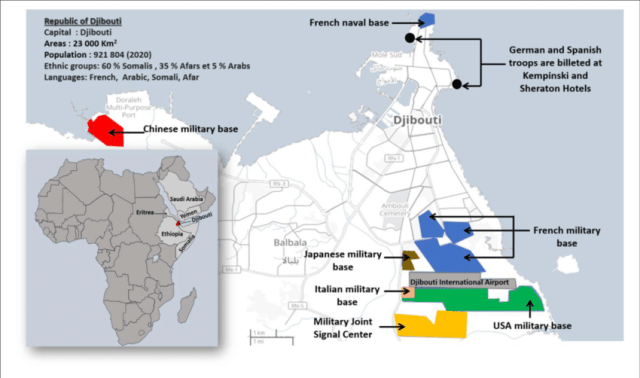
The strengthening of Sudan’s military cooperation with Israel to help secure its maritime borders and protect its sovereignty is a regional, indeed an international, interest, not just an Israeli one. Approximately 12% of global trade passes the coast of Sudan on the way to the Suez Canal. This represents 30% of all international container traffic, totaling over one trillion dollars of goods annually and 3-9 billion dollars of cargo per day. By comparison, this is four times the cargo traffic passing through the Panama Canal. The Red Sea shipping route is particularly significant for energy transport, enabling the transfer of oil and other hydrocarbons, with an estimated 7-10% of the world’s oil and 8% of liquefied natural gas passing through the Suez Canal. Continued instability in Sudan raises the prospects of increased Iranian involvement on the west bank of the Red Sea and greater Iranian penetration into Africa and countries of the Horn of Africa, in particular. With the constant threat of Iranian-backed Houthis taking control of Yemen, the portends are ominous. For this reason, many countries have chosen to build military bases in Djibouti right at the Bab-el-Mandeb naval passage. France, the former colonial power, still has one of the largest contingents of its overseas forces stationed there. Japan’s only foreign military base is undergoing expansion as a counterweight to China’s increasing influence. Likewise, the only permanent U.S. military installation in Africa is in Djibouti, and the Italian military base hosts troops from Germany and Spain. The United States established its Camp Lemonnier after the terrorist attacks of 9/11.Sudan, Egypt, and the Grand Ethiopian Renaissance Dam
Construction of the Grand Ethiopian Renaissance Dam (GERD) began in 2011 and is intended to relieve Ethiopia’s severe energy shortage. Upon completion, scheduled for 2023, the dam will produce enough electricity to satisfy a large share of Ethiopia’s domestic needs and supply neighboring countries with cheaper energy than they are currently paying. The dam is Africa’s largest hydroelectric power plant and the seventh largest in the world.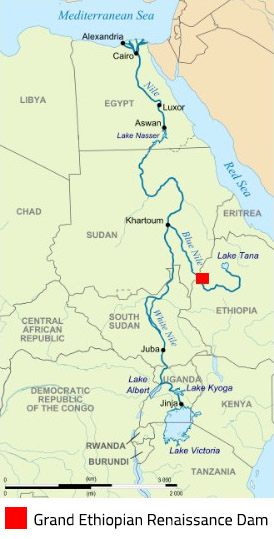
Israel’s Role as an Agricultural Innovator – Start-Up and Restart
Agriculture remains a critical sector of Sudan’s economy, with almost 80% of its citizens engaging in subsistence farming. Food insecurity is of paramount concern, as food scarcity and severe malnutrition threaten the country’s economic autonomy and social stability. The main issues facing Sudan’s food production are inefficient irrigation infrastructure, water shortages, and land degradation. These all involve research and knowledge-based areas that Israel excels in and is eager to export. Irrigated agriculture has been unevenly distributed across Sudan, primarily concentrated in the country’s center. As a result, there are considerable disparities in development indicators between the performance of each region. Irrigating previously untouched land is a crucial development, which, in the context of the Abraham Accords, Israel can assist. Its pathbreaking “slow-release tubing” has become foundational to the global micro-irrigation industry, improving the lives of millions around the world. “Tipa” kits that use gravity to irrigate rural lands with insufficient water pressure are another example of the revolution Israel has spurred in irrigation technology. These are but two examples of many technologies that can change the food production paradigm of Sudan and help guarantee food security for millions of Sudanese. Israel has already distributed these technologies to farmers in Senegal, Kenya, South Africa, Benin, and Niger through its Foreign Ministry, with stellar results. The Sudanese are a proud people with an organic connection to their land. Israelis understand this, and the effective agriculture industry it has created has its roots in the solid ideological bond to the Land of Israel that has served as an anchor for technological innovation. The Zionist movement’s unique ideological ties to agriculture and the pioneering mindset is something that countries like Sudan can appreciate and emulate to their advantage. The Tony Blair Institute, which does so much to improve lives on the African continent, sees in Israel’s historic cooperative farming (kibbutzim and moshavim) a proven template to copy. This system, the institute argues, produced a connection to a larger unit of production, which created bargaining power to function and compete in the market effectively. Israeli entrepreneurs have, in fact, implemented the cooperative farming structure in several countries with exceptional success. The Angola experience is of particular note and can become a template for projects elsewhere on the continent. Innovation and creativity, social cohesion, and strategic marketing created a healthy patriotism of personal responsibility, mutual dependence, and a preference for peaceful conflict resolution. Historical colonialism, internecine strife, and natural disasters have created a strong will for many Africans to start their state-building again or, more accurately, to restart it. After years of shunning Israel, they realize it was to their detriment and are partnering with the start-up nation. Sudan can lead the way. It is for Israel to embrace the challenge now.Heritage Seeds and Food Security
Israel is a world leader in cultivating seed durability, which has become critical to guaranteeing the future of food security. The under-the-radar visits of high-ranking Sudanese officials to Israel have emphasized this area of much-needed assistance. Heritage seeds, sometimes called legacy seeds, are cultivated from crops grown in a particular agricultural area for generations and have developed strong climatic adaptive traits. Some seeds are associated with crops that date back thousands of years and are even mentioned in the Bible. The seeds were created through a process of pure fertilization in which the open pollination by wind, insects, and birds transmits pollen among plants of the same species. Once the cultivation process of these “heritage variety” seeds is concluded, it results in seeds with a high level of durability that keeps the crops stable and pure even in the face of difficult growing conditions such as unusual weather conditions, dryness, pests, and diseases. Israel’s multicultural citizenry has also been a blessing for the country in this realm of crop durability. Unique types of seeds passed down through the generations and well-preserved have been brought to the country with each wave of immigration. They have all entered seed banks where they are germinated, cultivated, and sold to aspiring entrepreneurial farmers. Due to issues of climate change and the growing threat of food insecurity, there is a general shift by farmers, organizations, and the political echelon to go back to using traditional crops, particularly to learn about the immunity of legacy seeds. Israel has been at the forefront of this shift, and the Sudanese have correctly identified this area as a critical component in reconstructing their agro-based economy in order to guarantee a sufficient food supply for their people. Again, Israel, like Joseph in neighboring Egypt three millennia ago, can help. Tikun Olam at its most pristine.Afterword
There are those in the West, and in the Biden administration in particular, who want any normalization with Sudan to be contingent on the country’s full and complete transition to civilian governance. This is a mistake with potentially calamitous consequences. Africa is not America and Sudan is not Switzerland. Cultures differ, as do the historical processes of political development. The differences should be respected; to do otherwise is to condescend and worse. The will for democracy is admirable and should be supported, but full democratization is a process that requires care and common sense. President Morsi of Egypt was democratically elected to implement the policies of the Muslim Brotherhood. Does anyone who truly values democratic principles want a repeat of that phenomenon in Sudan? Islamic extremism and the terrorism that goes with it are on the rise in sub-Saharan Africa, including Sudan. The purveyors of that extremism, primarily Iran, would like nothing more than for Sudan’s transition to be immediate, unbalanced, and without the requisite preparatory measures. Instead, they would like a return to the Khartoum of “the Three Nos.” A reciprocal embrace between Israel and Sudan will help make sure that doesn’t happen. After years of civil war and military coups, famine and hunger, after being used as a pawn in superpower politics, Sudan is a country slowly weaving its way to democracy. It is happening because its military leaders want it to happen and are carrying it in that direction. They have hoisted the flag of cooperation and reconciliation and must not be discouraged. Likewise, Israel must avoid the protestations of those progressives who, in the name of Western values, would see Sudan thrust once again into chaos and civil strife. Sudan is now saying “yes,” and we dare not say “no.”* * *
Notes
* The author thanks Vasil Samardzhiev for his research assistance.
1 https://sudantribune.com/article264733/
{Written by Dr. Yechiel Leiter and reposted from JCPA}