יום שלישי, י״ב אלול תשפ״וTuesday, August 25, 2026



Follow Us


By JNi.Media
According to Ha'aretz, Camp Ramah has incorporated the curriculum of a group called IfNotNow to teach Jewish Children about the evils of Israeli occupation. So we made a phone call.
There are three Jewish crowns: the crown of Torah, the crown of priesthood, and the crown of kingship.
By Chabad.org
A class on Talmudic ethics in Vancouver, B.C., praised by regulars, is going virtual in a new series on Jewish.tv, the multimedia portal of the Judaism website Chabad.org. In the hour-long class, Rabbi Binyomin Bitton, director of Chabad of Downtown Vancouver and dean of the Jewish Academy there, dissects a complex Talmudic narrative and shows […]
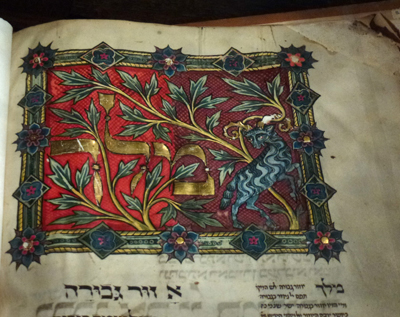
In the eyes of the ram lies the artist’s commentary on the Rosh Hashanah piyyut “The King Girded with Strength.” From the Tripartite Mahzor (German 14th century), this illumination simultaneously echoes the piyyut’s praise of God’s awesome power and expresses the terror of actually being a sacrifice to God. The ram is but a reflection of Isaac. It is all in the eyes.
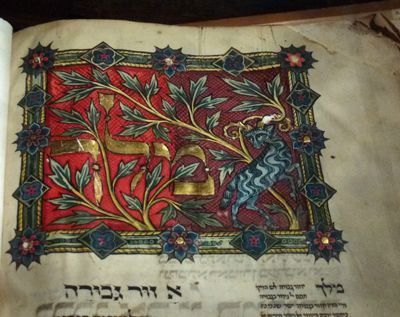
In the eyes of the ram lies the artist’s commentary on the Rosh Hashanah piyyut “The King Girded with Strength.” From the Tripartite Mahzor (German 14th century), this illumination simultaneously echoes the piyyut’s praise of God’s awesome power and expresses the terror of actually being a sacrifice to God. The ram is but a reflection of Isaac. It is all in the eyes.

Midrash Berashis Rabbah says that on the day that Rabi Akiva gave up his soul al Kiddush Hashem, Reb Yehudah HaNasi was born. A seven-generation descendent of Hillel HaZaken, Rebbe was the son of Rabban Shimon ben Gamlial, and of the royal line of Dovid HaMelech.
In this week’s parshah the Torah writes about a prohibition on killing a murderer prior to his trial. As the pasuk says: “…v’lo yamus harotzeach ad amdo lifnei haeidah lamishpat – … so that the murderer will not die until he stands before the assembly for judgment” (Bamidbar 35:12). The same rule applies to anyone who commits an aveirah that is punishable by death; no one is permitted to kill him prior to his trial in beis din, including the witnesses that warned him and witnessed the aveirah. The Sefer Hachinuch (mitzvah 409) writes that if one kills a transgressor prior to his trial, he is regarded as a murderer.
Question: I was taught that due to our state of mourning on Tisha B’Av, we are not allowed to learn or discuss Torah – a topic that makes us happy and weakens our mournful state. Why, then, are we allowed to read from the Torah at Shacharit and Mincha on Tisha B’Av? Also, does the halacha of not learning apply to a regular mourner as well? Menachem (Via E-Mail)
Question: I understand that at a minyan, the chazzan is required to repeat Shmoneh Esreh out loud so that people who may not know how to daven can fulfill their obligation to daven with the chazzan’s repetition. What, however, should the chazzan do when he reaches Kedushah and Modim? I hear some chazzanim say every word of Kedushah out loud and some only say the last part of the middle two phrases out loud. As far as the congregation is concerned, I hear some congregants say every word of Kedushah and some say only the last part. Finally, some chazzanim and congregants say Modim during chazaras hashatz out loud and some say it quietly. What is the source for these various practices? A Devoted Reader (Via E-Mail)

In the 19th century, the heart of European Jewry – its centers of Torah learning, its crown of glory – was centered in the vast expanse of the Russian Empire. There, under the hand of the czars, lived millions of Jews – poor in material wealth but blessed with a love of Torah and a dedication to their faith that was unshakeable.

Batei arei chomah are structures (of at least six to eight square feet) in towns consisting of at least three courtyards with two buildings each, with a predominantly Jewish population – provided that such towns were surrounded by a wall in the time of Joshua even though they may no longer be surrounded by a wall at the time of the sale or buyback.
 August 21, 2026