יום שבת, י״ב תמוז תשפ״וSaturday, June 27, 2026



Follow Us


By JTA
Prime Minister Benjamin Netanyahu berated U.N. Secretary General Ban Ki-moon for agreeing to attend a Non-Aligned Movement summit in Iran. "Even if it is not your intention, your visit will grant legitimacy to a regime that is the greatest threat to world peace and security," Netanyahu's office quoted the prime minister as saying Friday in […]

A reporter mentioned to White House Spokesman Jay Carney yesterday's scoop in Ha'aretz, which cited Western diplomats and high level Israeli officials about the special National Intelligence Estimate (NIE) on Iran's nuclear program submitted recently to President Obama, which is almost a word for word copy of the Israeli intelligence assessment. But State Dept. Spokesman Patrick Ventrell confirmed that the U.S. is concerned with the possibility of Iran attacking its Gulf neighbors.
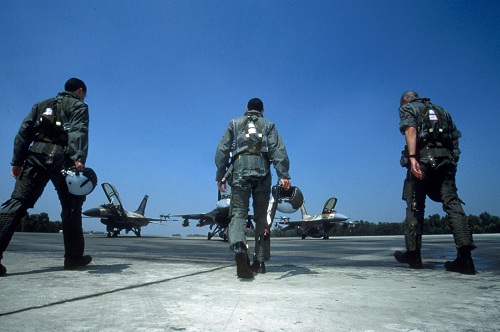
All of Israel’s wars involve the US as a silent ally or silent not-so-much-ally. The question of “what will the US allow Israel to do?” is almost as important as “what is Israel capable of doing?” And the timing of any action with regard to the upcoming election is very relevant to US behavior.

Efraim Halevy, former head of the Mossad, made the statement to the New York Times on Thursday. Later in the day, he told Israel Army Radio that Iran's "math is off if they think they have open-ended immunity."
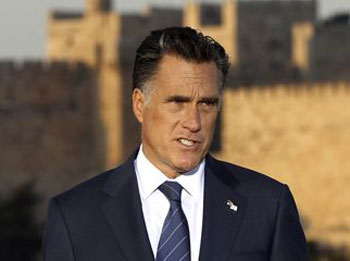
By Mitt Romney
To step foot into Israel is to step foot into a nation that began with an ancient promise made in this land. The Jewish people persisted through one of the most monstrous crimes in human history, and now this nation has come to take its place among the most impressive democracies on earth. Israel’s achievements are a wonder of the modern world.
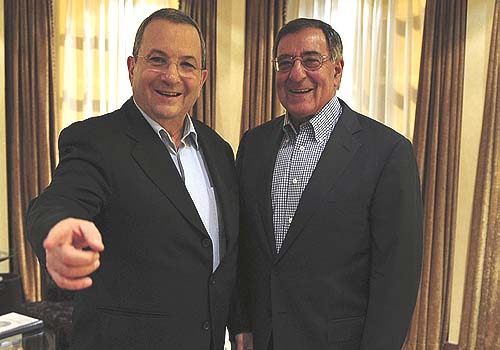
Secretary of Defense Leon Panetta said on Wednesday that if Iran does not negotiate acceptable limits on its nuclear program, it could face U.S. military action in tended to stop it from developing a nuclear bomb.

Dan Senor, Mitt Romney's national security aide, spoke to reporters shortly before the Presidential hopeful was scheduled to meet with Israeli Prime Minister Benjamin Netanyahu. Senor was quoted as saying: "If Israel has to take action on its own, in order to stop Iran from developing that capability, the governor would respect that decision."
By J. E. Dyer
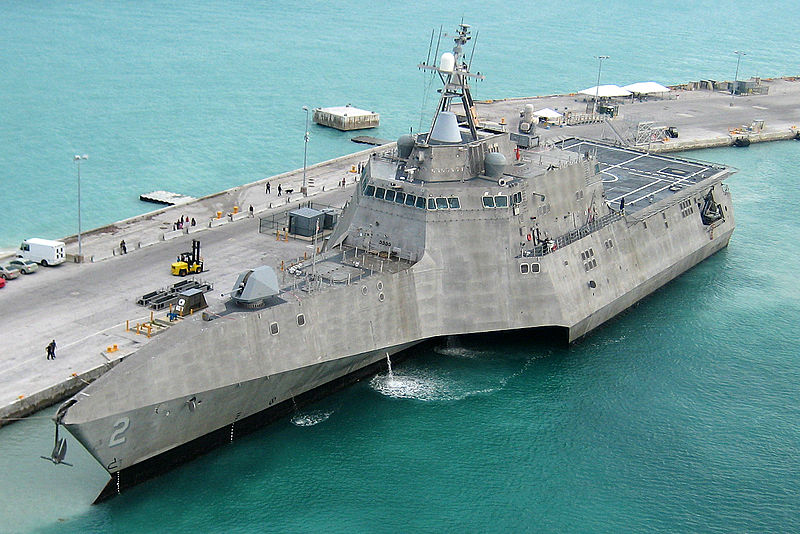
How should an American president use the military in an intimidating, persuasive manner, to induce Iran to give up her nuclear-weapons purpose? Very little has been discussed on this topic in the forums of punditry; virtually all treatments focus on the feasibility or proper method of a military attack campaign. Is there an “intimidation option,” short of a shooting war? And if so, what would it look like?

The primary point of Israel's nuclear forces must be deterrence ex ante, not preemption or reprisal ex post. If, however, nuclear weapons should ever be introduced into a conflict between Israel and one or more of the several states that still wish to destroy it, some form of nuclear war fighting could ensue.

For Israel, and also its cross-pressured U.S. ally, there would be very difficult problems to solve if an enemy state such as Iran were permitted to go fully nuclear. These problems could lethally undermine the conceptually neat, but probably unrealistic, notion of balanced nuclear deterrence in the region.

Finally, after many years of effective disregard, a core irony in the matter of Iranian nuclearization can be acknowledged: For President Ahmadinejad, and also his clerical superiors, any prospect of hastening the Shiite apocalypse – a decidedly “sacred” prospect linked to war with Israel and/or the United States – could be welcomed. Naturally, this religion-driven view of a "terrible beauty" would contrast starkly with senior leadership attitudes in both Jerusalem and Washington. In these plainly more secular circles, of course, any thought of a conscious encouragement for Final Battle must always be rejected.

With tougher sanctions by the European Union taking effect, Iran announced new missile tests and threatened to obliterate Israel. The Aerospace Force of the Islamic Revolution Guards Corps launched missiles with ranges of 300, 500, 800, and 1,300 kilometers, the Mehr agency reported on Tuesday.
The most recent round of sanctions is part of the West's determined effort to halt Iran's contentious nuclear program without resorting to force. But Iran struck a belligerent tone, with Iran's central bank governor Mahmoud Bahmani telling the semi-official Mehr News Agency that "we are implementing programs to counter sanctions and we will confront these malicious policies."

Worried about a nuclear Iran? Do you think such a development would not only threaten Israel's existence but would intimidate the Arab countries of the Gulf, put the radical Islamist regime in position to threaten the West, and lead to unmanageable nuclear proliferation? Have no fear! Kenneth N. Waltz, the highly respected professor of international relations at Columbia University, argues in a recent article of Foreign Affairs magazine that "Iran Should Get the Bomb."
By Barry Rubin
Iran’s moment in the region as a whole is over, though it can still do much damage in the Persian Gulf area. But we are now about to enter a new era in which Egypt, under Sunni Islamist leadership, has the option of assuming the leading role again. The last round of Egyptian ascendancy began almost 60 years ago with the Arab nationalist coup of July 23, 1952. Today it;s revolutionary Islamism that is sparking efforts to make some futile new effort to wipe out Israel.
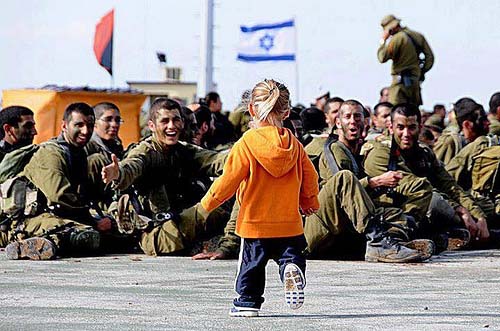
The Combat Engineering Corps is greeted by a jubilant little fellow after completing their treacherous trek for their gray berets. The Combat Engineering Corps symbol features a sword on a defensive tower with a blast halo on the background. The Combat Engineering Corps official motto is "Rishonim Tamid" ("Always First"). Its unofficial motto is "We'll […]
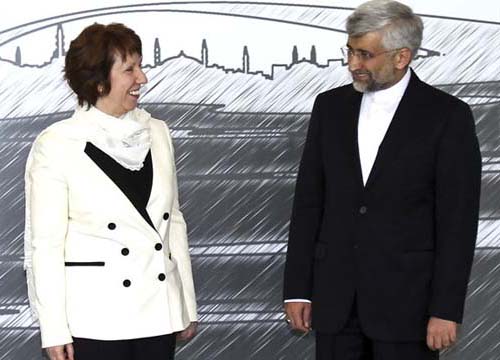
Western diplomats continue to accuse Iran of foot-dragging and obfuscation, noting that the five-point proposal presented by the Islamic Republic in Baghdad last month calls for discussions on matters that are tangential to the nuclear issue. Yet Western diplomats continue to hold out hope that Iran will finally "engage seriously" the proposal that the six-nation bloc made last month.

President Mahmoud Ahmadinejad’s welcome on the sunny Ipanema beach in Rio was less than warm from an eclectic group of Jews, human rights activists, and homosexuals, who arrived Sunday to protest the Iranian president’s attendance at a UN summit on sustainable development.

In an interview with Ha'aretz last Friday, Israel’s Minister for Strategic Affairs Moshe Ya’alon made clear that for Israel the red line is Iran’s capability to produce a nuclear weapon and not Khamenei’s order to produce a bomb. He also said that Israel is not bluffing when it comes to decisive action to stop Iran and does not need an American ‘green light’ for a military strike .

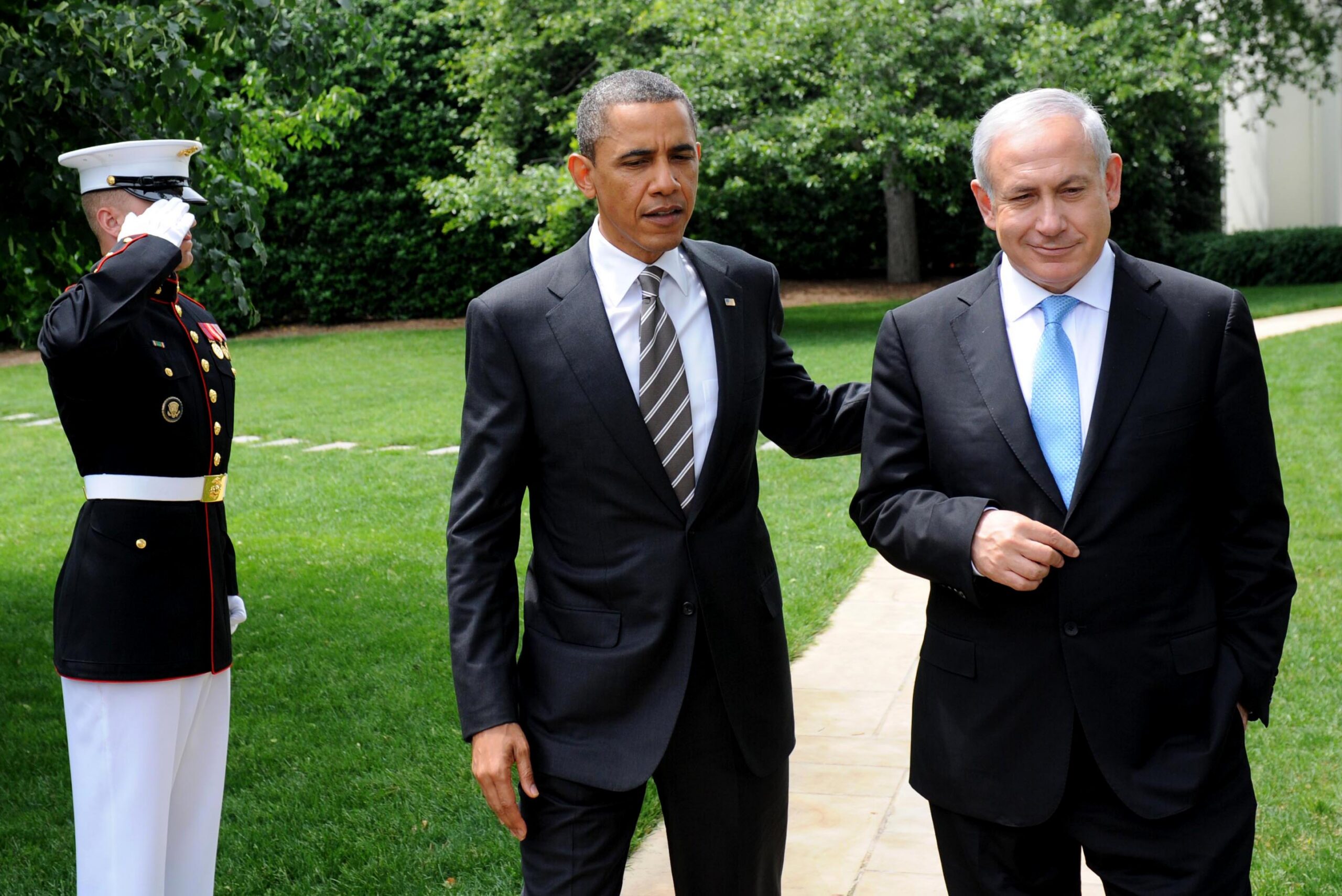
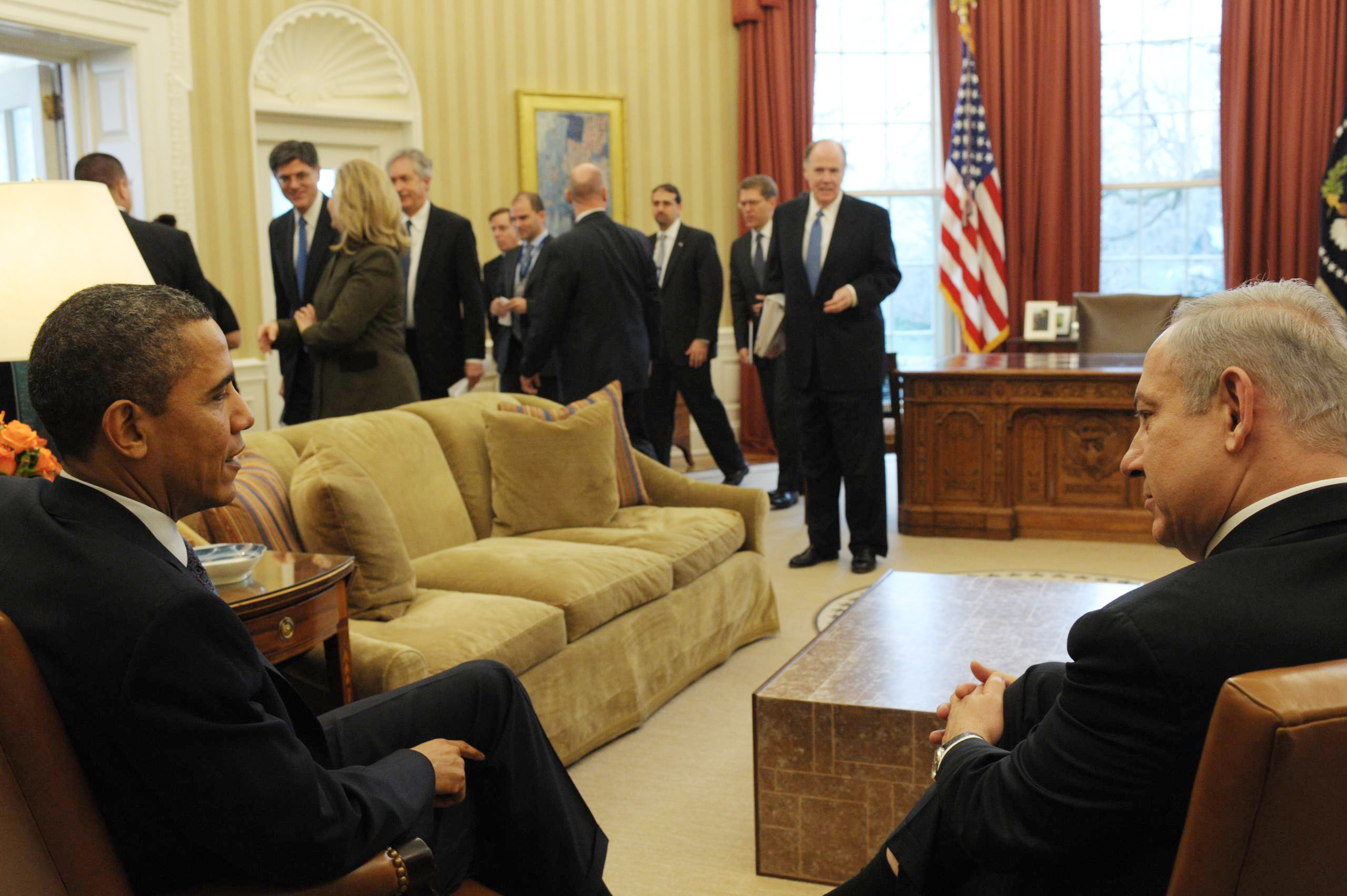
President Obama recently invited me to the Oval Office for a discussion about Iran. The President reiterated to me in private what he had previously said in public: namely, that he would not allow Iran to develop nuclear weapons; that containment of a nuclear Iran was not an option; that sanctions and diplomatic pressures would be applied and increased first; but that, as a last recourse, the military option would not be taken off the table.

Republican presidential candidate Mitt Romney on Saturday revved up his attacks on President Obama's Mid East policy, suggesting the president fears that Israel might attack Iran more than he fears that Iran will develop a nuclear weapon. “I think, by and large, you can just look at the things the president has done and do the opposite,” Romney said.

By Avi Jorisch
The United States and its allies have all the tools necessary to punish the banks, corporations and charities helping Iran achieve nuclearization. If we are truly going to stop Iran from pursuing nuclear weapons, we must use as many of the bows in our quiver as possible.
JERUSALEM – Despite the absence of an attack on Iranian military and nuclear facilities, Israel and the U.S. are engaged in a covert cyberwar campaign against a growing list of Iranian targets. The dual objective is to hamper the Iranian regime’s ability to build an atomic bomb while pressuring them to bow to Western and UN demands to downgrade their enrichment capabilities to less than 10 percent.
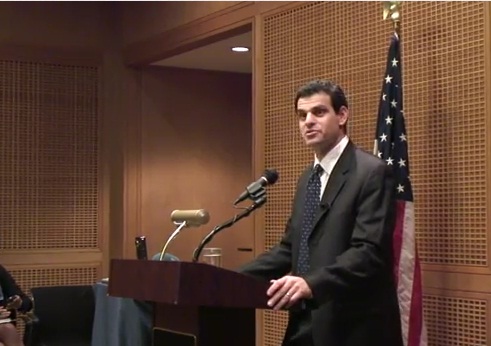
US undersecretary for terrorism and financial intelligence David Cohen, visiting Israel to coordinate sanctions policy with senior Israeli security, discussed plans to impose additional sanctions on Iran in the summer. In an interview with Haaretz, Cohen said: “If we don't get a breakthrough in Moscow there is no question we will continue to ratchet up the pressure."
By JTA
Israel is equipping submarines built in Germany with nuclear-tipped cruise missiles, according to an in-depth report in Der Spiegel magazine. The magazine also reported Sunday that the German government has known about Israel's nuclear weapons program for decades, despite its official denials. Last month, Israel received from Germany its fourth Dolphin–class submarine, which is slated […]
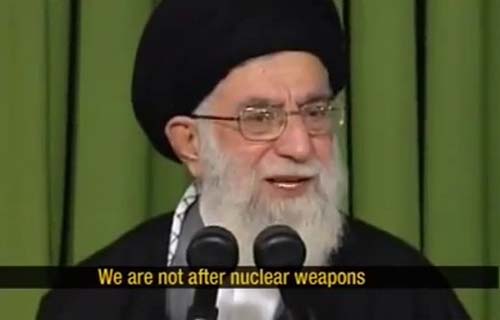
In an address marking the 23rd anniversary of the death of his predecessor Ayatollah Khomeini, Ayatollah Ali Khamenei also accused the West of cynically exaggerating the threat a nuclear Iran poses to divert attention: "What Americans and Westerners do is idiotic. They magnify the nuclear issue to cover up their own [economic] problems."

Few things ought to be as urgent as keeping Iran from acquiring nuclear weapons. Yet the West – led from the front by the United States – has fallen into the "peace process" trap that considers talk to be progress and, once a conversation has begun, that there is nothing worse than stopping it: Talk about what you've talked about. Talk about what you won't talk about. Talk about talking again. Talk again. Repeat.
By JTA
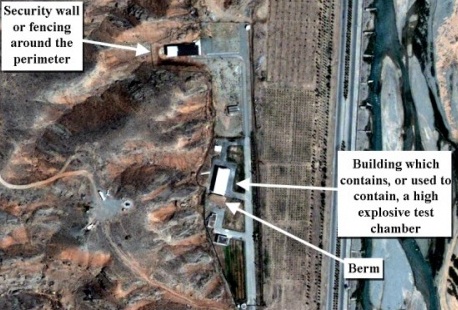
New satellite images show possible recent nuclear activity at the Parchin facility in Iran as well as attempts to hide evidence of past activity.
The full story has yet to be told, but even talk of the so-called Flame virus carries an important message. Certainly the widespread belief that Israel was behind this and earlier computer viruses that wreaked havoc on Iran’s nuclear efforts – a notion hinted at by Prime Minister Netanyahu and Vice Premier Moshe Ya’alon – should be taken as evidence that all things being equal, left to its own devices Israel is quite capable of taking care of itself. But there is an added dimension.

By J. E. Dyer
The holiday from history is over, although we may be the last ones to see it. Neither Russia nor Iran – nor China, North Korea, or Syria, for that matter – is very interested in signing anything with the West right now. Good deals based on the old assumptions aren’t as tempting when better ones seem to lie just over the horizon.
By JTA
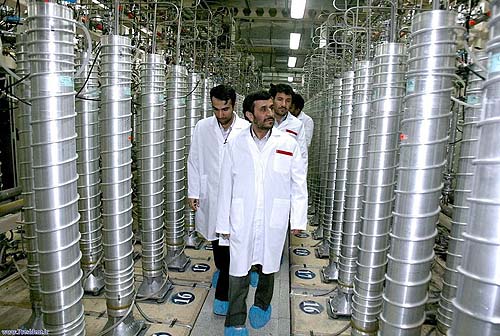
Evidence found in an underground bunker in Iran could signal the country’s having moved one step closer toward the uranium threshold needed to make nuclear arms, International Atomic Energy Agency diplomats said today. IAEA inspectors found traces of uranium enriched up to 27 percent at Iran's Fordo enrichment plant.

Iranian officials and media painted the six-nation bloc as the source of intransigence and focused its ire specifically at America. "We believe the reason they are not able to reach a result is America. The P5+1 came to Baghdad without a clear mandate so we think the atmosphere is difficult," an Iranian delegate told Reuters.

The current round of negotiations between the P5+1 and Iran will not enhance Israel’s security. Rather, they will do the opposite. They represent a strategy of appeasement rather than the use of power. What should happen is that the West should deliver a credible ultimatum to fully dismantle the program or face sharply increased sanctions — or, ultimately, military action.
By JTA
Nothing suggests that Iran is ready to stop its nuclear weapons program, Prime Minister Benjamin Netanyahu said ahead of talks between Iran and a U.S.-led negotiating coalition. "Nothing would be better than to see this issue resolved diplomatically," Netanyahu said Friday during a state visit to the Czech Republic. "But I have seen no evidence […]
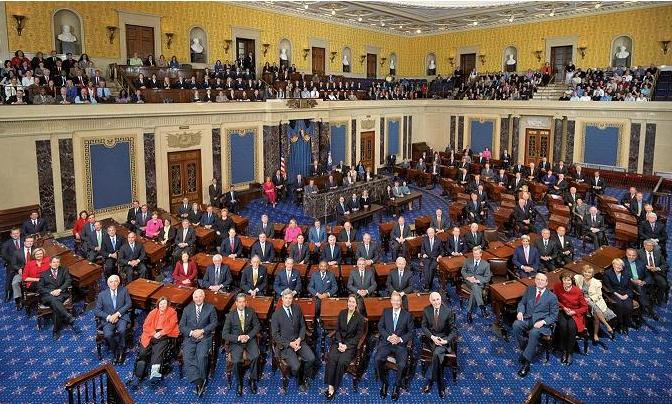
The US Senate will consider a new sanctions package against Iran on Thursday, in which oil and economic embargos will be considered in order to force Iran to abandon its nuclear development program. In the meantime, the US and Israel prepare for the possibility of a military strike on Iran.

Washington prefers the diplomatic option and stated as much time and again – but it seems that beneath the surface, an attack is ready to roll on command. An unusual moment of candor on the part of U.S. Ambassador to Israel Dan Shapiro at a closed meeting in Tel Aviv, reveals the planning behind the scenes. "The military option is not only possible, it's ready," he says.

It's called the Viper. It is a computer virus. Open it once and it propagates and grows in every other file that is opened. And last month it struck Iran. That's the third computer virus to hit Iran in the past eighteen months. But this one, the Viper, is different from the others.
A new report on the Iranian nuclear arms program compiled by the Iranian opposition group Mujahedin-e Khalq (MEK) shows that Iran is in fact accelerating its efforts to build a nuclear bomb.

What, then, might be most important to Israel's prospectively irrational enemies, potentially even more important than their own physical survival as a state? One possible answer is the avoidance of certain forms of shame and humiliation. Another would be avoidance of the potentially unendurable charge that they had somehow defiled their most sacred religious obligations. Still another would be leaders' preferred avoidance of their own violent deaths, deaths that could be attributable to Israeli strategies of targeted killing and/or regime-targeting.

Speaking at the annual convention of the Conservative movement's Rabbinical Assembly in Atlanta on Tuesday, Vice President Joe Biden made the case that Obama's strategies regarding the Iranian nuclear program have worked, but said the decision to strike must be Israel's. "I would not contract out my security to anybody, even a loyal, loyal, loyal friend like the United States," Biden said.
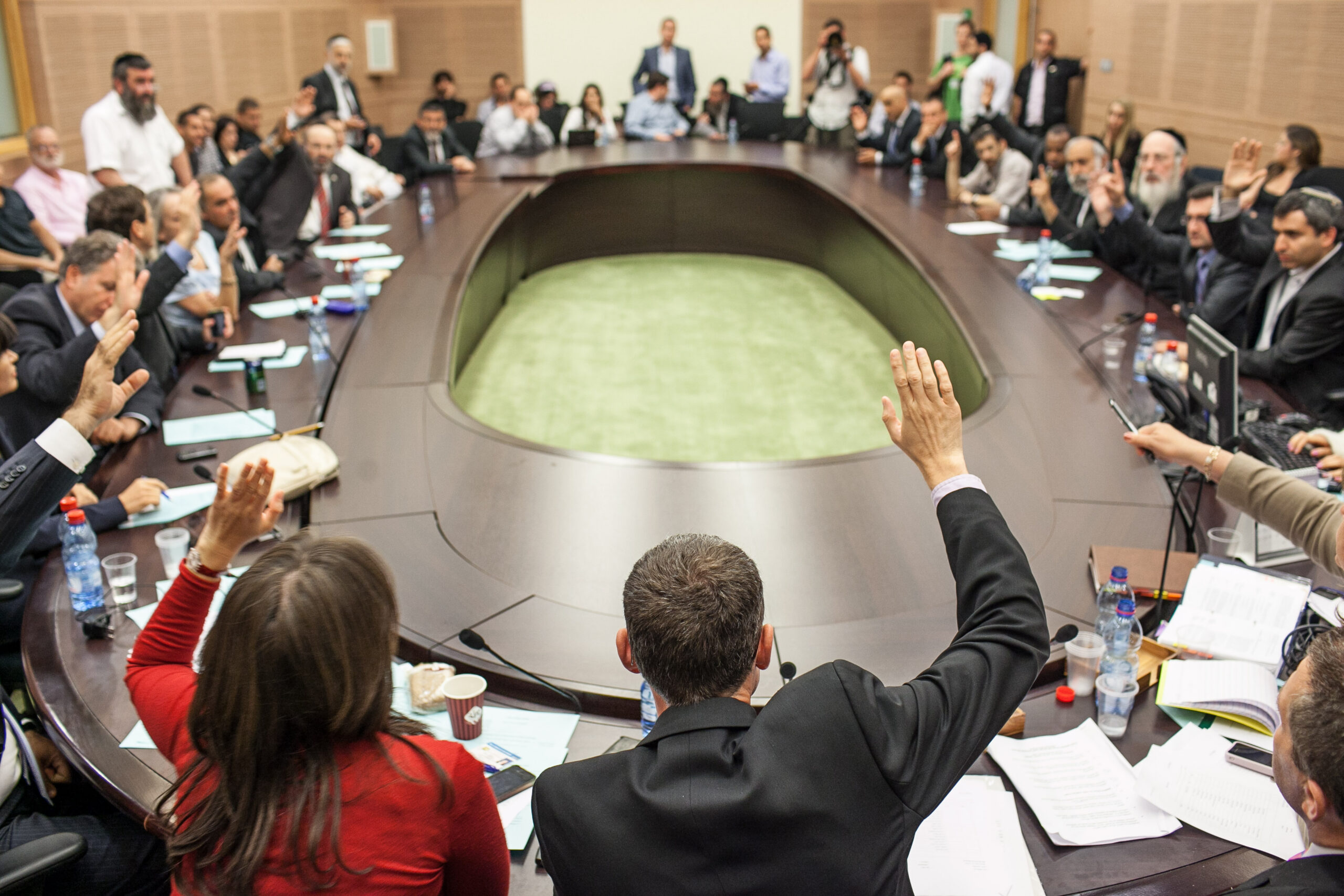
A unity government, which would give Netanyahu a massive 96 Knesset seats out of 120, would certainly clear the decks for military action against Iran. Early elections in September, on the other hand, carry a burden of uncertainty, even though Netanyahu’s Likud party is leading by a large amount in the polls. In any event, they would be disruptive.
By JTA
Two Congress members from Michigan at the Jewish Council for Public Affairs annual plenum stressed the importance of stopping a nuclear Iran and passing a bipartisan farm bill. Rep. Mike Rogers, the chairman of the U.S. House of Representatives Intelligence Committee, told plenum participants in Detroit on Monday that leaving the military option on the […]
Barack Obama and many of his appointees share a New Left sensibility, which includes the ideas that colonialism and imperialism — particularly ‘US imperialism’ is the root of all evil, that it is meaningless to suggest that one culture could be morally superior to another, and that national interests should be subordinated to multilateral cooperation.
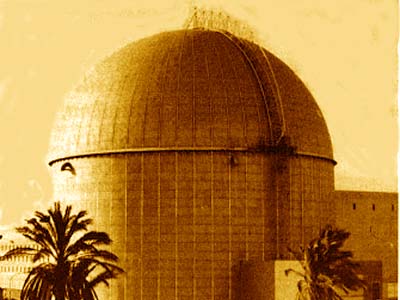
Press TV, Iran's television network, broadcasting in English round-the-clock, on Sunday published an interview with Mark Glenn, of The Crescent and Cross Solidarity movement, who said that Israel is the only regime that “has threatened to take the entire world down in a nuclear Armageddon in the instance that her precious experiments in Jewish self-rule in the Middle East ceases to materialize.”
The likelihood of Iran complying with its commitments is minimal. But there would be hundreds if not thousands of hours, days and weeks of new negotiations over whether and how the agreement is holding up. Once a deal is struck, the Western powers will be loath to cancel it, even when they know Iran is cheating.

By Barry Rubin
As you know, just about everyone in the world outside of Israel has been claiming that an attack is imminent or that it is only being held back by the U.S. government. My argument has been that this is simply untrue. Most of the Israeli strategic and intelligence leadership oppose an attack, for the same reasons I do. Moreover, these people don’t believe it is going to happen in the near future.

The failure thirty-two years ago of Operation Eagle Claw convinced U.S. military leaders to rethink how they would conduct special operations in the future: formulating plans that were simpler, carrying them out under unified command, and managing the risk. While our military has learned the lessons of the failed Iranian hostage rescue mission, however, our political leaders have not.
By Barry Rubin
It is astonishing to note how much the Obama Administration, supposedly so sensitive to the views of Arabs and Muslims, has ignored the concerns of America’s own Arab allies.

As air raid sirens blared out across the country on Thursday, citizens of Israel stopped for a moment of silence to remember the victims of the Holocaust. Memorial ceremonies are taking place throughout the country. Prime Minister Netanyahu: Never Again means stopping Iran.
Israeli Defense Minister Ehud Barak said that Israel would not refrain from striking Iranian nuclear installations during the course of the ongoing negotiations between the Western allies and Iranian government officials if Israel’s intelligence apparatus determined that the Iranian military was on the verge of constructing a nuclear warhead at its secret underground facility in Qom.
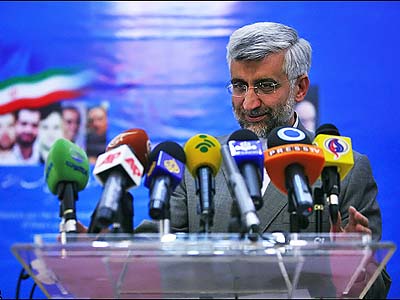
Saeed Jalili, Secretary of Iran’s National Security Council, says Tehran does not intend to stop producing uranium enriched to a purity level of 20 percent, insisting that enrichment of uranium is his country's right. The UN Security Council has demanded the suspension of enrichment. Iran has enough enriched uranium for around four bombs if the material is refined further to about 90-percent purity.
As unbelievable as it may seem, according to the dismayed Tariq Alhomayed, it appears, "based on the recent statement issued by US Secretary of State Hillary Clinton," that the Administration actually believes "that there are signals from Tehran that the Iranians are prepared to bring positive ideas to the table regarding their nuclear program," and those signals are "an Iranian fatwa prohibiting the country from possessing nuclear weapons."
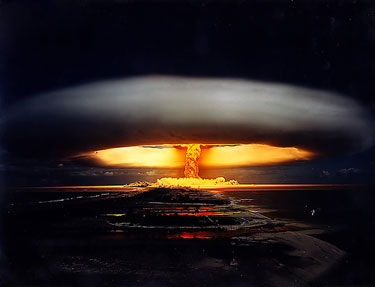
JERUSALEM – The latest round of negotiations between the West and Iran, designed to force the latter to abandon its nuclear weapons program, has for now seemingly prevented the IDF from proceeding with what many believe to be its planned preemptive strike against key Iranian nuclear installations.

By Barry Rubin
As the Turkish PM continues to undermine Turkish democracy, throw hundreds of moderates into jail, destroy the nation’s institutions, support Iran, throw hysterical tantrums about how much he hates Israel, promote Islamism in the region, and is fresh from yet another meeting with Hamas leaders, Obama continues to use Erdogan as his guru.
Reuters has reported that President Obama spoke with Turkish PM Erdogan Sunday morning, and told him that Iran still has time to solve the nuclear issue diplomatically, but that the window is closing. President Obama is currently in South Korea for a nuclear security conference in Seoul. He made a symbolic gesture by first visiting the De-Militarized […]

By Orthodox Union and Rabbinical Council of America
The Orthodox Union and the Rabbinical Council of America urge their member synagogues and member rabbis to respond to this time of formidable challenge for Jews around the world with programs of tefilla and divrei hitorerut, prayer and words of inspiration, in a manner appropriate to the severity of the situation.

It would appear to be ironic that when it comes to Iran, so-called "doves" favor a mutually assured destruction policy that threatens the deaths of millions over a preventive policy that targets military nuclear facilities. But it is not at all ironic, since such doves would be against actually carrying out the threat that is central to any credible policy of deterrence. For them, deterrence is a bluff—a hollow threat and the Iranians would see right through it.
By Barry Rubin
True, sanctions are hurting Iran but this regime is hardly delicate and gives every appearance of using negotiations only as a stalling tactic. Anybody who thinks the Iranian regime will crack under sanctions is living in wishful-thinking world. No matter how many chances Obama gives Iran, it’s still going to go full-speed ahead toward obtaining nuclear weapons and matching them up to long-range missiles.

A war between Israel and Iran is not something that may or may not occur in the future. It is in progress now.
The threat and the ominous effects of an air attack against Iran is the pull and tug of sovereignty versus suzerainty. Is Israel an independent nation free of American influence? Does the president of the U.S. have a veto over Israeli military actions? Or is Israel free of outside influences, a state enjoined by what it believes to be its self interest?

Russian diplomat: 'The invasion will happen before year’s end. The Israelis are in effect blackmailing Obama. They’ve put him in this interesting position - either he supports the war or loses the support of the Jewish lobby.'
Former US secretary of state Henry Kissinger said on Sunday that the US should premise its policy on Iran on the assumption that it is actively seeking to produce nuclear weapons. "I am very uneasy with the so-called intelligence report that say we don't know whether they are actually working on nuclear weapons," Kissinger said […]
If you were looking for clues as to how Iran could stand up to global pressure over its nuclear program, perhaps this bit of news serves as an explanation: the semi-official Mehr news agency reports that Tehran and New Delhi have announced that they are planning to hit $25 billion in annual bilateral trade over […]
Defense Secretary Leon Panetta told the National Journal on Thursday: "If they (Israel) decided to do it, there's no question that it would have an impact, but I think it's also clear that if the United States did it, we would have a hell of a bigger impact." President Obama and US officials have been […]
By Rafi Harkham
Anonymous diplomatic and intelligence sources tell Israeli paper that the Obama administration would supply Israel with weapons that would extend its time-line for military action – like advanced GBU-28 bunker-busting bombs and long-range refueling aircraft, so that Israel could wait till after the 2012 presidential election to launch a strike.
Reuters reports that French Foreign Minister Alain Juppe voiced skepticism on Wednesday that resumed talks between the six world powers and Iran would succeed. He said Tehran was not sincerely willing to negotiate about the future of its nuclear program. "I am a little skeptical ... I think Iran continues to be two-faced," Juppe said […]

If the reports are accurate, North Korea is playing a direct role in helping Tehran create the infrastructure to assemble nuclear warheads that can be mounted on missiles aimed at Israel, American military bases in the Persian Gulf and pro-Western oil sheikhdoms in the Middle East.
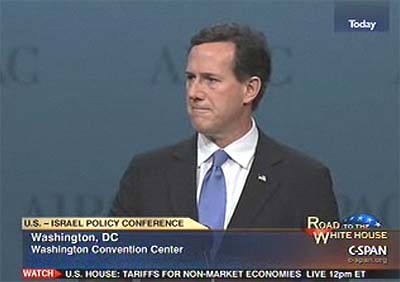
At a speech before the American Israel Public Affairs Committee conference, coinciding with the Super Tuesday primaries, Republican presidential candidate Rick Santorum accused President Barack Obama of appeasement of Iran and urged an ultimatum demanding that it put a stop to its nuclear production immediately, or the US will "tear down" its plants. Mitt Romney, Rick Santorum and Newt Gingrich took a break from their race for votes in the high-stakes primaries to speak to the pro-Israel lobby.

By Barry Rubin
Whether he realizes it or not, President Obama changed history with his AIPAC speech. What he did is make a war between Israel and Iran almost inevitable - let’s say more than 90 percent probable - most likely some time in late 2013, 2014, or 2015.

Berlin-based researcher Benjamin Weinthal argues that Israel is militarily capable today of launching a successful attack on Iran's nuclear facilities. It would require successive strikes, using GBU-28 bunker busters to knock out Iran's entire nuclear program. Those devastating bombs were delivered to Israel by President Obama, who made good on a promise made by President Bush.
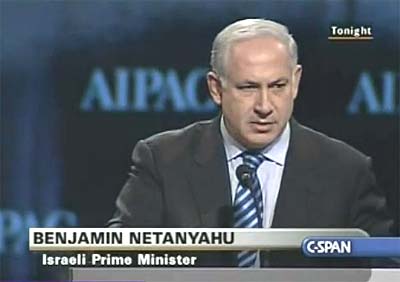
A transcript of Prime Minister Benjamin Netanyahu's speech before the AIPAC Policy Conference Monday.
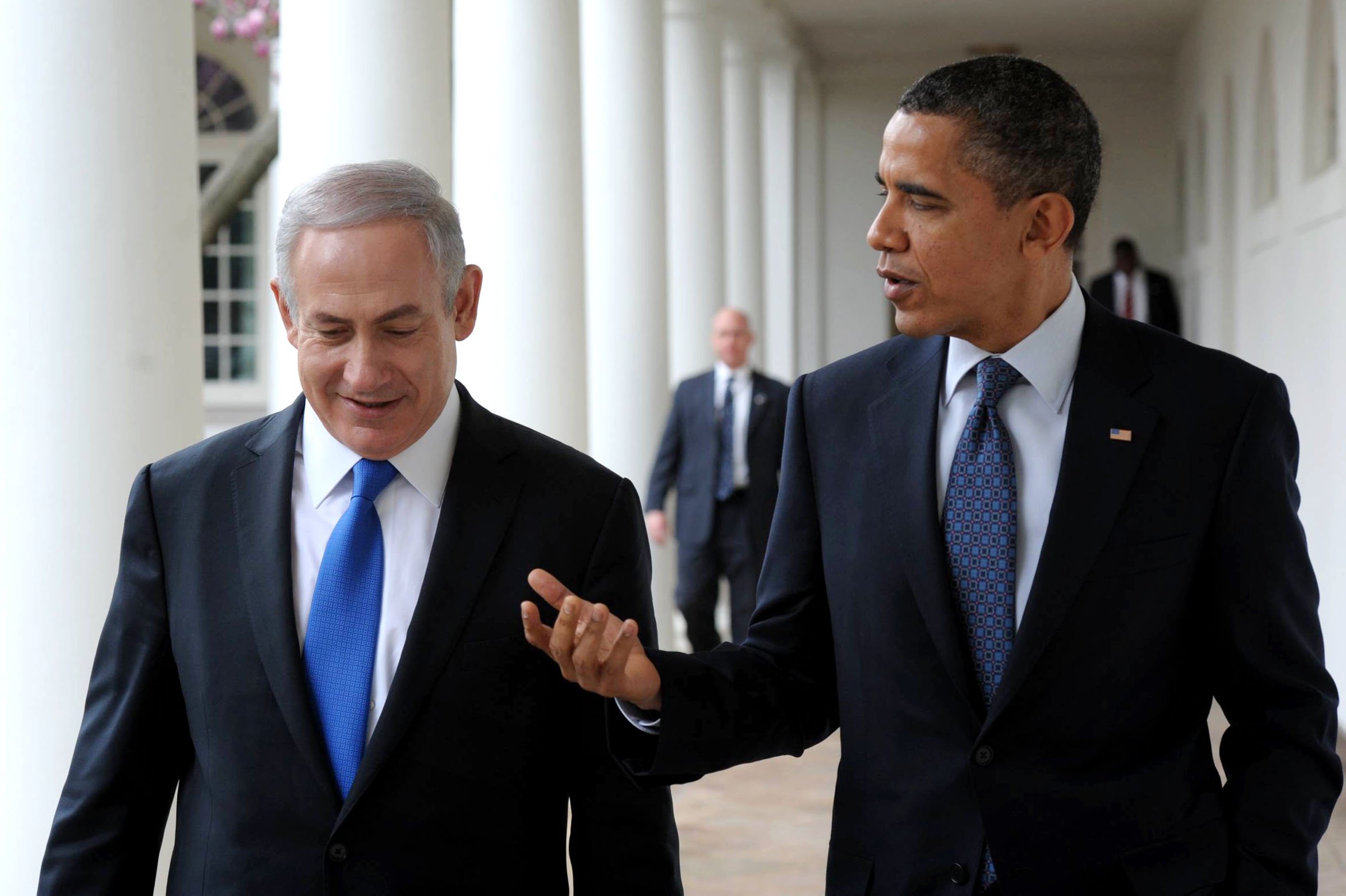
Canada.com reports that Israeli Prime Minister Benjamin Netanyahu said on Sunday that he "appreciated" President Barack Obama's statements on Iran and was looking forward to discussing them when he arrives in Washington Monday. “I very much appreciated that President Obama reiterated his position that Iran must not be allowed to develop nuclear weapons and that […]

By Rafi Harkham
President Peres said "there is NO space between" Israel and the US, and insisted that Obama's "commitment to Israel is deep and profound." Regarding peace with the Palestinians, he said "the principle of the 'The Two State solution' was "a paramount Israeli interest."

Occupy AIPAC is a weekend long series of events to coincide with the American Israel Public Affairs Committee's annual Policy Conference, going through March 6. The Occupy AIPAC website says the group is gathering in Washington DC for a policy-style summit on the issues of Iran, the Arab Uprising and Palestine and "the affects of AIPAC in determining US foreign policy around those topics."

US President Barack Obama's sentiments notwithstanding, nuclear arms are not per se destabilizing or "warmongering." They are not necessarily anti-peace. Rather, in certain identifiably volatile circumstances, nuclear weapons can actually be indispensable to the avoidance of catastrophic war.

I dare not remain silent. I dare not ignore the wake-up calls and the catastrophe they portend. So I ask you to read my ensuing columns on the subject with open minds and receptive hearts. I will limit myself to the wake-up calls we have witnessed over the past couple of years, though they began considerably earlier.
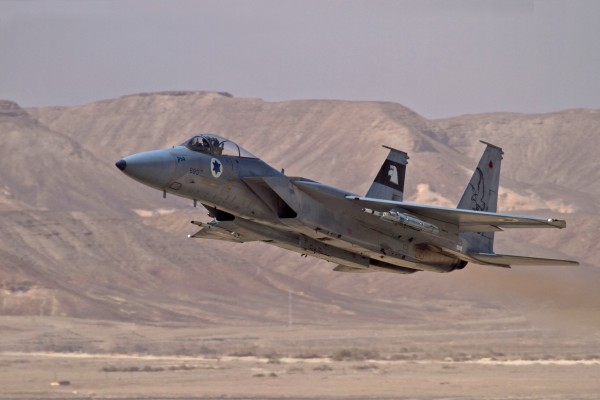
Refraining from preemption would gravely destabilize the Mid-East and beyond. The only effective way to prevent Iran’s nuclearization and its devastating cost is to preempt!

As atomic energy watchdogs reported being denied access to critical Iranian nuclear facilities, Israeli Foreign Minister Avigdor Lieberman told reporters that Israel alone would make the decisions necessary for the security of its citizens.

It seems like only yesterday that the Obama administration missed no opportunity to declare its solidarity with Israel regarding the threat of a nuclear Iran.
According to news agencies, after two days of talks on Iran’s nuclear program, UN nuclear experts have left Tehran without reaching a deal, adding to growing tensions after an Iranian general warned of a pre-emptive strike against any nation that threatens Iran. The International Atomic Energy Agency also said that Iran had barred its inspectors […]
The deputy chief of Iran's armed forces said that Iran would take pre-emptive action against its enemies if it felt its national interests were threatened, in the latest round of sabre-rattling over its nuclear program. "Our strategy now is that if we feel our enemies want to endanger Iran's national interests, and want to decide […]
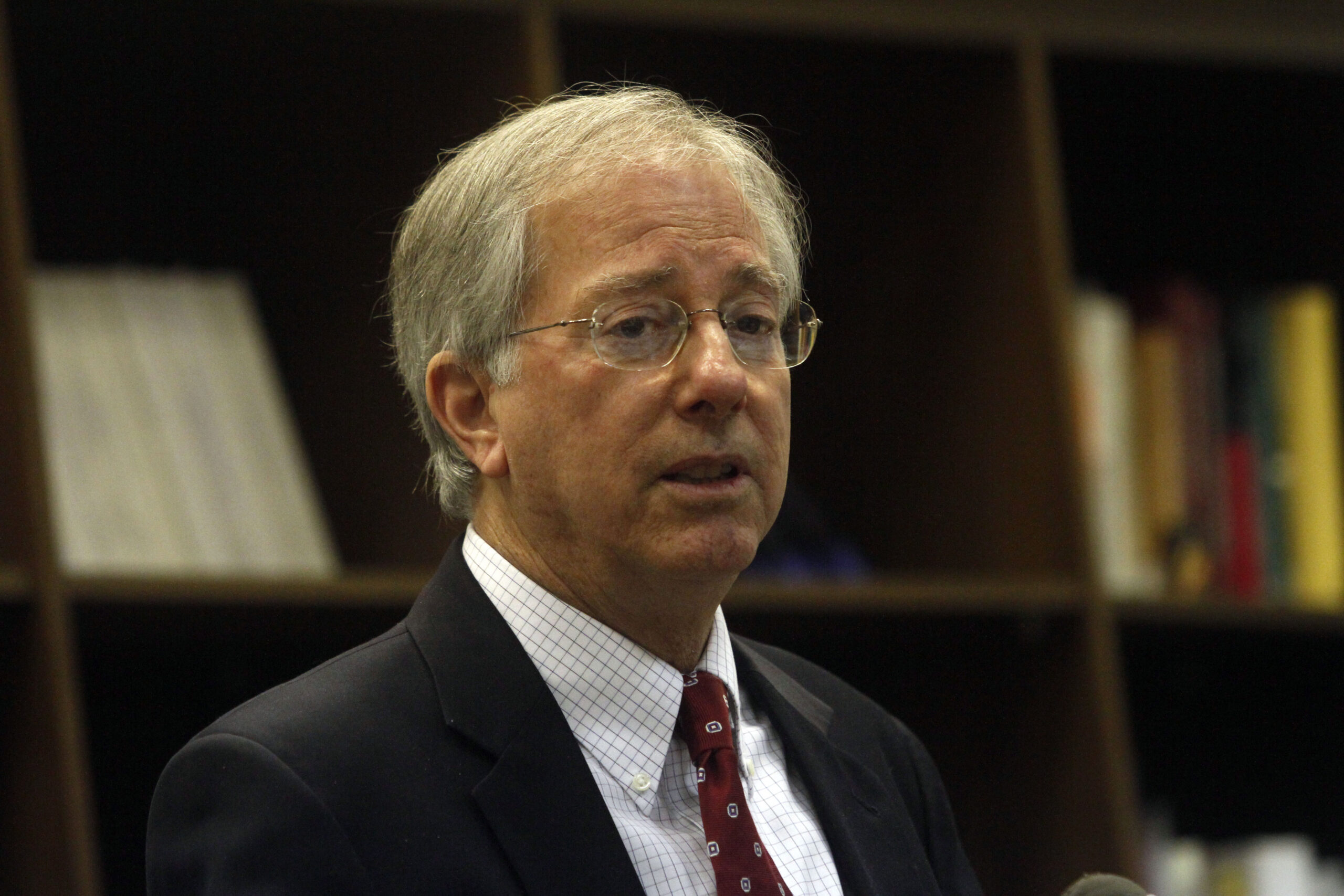
Dennis Ross, former State Department advisor, NSC official, and special assistant to President Obama, is the latest voice in the Obama administration’s campaign to convince an already skeptical public that Iran should not be attacked – by either the US or Israel. Their obsession with diplomacy plays right into Iran's hands, as the Mullahs stretch out “negotiations” while crossing every one of the Obama administration’s "red lines".
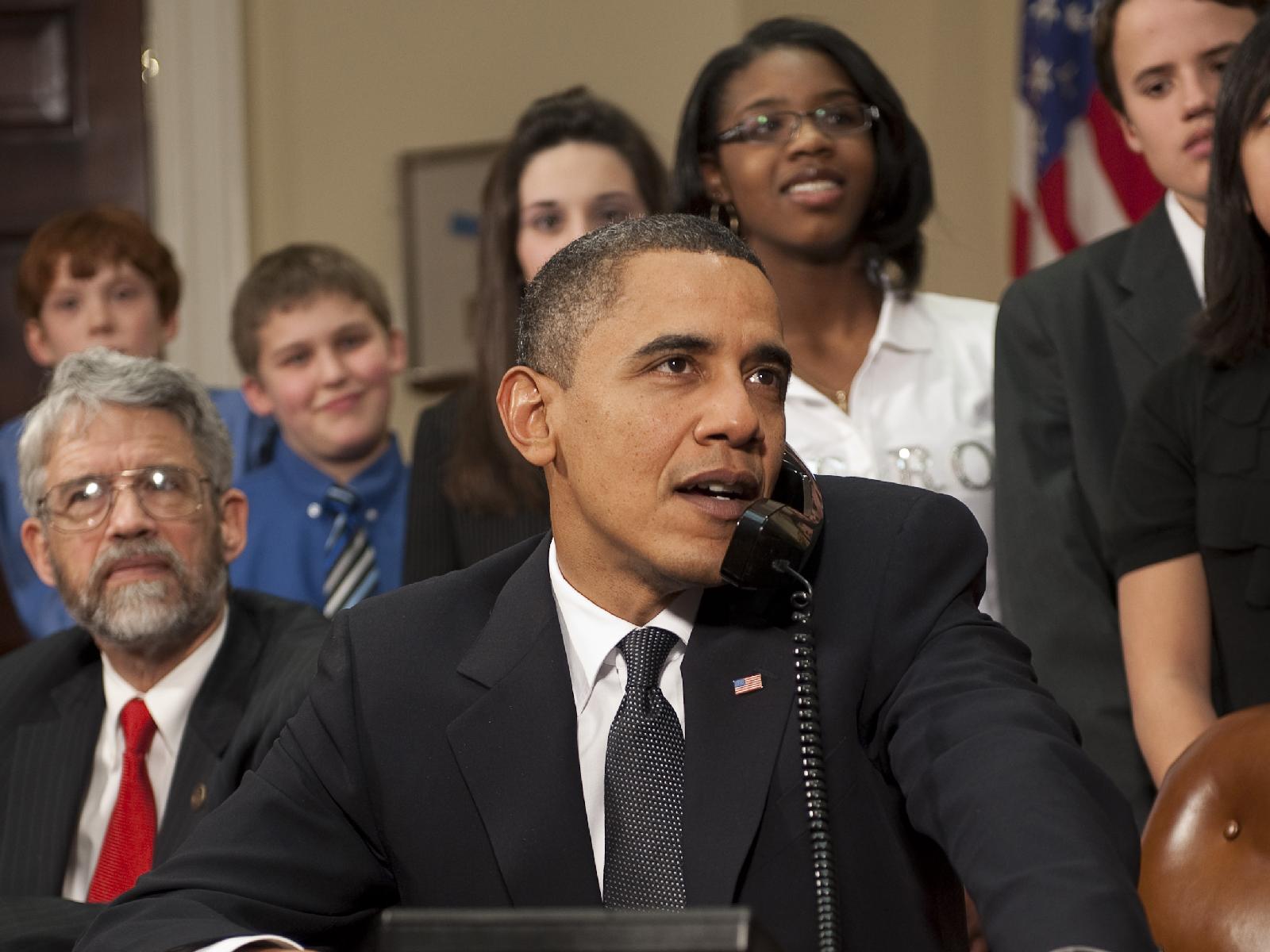
Obama plays the delaying game while giving a false impression to his gullible supporters – especially liberal American Jews – that he is supposedly doing everything to stop Iran short of military attack.
The two apparently coordinated attacks on Monday against Israeli diplomatic personnel present Israel with a significant challenge of how to respond, aside from an obvious concern for the safety of its citizens abroad.
According to Reuters, based on European and U.S. officials and private experts, Iranian engineers have succeeded in neutralizing and purging the computer virus known as Stuxnet from their country's nuclear machinery. In 2009, the malicious code penetrated equipment controlling centrifuges Iran is using to enrich uranium, dealing a significant setback to Iran's nuclear weapons work. […]
Newsweek magazine quoted Pentagon officials this week saying the US will “look the other way” regarding an impending Israeli airstrike on Iranian nuclear facilities and the assassination of Iranian nuclear scientists. This is despite Washington’s interest in preventing warfare in the region, according to the report. The article alleges that Mossad Director Tamir Pardo's was […]
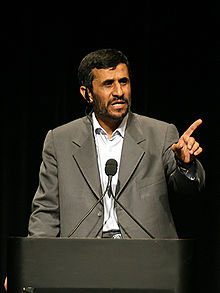
By Ron Kampeas
WASHINGTON – When America’s top intelligence official said that Iran’s regime is considering attacks on U.S. soil, he cited a single incident and qualified the assessment with a “probably.”
Rasmussen Reports also found that 83% believe it is at least somewhat likely Iran will develop a nuclear weapon in the near future.
Comments were made last month prior to Eshel's appointment, and so offer a candid look into the new IAF chief's strategic thinking.
Obama describes the cooperation between the US and Israel as unprecedented
Eshel, head of strategic planning for the IDF, succeeds Maj.-Gen. Ido Nehushtan.
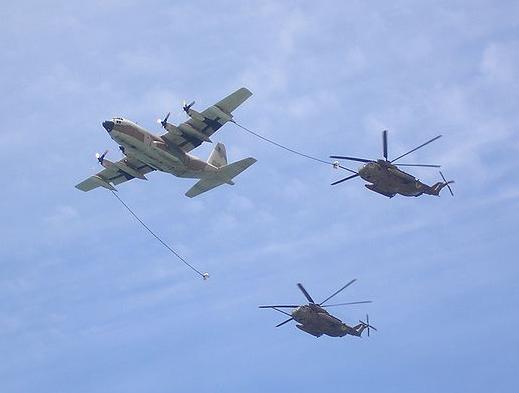
News of an increased threat on Jewish and Israeli targets across North America comes at the same time as predictions of an imminent and detailed Israeli attack on Iranian nuclear facilities arise.
A team of UN Nuclear experts will return to Iran for the talks on February 21.
Maj.-Gen. Aviv Kochavi: "When Khamenei gives the order to produce the first nuclear weapon – it will be done, we believe, within one year."
A discussion about the cost of a pre-emptive strike on Iran's nuclear facilities that reflects skepticism and acquiesces to a nuclear-armed Iran ignores precedents, plays into Iran's hands, and threatens Israel's existence.
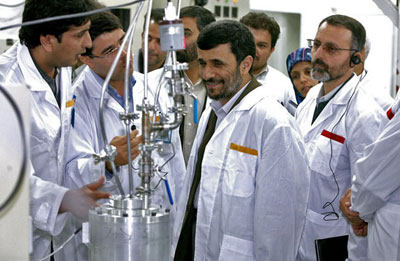
By Ron Kampeas
WASHINGTON – Israel, the United States and Iran have all gone deep into mixed-signals territory.
Comments come in joint press conference with Israeli President Shimon Peres.
US Defense Secretary makes statements on '60 Minutes'.
IAEA is expected to visit the underground enrichment site near the city of Qom, in which Iran recently said it had begun uranium enrichment work.
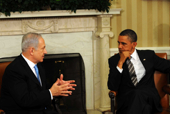
Roger Cohen’s New York Times column was the latest in the Obama camp’s efforts to pressure Binyamin Netanyahu to risk Israel’s being nuked by a nuclear Iran rather than cause any ripples in President Obama campaign for re-election to a second term.
 June 26, 2026