September 11, 2026
 Categories: Features
The Bitachon Blueprint (Part XLIX)


The 60-Second Reset—How to Create Calm on Demand
Calm is not an emotion. It's a skill. And like any skill, calm can be trained, strengthened, and summoned on demand—not when life becomes peaceful, but precisely when conditions are pressuring you most.Fortunately, the human nervous system has a built-in switch. When used properly, it lowers stress, sharpens clarity, and quiets fear within seconds. This is the 60-Second Reset—a three-tier technique that leverages the latest neuroscience in breathwork, physical grounding, and cognitive control, combined with Torah's timeless understanding of presence and inner awareness.
Calm Is Not a Mood
Your body has two primary operating modes: Sympathetic (stress mode), which produces fight, flight, tension, reactivity, and worry; and Parasympathetic (calm mode), which produces clarity, composure, focus, and regulated breathing. You don't “feel calm.” You shift into calm. The problem: stress mode activates automatically, but calm mode almost never does. This is why the ability to activate calm internally is one of the most critical emotional skills you can develop.The research is clear: deliberate breathing patterns can shift the autonomic state within 30-90 seconds by directly modulating vagal tone—the primary regulator of the parasympathetic nervous system.
The 60-Second Reset: Three Components
The reset has three parts: breath, body, and mind. Each interrupts a different part of the stress response. Used together, they flip the entire system from stress to calm.PART 1: 20 Seconds of Breath—The 2-4 Pattern: Breathing is the remote control of the nervous system. A long exhale signals safety. A short inhale signals alertness. So, we use the 2-4 pattern: Inhale gently for 2 seconds, exhale slowly for 4 seconds. Repeat this five times (approximately 20 seconds). A longer exhale activates the vagus nerve, immediately shifting the body toward parasympathetic calm. This lowers heart rate, slows racing thoughts, and tells the brain: We are not in danger. In fact, studies show that extended exhalation patterns reduce anxiety markers by 35% in under 30 seconds.
PART 2: 20 Seconds of Body—Grounding and Posture Reset. Stress pulls the body upward: shoulders rise, chest tightens, breath shortens, jaw locks. Calm pulls the body downward: shoulders drop, feet root, breath deepens. During the next 20 seconds: Unclench your jaw, lower your shoulders deliberately, straighten your spine, press your feet firmly into the floor, and spread your fingers slightly. These tiny adjustments send a massive signal to the brain: “I am anchored.” This interrupts stress physiology at the root.
PART 3: 20 Seconds of Mind—The Perspective Shift. This completes the reset. Stress hijacks the mind by pulling it into the future: “What if this goes wrong?” “What if I can't handle this?” “What if something bad happens?” Calm returns the mind to the present: “What is happening right now?” During the final 20 seconds, say one sentence—softly, internally, slowly: “In this moment, I am safe” or “Hashem is here in this moment” or “This is a feeling, not a fact.” Pick whichever resonates most. This short verbal anchor collapses catastrophic thinking and brings the mind back into contact with reality—not imagination.
Why 60 Seconds Is Enough
I practice meditation and recommend it highly, but this 60-Second Reset doesn't require meditation experience, a quiet room, or perfect conditions. When breath slows, body anchors, and mind reframes, the nervous system must shift. It has no choice. You're sending three biological messages: "Stand down," "We're safe," and "I'm in control." The brain listens. People who practice the 60-Second Reset daily find baseline anxiety decreases, stress tolerance increases, and emotional intensity becomes easier to manage. They still feel stress—but it no longer owns them.
When to Use the Reset
Anytime your system starts climbing: before a difficult conversation, after a triggering moment, when you wake up anxious, when you feel overwhelmed, when panic starts rising, before reacting emotionally, when thoughts start racing, when heart rate spikes, or when patience drops. This technique is your emergency brake. But here's the secret: It's even more powerful when used before you're overwhelmed. Use it 2-3 times daily—even when you feel fine—and your nervous system trains to respond faster when you actually need it.
Integrated Practice
Make the 60-Second Reset part of your daily rhythm: Morning (upon waking, before checking your phone—establishes calm baseline), Midday (before lunch or during natural break—prevents stress accumulation), Evening (before sleep—clears the day's tension), and As-needed (whenever you notice early stress signals). The more you practice when calm, the more effective it becomes when stressed.
A Word of Gratitude
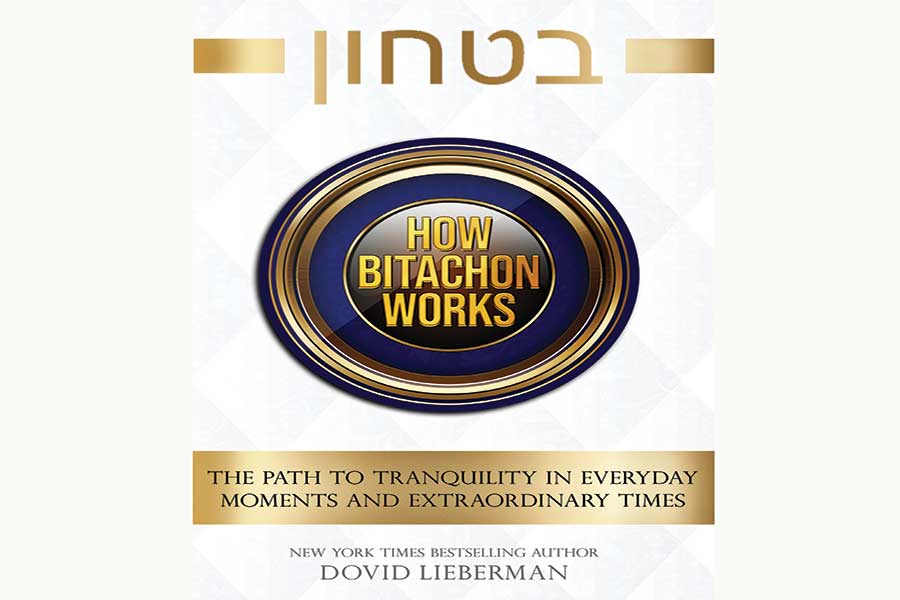
Over these past months, it has been my privilege to share these insights on bitachon through the pages of The Jewish Press. I am deeply grateful to the editors and staff for providing this platform.For those who wish to explore further—not only the psychology and philosophy but also the teachings of Chazal on hashgacha pratis and the practical application of these concepts—the complete work, How Bitachon Works (Feldheim Publishers), is available on Amazon and at Jewish bookstores everywhere.
Whether through these columns or the book itself, my hope is that these teachings serve as a guide toward greater menuchas hanefesh, resilience, and an ever-deepening trust in Hashem’s constant love and Providence.
B'vracha v'hatzlacha to all of you.
Dovid Lieberman