 October 23, 2026
 The Courage of the Quiet Seder
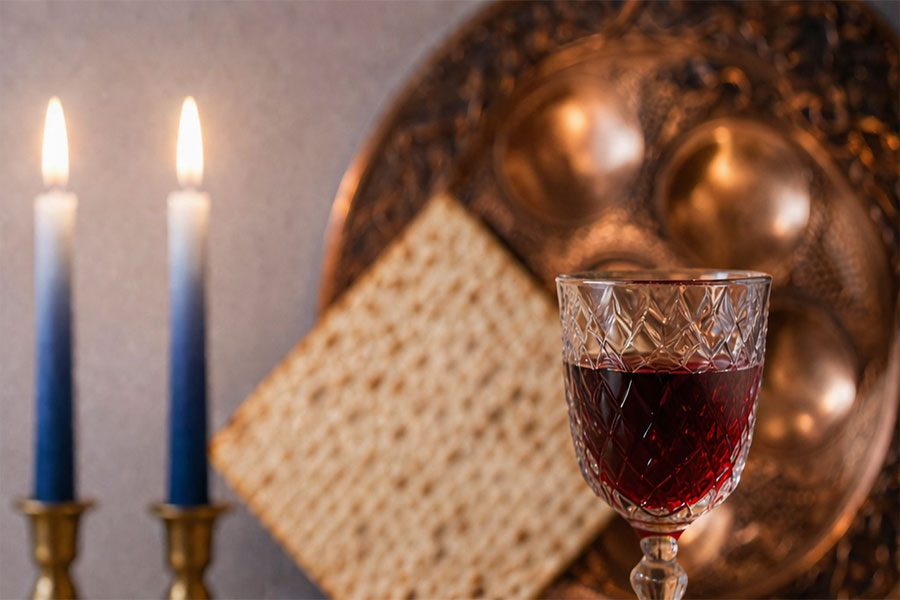


We speak about the Seder as if its magic comes from the children. The high-pitched Ma Nishtana, the crumpled afikoman clues, the wide-eyed wonder – these have become the cultural symbols of the night. We plan for them, prepare for them, and measure the “success” of the evening by how engaged they were and how late they stayed awake. In the communal imagination, Pesach is a holiday built around the next generation.
But the Torah tells a different story.
The Torah places the entire weight of the night on the adult. The mitzvos of the Seder are not directed at children; they are directed at the one who must speak. The one who must remember. The one who must imagine themselves into freedom. The one who must create the atmosphere, hold the narrative, and carry the emotional temperature of the table. The one who must tell the story even when there are no children present. Even when the house is quiet. Even when the table is small. Even when the only person listening is themselves.
And that truth matters, because there are many Jews – more than we ever acknowledge – whose Sedarim do not look like the glossy Pesach supplements. There are couples still waiting. Empty nesters adjusting to a new quiet. Single adults. Widowed adults. Divorced adults. Adults whose children are elsewhere, or not speaking, or not coming home this year. Adults who host others but have no children of their own. Adults who simply have a quieter table this time around.
We rarely speak to them.
But the Torah does. The Torah imagines a Seder with one plate, one cup, one voice. And it calls that Seder complete.
A person sitting alone must still ask the Four Questions. A person with no children must still tell the story. A person with no audience must still narrate themselves into freedom.
This is not a diminished version of the night. This is the night. Because the Seder is not a performance. It is an act of identity.
The Holiness of the Small Table
What makes the adult’s role so striking is how invisible it is. We talk about the children’s questions, but not the adult who must answer them even when the answers feel heavy. We talk about the excitement of the night, but not the adult who must generate that excitement after weeks of preparation and a year of living. We talk about the symbolism of the matzah, but not the adult who breaks it with hands that have known their own fractures. The Haggadah assumes the adult will bring the magic, and we rarely pause to acknowledge what that actually asks of a person. Because the truth is that adults do not come to the Seder as blank slates. They come carrying the year. They come carrying whatever Egypt they have been walking through quietly. They come carrying the private disappointments that do not make it into divrei Torah, the hopes that feel too tender to name, the questions that do not have neat answers. And yet the night asks them to speak in the language of redemption – even when they are not sure where, exactly, the redemption has touched their lives this year. It asks them to hold a story that is larger than their own, and to trust that they still belong inside it. There is something profoundly adult about that kind of faith. Not the faith of certainty, but the faith of continuity. The faith of someone who shows up because showing up is what we do. The faith of someone who tells the story because the story is ours, even when it feels distant. The faith of someone who understands that freedom is not always a feeling. Sometimes it is a discipline. Sometimes it is the act of sitting at a table and saying the words again, because the words have carried us further than our emotions ever could. And this is where the Torah’s insistence on the adult’s voice becomes so moving. The Mishna’s image of a person asking themselves the Four Questions is not a technical halachic scenario. It is a portrait of spiritual resilience. It is the Torah saying: Even if no one else is there to draw the questions out of you, you still matter enough to ask. Even if no one else is there to hear your answers, your answers still matter. Even if the table is quiet, the story is still yours to tell. There is a kind of strength in that quiet that we rarely honor. We celebrate the loud Sedarim, the crowded ones, the ones with songs that echo down the hallway. But there is a different kind of holiness in the Seder that happens in a room where the only sound is the turning of a page. It is the holiness of a person who refuses to let the story slip away from them. The holiness of a person who understands that the Seder is not validated by noise, but by presence. The holiness of a person who knows that the story of Yetziyas Mitzrayim is not a performance for children, but a covenant with G-d – and covenants are kept in quiet rooms just as surely as in crowded ones. And perhaps this is the part of the Seder we need to reclaim: the dignity of the adult who keeps the story alive. The adult who does not wait for an audience to make the night meaningful. The adult who does not measure the Seder by how many people are at the table, but by the integrity with which they show up to it. The adult who understands that the Haggadah was written for them – for their voice, their questions, their memories, their longing, their hope.The One Who Must Speak
There is also a quiet honesty in admitting that adults sometimes arrive at the Seder feeling more like the “simple child” than the wise one. Not because they lack understanding, but because life has a way of stripping things down to their essentials. There are years when the questions feel heavier than the answers. Years when the story feels farther away. Years when the words come out of a tired mouth, not an inspired one. And yet the Haggadah does not ask for inspiration. It asks for presence. It asks for voice. It asks for the adult to show up as they are and speak the story anyway. That is why the Seder is not built on emotion. It is built on action. We eat, we drink, we recline, we point, we lift, we break, we hide, we reveal. The night is choreographed so that even when the heart is quiet, the hands can still move. Even when the mind is distracted, the body can still participate. Even when the soul feels far away, the story can still be told. The Seder trusts the adult to keep going, even when the feeling is not there. It trusts that the doing will carry the believing, not the other way around. And perhaps that is the deepest kindness of the night. The Torah does not ask the adult to feel free. It asks them to act as if they are. It asks them to lean into a posture of freedom even when their inner world is still tangled. It asks them to speak in the language of redemption even when they are still waiting for their own. It asks them to sit at a table that may not look the way they once imagined and still say, “This is the story of my people, and I am part of it.” There is a steadiness in that kind of faith. A steadiness that does not depend on circumstances. A steadiness that does not require a perfect year or a perfect family or a perfect table. A steadiness that comes from knowing that the Seder is not a reflection of our lives; it is a reminder of something larger than our lives. It is a reminder that we come from people who learned to walk toward freedom long before they felt it. People who learned to trust a future they could not yet see. People who learned to tell the story before they fully understood it. And that is why the adult’s voice matters so much. Because the adult is the one who knows what it means to live in the in-between. The adult is the one who knows what it means to hold joy and disappointment in the same breath. The adult is the one who knows what it means to carry responsibility, to carry memory, to carry hope. The adult is the one who knows what it means to keep going. Children bring wonder, but adults bring endurance. Children bring questions, but adults bring the willingness to answer them even when the answers are complicated. Children bring excitement, but adults bring commitment. The Seder needs both. But it is built on the adults. And when we say that the adult “brings the magic,” we do not mean the Pinterest‑ready centerpieces or the creative afikoman hunts. We mean the deeper magic: the ability to sit at a table – whatever that table looks like – and choose to tell a story of freedom. The ability to say, “This is who we are,” even when life has been unkind. The ability to say, “We were taken out,” even when they themselves feel stuck. The ability to say, “We are part of something,” even when they feel alone. That is the magic. That is the courage. That is the adult’s gift to the night. And when the house is quiet, that courage becomes even more visible. There is no noise to hide behind, no chaos to fill the space, no children to absorb the attention. There is only the adult and the Haggadah and the long, unbroken chain of Jews who have sat at tables of every shape and size and told the same story. There is something almost ancient in that kind of Seder. Something stripped down and essential. Something that feels closer to the original night, when a small group of people sat in their homes, doors closed, waiting for dawn. A quiet Seder is not a lesser Seder. It is a different kind of intimacy. A different kind of honesty. A different kind of strength. And perhaps this is the message we need to say out loud this year: the Seder belongs to every Jew, in every home, in every configuration. It belongs to the bustling tables and the quiet ones. It belongs to the families with many children and the families with none. It belongs to the people who are surrounded and the people who are alone. It belongs to the people who feel free and the people who are still waiting for their own redemption. It belongs to the people whose lives look like the Pesach ads and the people whose lives do not. The Seder belongs to the adults who keep telling the story. And maybe that is the quiet truth the Haggadah has been whispering all along: the Seder was never meant to be measured by noise. It was meant to be measured by presence. By the adult who shows up to the story again, even when the year has been long. By the adult who keeps the chain unbroken, even when their own life feels full of loose ends. By the adult who understands that the story of Yetziyas Mitzrayim is not a children’s tale, but a covenantal inheritance – one that belongs to every Jew, in every home, in every season of life. Because the night is not about who is at the table. It is about who we become at the table. It is about the adult who leans into freedom even when they are still waiting for their own. It is about the adult who chooses to speak the language of redemption even when their heart is still catching up. It is about the adult who understands that telling the story is not a reflection of how life feels, but a declaration of what we believe: that we come from people who walked toward dawn long before they saw the sun. And so the adult sits, and the adult speaks, and the adult tells the story again. Not because the room is full, but because the story is. Not because the table is loud, but because the tradition is. Not because the night looks the way they once imagined, but because the night still holds them inside it. There is a kind of courage in that – a courage that does not announce itself, a courage that does not need applause, a courage that is woven into the fabric of Jewish life. The courage of the adult who keeps the story alive. This year, as we gather around our tables – large or small, loud or quiet, familiar or changed – we might remember that the Seder was entrusted to the adults for a reason. Because adults know what it means to carry a story. Adults know what it means to hold memory and hope in the same breath. Adults know what it means to keep going. Adults know what it means to sit in the in‑between and still choose to speak of freedom. And if your table is full, may it be full of joy. If your table is small, may it be filled with presence. If your table is quiet, may it be filled with dignity. If your table is yours alone, may it be filled with the holiness of a Jew who tells the story because the Torah asked them to. There is no version of the Seder that is less than. There is only the version you live with honesty and heart. The world may tell us that the magic of the Seder comes from the children. But the Torah tells a different story. The magic comes from the adults who keep showing up. The adults who keep telling. The adults who keep believing that freedom is still possible. The adults who understand that the story is theirs, even when the house is quiet. And that is enough. It has always been enough.