 September 18, 2026
 Categories: Headline / Collecting / Arts
The Einstein-Belkin Connection
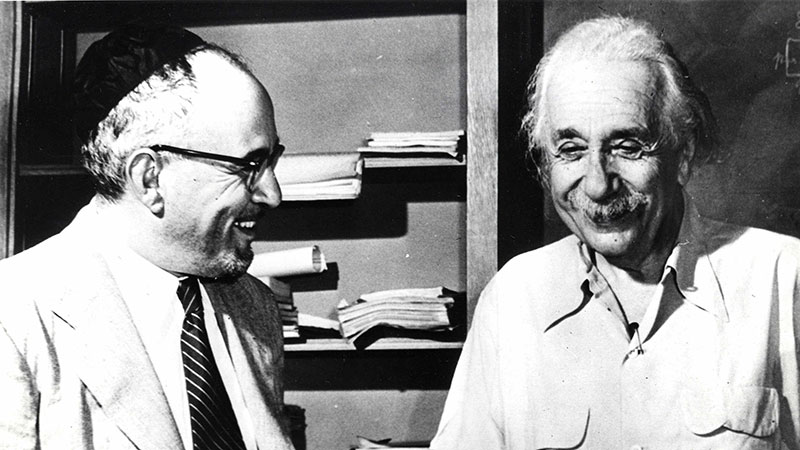


Rabbi Samuel Belkin (1911-1976) was one of the most consequential figures in the history of American Jewish higher education. A rabbinic prodigy trained in the great Lithuanian yeshivot, a classically educated scholar with a doctorate in Greek and Hellenistic studies, and a transformative university president, Belkin reshaped a small Orthodox college into a comprehensive university with national stature. His career illustrates the intellectual, institutional, and communal ambitions of American Orthodoxy in the mid-twentieth century, as well as the tensions inherent in attempting to harmonize uncompromising religious commitment with participation in modern academic life.
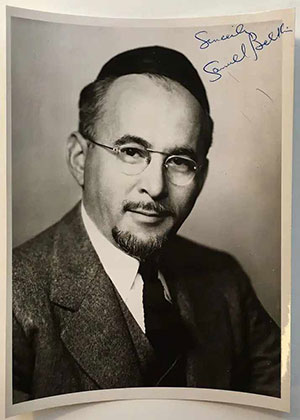
Belkin was born in Svislach, then part of the Russian Empire (today Belarus), into a traditionally observant Jewish family. His father, Solomon Belkin, was killed during the political violence that accompanied the upheavals of the Russian Revolution and its aftermath and this traumatic early experience, coupled with the instability of Jewish life in Eastern Europe during that period, formed the backdrop to his intellectual formation. From a young age, he displayed extraordinary aptitude in Talmudic learning while studying at the yeshivot of Slonim and Mir, two of the most respected centers of advanced rabbinic scholarship in Lithuania and Poland. By his late teens he had received rabbinic ordination; sources consistently report that he was ordained by Rabbi Yisrael Meir Kagan, the revered Chofetz Chaim.
In 1929, at age seventeen, Belkin immigrated to the United States where, unlike many rabbinic émigrés who remained within traditional seminaries, he pursued a dual course of study. He enrolled at Brown University, immersing himself in classical languages and philosophy, and he later studied under the distinguished scholar Harry Austryn Wolfson at Harvard. In 1935, he earned a Ph.D. from Brown with a dissertation on Philo of Alexandria, the Hellenistic Jewish philosopher whose work mediated between Greek thought and Jewish tradition. The dissertation was later expanded and published as Philo and the Oral Law, a work that argued for the interaction between Hellenistic philosophical categories and rabbinic interpretive traditions. This early scholarship already displayed a hallmark of Belkin’s intellectual temperament: a refusal to isolate Jewish learning from the broader currents of Western intellectual history.
Belkin joined the faculty of Yeshiva College in the 1930s, teaching Greek and later Talmud and Hellenistic literature. The institution at that time consisted of Yeshiva College and the Rabbi Isaac Elchanan Theological Seminary (RIETS), founded under the leadership of Rabbi Bernard Revel, who had articulated a program of integrating Torah study with secular education. The institutional framework remained modest in scale, but Belkin quickly emerged as both an academic and administrative force. In 1940, he was appointed dean of RIETS, and, when Revel died in 1943, Belkin, then only thirty-two years old, was elected president of Yeshiva College and RIETS.
Belkin did not “found” Yeshiva University in the literal sense – the institution’s roots predated his presidency by decades – but he was the architect of its transformation into a university in the modern sense. In 1945, two years after assuming the presidency, he secured a charter from the New York State Board of Regents granting university status; the change from Yeshiva College to Yeshiva University marked an institutional commitment to graduate education, professional schools, and research. Belkin envisioned a university that would offer advanced degrees in multiple disciplines while maintaining the primacy of rabbinic scholarship, and he regarded this not as a compromise, but as a fulfillment of Jewish intellectual tradition. In speeches and essays, he frequently invoked the idea that historically Judaism had sanctified knowledge and that engagement with science and philosophy was entirely compatible with religious fidelity.
Under Belkin’s leadership, the university expanded dramatically in physical plant, enrollment, and academic scope. In the early 1940s, the student body numbered fewer than a thousand, but by the 1960s it had grown severalfold; new buildings were constructed on the Washington Heights campus in Manhattan; and the university extended its reach into the Bronx and other boroughs. He proved adept at fundraising, cultivating relationships with philanthropists who believed in the possibility of an Orthodox institution achieving academic distinction without relinquishing religious identity.
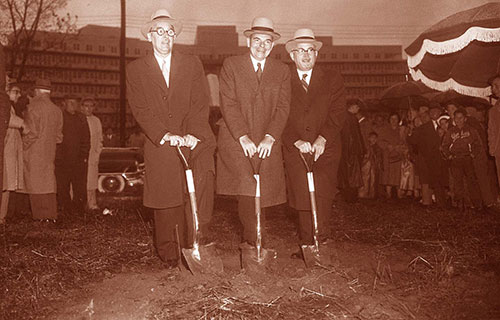
One of Belkin’s most significant achievements was the establishment of professional and graduate schools, including the Albert Einstein College of Medicine, which represented a bold assertion that a university under Jewish auspices could operate a major medical school committed to scientific research and open admissions. He also oversaw the creation and expansion of other academic units, including graduate programs in Jewish studies, education, social work, and psychology. The founding of Stern College for Women in 1954 provided women with rigorous liberal arts and sciences education within an Orthodox environment and marked a significant development in American Orthodox education, reflecting changing expectations about women’s higher education while maintaining adherence to religious norms. Belkin supported this expansion as part of a comprehensive vision of communal development: educated women, he believed, were essential to the vitality of Jewish family and intellectual life.
Throughout his presidency, Belkin articulated a Torah u’Maddah philosophy (the integration of Torah and secular knowledge) and gave it institutional form. He argued that Jewish law and tradition contain ethical and metaphysical insights that should inform engagement with the modern world. In his book In His Image: The Jewish Philosophy of Man as Expressed in Rabbinic Tradition, he developed a conception of Judaism as a “Democratic Theocracy,” by which he meant a system in which divine sovereignty and human dignity coexist. This framework underscores his understanding of university education: that scientific and humanistic inquiry were not threats, but arenas in which the divine image in humanity could be expressed.
Belkin’s leadership style combined intellectual seriousness with administrative decisiveness. He centralized authority in the presidency to an extent some contemporaries found formidable; supporters credited him with clarity of purpose and the ability to navigate complex constituencies, including trustees, rabbinic authorities, faculty, students, and donors. He cultivated a cadre of administrators loyal to his vision and insisted on academic standards comparable to those of leading American universities while, at the same time, maintaining close ties to rabbinic leadership within RIETS, reinforcing the seminary’s status as the spiritual heart of the university.
Criticism of Belkin emerged from several quarters. Within segments of the Orthodox community, some viewed the university’s expansion into secular and professional domains with suspicion and they feared that engagement with broader academic culture might dilute traditional observance or theological boundaries. A particularly notable controversy occurred in 1966, when an Orthodox rabbinical group criticized Belkin for attending a dinner of the Synagogue Council of America, an umbrella organization that included leaders from Conservative and Reform movements. Critics argued that participation in such a body implied theological recognition of non-Orthodox denominations, but he defended his involvement as a matter of communal responsibility and dialogue; nonetheless, the episode exposed fissures within Orthodoxy regarding cooperation across denominational lines, a dispute which continues to this day among Orthodox leaders.
Financial management posed another challenge. Private universities in the postwar period faced rising costs and increasing competition for faculty and research funding, and the rapid expansion of facilities and programs required sustained fundraising and careful fiscal oversight. Although Belkin was a highly effective fundraiser, periodic budgetary strains occurred and, near the end of his presidency, he publicly acknowledged the pressures facing Yeshiva University. Some critics contended that ambitious growth outpaced secure financial foundations, though supporters countered that the university would have stagnated absent bold expansion.
Belkin’s academic reputation remained strong throughout his administrative career. He was recognized as a scholar of rabbinic literature and Hellenistic Judaism and was active in scholarly societies, and his dual competence, at home in both the beit midrash and in the modern university seminar, lent credibility to his synthesis.
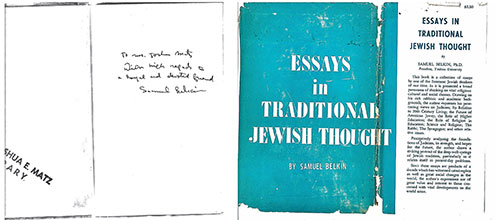
Exhibited here is Belkin’s Essays in Traditional Jewish Thought, which he had inscribed to Professor Joshua E. Matz “with high regards to a loyal and devoted friend.” This important work is best understood as a sustained attempt to articulate the intellectual dignity, coherence, and continuing vitality of classical Judaism in the modern age, without surrendering either its authority or its spiritual depth. Writing as both a Talmudic scholar and a university president, Belkin sought to demonstrate that the traditional categories of rabbinic thought, including halacha, aggadah, ethical teaching, and metaphysical reflection, were not relics of a premodern mentality, but rather a living, internally consistent system capable of addressing modern philosophical and cultural challenges.
At the heart of the work lies Belkin’s conviction that Judaism is neither reducible to abstract theology nor to legal formalism alone, but is instead a unified organism in which law and spirit, intellect and devotion, are inseparably intertwined. He consistently resists the dichotomy, so often imposed by modern interpreters, between “legalistic” rabbinism and “spiritual” prophetic religion. For him, this division is false and distorting; the halachic system itself embodies ethical and theological principles and it is not merely a structure of obligation but a medium through which divine values are realized in concrete human life. Thus, Jewish law is not opposed to morality or spirituality, but constitutes their disciplined expression.
A recurring theme in the essays is the authority and creativity of the rabbinic tradition. Belkin emphasizes that the sages of the Talmud were not passive transmitters of a fixed revelation, but active interpreters who engaged dynamically with the biblical text. He presents their interpretive methods, often caricatured by others as artificial or overly subtle, as principled and intellectually rigorous, grounded in a conception of Torah as a living, unfolding revelation. The Oral Law, in his account, is not an accretion but an essential component of Judaism, without which the Written Law would remain incomplete and inapplicable. In defending this view, he implicitly argues against both modern biblical criticism, which tends to fragment the text historically, and against religious reform movements that would diminish the binding character of rabbinic authority.
Belkin is also deeply concerned with the ethical vision of Judaism. He highlights the moral teachings embedded within rabbinic literature, particularly in aggadic passages that explore themes such as human dignity, social justice, repentance, and divine compassion. These teachings, he argues, reveal a profoundly humane and universalistic dimension within the tradition, one that speaks not only to Jews but to humanity at large. At the same time, he insists that this ethical vision cannot be detached from the covenantal framework of Jewish life because universal values emerge from, and are sustained by, the particular commitments of the Jewish people.
Philosophically, Belkin engages – often implicitly – with the legacy of Maimonides and other medieval thinkers, while also responding to modern currents. Like Maimonides, he affirms the compatibility of reason and revelation, but he is less inclined to subordinate the richness of rabbinic tradition to a systematic philosophical framework. Instead, he presents Judaism as a multifaceted intellectual tradition in which legal reasoning, narrative imagination, and theological reflection coexist without being reduced to a single method or doctrine. This pluralism within unity allows Judaism, in his view, to remain intellectually vibrant across changing historical contexts.
Professor Matz served as treasurer of Yeshiva University and as a member of the faculty and administration there for almost fifty years. Sadly, he died in May 1970 shortly before he was to receive an honorary Doctor of Humane Letters degree from Yeshiva at June 18th commencement exercises. After joining Yeshiva as an auditor when the school was on Manhattan's Lower East Side, he pursued dual careers as administrator and teacher before being named bursar in 1943, assistant professor of mathematics and statistics in 1948, associate professor in 1955, professor in 1958, and treasurer in 1961. A native of Kiev, Russia, he was graduated from the city's University of St. Vlodemar in 1919 and he was awarded a Master of Arts degree by Columbia University in 1939.
In 1975, after more than three decades as president, Belkin resigned due to illness and was appointed chancellor, a position created in recognition of his long service. By the time of his passing in 1976 at age sixty-four, Yeshiva University had evolved into a multifaceted institution encompassing undergraduate colleges, a rabbinical seminary, graduate schools, and a major medical school, and its physical campuses and academic programs bore the imprint of his strategic vision, while tributes emphasized his transformative impact.
Belkin stands as a figure emblematic of mid-twentieth-century American Orthodoxy’s aspirations: intellectually confident, institutionally ambitious, and determined to prove that fidelity to Jewish law could coexist with scholarly excellence. His biography traces a journey from the yeshivot of Eastern Europe to the presidency of a major American university, and his accomplishments at Yeshiva University constitute the central achievements of his life. Whether viewed through the lens of communal leadership, educational reform, or intellectual history, his role in shaping modern Orthodox higher education endures.
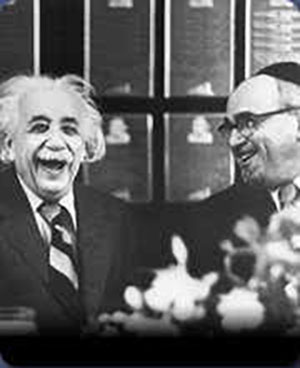
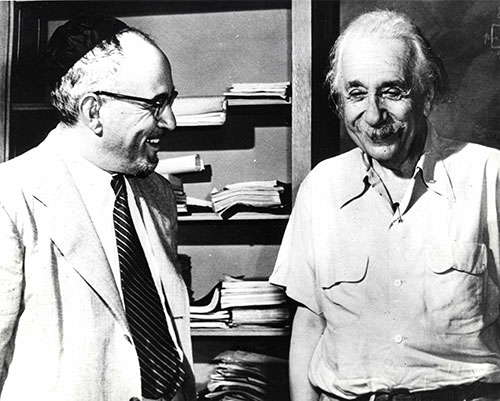
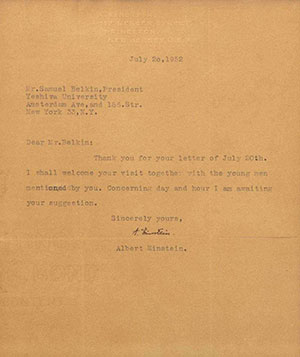
Exhibited here is an incredible rarity, a July 20, 1952 correspondence from Albert Einstein to Belkin, which belongs to a historically charged moment in American Jewish life, in the history of higher education, and in Einstein’s own final years. Though brief in wording – he thanks Belkin for his communication and expresses anticipation of a visit “along with the young men mentioned by you” – it stands at the intersection of institutional ambition, postwar Jewish self-confidence, scientific modernity, and Einstein’s enduring moral authority. To understand it fully requires situating it within the evolution of Yeshiva University in the mid-twentieth century, Belkin’s career and personality, and Einstein’s complex but consistent engagement with Jewish educational and communal projects in America and abroad.
By 1952, Einstein was living in Princeton, New Jersey, as a senior member of the Institute for Advanced Study, where he had resided since 1933 after leaving Nazi Germany. In his American decades, he became far more than a theoretical physicist; he was a public intellectual, a refugee icon, a humanitarian voice, and an internationally recognized representative of Jewish cultural achievement. While his signature carried symbolic weight, and institutions – Jewish and non-Jewish alike – sought his endorsement, he was selective in the causes to which he lent his name. He had strong convictions about education, academic integrity, intellectual freedom, and the moral responsibilities of science. Accordingly, he declined many invitations and was wary of institutional vanity projects. When he chose to support an initiative, he typically did so because he believed it aligned with substantive values.
Yeshiva University in the mid-twentieth century was undergoing a transformation. Belkin’s presidency coincided with a dramatic expansion of American higher education after World War II, as the GI Bill, demographic growth, and increasing Jewish social mobility created new opportunities. At the same time, antisemitic quotas at elite universities, though weakening, had left a deep imprint on communal memory. One of Belkin’s most ambitious initiatives was the creation of a medical school under Jewish auspices that would combine scientific excellence with ethical seriousness and open admissions irrespective of race or creed. The project was not conceived as a sectarian institution but, rather, as a fully accredited, research-oriented medical school grounded in universal principles and animated by a Jewish ethical sensibility. This initiative would eventually become the Albert Einstein College of Medicine.
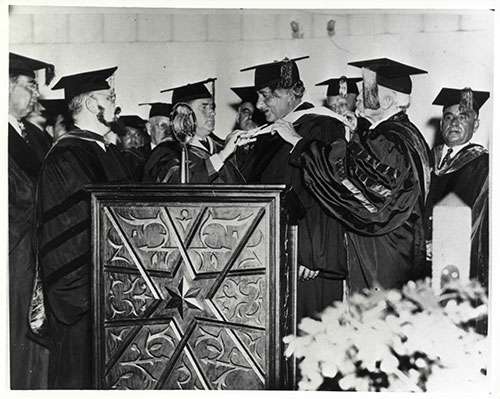
Einstein’s connection to Yeshiva University predates the medical school project. Soon after his arrival in the United States in 1933, he corresponded with Jewish communal leaders and institutions concerned with education and cultural continuity. Mendel Gottesman, a major benefactor of Yeshiva College, sent Einstein a copy of the Jewish Yearbook in 1933, to which Einstein responded warmly, expressing appreciation for the preservation of Jewish intellectual and spiritual life in America. In 1934, Yeshiva College conferred upon Einstein an honorary degree and his acceptance signaled not merely ceremonial courtesy but recognition of the institution’s attempt to harmonize Jewish tradition with modern scholarship. Einstein was not Orthodox in practice, nor was he conventionally religious in a theological sense, but while his conception of “religion” was famously bound up with a sense of cosmic wonder and ethical responsibility rather than dogma, he consistently affirmed the importance of Jewish cultural continuity and admired institutions that fostered serious study.
Throughout the 1930s and 1940s Einstein maintained relationships with Jewish educational and cultural organizations. He supported the Hebrew University of Jerusalem, serving on its board of governors and bequeathing his literary estate to it, and he advocated for Jewish refugees and used his public stature to combat antisemitism. In the American context, he was sensitive to the needs of a community negotiating its place in a pluralistic society and the Yeshiva University project of integrating advanced secular education with fidelity to Jewish law and tradition resonated with his belief that Jewish historical survival had depended on reverence for learning and moral seriousness.
The specific phase of Einstein’s relationship with Belkin that culminated with our July 1952 letter was shaped by the campaign to establish the medical school. Planning intensified around 1950-1951, and Belkin and his colleagues recognized that attaching Einstein’s name to the project would accomplish several important aims simultaneously: it would signal scientific seriousness, attract donors, and communicate a universalistic ethos. The proposal was not merely to seek a letter of support but, eventually, to name the school in Einstein’s honor. Einstein was initially hesitant about such personal commemoration. Reports from university archives indicate that he suggested alternative names, including that of Maimonides, the medieval Jewish philosopher-physician who symbolized the integration of religious learning and medical science. Einstein’s reluctance was characteristic; he was often uncomfortable with personal glorification but he ultimately consented to lend his name, understanding that it would strengthen the institution’s ability to fulfill its mission.
In 1951 Einstein wrote to Belkin expressing support for the proposed medical school emphasizing that such an institution should welcome students of all races and creeds. This statement was not perfunctory; in the early 1950s the United States was still segregated in many regions, and discrimination in professional education persisted. By insisting on inclusivity, Einstein framed the medical school as a contribution to American society as a whole rather than as a narrow communal enclave. The public announcement in 1953 that Yeshiva University would establish the Albert Einstein College of Medicine reflected months of consultation and planning, of which our July 1952 letter forms a part.
The wording of our letter, as described, suggests that Belkin had written to Einstein proposing a visit that would include several young men, and Einstein’s response indicates cordiality and anticipation. The phrase “the young men mentioned by you” is understated but revealing, suggesting that Belkin was not merely arranging a personal courtesy call but he was bringing students or junior colleagues to meet the great scientist. In the culture of the time, such encounters were significant; Einstein, though advanced in age (he was 73 in July 1952), remained a living symbol of intellectual achievement and to bring promising students to Princeton to meet him would serve both inspirational and institutional purposes.
Photographic evidence and contemporaneous accounts confirm that groups of Yeshiva University students, particularly those in scientific fields, did meet Einstein in the early 1950s at the Institute for Advanced Study. In one widely circulated image, a group of young men from Yeshiva University stand with Einstein, who addresses them informally, and recollections associated with these visits attribute to Einstein remarks about the moral dimension of science, that scientific skill must be joined to human understanding. While precise wording varies in secondary sources, the general theme is consistent with Einstein’s documented views: He frequently warned against the divorce of technical expertise from ethical responsibility, particularly in the atomic age.
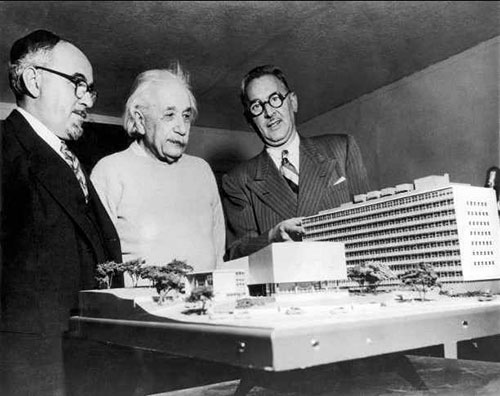
On March 15, 1953, Einstein’s 74th birthday, representatives of Yeshiva University visited him in Princeton to present a model of the proposed medical school building, and news reports from the Jewish Telegraphic Agency and university archives describe the occasion with the formal naming of the medical school after Einstein occurring that same year.
The timing of our July 1952 letter is significant for another reason. In November 1952, only months after the date of the correspondence, Einstein would be offered the presidency of the State of Israel following the death of Chaim Weizmann. Einstein declined, famously citing his lack of experience in political affairs, but the offer itself, however, underscored his stature in Jewish public life. During that same period, American Jewish institutions were navigating their relationship to the new state while also consolidating their own educational infrastructure so that Yeshiva University’s medical school project can be seen as part of a broader assertion of Jewish capability and confidence in the postwar era. Einstein’s engagement with YU must be viewed against this backdrop of global Jewish reorientation.
Einstein’s support for the medical school was consistent with his long-standing advocacy of medical and scientific advancement as vehicles for human betterment. He was deeply troubled by the destructive uses of science, particularly after Hiroshima and Nagasaki, yet he never retreated from the belief that knowledge itself was intrinsically valuable. He believed that education cultivated independence of thought and moral courage, and, in this respect, his interactions with Yeshiva University students carried symbolic weight so that the “young men” mentioned in our letter were not mere visitors but, rather, they represented a generation that would inherit both the promise and the peril of scientific modernity.
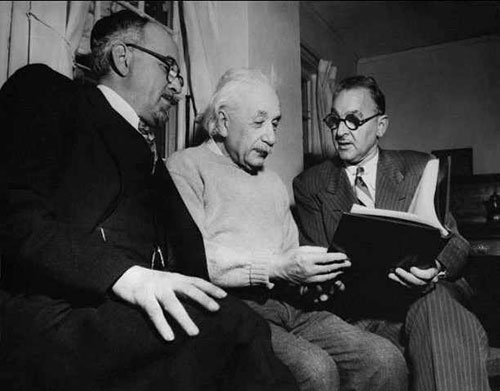
Archival materials at Yeshiva University’s Mendel Gottesman Library include correspondence between Einstein and university officials, photographs of visits, and documentation of the naming process, records that corroborate the continuity of engagement from the 1930s through the early 1950s. They also show that Einstein’s relationship with YU was not limited to the medical school; he received university publications, responded to communications, and maintained cordial ties with its leadership. While he was not involved in governance or curriculum, his symbolic association reinforced YU’s aspiration to be recognized within the broader American academic landscape.
The personal dimension of the Einstein-Belkin relationship emerges in the tone of their letters. Einstein’s surviving correspondence often combines brevity with warmth and, though he was capable of sharp critique, his exchanges with Belkin appear supportive and respectful. Belkin, for his part, approached Einstein with deference and intellectual seriousness.
Einstein visited a fundraiser on March 15, 1953 (the day after his 74th birthday) marking the official naming, his only public appearance in many years tied to the school’s founding. He died on April 18, 1955, some five months before the Einstein College of Medicine opened its doors to its first class (56 students) on September 12, 1955, months before the formal dedication on October 24, 1955, when ceremonies were held on campus followed by a major dinner at the Waldorf‑Astoria hotel in Manhattan that evening.
The Afternoon Campus Dedication Ceremony began at 1:00 p.m. with the arrival of guests at 1:30 p.m. and opening remarks by Dr. Nathaniel L. Goldstein, former New York State Attorney General and chairman of the Board of Overseers of the College, who presided over the ceremonies. After the invocation, addresses were given by Hans Einstein, Albert’s son; New York Governor Averell Harriman, who delivered a principal address, stressing the school’s non‑sectarian mission and aligning it with Einstein’s humanitarian ideals; U.S. Senator Irving Ives, who spoke about the college’s broader significance to American education and medicine; and Mayor Robert Wagner, followed by a Recognition of Founders and Donors, a Musical Tribute at 4:00 p.m., and a campus tour. Other distinguished attendees included delegations from thirty U.S. states and Canada, academic leaders, medical scientists, educational officials, students, and faculty from across the U.S. and abroad, and more than 7,500 guests attended the campus dedication. After closing remarks, the ceremonies moved to the evening reception and dinner at the Waldorf attended by 1,000 invitees, where after the reception and dinner, Dr. Goldstein delivered the keynote address followed by toasts.
Einstein’s broader philosophy of education sheds further light on his willingness to engage. He believed that universities should cultivate independent thinkers rather than merely train specialists and he criticized rote learning and authoritarian pedagogy. In essays such as On Education, he emphasized curiosity and moral development, and YU’s self-description as an institution integrating ethical tradition with intellectual rigor resonated with this outlook.
The cumulative evidence indicates that Belkin regularly brought promising students and associates to meet Einstein and that such visits were part of the choreography of institutional endorsement and mentorship. Einstein’s advanced age did not prevent him from receiving visitors, though his health was declining, and his willingness to meet students from Yeshiva University suggests that he regarded the connection as meaningful.
In the final analysis, our letter is a fragment of a larger narrative. It captures a moment when an aging Nobel laureate, living quietly in Princeton yet still globally revered, corresponded with a dynamic university president shaping the future of American Jewish education. The letter’s reference to a forthcoming visit with young men evokes the transmission of values across generations; anticipates the public events of 1953 that would formally bind Einstein’s name to Yeshiva University’s medical school; and testifies to a relationship rooted in mutual respect and shared commitment to learning.