 October 9, 2026
 The Good That is Hidden (The Three Weeks – Part III)


This week, we will conclude our review of the commentary of the OhevYisrael, the Apter Rebbe – Rav Avraham Yehoshua Heschel (the second) as it bears upon the three weeks of adversity between the 17th of Tamuz and the 9th of Av. Unfortunately, unless the final redemption arrives before then, we will still have to consider Shabbat Chazon and Tisha b’Av next week, and we will approach those from another perspective.
The Ohev Yisrael’s in-depth insights on the Three Weeks specifically are found at the end of his commentary on last week’s parsha, Pinchas. The Rebbe notes the strange conjunction of reading the parsha that includes all of our festive holidays in the middle of this period of national mourning. Furthermore, he explains that the number of festive days during the year totals 21, the same as the number of days in these Three Weeks. (The calculation counts one day each for Shabbat and Rosh Chodesh, and every other Biblical holiday without the second day observed in exile.) His analysis is similar to what we observed in recent weeks, emphasizing the gap between the ideal and the actual in our present state of being.
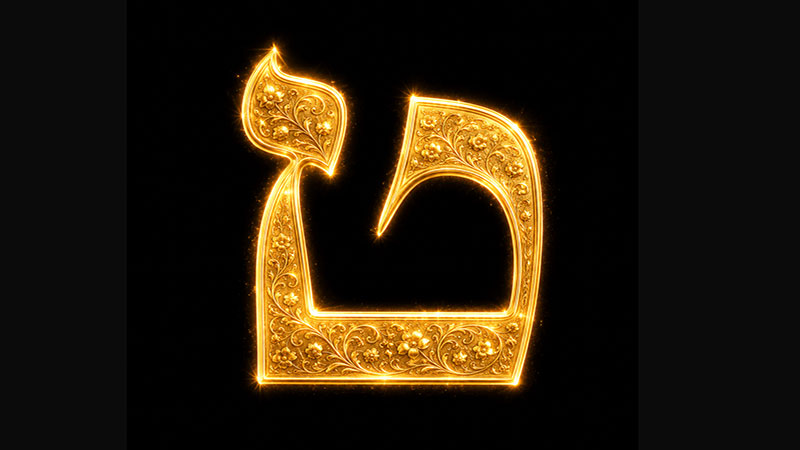
The Ohev Yisrael explains, following our Sages of blessed memory, the well-known teaching regarding Tisha b’Av that the 21 days of present mourning are actually meant to be days of celebration. Indeed, the juxtaposition of these days with the 21 festival days should not be one of mourning and celebration but rather the limited celebration of our time preceding the final redemption, with the unbridled celebration of the future world of rectification. Thus, he explains that the symbol for our present mourning is the Hebrew letter tet, corresponding to the number nine of the 9th of Av. When this letter is written by a scribe, its “head” is bent in upon itself, so that it is concealed within the body of the letter. This signifies the great spiritual joy and elevation that has been preserved for the righteous in the World to Come, but which is hidden from us in our present state. Our suffering in this world is born of concealment, the concealment of the Divine Bounty that emerged from the fall of Adam and from the corruption that necessitated the destruction of the Beit HaMikdash that was built by Shlomo Hamelech.
The Rebbe cites an aggadah detailing the martyrdom of Rabbi Akiva (Menachot 29b) in which the Heavenly Hosts question the apparent injustice of this event and Hashem responds, “This is how I determined it should be” (lit., “It arose thus in my thought”). At first, this doesn’t seem to be a very satisfactory answer – we see a great tzaddik suffering for his dedication to Torah, and Hashem silences His servants simply by saying, “I said so”? But the Rebbe explains that there are a profound truth and insight hidden in these remarks, illuminating the entire plan of Creation, that is, the thought of the Creator.
When Hashem created the universe, He saw fit to make it with Judgment counterbalanced by Mercy, so that the free choice and the efforts of humanity could bring about the final rectification of the material world. In humanity’s final form of perfection, which we are destined to achieve, the Mercy brings us joy and pleasure, but the greatest reward comes from the transfiguration of Judgment so that this attribute, in particular, rebounds to our benefit. In the times of darkness and concealment, only the righteous merit this kind of awareness and its associated reward. Thus, Rabbi Akiva, in enduring unimaginable suffering, was – for the spiritual level he was on – at the same time experiencing unimaginable joy and spiritual transcendence. In rendering his life for the glorification of the Divine Name, he was also forever positioning his spiritual essence in the highest echelons of the true servants of Hashem. He was, so to speak, tasting the future rewards of the World to Come already upon exiting this world.
The misery of the days of adversity, the Three Weeks that have come upon us, memorialize all the suffering that we have had to endure in our long exile – not only since the destruction of the Second Beit HaMikdash but since Adam and Chava failed to live up to the standard that was set for them and for all of us, their progeny. In the future time of redemption, may we live to experience it speedily and, in our lifetimes, all of that misery will be turned to celebration as all the remnant of Israel become tzaddikim and rejoice as one in the thought ofthe Creator who provided both Mercy and Judgment for our edification and our ultimate reward.
This is the secret meaning of the correspondence between the number of days of adversity and the number of days of celebration in every year. In exile, we experience these as times of joy and of sorrow, but in redemption we will know them as celebrations – even more wonderful celebrations – and the head of the tet that is hidden today will be revealed tomorrow as the most joyous holiday of all – the “head” of the holidays.