יום ראשון, ל׳ תשרי תשפ״זSunday, October 11, 2026



Follow Us


Avraham Levitt is a poet and philosopher living in Samaria. He has written extensively on Jewish and Israeli art, music, and spirituality. He is particularly focused on Hebrew philology and the magic of late antiquity. He can be contacted at avraham@thegeula.com.
Read More

The message implicit in the primacy of Rosh Hashanah and of Bereishit is that it is only through the embrace of beginnings – of renewal, of originality – that we can truly embody the G-dly form and consciousness that it is our lot to achieve.
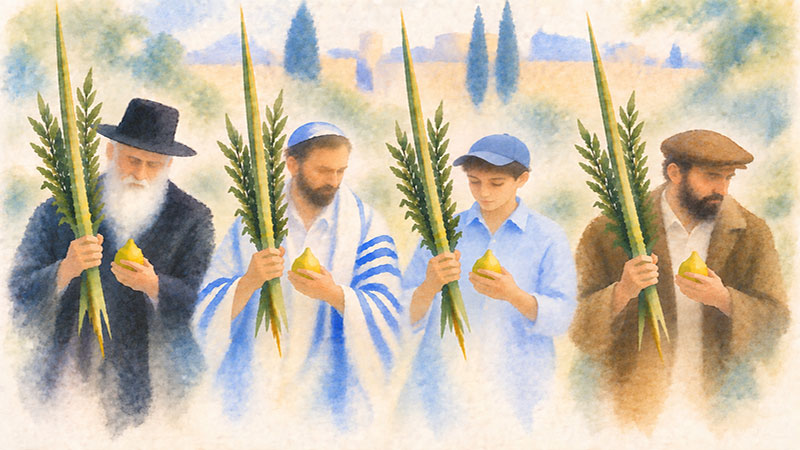
The Shela explained that one’s ability to draw close to Hashem and receive messages from Him is correlated to that person’s refinement of his own character to more closely resemble the Divine.

Rav Moshe Cordovero (RaMaK), in his commentary on the Yom Kippur service, associates the two sets of garments – each comprising four pieces – with the four-letter Divine Name.
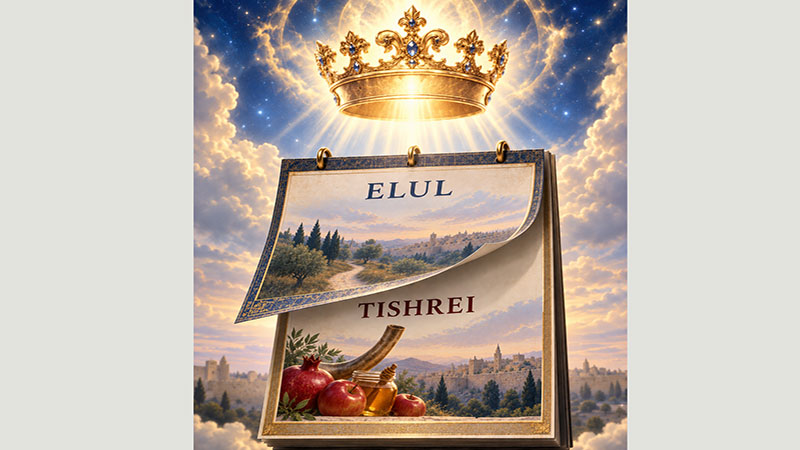
The fundamental premise of Rosh Hashanah derives from the idea that time is only demarcated when a temporal consciousness – that is, we as human beings – becomes aware of it.

When we shift our focus away from the mundane and from the experience of pain or fear that accompanies our own defects and precedes our repentance, we come to know, above all, that everything is a manifestation of this Divine mercy.

The bikkurim ritual is so central to Jewish spirituality, and the Sages were so concerned about it losing its flavor in exile, that they wrote it into the liturgy of the Pesach Seder.

Just as Hashem promised never to destroy the world with another flood, so He promised never again to exile Israel after He has returned them.

Israel never left Hashem or His Torah in spite of all the efforts of the nations to sway us, and we never worshipped foreign gods. Hashem has been leading His flock among the flowers, never wavering in His devotion and only waiting for our return.
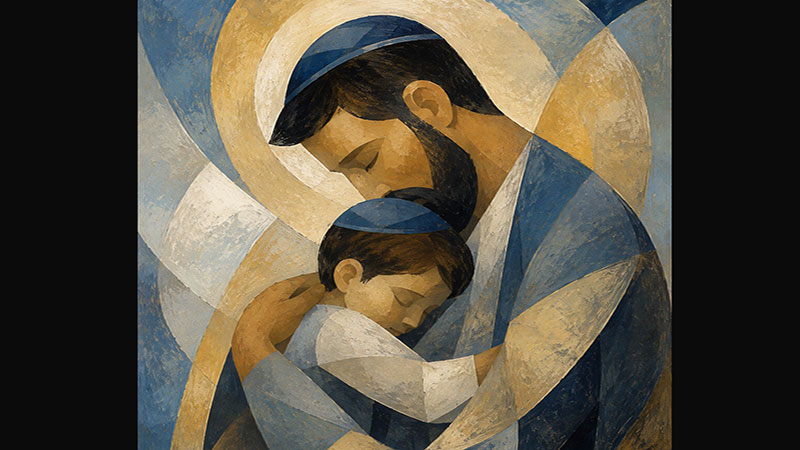
The Aish Kodesh pointed out that when we endure the adversity that is meant to impel us to improve ourselves, because we know that everything is from Hashem, we eagerly anticipate the end of our suffering.

As we emerge into independence and sovereignty, we are confronted with the enormity of our shortcomings and of the offenses we committed against the Divine Will which led to – and extended – our exile.

It is precisely when we achieve great wealth and bounty that we are most tempted to forget that we owe everything to Hashem.

Ramban acknowledges the practice, but he doesn’t concur that it is necessarily a bad thing. In fact, he states that the idea of escalating difficult matters to higher courts is a praiseworthy practice which confers honor on the law.
When Hashem created the universe, He saw fit to make it with Judgment counterbalanced by Mercy, so that the free choice and the efforts of humanity could bring about the final rectification of the material world.
Hashem wanted to glorify both Moshe and Aharon, who would, through the power of their speech, reveal the hidden power within the material world. At the same time, He wanted to highlight His own Creation of a world of true essences locked within the symbolic framework of the physical universe.

It strains our credulity to imagine that such tremendous tzaddikim, especially after everything they have already seen and led us through, would be in any way lacking in belief.
Only Moshe and Aharon are willing to sacrifice themselves and ignore their self-interest for the good of Israel.
To whom is Hashem to show patience and slowness to anger if not to those who transgress against His commands?

In this week’s parsha, we receive the command to raise up its candles, and of course on Shabbat Chanukah we are very involved with the mitzvah of lighting candles.
The Aish Kodesh explains that in this world, a Jew can be identified by virtue of his rootedness in the supernal wisdom, but all the wisdom that reaches his consciousness comes through an extension of the Divine spirit into this material world.

Of course, we know without a doubt that Hashem is One and His Name is One – and thus there is no question as to who spoke to Israel from out of the flame (ibid. 4:12) – but there is a question as to the mechanism by which the message was communicated and how it was experienced by all of us at Har Sinai.

The mitzvot are acts that we perform to refine ourselves and achieve our own potential, while the true object of our mental striving is to understand the acts that He performs and in what ways His greatness is made manifest.

Even when we are in the darkest places and suffer terrible abuses that no other nation has ever endured, our concern first and foremost is for His Name and His Holy Shechinah, and that He should emerge from the darkness of exile that we precipitated.

Ultimately, the wisdom, might, and wealth of an individual are only aspects reflecting his stature, but not essential to his character; the celebrated aspect may reveal itself in some situations to be superficial and not substantive.
It is interesting to note that all of these ideas really complement one another, and there is a unifying perspective where we can see that Nadav and Avihu did not really “fit” into the mold of their generation and to the needs of the moment.

While it’s true that in the generation of the Sages, there were very few people who could understand the intricate laws of purity and impurity – let alone live according to them – the Sages were looking ahead and planning for a future era when all of Israel would be engaged in the active fulfillment of the Divine plan for Creation.
This distinction between the needs of the moment and the needs of future generations was paramount in his mind.

Adam’s essence had abandoned his body, so he was no longer conscious of the godliness that had inhered in him while in Gan Eden. Adam had become an empty shell of himself and was turning into an animal.
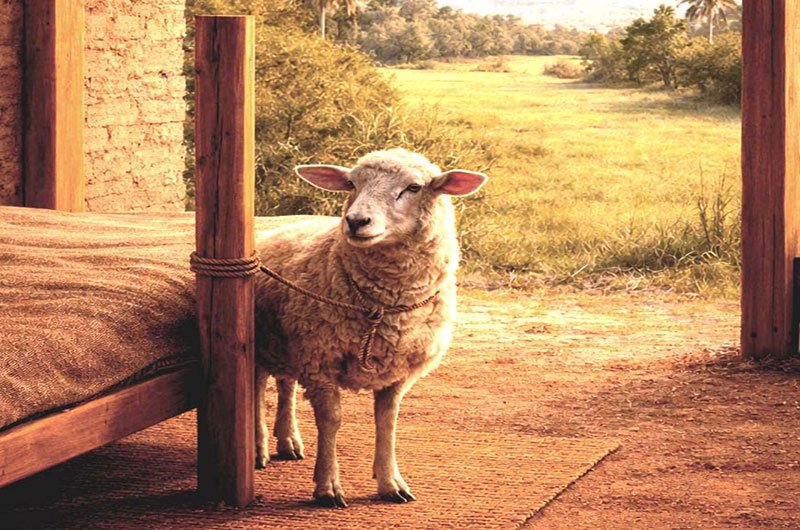
It is commonly understood (from the Gemara and elsewhere) that in the year that Israel went out of Mitzrayim, the process of bringing the Korban Pesach began with the taking of the sheep and tying it to the bedpost on Shabbat.

Although the construction of the physical universe concluded on the first of Tishrei, on the first of Nissan – and particularly on this date in the year following the Exodus – the rectification of mankind begins.
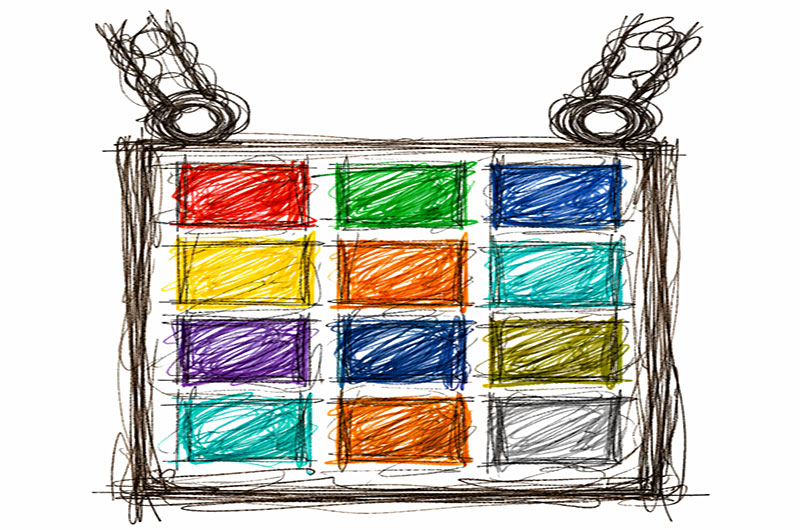
Philo’s discussion of the clothes of the Kohen Gadol is deeply fascinating, but also probably demonstrates some of the basis for Chazal’s decision to ignore his teachings in the Talmud.

The form of the world we know, like the forms of the letters engraved upon the Luchot, is that which was decreed on High when Hashem decided to create our universe.
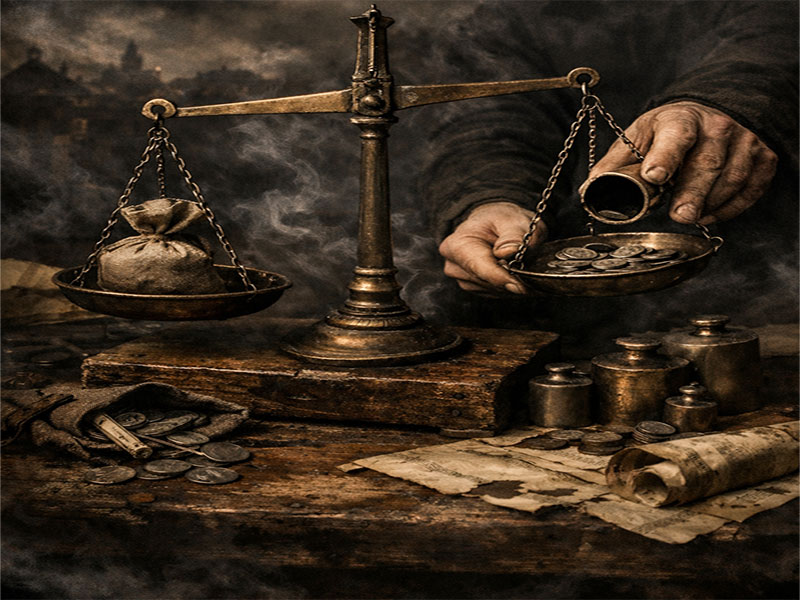
Individual humans upset the balance on their own, Rashi is saying, and thereby provide an opening for the enemy.
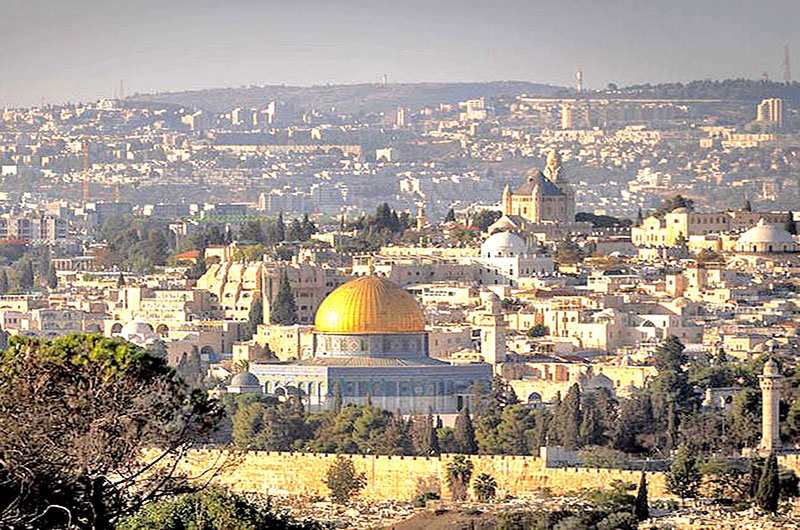
On the evidence of his writings, Philo was almost certainly a Torah-observant Jew who believed in the Divinity of the Torah and the uniqueness of Moshe’s prophecy.
Mystical Insights into the Redemptive Powers of the Half-Shekel.
Until Israel had accepted our collective purpose and come to embody the Will of the Creator to have a nation among nations to perform His commandments and act on His behalf, there were only tribes and families.
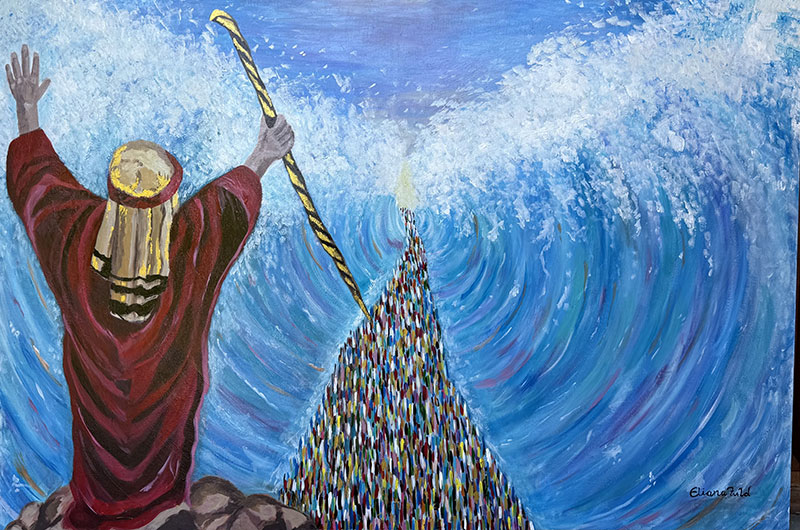
At the splitting of the sea, we learn that Hashem is willing and able to overturn the laws of nature as He sees fit to intervene on behalf of His chosen people.

The two chapters he dedicates to Parshat HaChodesh, which is found in this week’s parsha, contain profound and beautiful insights into the nature of the Nation of Israel and our unique relationship to the moon.

One of the key characteristics we see of Moshe that make him uniquely qualified for prophecy is his attention to detail in the face of the unusual.

Thinking (and reason) is inexorably bound up with our free choice and the determinations we make in our lives that shape the past, present, and future.

As he prepares to bless the sons of Yosef, having established them as Shevatim the same as their uncles, Yaakov relates how Rachel passed away on the side of the road, which seems incongruous here.

There were three catastrophic events precipitating the future exile of Israel. Two of these were, of course, the destruction of the First and Second Batei HaMikdash, but in between these was the exile of the northern kingdom, the Kingdom of Israel under the rulership of the descendants of Yosef.
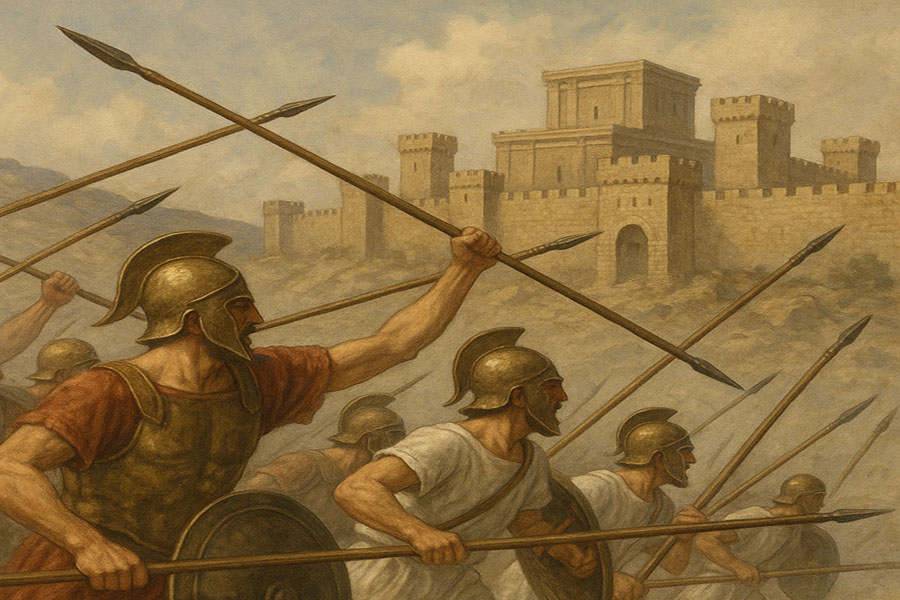
The Greeks resent the mitzvot as not rational and because they don’t understand them.

The number four is noteworthy, and the Maharal explains that four represents the division of that which ought to be unified. So, in the physical world, the Divine Mercy is represented by the Name of four letters, but this is also a necessary refraction of the unified essence of the Infinite as it is experienced by us mortals here below.
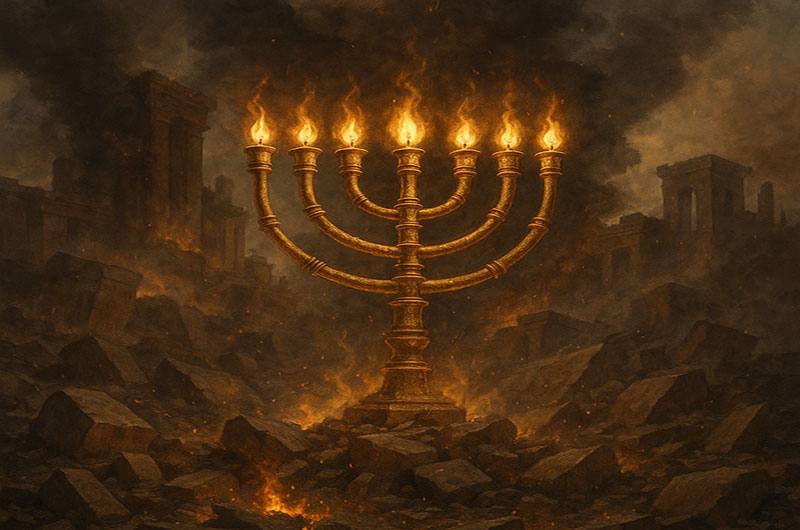
For us, the Children of Israel, the destruction of the Second Beit HaMikdash at the hands of Rome is still a raw memory, and we are still enduring the long exile that began on that day.
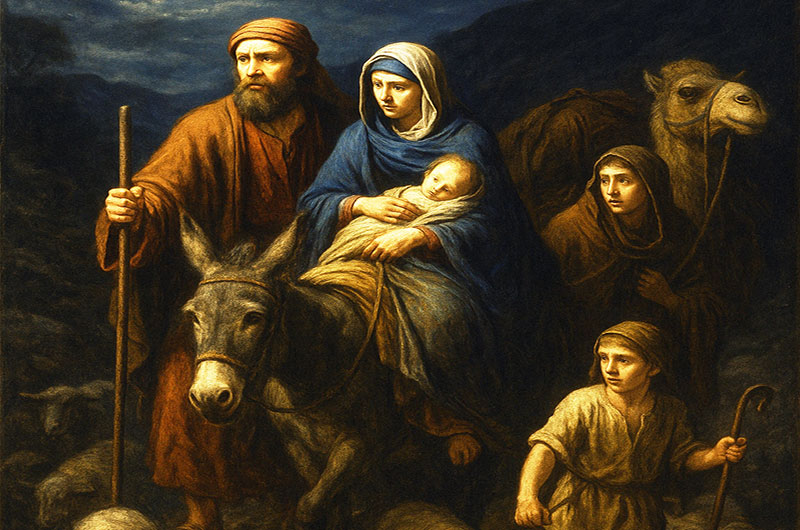
A theme we find pervading these parshiyot and the various commentaries upon them is the grudge that the enemies of Israel hold from past generations, as a consequence of which they are constantly seeking to torment and persecute and even exterminate us – or to dispossess us – in every generation.
Maharal says that when Yitzchak was brought as a korban, his own status changed, elevating him to a higher level of kedusha. He was no longer just some person, even a very righteous one – he had become a designated offering and a part of the Divine Service.
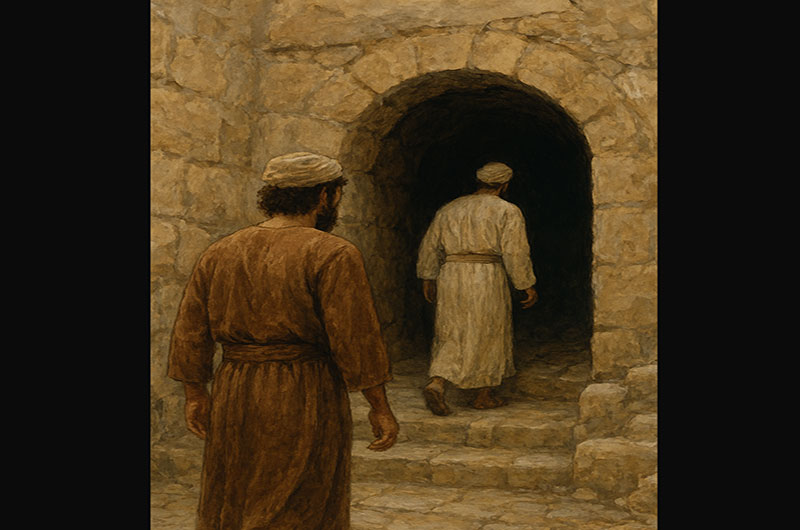
When the Torah relates at the end of the parsha (after already describing the death of Yishmael) that he fell before all his brethren on the approach to Ashur, Rabbi David Abuchatzera interprets this as a reference to the Purim story.
In Ramban's view, one simply can’t explain away every description of malachim in the Torah as a hallucination or lucid dream.
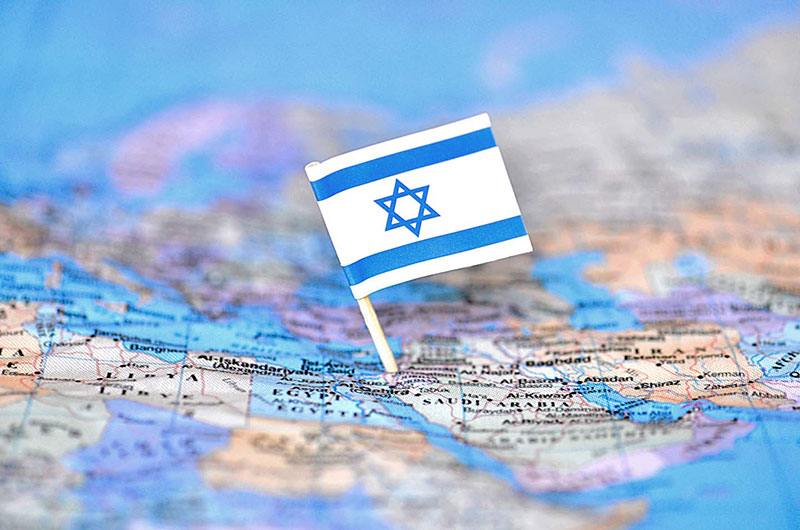
Avram somehow seems to be consummating the spiritual process begun with Enosh, finally achieving the spiritual possibilities of humanity – in Hebrew also known as Bnei Enosh, the descendants of Enosh.
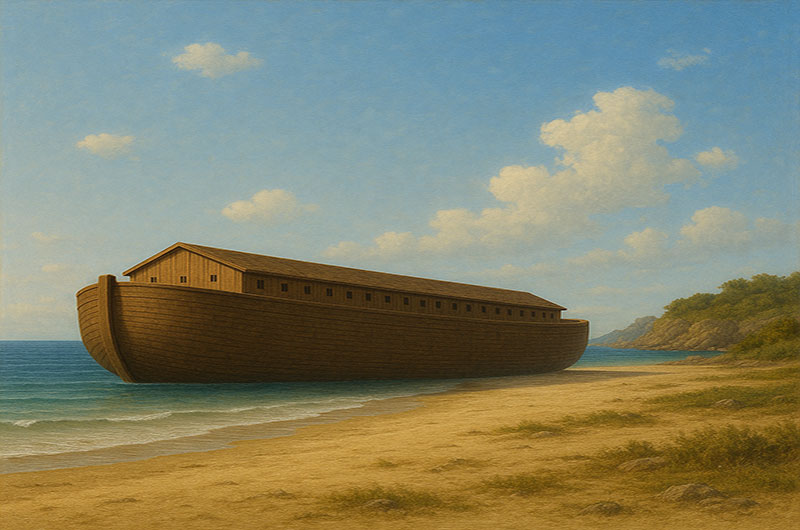
The Rebbe references the Hebrew name of the wood from which the teivah was constructed (gopher wood), which might be cypress but the etymology is unclear. What is clear is that gopher is related to sulfur (gaphror in Hebrew), and thus correlates to burning and simmering rage.
When the Torah restates the mitzvot of Sukkot in Devarim (17) – although it doesn’t actually mention there the mitzvah of sukkah (!) – Rabbeinu Bachye discusses some of the hidden aspects of this mitzvah, particularly as they relate to the mitzvah of rejoicing on the holiday and in the context of all the major pilgrimage holidays under discussion there.
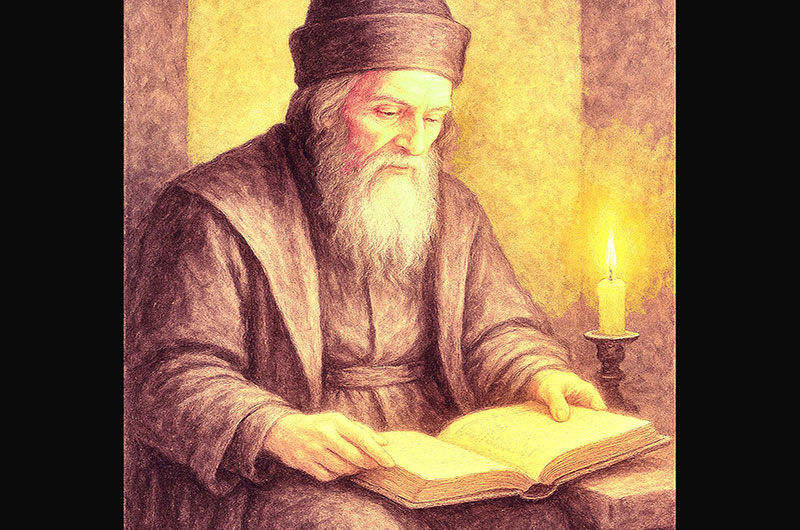
Clearly, Hashem could have created a universe in which there is no suffering and in which we can acknowledge and praise Him without having to overcome adversity. So, there is an inherent value to us, whether as individuals or as a species, in coming to this awareness through our own processes and gaining insight, and not just having it presented to us as perhaps the malachim do.

Hashem is Hashem in the supernal realms in which He plans Creation as an ideal to be embodied, and He is Hashem in the physical world that He created and which we have inhabited since the first Rosh Hashana.

The true national essence of Israel is not found in our markets, whether domestic or for export. In fact, Hashem made us with all the capabilities we require to subsist and even to thrive in our Land, which He endowed with all the ingredients we require to prosper.
The mitzvot of Parshat Shoftim are relevant to the governance and political practices of an Israelite (or Israeli) society ruled by law. The king is interchangeable with the elders, as we find in the present passages (Devarim 21:1-9), and stands in for the collective of Israel at large.

Other depictions of the redemption tend to emphasize the glory of G-d that derives from His redeeming His people at a time and in a manner which suits Him. But human beings, even those who are desperate and endangered, ideally don’t want to be given something they have not earned.
The Aish Kodesh taught his community, in the abyss of dehumanization and annihilation, that they had been given an opportunity to elicit Hashem’s power to redeem the world and fulfill His promises to our forefathers.
If Tzion is to be redeemed, will her captives not be freed as well?
Rabbbeinu Bachye finds it problematic to accept the literal interpretation that Hashem somehow erred, requiring our intercession on His behalf. He explains that the real purpose of this mitzvah of the Chatat on Rosh Chodesh is to give hope to those who have gone astray but wish to return to the faithful service of Hashem.
Idolatry is insidious and it sneaks into the hearts of the unwary by way of small compromises and prohibited acts that appear insignificant at first.
Because if it is corruption we are worried about, there is no greater corruption and source of impurity than the presence of death itself.
Someone who understands reality on such a level also begins to see that all of humanity is really bound together as a cohesive whole.
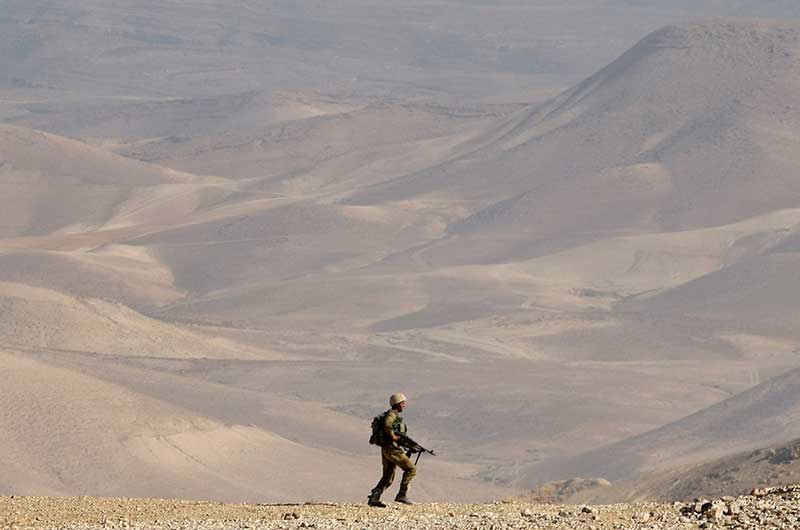
The Rogatchover Gaon emphasizes specifically that Eretz Yisrael is only acquired through tribulation (Brachot 5), noting how inappropriate it is for someone to expect to gain the fruits of the labor of another – especially when somebody has to go to war to defend the land and somebody else expects to just sit at home and benefit from this.
Every time we discover a new Torah deMoshe MiSinai, an unprovenanced edict associated colloquially with Moshe, we are reaffirming our connection to that primary source of all Torah and to Moshe who passed it on to us.
Israel is blessed in the merit of the three fathers, also in whose merit the Torah was given.

Pesach and Shavuot...represent the liberation of the body and the liberation of the mind, respectively.

One possible explanation that Rashi finds in the Midrash is that all of the general principles were received at Har Sinai; however, many of the specifics were taught by Moshe in the land of Moav immediately before the crossing of the Yarden.
As we exist in the world and interact with it, we receive input and understand our surroundings by means of the data we collect, chiefly by way of our senses. But because we also have the ability to communicate with one another, we learn much useful information about the world from each another.

Flour is the most basic ingredient needed to feed the body, but once it is made into bread, it becomes more associated with physical urges and pleasures and thus potentially detrimental to spiritual growth.
Aharon was silent out of pride in his sons.
When Hashem judges us and confers upon us the things we deserve in this world, our Sages teach, He responds to us middah keneged middah, in a manner befitting the conduct we have exhibited.
On the Shabbat before Pesach, Israel risked everything to begin offering the Korban Pesach, and in doing so we made ourselves great, making G-d that much greater in proportion. This manifestation of the Divine light of redemption – in just the moment we most needed to see it – was the greatest thing Hashem could do for us.
Sometimes, because of the low spiritual state of Israel going out of bondage, there are intermediate steps in order for growth to be achieved. The Rambam understands the sacrificial rite in this spirit. He sees the korbanot as serving a practical purpose in weaning Israel off of the idolatrous customs of primitive civilizations.

The innermost aspects of being are revealed in the interior of the Tent of Meeting in the Mishkan, or in the Hechal (or sanctuary) of the Beit HaMikdash.
Ramchal teaches that although the Kohen officiates in the offering of korbanot, the three groupings of Israel are all essential to the effective completion of the service in the Beit HaMikdash.
In the aftermath of this ordeal, Moshe seems to struggle with his understanding of the omnipotence of Hashem and the instantiation of His will in the affairs of men.
The nexus of all worlds, the point of conjunction of the physical and spiritual poles is the golden Mizbe’ach.
Mishkenei Elyon is a small but profound text that explains the spiritual significance of the detailed structure of the third Beit HaMikdash that was witnessed and reported on by the navi Yechezkel.
When Israel enslaves their own brothers, they are also enslaving G-d’s very image and likeness on earth.

There cannot possibly be a substitute for the experience of encountering the knowledge of Hashem once it has directly impacted upon one’s consciousness.

The overarching texts and principles that guide the Seder Tu B’Shvat are the two trees that were created in the Garden of Eden and the biblical passage stating that the human being is a tree of the field (Devarim 20:19).
In the fascinating and unjustifiably obscure text Semichat Chachamim by R’ Naftali Katz HaCohen, the question is asked why Rosh Hashana in Tishrei and the one in Nissan, the new year for kings and for festivals, seem to be reversed.

It is possible to be enslaved but not to suffer brutality, and also to be tormented without being a slave.
The double language of reckoning also encompasses two aspects of the Divine Judgment that the true redeemer would have to know to invoke – Hashem will do good to Israel and lead us out of our misfortune, and He will also punish those who tormented us and hold them accountable.

When Lavan decided to trick Yaakov, and essentially Rachel too, Rachel nevertheless played along and gave the secret codes to Leah to enable her to succeed in the ploy. Rachel realized that what was happening must be the will of Hashem, and that it was not possible for Yaakov to have only one wife.
When Yehuda approaches Yosef, he touches his garment, and this is said to be a manner in which individuals may connect with Hashem when they are not at the level of achieving proper communion.

When we are faced with adversity and challenges that are difficult for us to bear, it is a mitzvah to accept His judgment with grace and dignity.

Rachel’s influence was to unify Israel, to remind us to welcome and accept one another just as she was a mother to all Yaakov’s sons and her sons never treated any of the other brothers with disdain or disrespect.

Leah and Rachel are competitors for Yaakov’s affection, but their devotion and kindness to one another is unabated.
Rivka’s righteousness in spite of her origins is noteworthy, but the Sages also point out that when it was necessary to pray for Hashem to open her womb, the Torah tells us that Hashem was moved by the prayers of Yitzchak.
There are apocryphal sources that describe a period of separation between Adam and Chava during which time they took other partners. Avraham and Sarah, on the other hand never deviate from their commitment to one another, even when it becomes evident that Sarah cannot conceive children and in spite of the great value Avraham places in producing offspring.

Rav Shagar points out certain thematic similarities between the trial of Avraham and that of Iyov. But Avraham excels and demonstrates his qualities by virtue of the outcome of his test while Iyov is criticized by Chazal for his responses.

Hashem’s greatest desire is to bestow His kindness upon us and to rejoice in our success.
For the Tower of Bavel, the punishment of scattering them and confusing their languages was, in fact, a punishment befitting the crime.
When Hashem finally redeems His people from all our afflictions, crushing our enemies and “their high places” beneath us, then we will encounter the final unfolding and unfurling of His Name over all of creation.
Is it true then that one elevates oneself to the level of the most righteous simply by sacrificing one’s life for the sanctification of the Name?
The Vilna Gaon speaks at length of the kedusha of the malachim in his commentary on the siddur. He explains that the malachim don’t wait for Israel to finish our kedusha below out of respect for us but because they have no right to attest to the glory of Hashem until they hear our mouths doing it – as they have no awareness of any other possible state of affairs.

We as individuals and as a nation understand something is wrong and we are driven to fix it, even if we have no idea how to go about it properly. But it is precisely through this process, this “casting about” for something that will salve the pain of uncertainty and inspire us with a sense of purpose, that we connect through our teshuva with our higher purpose.
Rav Kook sees the impulse to do teshuva and the initiative taken in pursuit of it to be the exemplar of human nature as a spiritual being.
The act of engaging in teshuva, which is so essential to our achievement of our moral and spiritual goals as humans and as members of the community of Israel, is also very challenging for us in practice.


 October 9, 2026