 July 10, 2026
 Categories: Featured / Parsha / Torah
Why Is This Shabbat Different from All Other Shabbats?


The Maharal, in his essay on Shabbat HaGadol, delves into the question of why this Shabbat is called by that name (which translates literally as “the Great Shabbat”). The first and most obvious explanation comes from the haftara we read on this Shabbat, wherein we are told that Eliyahu HaNavi will be sent to us before “the great and awesome day” (Malachi 3:23).
But greatness in reference to Shabbat HaGadol is specifically associated with the Exodus from Mitzrayim, as Hashem performed “great deeds” there when He redeemed us with revealed miracles and wondrous intervention in the course of history. The Maharal doesn’t reference this specifically, but he certainly also considers the fact that in classical (i.e., medieval) Jewish mysticism, the Divine attribute of Mercy (chesed) is interchangeable with the word gedula (greatness). Thus, this Shabbat preceding Pesach is distinguished by its association with the Divine attribute of Mercy, particularly as manifested in revealed miracles.
The Maharal goes on to explain that the final redemption that will occur at the end of days will be similar to the Exodus but vastly superior in magnitude and degree. Also, the period that will follow our redemption is referred to as the era of “eternal Shabbat” (or “the day that is completely Shabbat”). Therefore, the Shabbat that precedes Pesach, insofar as it partakes of the sanctity of both Pesach and the eternal future redemption, is a “Great Shabbat.”
But all of this begs the question of why specifically focus on Shabbat?
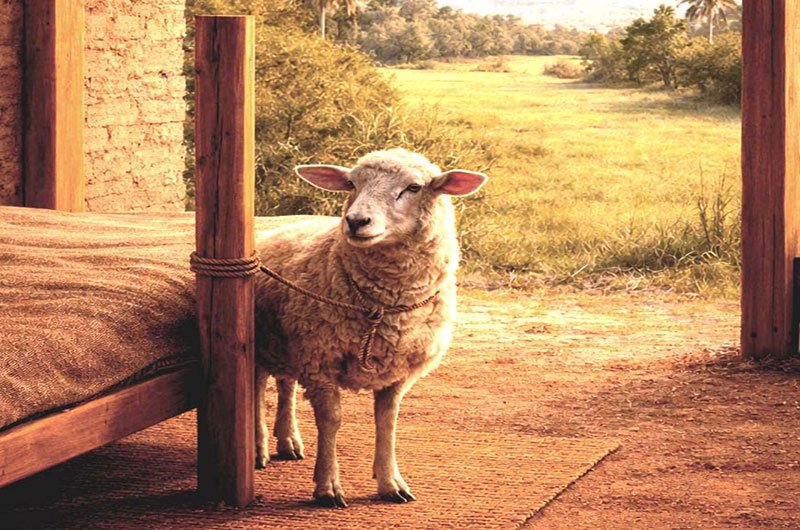
It is commonly understood (from the Gemara and elsewhere) that in the year that Israel went out of Mitzrayim, the process of bringing the Korban Pesach began with the taking of the sheep and tying it to the bedpost on Shabbat. So, Shabbat is integrally connected to our experience of going out of Mitzrayim and to the miracles that accompanied that process.
However, the Maharal takes this a step further. He explains that every week draws its energy from the Shabbat that precedes it. So, when Pesach falls in the week following Shabbat, as it does for us this week, the special sanctity and redemptive power of Pesach is already latent in that Shabbat.
The Maharal compares this to the Shabbat preceding Yom Kippur, which we know as “Shabbat Teshuvah” (or “Shabbat Shuva,” again from the haftara). The spiritual precedent for our repentance, and the initiation of that process in anticipation of Yom Kippur, climaxes on the preceding Shabbat. This is why the process of bringing the Korban Pesach, and with it the preparation of the generation of slaves to be protected from the plague that would strike the firstborn of Mitzrayim and to be liberated from bondage, necessarily began on Shabbat. Indeed, the power of redemption that achieved its expression and fulfillment later in the week was drawn out of that Shabbat.
So too, it is our prayer that this Shabbat will be the last Shabbat before the even more wondrous redemption that Hashem has in store for us, delivering us from the persecution and the depredations of the nations of the world.
The Aish Kodesh, in his sermon on Shabbat HaGadol in the Warsaw Ghetto in 1940, also referenced this unique spiritual power of the Shabbat preceding the holiday. But he explained that the people were not yet truly prepared for redemption nor ready to accept the Torah. Hashem wished to redeem us because of His love for us and because of the covenant He made with our ancestors, but after hundreds of years in the decadence of Mitzrayim, we were no longer worthy of redemption. The Aish Kodesh explained that it is human nature to follow the dicta of our reason and to adhere to an ethical system that conforms to our understanding of the universe. This is how most people behave and it is right and proper to do so. However, in order for Israel to accept the Torah and restructure our ethical system according to its mitzvot, it was also necessary for us to reframe our understanding of ourselves and our place in the world according to the teachings of the Torah – not by our own preferences or predilections. As it says in Tehillim (147:19-20), “He recites His sayings to Yaakov, His ordinances and laws to Israel, He does not do this for any other nation and they cannot comprehend His laws.”
On that fateful Shabbat in Mitzrayim, when Israel began the process of throwing off the customs and mores of the society they had been raised in – when they took the lamb that was sacred to the Mitzrim with the intent of sacrificing it – they were shattering the ethical framework and the societal norms that had been familiar to them. The offering was a sheep, but the true sacrifice was of the self, in dedication to the service of Hashem. This Shabbat is uniquely great, because it is an occasion for us to cast off the false consciousness of the world around us and focus our attention and intention on the greatness of the revealed miracles that Hashem is preparing for our benefit.