October 2, 2026
 Categories: Featured / Parsha / Torah
The Glory of the Temple for Those Who Behold It (Part II)


A Perspective on the Kohen Gadol’s Garments
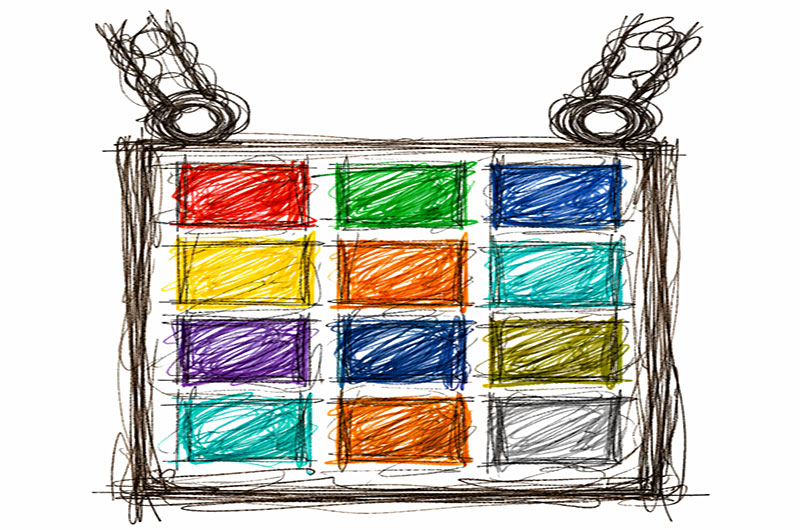
A few weeks ago, we encountered Philo of Alexandria and his underappreciated discourses on Jewish Scriptures and philosophy. We examined his unjustly neglected commentary on the construction of the Mishkan and, as we are concluding the account of the building of the Mishkan in our parsha this week, we’ll now conclude the review of sections in Philo’s The Special Laws that concern this material. Philo’s discussion of the clothes of the Kohen Gadol is deeply fascinating, but also probably demonstrates some of the basis for Chazal’s decision to ignore his teachings in the Talmud. As is often the case with Philo, we find a deep familiarity with authentic Jewish sources, not all of which are commonly known in our era, alongside speculations rooted in Greek philosophy. This is not altogether different from what we find many “popular” teachers of Torah doing today in an effort to reconcile Torah teachings with contemporary science and culture to appeal to the uninitiated and uncommitted. When Philo does it in ancient Hellenic Egypt, however, it can seem a bit disconcerting. In spite of the fact that some of his speculations and associations might not hold up to scrutiny in a normative framework, his insights are always profound and, as noted, include deep learning in the mysteries of the Torah from a common wellspring from which the Sages of the Talmud also drew. Philo points out that the tribe of Levi is selected from among the tribes of Israel to be preeminent in the service of Hashem, chiefly by virtue of their consistently demonstrated willingness to stand against the corruption of the masses in service of the true teachings of Torah and “labor for the sake of piety.” As we find so often among the Patriarchs and the prophets of later generations, Levi (and by extension Aharon) is selected in recognition of his unique qualities and not merely as an acknowledgment of a birthright. Our heroes are revered when they live up to the circumstances of their birth, and reviled when they fall short. Philo sees in the garments of the Kohen Gadol a parallel to the structure of the Mishkan, which in turn stands as a microcosm for the created universe. First, he points out that the tunic (i.e., the me’il) is made entirely of fabric dyed blue (techelet) and as such corresponds to the air (as has been translated from Latin into English) or what today we would perhaps term “the atmosphere.” The me’il covers his entire body from his neck to his feet, as the atmosphere enwraps our entire globe extending from the highest points (not from the moon, as Philo asserts!) to the Earth’s surface. Upon this garment the Kohen Gadol wears the choshen, a woven garment in the form of a breastplate which is suspended from two jewels upon his chest and which is emblazoned with twelve jewels representing the tribes of Israel. Philo associates the jewels on his shoulders (i.e., the jewels of the ephod) with the twin “hemispheres,” corresponding to the Greek understanding of the organization of the cosmos, while the twelve stones represent the twelve signs of the Zodiac. He points out that, being split into four columns (arba turim), the stones stand in for the four seasons of the year. Again, some of the nuances of his understanding might seem dated to us, but we could probably make some fascinating associations using our own contemporary understanding of science. The entirety of the choshen Philo calls by its Greek name, logeion – intriguing first of all because although he doesn’t note this (and might not have been familiar with it if he didn’t speak Latin), the Latin term loggia would also suggest the architecture of the Mishkan or the outer courtyard of the Beit HaMikdash. Philo connects this term with its philological root in Greek – logos – which he defines as “right reason and proportion,” and he goes on to say that “there is absolutely nothing there which is devoid of reason” (ibid. XVI,88). This is an interesting if not the most recognizable definition of the Greek term here, suitable for the case Philo is making about the garment and the role of the kohen, and it is one that Rambam probably would have found appealing. Philo further expands on this expression by translating the Hebrew term well known to us as “Urim v’Tumim” in a manner that is very evocative, being rendered into English (from Latin) as “manifestation and truth.” Defined in this way, it will be familiar to us yet represents a profound insight into the nature of this powerful expression of Divine election worn on the body of the Kohen Gadol whom, Philo already pointed out, was been selected for the perfection of both body and spirit. Philo’s translation of the Hebrew here probably also influenced the founders of Yale University when they adopted these Hebrew words for their seal. Urim, which we will recognize from its Hebrew philology as deriving from the root meaning “light,” can easily be associated with manifestation, but this is probably not a conclusion most of us would draw in our present context. Tumim as “truth” is particularly intriguing because this seems to associate it with the Hebrew root of tamim or tam, as in Yaakov Avinu being a man of simple purity (“ish tam”). In later Jewish mystical tradition, Yaakov is generally associated directly with Torah and the transmission of Torah. As Torah is the most perfect expression of truth, the connection of tumim with truth resonates perfectly when explained in this way. Of course, arguably the most important component of the Urim v’Tumim was the sheet of parchment inscribed with the Divine Name that was inserted between the two sides of the pouch; fascinatingly, Philo apparently makes no mention of this detail. There is so much more that can be explored in this discussion of Philo’s writings on these subjects, but instead let us turn to the fact that this Shabbat is Shabbat HaChodesh in acknowledgement of the month of Nissan and the advent of our redemption which begins this week. Philo makes special note of the month of Nissan being the seventh of the months of the year (counting from Tishrei) and including the seven-day holiday of Pesach, all of which corresponds to the seven days of Creation and the mystical power of the number seven in Jewish numerology. For this reason, he suggests that the first day of the seventh month is of particular note. He also famously taught regarding the freedom that is the subject of our upcoming festivities that “Every Good Man Is Free” (the English translation of the title of a treatise by Philo). He explains at length in a manner that will also be familiar to most students of Jewish philosophy – long before most of those familiar texts were composed – that the one who is a slave to his urges and desires is never truly free, but the one who truly serves G-d and is the master of his own will can never be enslaved. He writes: “For, in real truth, that man alone is free who has G-d for his leader; indeed, in my opinion that man is even the ruler of all others.” May we all be freed from every form of slavery and exile and serve G-d as He commanded us to do in the place that He designated, this Pesach and every Pesach to come.