October 2, 2026
 Acquiring Torah (On the Hilulah of Ramchal, a week after Rashbi)


This Shabbat, which is the last Shabbat before Shavuot, we will learn, G-d willing, the sixth chapter of Pirkei Avot, which is also commonly known as Kinyan HaTorah, the chapter of “Acquiring Torah.” Originally Pirkei Avot only had five chapters; the sixth was added because it becomes increasingly popular to study the text between Pesach and Shavuot, and a sixth chapter allows the study to fit nicely into the cycle of the Counting of the Omer. These mishnayot were chiefly collected from apocryphal sources such as beraitot or other contemporaneous texts that were not collected by Rabbi Yehuda HaNasi into the body of the Mishna. The principal focus of the chapter is on the importance of studying Torah and the rewards due to one who studies it faithfully.
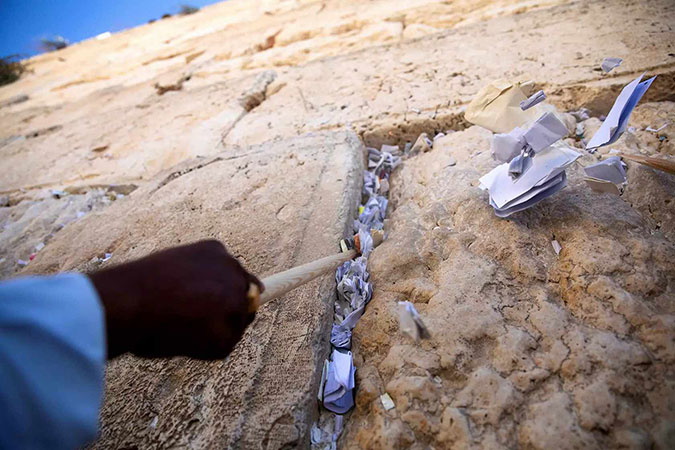
During this past week, which always falls in this sixth week of the Omer, we observed the yahrzeit of Ramchal, Rabbi Moshe Chaim Luzzatto. Ramchal is recognized today as a leading Torah authority of 18th-century Italy, although in his own time he was very controversial and had to contend with excommunication and even the banning of his books. As a consequence of the suppression of Ramchal’s books, many of his manuscripts have only come to light in recent years due to the efforts of scholars and researchers who have found copies in repositories of discarded holy books (genizot), among other places.
One such obscure text of Ramchal which was first published in 5749 (1989) is a short essay on the topic of what we can learn from “the Torah of Truth.” In this context, generally, the author will be referring to esoteric and/or mystical interpretations of Torah by that terminology. Broadly speaking, Ramchal’s essay parallels many of the key points in the chapter of “Acquiring Torah,” but his specific emphasis on the esoteric and the spiritual as distinct from the purely intellectual or rational should be of interest to us.
Ramchal begins his discussion of the value of studying Torah by referencing the same verse from Yirmiyahu that we had occasion to examine here a couple of weeks ago in the context of the beginning of the fourth chapter of Pirkei Avot – Yirmiyahu 9:22. We learned there that the wise man must not be celebrated for his wisdom. Ramchal then concludes from the following verse what the proper use of the intellect is. The Navi teaches that one must “become knowledgeable and know Me [i.e., the Creator] in order to do acts of kindness and justice and charity in the world.” We are not instructed to learn His teachings, or how to better perform His commandments. Ramchal emphasizes that the highest and best use of our minds is to seek to know Him – which, of course, is ultimately beyond our capability – and in so doing, to come to both admire His greatness and also to emulate His kindness and goodness.
This all leads us back to the question of how we can possibly know Him, in particular as distinct from the mitzvot we perform to serve Him. The mitzvot are acts that we perform to refine ourselves and achieve our own potential, while the true object of our mental striving is to understand the acts that He performs and in what ways His greatness is made manifest.
The first thing to understand is that Hashem is kadosh. We have discussed the meaning of this term elsewhere, but for our purposes here we must understand that He is separate from everything that is base and material. Therefore, if we wish to truly understand Him to the best of our ability, we must separate ourselves from the ideas and practices that draw us down into the material world and its temptations. It’s important to note that this doesn’t mean we should become pure and celestial in the manner of the angels, because Hashem created them to serve Him Above, where they are useful to Him, and He created us to serve Him here in the world below. We have to understand what it means to completely refine and devote ourselves to following His commands in kedusha, which is not at all the same as being entirely pure and separate from the physical world. Rather, we work towards that ideal as humans through our human faculties – recognizing that our intimate knowledge of physicality remains essential for us to understand both our purpose in Creation and the aspects of our Creator that are available to our understanding.
This paradox – this distance between the separateness of the Divine and the separateness that is achievable by us in our earthly forms – is the essence of the project that Ramchal develops in the remainder of this essay. In order for one to enter into the true inner secrets of Torah, it is necessary that he or she first be a human, of course. One must also belong to the People of Israel who received the Torah and are bound by its commandments. One must live and experience a life bound by Divine commandments, and one must also be totally immersed in the love of Hashem through this world as we experience it.
Ramchal cites a Gemara from Chagiga (12b) bemoaning those who see and do not understand, or who occupy space and don’t consider where they are or how they got there. He emphasizes that Rabbi Shimon Bar Yochai in particular believed that as important as it is to learn the literal interpretation of Scripture, one must also gain the tools and the insights that will enable this visceral experience of the love of Hashem and of truly understanding one’s place in the universe. This can only be truly known and understood by delving into the deeper meaning of Torah, the truth and the knowledge that has been embedded in these texts for our edification by their Author.
Ramchal notes that our long exile has had the unfortunate effect of distancing us from this sort of visceral experience of Torah and led to a situation where the vast majority of Torah-observant Jews have become content with only superficial and mechanistic understandings of Torah. This was perhaps a necessary outcome of the persecution and alienation we were forced to endure for many long generations. However, the true inner meaning of Torah is to bring us to the fullest possible understanding of what it means to be Kadosh – how we can inhabit the physical world and at the same time remain attuned to the Divine effluence that animates it and remains above or apart from it.
We, the people of Israel, who stand ready to receive the Torah in only a few days, in receiving the Torah become uniquely suited to achieve this understanding. And through understanding ourselves and our relationship with the Divine, we come to have insight into the nature of the Divine – which is only ever available to those who immerse themselves in the inner meaning of the Torah of Truth.