 October 9, 2026
 Categories: Headline / Columns
The Home of Hope


Hope, for Jews, has never been a mood. It has been a discipline aimed at a place. Other nations have hoped for victory, rain, or a kinder king. We hoped for return. When the return began, the old language did not become obsolete. It became visible.
Rabbi Jonathan Sacks said in Israel: Home of Hope, “Israel is the Jewish home of hope, the place where our people was born in the age of Abraham and where, after the longest exile ever endured by a people, it was reborn in our time.” Birth and rebirth in the same sentence. That is the Jewish timeline compressed until it almost hurts. Abraham walked into a land he did not yet own. A century of builders walked into a land the world had filed under impossibility. Between those walks sits most of our history.
Psalm 126 already knew the feeling: “A song of ascents. When Hashem restored the fortunes of Zion, we were as dreamers.” The verse does not say the dreamers were foolish. It says restoration would feel unreal to people trained by delay. Anyone who has stood on a hill over Jerusalem at dusk understands the psalm without a commentary. The mind keeps waiting for the curtain. The stones remain.
Theodor Herzl, in The Jewish State, wrote the political twin of that verse: “We shall live at last as free men on our own soil.” He was not composing liturgy. He was insisting that hope take the form of citizenship, labor, and law. Freedom on one’s own soil is a plain phrase. It does not require enemies at the gate to make its case. It requires only the memory of how rarely that sentence could be said.
President Joe Biden, in remarks at Yad Vashem, said, “For world Jewry, Israel is the light. For world Jewry, Israel is the hope.” Leaders outside the people have often reached for those two words because they are accurate. Light and hope are not slogans when a scattered people can point to a working city by the sea and a capital in the hills and say: there.
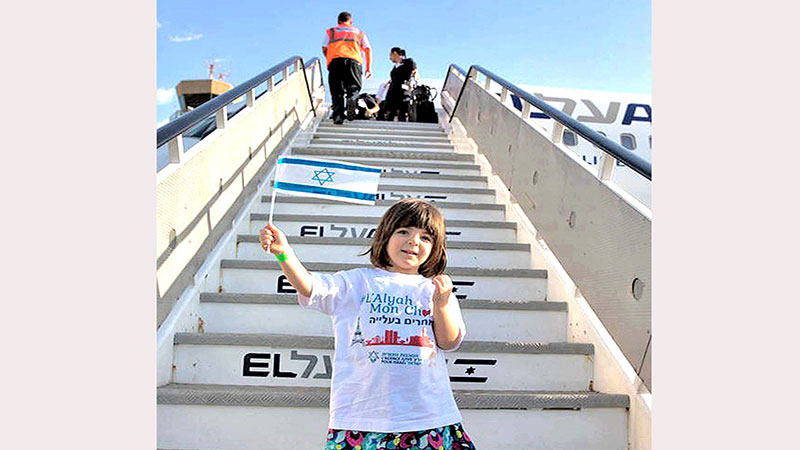
Aliyah is how hope stops being a theme for a banquet and becomes a morning. The first months are rarely luminous. There is a bank, a clinic, a landlord, a child who misses a friend. The psalm’s dreamers also had to plant. Herzl’s free men also had to invent institutions. Rabbi Sacks’s home of hope is inhabited by people who take out the trash on a Jewish street. That is not a reduction of the vision. It is the vision having an address.
A positive case for living in Israel today does not depend on dark forecasts about anywhere else. It depends on the simple claim that a home of hope should be lived in by those who can. Some cannot, for reasons of health, parents, or work that is not portable. Honesty requires that sentence. Honesty also requires the next one: many who say they cannot have never tested which parts of the obstacle are real and which are habit.
The rebirth Rabbi Sacks named is not finished. Rebirth is a process that looks like schools opening, like Hebrew slang changing every decade, like a new town on a ridge that was empty on a map your grandfather used. Psalm 126’s dreamers become, in time, people who know the bus routes. That descent from wonder into familiarity is not a loss of holiness. It is how a home behaves.
Herzl feared that a generation might treat his pamphlet as romance. The State answered him. The remaining question is personal, and therefore harder. Will a given family allow their own hope to remain a feeling they experience on Israel’s Independence Day from a distance, or will they join the unspectacular continuation of the rebirth?
I am not asking readers to despise the countries that sheltered us. Gratitude is a Jewish duty. I am asking that gratitude not be confused with destination. Shelter is not the same as home. Home is the place where hope has a language, a parliament, and a harvest.
The four voices above do not threaten. They describe. A home of hope. Dreamers watching restoration. Free men on their own soil. Light, for a people that has practiced waiting. Aliyah is one name for stepping into that description with a suitcase that is too heavy and a heart that is, for once, pointed in the right direction.