October 2, 2026
 Categories: Collecting / Arts
The Tobianski Affair and Justice in the Shadow of Israel’s War of Independence
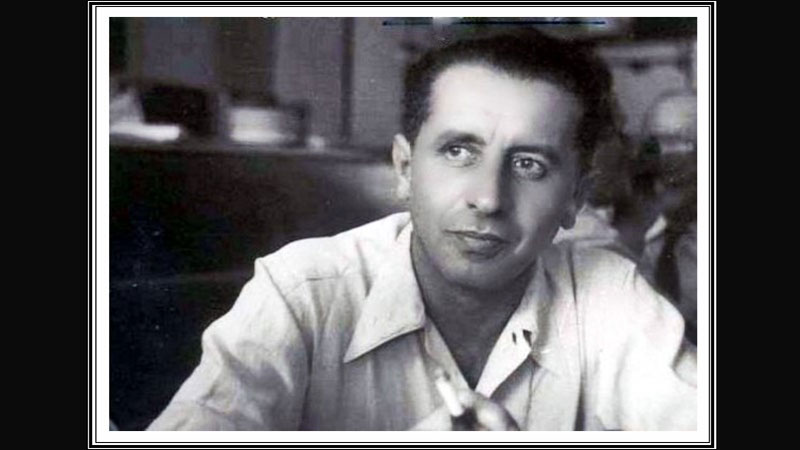


Adolf Eichmann was executed on June 1, 1962, after one of the most thorough and procedurally rigorous criminal trials in modern history. Following his capture in Argentina and transfer to Israel, he was indicted under the Nazis and Nazi Collaborators (Punishment) Law and tried before a civilian court in Jerusalem. He was represented throughout the process by defense counsel of his choosing, Robert Servatius, who was given full access to the prosecution’s evidence and ample opportunity to challenge it. The trial itself, which began in April 1961, was conducted publicly and received extensive international coverage, with proceedings translated and documented in detail. The prosecution presented a vast evidentiary record, including documents, testimony from survivors, and expert analysis, while the defense cross-examined witnesses and presented its own arguments.
Eichmann was permitted to testify at length in his own defense and, after being found guilty on multiple counts, he exercised his right to appeal to the Israeli Supreme Court, which carefully reviewed both factual and legal issues before upholding the conviction. He then submitted a petition for clemency to President Yitzhak Ben-Zvi, which was duly considered and denied. It was only after the completion of these multiple layers of legal review that the sentence was carried out, making the case a defining example of due process, transparency, and adherence to the rule of law, even in the prosecution of one of the principal architects of the Holocaust.


Although Israel’s execution of Eichmann is broadly known, many mistakenly believe that his capital punishment is unique and stands alone in the nation’s history. However, fourteen years earlier, in the chaotic and fearful first weeks of Israel’s existence, another man faced a firing squad, not after receiving basic due process or a fair trial, but within mere hours of his arrest. Meir Tobianski, an engineer and military officer, was executed not after receiving due process and being proven guilty, but because suspicion hardened into certainty at a moment when the young state could least afford any doubt. His story, long overshadowed, is one of the most striking miscarriages of justice in modern history and one that raises unsettling questions about how even a society founded upon law and survival can, under severe pressure, sometimes condemn the wrong man and rush to judgment.
Tobianski (1904-1948) was born in Lithuania, then part of the Russian Empire, into a Jewish environment shaped by a combination of long-standing religious tradition and the accelerating forces of modernity that characterized Eastern European Jewish life in the late nineteenth and early twentieth centuries. Lithuanian Jewry at that time was widely regarded as one of the intellectual centers of Ashkenazi Judaism, particularly due to its strong tradition of Talmudic scholarship and its dense network of yeshivot. At the same time, it was also a society undergoing significant transformation, as secular education, political movements such as Bundism and Zionism, and the pressures of economic modernization increasingly influenced younger generations.
Within this complex environment, Tobianski grew up in what appears to have been a moderately observant Jewish household. While I have been unable to find precise biographical documentation regarding his childhood religious observance and practices, historical context suggests that his family likely observed core elements of Jewish religious life, including Sabbath observance, holiday rituals, and participation in communal synagogue structures, while not necessarily aligning with the Orthodox frameworks of the time. This would place him within a broad middle spectrum of Jewish identity in Eastern Europe, one that balanced tradition with increasing engagement with modern civic and professional life.
The early twentieth century was also a period of profound instability for Jews in the Russian Empire, marked by political upheaval, economic uncertainty, and episodes of antisemitic violence, conditions that contributed to large-scale emigration, particularly to North America and Eretz Yisael. Tobianski eventually became part of this migratory movement, joining the wave of Jewish immigrants who sought to build new lives in Eretz Yisrael under British administration.
Upon arrival in Eretz Yisrael, he entered a society that was not yet a state but was actively engaged in constructing the institutional and material foundations of one. The Yishuv during this period was characterized by a broad array of labor organizations, agricultural settlements, emerging municipal structures, and quasi-governmental institutions that collectively functioned as a proto-state. Within this framework, technical professionals such as engineers played a critical role in shaping the physical and infrastructural landscape of the developing society.
Tobianski pursued engineering training and eventually secured employment with the Palestine Electric Corporation, an enterprise founded under the leadership of Pinchas Rutenberg. The electrification of Eretz Yisrael, one of the most ambitious infrastructural projects of the Yishuv period, was not merely a technical undertaking, but also a symbolic one, representing modernization, industrial development, and the material realization of national aspirations. The expansion of electrical networks enabled urban growth, industrial productivity, and the integration of disparate communities into a more interconnected system.
In his professional capacity, Tobianski worked with systems that required detailed technical knowledge of electrical infrastructure, including generation facilities, distribution networks, and urban installation layouts, and he supported mapping and maintaining critical systems that supported both civilian life and industrial activity. While such information was purely technical in peacetime, it had the potential to acquire strategic significance in wartime conditions, particularly in densely populated and contested urban environments such as Jerusalem.
Colleagues who worked with Tobianski generally described him as methodical, technically competent, and professionally reliable. He does not appear to have been a prominent public figure or political activist but, rather, someone whose contributions were embedded in the practical functioning of infrastructure systems. His role reflected the broader class of technical specialists whose labor underpinned the modernization of the Yishuv without necessarily placing them in positions of political visibility.
In addition to his civilian engineering work, Tobianski was also a member of the Haganah, the principal Jewish defense organization during the British Mandate period that functioned as a decentralized but increasingly organized military structure responsible for the defense of Jewish communities. It drew heavily on civilian participation, with individuals from a wide range of professional backgrounds contributing to its operations and engineers were particularly valued for their technical expertise in communications, logistics, and infrastructure-related planning.
Within the Haganah, Tobianski served in roles connected to engineering and communications, positions that required precision, reliability, and trustworthiness, as they often involved sensitive operational information. He attained the rank of captain, indicating that he was entrusted with a level of responsibility within the organization, though he was not part of its senior strategic leadership. His service reflects the dual-role structure common in the Yishuv, where individuals simultaneously maintained civilian careers and contributed to defense efforts.
Throughout this period, Tobianski’s personal life appears to have remained stable and grounded. He was married and had a daughter, and available accounts consistently describe him as a family-oriented individual. There is no evidence that he was involved in ideological extremism or political radicalism; instead, his life trajectory suggests a focus on professional contribution and familial responsibility within the broader collective project of Jewish society in Eretz Yisrael.
By the mid-1940s, Tobianski had established himself as a competent engineer within a critical infrastructure system. The Palestine Electric Corporation, as part of its operations, managed extensive electrical grids that supplied energy to urban centers, industrial facilities, and residential areas, work that required careful coordination, technical precision, and detailed knowledge of geographic and structural layouts. At the time, Tobianski’s role was entirely civilian in nature and his work was not connected to intelligence activities or military planning in any explicit sense.
In addition to his engineering responsibilities, Tobianski’s involvement in the Haganah placed him within the network of individuals engaged in the defense of Jewish communities. This dual identity as civilian engineer and part-time defense participant was common in the pre-state period and reflected the integrated nature of society and security in the Yishuv and the boundaries between civilian and military roles were often fluid, shaped by necessity rather than formal institutional separation.
As the 1940s progressed, the geopolitical situation in Eretz Yisrael became increasingly unstable, culminating in the end of the British Mandate and the United Nations partition plan, developments that set the stage for the outbreak of full-scale conflict following the declaration of the State of Israel in May 1948. It is within this rapidly shifting historical context that Tobianski’s life would intersect with the emerging structures of wartime intelligence and military authority.
By the summer of 1948, the environment in which Tobianski lived had undergone a profound transformation, as the declaration of the State of Israel was followed almost immediately by invasion from neighboring Arab states, and the resulting war created intense pressure on every aspect of the functioning of the new Jewish State. Military structures were still being consolidated from pre-state organizations; intelligence systems were embryonic; legal procedures, particularly within the military, were not yet fully developed and codified; and decision-making often took place under conditions of urgency, incomplete information, and a pervasive understanding that failure could have existential consequences.
Jerusalem was one of the most critical and fragile fronts in this early phase of the war and Jewish neighborhoods were under constant threat, supply lines were precarious, and the city’s geographic isolation made it particularly vulnerable. The Arab Legion, one of the most effective Arab military forces in the conflict, conducted artillery operations that at times demonstrated disturbing accuracy and, much to the chagrin of Israel’s military leaders, Israeli positions that were assumed to be concealed or only approximately known appeared to be targeted with precision. In the absence of clear intelligence explaining the accuracy of the shelling, suspicion began to turn inward and the possibility that sensitive information was being leaked to the enemy gained traction. Not surprisingly, the search for a “source” of the leak in such an atmosphere became urgent. Attention naturally focused on individuals who had access to infrastructure or positional information, with engineers, surveyors, and technical personnel high among those who could theoretically possess knowledge that might facilitate enemy targeting. Tobianski fell well within this category and his knowledge, entirely routine in a civilian context, was now being reinterpreted through the lens of wartime suspicion.
The reasoning that led to his arrest was based entirely on inference: he knew the locations of certain facilities; those facilities had been hit; ergo, he might have provided the information. This chain of “logic” was not supported by demonstrable acts of communication with enemy forces, but under the psychological pressures of war, it nonetheless quickly acquired persuasive force.
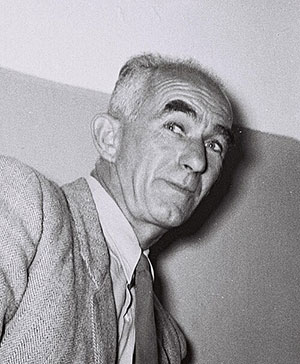
The central authority in advancing the case was Isser Be’eri, head of military intelligence, who operated in an environment where rapid decisions were often required and where the consequences of inaction could be most severe. However, the same urgency that demanded decisiveness also created conditions in which procedural safeguards could be bypassed and, in this instance, suspicion was elevated to action without the level of verification that would ordinarily be required for such a grave accusation. On June 30, 1948, Captain Tobianski was arrested in Tel Aviv, an arrest that did not follow what would later become standard legal procedure, having not been accompanied by a formal indictment or the presentation of clearly articulated charges in a judicial setting. Instead, it was conducted as part of an intelligence operation, reflecting the blurred boundary at the time between intelligence gathering and judicial authority.
Following his arrest, Tobianski was transported to a remote area near the village of Beit Jiz where, rather than being held for extended interrogation or transferred to a formal tribunal, he was subjected to an immediate field court-martial. The use of such a procedure suggested an attempt to maintain the appearance of legality but, in practice, the structure of the proceeding diverged sharply from all recognized judicial norms. The officers involved in the interrogation also comprised the court, which means that the same individuals who had developed the suspicion and gathered the preliminary information were now responsible for evaluating its validity and issuing judgment. As such, this represented a classic situation of conflict, where the absence of institutional separation between these roles eliminated even any arguable meaningful safeguard against confirmation or other bias.
The proceedings themselves were brief to the point of inadequacy, as the entire process, from interrogation to verdict, unfolded within a matter of mere hours. Tobianski was not provided with legal counsel, nor was he given sufficient time to prepare a defense, and he was afforded no realistic opportunity to gather evidence, call witnesses, or challenge the assumptions underlying the accusations against him. He was charged with espionage; specifically, he was accused of providing information that had enabled enemy artillery units to target Israeli positions, but the evidence supporting this claim was circumstantial: there were no intercepted messages, no testimony from individuals who had observed him in contact with enemy agents, and no documents demonstrating the transmission of information.
One element cited by the prosecution was Tobianski’s acknowledgment that he had shared certain technical information, such as lists related to electrical infrastructure, with a British acquaintance. In the transitional period following the end of the British Mandate, such interactions were not inherently unusual but, in the charged atmosphere of wartime suspicion, this fact was reinterpreted as potentially incriminating, notwithstanding the fact that it did not establish a link to enemy forces or demonstrate any intent to commit espionage. Moreover, the evidentiary process lacked rigor; there is virtually no indication that alternative explanations were explored or that the assumptions underlying the accusations were subjected to systematic scrutiny. The entire process appears to have been driven by a need to reach a conclusion quickly rather than to establish the truth through careful examination.
Throughout the proceedings, Tobianski denied the charges against him, and accounts indicate that he maintained his innocence consistently. However, given the structure and pace of the trial, his denials had little impact and, without representation, without preparation, and without an impartial tribunal, he was effectively unable to defend himself. A guilty verdict was quickly delivered followed quickly by a death sentence and an immediate carrying out of the execution by firing squad: he was afforded no opportunities to request reconsideration or to file an appeal. Tobianski was executed on the same day as his arrest. This immediacy is one of the most striking aspects of the case because even in wartime, systems of military justice typically include some mechanism for confirmation of a death sentence by higher authority but, in this instance, no such mechanism was employed.
At that moment, the lack of due process was justified by those involved as a necessary measure in the context of national defense, but the speed and manner in which the process unfolded left a lingering sense of unease, even among some within the military establishment. Indeed, Tobianski’s execution did not bring closure to the matter. Instead, it marked the beginning of a process of doubt, scrutiny, and, eventually, institutional reckoning. Unease began to surface almost immediately after the events of June 30, 1948 became known within certain military and governmental circles.
A critical factor in ensuring that these doubts did not dissipate was the persistence of Tobianski’s widow, Chaya. Refusing to accept the official designation of her husband as a traitor, she undertook a massive and determined effort to challenge the narrative that had been constructed around his death. Her actions were not dramatic in a public sense, but they were relentless and methodical; she sought meetings with officials, submitted requests for review, and appealed to individuals in positions of authority to reexamine the circumstances of the case. In doing so, she confronted not only the stigma attached to her husband’s name, but also the natural reluctance of institutions to revisit decisions made under pressure. The combination of external pressure from the family and internal unease created conditions in which the issue could no longer be ignored, and it eventually came to the attention of Ben Gurion, then both Prime Minister and Minister of Defense.
Ben Gurion’s role in the Tobianski affair is significant not because he was involved in the original decision (he was not) but because of his response once doubts were brought to his attention. As the central political and military authority in the young state, he recognized that the legitimacy of Israel’s institutions depended not only on their effectiveness in war but also on their adherence to principles of justice and that the possibility that an innocent man had been executed by military authorities posed a serious challenge to that legitimacy.
Accordingly, he ordered a formal investigation, a decision that marked a turning point in the case; what had been deemed a closed matter was reopened and the process shifted from assertion to examination. The investigation was conducted by military legal authorities, including the Judge Advocate General, Colonel Shimon Agranat, who was one of the most important figures in the early legal history of the State of Israel; he would later be appointed a Justice of Israel’s Supreme Court (1949) and Chief Justice (1965-1976), but he is arguably best known for his leading the Agranat Commission (1973-1974), which investigated failures in the Yom Kippur War intelligence and command structure.
The investigatory committee was tasked with reviewing both the evidence against Tobianski and the procedures by which he had been tried and executed, and its findings were unequivocal: the evidence that had been used to convict Tobianski was insufficient to support a charge of espionage as a matter of law and the central premise of the accusation – that the accuracy of enemy artillery fire indicated the presence of an internal informant – was fatally flawed. Alternative explanations were offered, including the professional competence of the Arab Legion, the use of reconnaissance techniques, and the simple visibility of certain Israeli positions and installations. All these explanations actually served to undermine the core logic of the original accusation.
Equally significant were the findings regarding the conduct of the court-martial itself. The investigation determined that the process had violated fundamental principles of justice; that Tobianski had not been given the opportunity to defend himself adequately; that he had been denied legal representation and given no meaningful time to prepare; and that he had been subjected to a tribunal that lacked independence. In addition, it emerged that proper procedures had been bypassed, including the expectation within the military legal framework that suspects would be detained and interrogated over a period of time, allowing for the collection and evaluation of evidence, and the formal investigation concluded that the decision to proceed immediately to trial and the speedy execution represented inexcusable dramatic departures from even the limited safeguards that existed at the time. The conclusion of the investigation was unavoidable: Tobianski had been wrongfully executed.
In 1949, less than a year after his death, the state formally exonerated him; his military rank was restored; his name was cleared of all charges; and, perhaps most symbolically, his remains were reinterred with full military honors on Mt. Herzl in a ceremony attended by Rishon L’Tzion Rav Benzion Uziel. (His military gravestone includes the inscription "killed by mistake.”) This act served as a public acknowledgment of both his service and the injustice he had suffered, and it also represented an effort by the state to restore his dignity and to signal that the original judgment had been in error.


Nathan Alterman (1910-1970), one of the towering figures of modern Hebrew literature and arguably the most influential Hebrew poet in the first decades of the State of Israel and who replaced Bialik as the nation’s poet laureate, was awarded the Bialik Prize for literature (1957) and the Israel Prize for literature (1968), and his portrait was chosen to be on Israel's currency (2011). Born in Warsaw, he immigrated with his family to Eretz Yisrael in 1925, where he grew up in Tel Aviv and, although trained in agronomy in France, he devoted himself almost entirely to poetry, journalism, political commentary, songwriting, and translation. His weekly political-poetic columns in the Labor newspaper Davar became enormously influential; many Israelis awaited them as moral commentary on the events of the week. Alterman combined lyrical brilliance with fierce civic engagement, and during the 1940s-1950s he occupied a unique place in Israeli culture as part national poet and part conscience of the young state.
Among his best-known works are Magash HaKesef (“The Silver Platter”), which became almost a secular national text in Israel, and the poem about the Tobianski affair commonly translated as “The Traitor’s Widow,” which attacked the euphemisms and bureaucratic evasions surrounding the “field court-martial” that condemned Tobianski and gave literary expression to the growing public unease over the affair. The poem appeared in Alterman’s celebrated current-events column Ha-Tur Ha-Shevi‘i (“The Seventh Column”) in the newspaper Davar in 1949, shortly after Tobianski’s posthumous exoneration by the Israeli government. The poem helped to crystallize public memory of the case as a terrible miscarriage of justice rather than merely an unfortunate wartime error.
In the poem, Alterman portrays Tobianski’s widow as standing almost alone against the machinery of the state, insisting upon truth when officials preferred silence and euphemism:
And the widow stood before them and asked:
“Who signed the order?
Who hurried so greatly to kill and to be done?”
The emotional force of the poem lay not only in sympathy for the widow, but in Alterman’s warning that a Jewish state, created after centuries of Jewish powerlessness, could itself commit injustice if it abandoned law, restraint, and moral accountability.
The question of accountability for those responsible for the execution was more complex. The central figure in the case, Isser Be'eri, was subjected to legal proceedings for his actions, and his conduct in the Tobianski affair was examined alongside other controversial actions he had taken during the same period. He was ultimately tried and convicted of abuse of authority, but the penalties imposed on him were relatively limited: he was dismissed from his position and, although he was convicted, he was later pardoned. This outcome has been the subject of considerable debate among historians and legal scholars, with some arguing that the punishment was insufficient given the gravity of the injustice, while others contend that the very act of prosecuting a senior intelligence official represented a significant step in establishing accountability within the new state. But regardless of the severity of the penalty, the trial of Be'eri marked an important precedent because it demonstrated that actions taken in the name of security were not beyond legal scrutiny and that even high-ranking officials could be held responsible for abuses of power. In this sense, the Tobianski affair contributed to the early development of norms governing the relationship between military authority and the rule of law.
For Tobianski’s family, the exoneration provided a measure of vindication but, obviously, it could never undo the great loss. The stigma that had attached to his name in the immediate aftermath of his execution was not easily erased, even after official rehabilitation, and the emotional and social consequences of the accusation persisted, underscoring the limits of posthumous justice in general.
Over time, the Tobianski case came to occupy a significant place in Israeli legal and historical discourse. It has been studied as a cautionary example of the dangers inherent in wartime decision-making, particularly when fear and urgency override procedural safeguards, and military training programs and legal education in Israel have often referenced the case as a reminder of the importance of due process, even under extreme conditions.
The case is frequently contrasted with the later legal proceedings in the Eichmann trial. Israel had apparently learned an important lesson from the Tobianski affair, and Eichmann’s trial was conducted with extensive procedural safeguards, including legal representation, the presentation of evidence, and opportunities for appeal. The contrast highlights the evolution of Israeli legal institutions from the improvised conditions of 1948 to a more structured and formalized system of justice.
At a broader level, the Tobianski affair raises enduring questions about the balance between security and justice: How should a society respond to perceived threats when its survival appears to be at stake? What safeguards are necessary to prevent the misuse of power in such circumstances? These questions extend beyond the specific historical context of Israel in 1948 and remain relevant to any society facing similar pressures.
The memory of Meir Tobianski has evolved over time, and he is no longer remembered as a traitor but as a victim of a grave miscarriage of justice. His story has been incorporated into public memory through historical writing, legal analysis, and, in some cases, commemoration, and a street in Jerusalem bearing his name reflects the extent to which his reputation has been rehabilitated. In the final analysis, the enduring significance of the Tobianski Affair and the government’s acknowledgment of wrongdoing have become a critical component of institutional integrity in Israel.