 October 23, 2026
 Categories: Headline / Perspectives / Op-Eds
The Torah's Model for Jewish Life
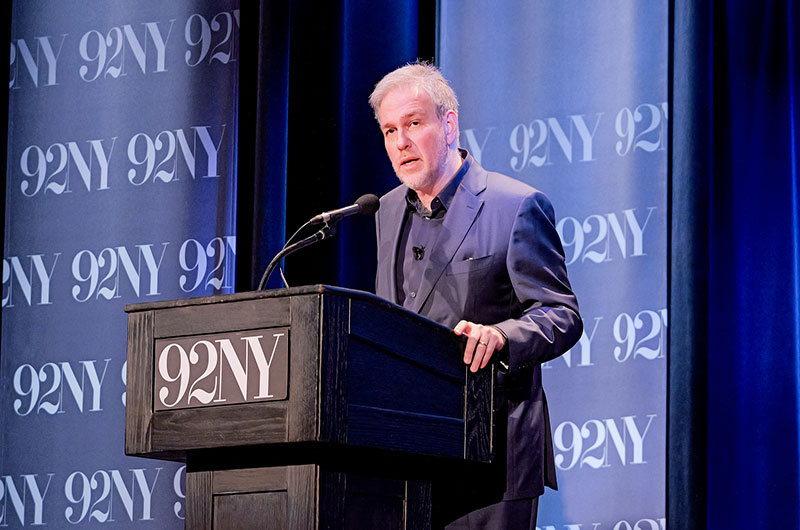


Bret Stephens’s recent “State of World Jewry” address at 92NY resonated with many Jews. We are in a scary time, he acknowledged. Antisemitism is rising openly and shamelessly on campuses, online, in the streets, and even in mainstream institutions that once felt safe.
From Stephens’s perspective, the fight against antisemitism, as it has been carried out for decades with education campaigns and advocacy groups, is well-meaning but largely ineffective. He argued that Jew hatred is not mainly a result of ignorance; it is a psychological reflex, more like a neurosis than a solvable misunderstanding. Instead of spending millions on fighting antisemitism, he argued, Jews should focus on promoting Jewish life: day schools, camps, media, culture, philanthropy, and building strong Jewish institutions. “If there’s no room at the table,” he quoted Philip Glass, “build your own table.”
The speech sparked excitement and inspiration. It provided something rare: a vision of Jewish strength rather than just a lamentation about the hatred Jews face.
However, the backlash was swift. Critics offered their own metaphor: you can’t protect a people by just improving the inside of the house while the walls burn. They argued that while Jewish pride, identity-building, and Torah education are essential, without a strong communal defense, Jewish life itself could become impossible.
So, what should we do? Should we invest in building Jewish life or in defending Jews against those who wish to harm them?
From a Torah perspective, the answer is clear: the question itself is flawed. Judaism does not operate in either/or terms. The Torah’s model is not “build” or “protect.” It is always both.
One striking aspect of halacha is that it doesn’t create kedusha (holiness) through positive commandments alone. It pairs mitzvot aseh (what we must do) with mitzvot lo ta’aseh (what we must be sure to avoid). The Torah suggests that a meaningful life requires both building the good and resisting the harmful.
Pesach illustrates this perfectly. We are commanded to eat matzah. But any Jew preparing for Pesach knows that the real work involves not eating chametz. We search for it, remove it, burn it, and rearrange our entire home around its absence.
Shabbat is similar. Shabbat involves not just Kiddush, zemirot, family meals, and resting. It also includes “shamor,” carefully observing Shabbat by refraining from melacha. The joy of Shabbat comes from its boundaries. The holiness of the day is shaped not just by what we bring into our home, but also by what we work hard to keep out.
The Torah’s theology operates the same way. Judaism is not only about believing in one true G-d. It also includes a system of prohibitions against idolatry and even the appearance of idolatry. We are commanded not just to worship Hashem, but to eliminate competing loyalties and negative influences that distort our faith. The Torah does not trust holiness to stand alone without protection.
This is crucial. It is the Torah’s key insight: building anything sacred needs guarding.
That is why the Torah often frames religious life as a mix of two actions: aseh tov v’sur me’ra, “do good and turn away from evil.” A Jewish life encompasses both growth and resistance. It is about creating and also about preventing destruction.
This is the lens we should use for our current situation.
Yes, we need to build. We must invest more in Jewish education, literacy, institutions, and pride. This is what I involve myself with daily as a rabbi. We need day schools that are affordable for Jews of all socioeconomic levels, camps, youth movements, adult learning opportunities, and serious cultural life. We should raise a generation of Jews whose identities are not merely reactions defined by fear or historical trauma but proactive, grounded in Torah, mitzvot, and a bond with all Jews and our shared history. In this way, Stephens is absolutely right. Jewish identity cannot survive if victimhood becomes its main focus.
However, it is also true that Jewish life cannot thrive if safety is an afterthought. Pikuach nefesh is a mitzvah. There is nothing “optional” about protecting Jewish communities, securing synagogues and schools, confronting incitement, challenging discrimination, and addressing legal and institutional threats.
It’s both. Walls without a home and a family inside them are meaningless, and a home without walls does nothing to protect the family inside of it.
We should reject this false choice. Jewish continuity will not come from dismantling the organizations that defend Jews. Yet it also won’t happen if we think that defense alone will foster Jewish pride. Fighting antisemitism cannot substitute for living Judaism. Thank G-d the Jewish community has sufficient resources for both.
Defense protects the Jewish people. Jewish identity shows why the Jewish people are worth protecting. The Torah does not ask us to choose between “zachor” and “shamor.” It asks for both. It does not establish holiness through positive commands alone or maintain it with prohibitions alone. It calls for a religious life that builds and guards, that creates and defends, that dreams and safeguards the dream. In a time when it feels like the walls are on fire, our response must be the one that follows the Torah’s model: both reinforce the walls and enrich the life within them.