 October 16, 2026
 Categories: Featured / Headline / Parsha
Vayigash: Hidden Strength in Sacred Devotion
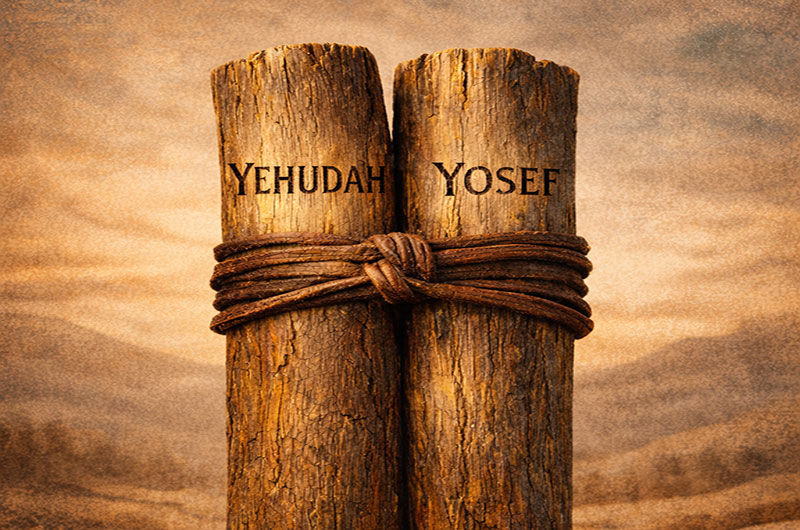


Yechezkel is commanded to take two sticks, one inscribed for Yehudah and the other for Yosef, and join them together. This prophetic act is not merely symbolic but a ritual of restoration. Two kingdoms, long divided, are to become one nation again. Their differences are not erased, but held together in harmony under Hashem’s bris shalom.
It is a powerful image, but raises a question we seldom ask: Who is counted in that nation?
The Torah records: “His sons, his sons’ sons, his daughters, and his sons’ daughters all went down to Egypt with Yaakov.” Only Dinah is named, yet the plural reminds us that others were present. Though the genealogies trace the sons, the daughters – whether biological, daughters‑in‑law, or even Yocheved, born at the threshold of exile – were part of the transmission. Their presence, though less visible, sustained our people in exile.
This is not merely a genealogical curiosity. It is a silence that echoes through the generations. These daughters were there. They consoled Yaakov. They entered Mitzrayim. They carried our traditions in ways the text does not name. And if we are serious about Yechezkel’s vision of unity and becoming one nation in the land, then we must be meticulous about who we include when we say “nation.”
This is not about resolving ambiguity. It is about honoring the Torah’s plural. It is about remembering the daughters. Not only Dinah or Yocheved, but all of them. The ones who were present. The ones whose names are not preserved. The ones who remind us that Klal Yisrael is not limited to census alone, but is a living transmission, carried in faith, and it must speak in plural.
Names in the Silence
The Torah does not record the names of the daughters who entered Mitzrayim, yet the commentators do not let that silence rest. Across centuries, there have been interpretations that not only resolve a textual ambiguity, but preserve a sense of wholeness. Their efforts reveal something deeper than historical curiosity: They show us how much is at stake in the act of counting within Klal Yisrael.One approach suggests that each of Yaakov’s sons was born with a twin sister. This would mean twelve daughters, each paired with a brother, each part of the family’s expansion. This view raises halachic and narrative questions: If the brothers married their twin sisters, how does that align with later prohibitions in the Torah? Some commentators respond that they married each other’s twins instead. Others suggest these daughters died before the descent to Mitzrayim. The point is not to resolve the contradictions, but to affirm that the daughters were present, part of the family’s growth, and integral to its journey.
Another view identifies the daughters as daughters‑in‑law. In this reading, “b’notav” is not strictly biological but relational. It reflects affection, inclusion, and proximity. These women married into the family, bore children, and entered exile alongside their husbands. They were not born of Yaakov, but they were bound to him, and thus part of the mesorah.
Some commentators go further, suggesting that the term includes maidservants. These women lived in Yaakov’s household, raised his children, served his wives, and crossed into exile with the family. They were not kin by blood or marriage, but they were present. They witnessed. They carried. They crossed borders with the rest. This view reminds us that proximity, loyalty, and service also shaped the household of Israel.
Then there is Yocheved. According to one tradition, she was born bein hachomot – between the walls of Mitzrayim as the family entered. She would become the mother of Moshe, Aharon, and Miriam, birthing the next generation of redemption. Her presence in the verse is a hinge between exile and exodus. She is both daughter and mother, entry and future. Her inclusion shows that even a single name, placed carefully, can carry the weight of generations.
Finally, some suggest that Dinah was the only daughter, and that the plural is a linguistic convention – as in “bnei Dan: Chushim,” a single son named in the plural. If that is the case, then the silence is notable. Dinah is the only one named, and even she disappears from the narrative after Shechem. Her story is one of pain and ambiguity, yet she remains the sole daughter preserved in the text.
Each interpretation does more than fill in a blank. It makes a claim about what matters, about who counts, about how we hold memory. Whether through bloodline, marriage, service, or consolation, these daughters are drawn back into the frame – not only to complete a census, but to restore a sense of wholeness.
The commentaries do not agree. They do not need to. Their multiplicity is the point. Together, they model a kind of interpretive mercy. It is a refusal to let silence mean absence, or plural mean peripheral. They remind us that our faith is not limited to names alone. It is a living transmission, carried in plural, sustained by devotion, and preserved across generations.
Pillars at the Threshold
If we want to understand what it means to join Yehudah and Yosef – two lineages, two visions of leadership – we must also look at the women who stand at their thresholds. Not only the unnamed daughters who entered Mitzrayim, but also the named women whose faith and devotion shaped the legacy and carried it forward.Take Tamar. She compels Yehudah to continue his line not through rebellion, but through fidelity. Her actions are bold and foundational. Without her, there is no Peretz. Without Peretz, no David. Without David, no messianic line. Tamar does not simply preserve the legacy; she ensures its continuity in accordance with Hashem’s plan.
Or Serach bat Asher. She appears briefly in the genealogies, but Midrash grants her a voice that spans generations. According to Midrash, she is the one who tells Yaakov that Yosef is still alive. She is the one who remembers the secret of redemption. She enters Mitzrayim and, according to tradition, lives to witness the Exodus. She embodies memory itself, carrying the arc of the story across centuries.
Yocheved, born bein hachomot, between the walls of Mitzrayim, is another hinge. She is both the last to enter and the first to birth the future. As the mother of Moshe, Aharon, and Miriam, she becomes the source of leadership, prophecy, and redemption. Her birth marks the threshold of exile, and her legacy anchors the dawn of deliverance.
Osnat, daughter of Poti Phera and wife of Yosef, is often overlooked. Yet she, too, is part of the transmission. Her children, Efraim and Menashe, are counted among the tribes. An outsider, her sons are blessed by Yaakov as his own. Her presence reminds us that belonging in Israel is not only through bloodline, but through the embrace of emunah by those who join and build within it.
These women are not exceptions. They are pillars of the architecture of our people. They remind us that tradition is not limited to names alone, but is sustained by devotion, loyalty, and faith. To speak of “one nation” without them is to overlook the fullness of belonging. Their presence does not complicate the story; it completes it.
Sacred Acts of Remembrance
To restore is not to rewrite. It is to name what was carried, without claiming what was never ours to invent. It is to hold memory without forcing symmetry. Restoration demands precision, humility, and care.The daughters who entered Mitzrayim were not named. The women who preserved Klal Yisrael are named, but often only in passing. Their stories do not disrupt the lineage; they strengthen it. Their presence does not unsettle the census; it completes it. Their transmission is undeniable.
But restoration is not only about naming. It is about how we remember. Whom we honor. What we refuse to overlook.
We could say “the daughters were there” and leave it at that. But true restoration requires us to ask: What did they carry? What did they witness? What was lost when their names were not recorded?
It also requires restraint. We are not meant to fill in every blank or assign roles simply to soothe the silence. The Torah’s gaps are not errors; they are invitations. Invitations to remember without overclaiming, to honor without rewriting.
This is where Devorah enters. She does not transmit lineage. She does not preserve descent. She judges. She leads. She sings. She holds the people accountable. Her authority is not inherited but earned through devotion to Torah. She reminds us that restoration is also about voice. It is about standing in the breach and guiding the people with faith.
Shifra and Puah, too – they do not carry our emunah through descent, but through devotion. In the face of Pharaoh’s decree, they preserve life with courage and loyalty to Hashem. Their names are recorded not because of ancestry, but because of their faith and their role in safeguarding the future of Israel.
Restoration with reverence means naming these women. They are not exceptions; they are foundations. It means recognizing difference without collapsing it into sameness. It means holding paradox with humility, knowing that Hashem’s plan is carried through many vessels.
The daughters of Yaakov were plural. The Torah says so, but the record is silent. Thus, the commentaries seek to restore. We are not resolving the silence, but honoring it. To name what can be named. To leave space where space is sacred.
This is not only a textual act; rather, it is the sacred act of remembrance. Restoration is a form of transmission. And transmission, when done with integrity, preserves the mesorah without flattening its depth.
The Plural as Promise
The Torah’s record is deliberate. It names the sons. It traces the lineage. It builds the census. And it leaves the daughters in plural, unnamed.That is not an oversight. It is an opening.
Commentators across generations have sought to respond to that silence. They have offered interpretations that draw women back into the frame – Tamar, Serach, Yocheved, Osnat, and others whose devotion preserved Israel’s future. Yet restoration is not about recovering every name. It is about recognizing what the plural teaches us.
It teaches that transmission is broader than a list of names. It reminds us that belonging in Klal Yisrael comes not only through bloodline, but through faith, loyalty, and devotion. It calls us to treat absence not as erasure, but as an invitation to remember, to honor, and to recognize the fullness of our emunah.
The plural compels us to ask: Whom do we remember, and why? Whom do we honor, and whom do we leave unnamed? What do we carry forward, and how do we carry it?
This is not about correcting the Torah. It is about engaging with it. Responding to its silences with care. Honoring its precision without denying its depth.
The daughters were there. The Torah leaves them unnamed, but not absent. Their faith carried Israel into exile, and their strength will carry us toward redemption. The plural is not only a record; it is a promise from Hashem that Klal Yisrael belongs to all of us, and that in its fullness, it will lead us to the unity of Moshiach.