 October 23, 2026
 Categories: Featured / Focus / Torah / Features
Welcoming Elul, Haftara Hullabaloo, And an Animal Appendix


Parshat Re’eh – Erev Rosh Chodesh Elul
Shabbat Parshat Re’eh falls on the 29th of Menachem Av this year. That means that Rosh Chodesh Elul is on Sunday and Monday. This happens 11.51% of the time. Rosh Chodesh Elul falls on Shabbat Parshat Re’eh 28.03% of the time. Not this year. But what makes that occurrence interesting is the following:
Usually, on Shabbat Rosh Chodesh, we read the special haftara “Hashamayim Kis-i” from Yishayahu 66 (the final perek). And usually, on Shabbat Erev Rosh Chodesh, we read a different special haftara – “Vayomer Lo Yehonatan Machar Chodesh.” This coming Shabbat is Erev Rosh Chodesh, but we do not read the Machar Chodesh haftara as it would interrupt the flow of the Seven Haftarot of Consolation read from the Shabbat after Tisha B’Av through the Shabbat before Rosh Hashana. Sepharadim (Eidot Mizrach) will add the first and last pesukim of the Machar Chodesh haftara after finishing the regular haftara of Re’eh. Ashkenazim do not add anything to Re’eh’s haftara.
Also of note: When Re’eh falls out on Shabbat Rosh Chodesh (which is not the case this year), we do read the haftara for Shabbat Rosh Chodesh, since it too comes from the consolation perakim of Yishayahu. Two weeks later, we append the Re’eh haftara that we had skipped to the haftara of Ki Teitzei, reading them both. In this way, none of the seven special haftarot are left out of the schedule. Ki Teitzei’s haftara and that of Re’eh are continuous in Yishayahu, and the two together happen to be the haftara of Parshat Noach.
Since Menachem Av has 30 days in our fixed calendar, Rosh Chodesh Elul is always two days. Elul itself has only 29 days.
The customs of blowing shofar each weekday morning during Elul (except for erev Rosh Hashana) and the recitation of “L’David” (Psalm 27) begin on Monday morning, the first day of Elul and second day of Rosh Chodesh. Those who say L’David at Maariv will begin on Sunday night; those who say it at Mincha will say it twice on Monday. By the way, strict followers of Minhag Yerushalayim (based on the opinions of the Vilna Gaon), do not say L’David.
As for Selichot, Eidot Mizrach will begin saying them from the second of Elul, early Tuesday morning. Ashkenazim will be saying Selichot this year from Motza’ei Shabbat Ki Tavo (September 13). That’s a week earlier than the Motza’ei Shabbat right before Rosh Hashana, because we need a minimum of four days of Selichot before Rosh Hashana. Since Rosh Hashana is Tuesday and Wednesday this year, Ashkenazi Selichot begin a week earlier.
We will bentch Rosh Chodesh this Shabbat and announce the coming month – “Rosh Chodesh Elul yihyeh machar b’yom Rishon uvyom Sheini…”
Which finally brings us to Re’eh, and some interesting stats about the length and ranking of the sedra.
With 126 pesukim, Re’eh is ranked 13th among the Torah’s 54 sedras. It is tied in number of pesukim with Lech Lecha.
But look at the result using other ways of measuring the length of a sedra: Re’eh is written on 257.8 lines in a Sefer Torah (ranking 4th), while Lech Lecha is ranked 23rd, written on only 208 lines. Line count is affected by words and letters per pasuk (much higher for Re’eh) and the amount of blank spaces due to the number of parshiyot (Re’eh has many more). For total words and letters, Re’eh i is ranked 7th (first in the Book of Devarim); Lech L’cha is ranked 18th and 19th in these two categories. Re’eh has relatively long pesukim like most sedras in Devarim; hence its increase in rank from the pesukim category to words and letters.
Mitzvot, you ask? (Or even if you didn’t ask…) Re’eh has 55 of the Torah’s 613 mitzvot – only Emor (with 63) and Ki Teitzei (with 74) have more mitzvot. Re’eh has 17 mitzvot asei (positive mitzvot) and 38 mitzvot lo ta’aseh (prohibitions).
Commentaries point out that the Book of Devarim can be divided into three parts. The first part includes the sedras of Devarim, Va’etchanan, and Eikev – which constitute the first section of Moshe’s farewell address to the people. In this section, he reviews the formative history since the Exodus up to the point when the new generation finds itself at the threshold of Eretz Yisrael. He also presents the foundations of Torah observance: the Aseret HaDibrot, the Shema (first and second passages), the basic mitzvot of Birkat HaMazon (and all brachot in its wake), and the mitzvot of prayer, love of G-d, fear of G-d, and other fundamentals of Judaism, including the primacy of Eretz Yisrael in G-d’s plan for His People. The mitzvah count for these three sedras is smallish – 2, 12, and 8 (22 total).
The middle part of the Book of Devarim is the tachlis part – mitzvot, mitzvot, and more mitzvot. Some are a review; others are being taught by Moshe for the first time. But all are from Sinai. Re’eh (55 mitzvot), Shof’tim (41), and Ki Teitzei (74) are the sedras in this section of the Book. The Gr”a adds the beginning of Ki Tavo, with 6 more mitzvot, for a total of 176 (a little under 30% of all the mitzvot in the Torah).
And the final section, made up of the bulk of Ki Tavo, all of Nitzavim, Vayeilech, Ha’azinu, and V’zot HaBeracha, has only two mitzvot total, but contains the concepts of reward and punishment, free will, and accountability – which combine to give us an understanding of why a Torah life is so important to us.
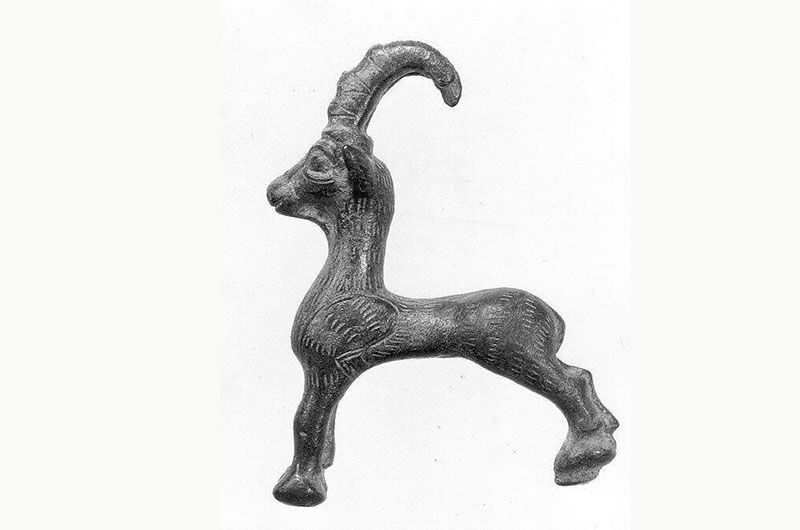
Among many other topics, we find in Re’eh a second presentation of the animals we may and may not eat. The first time was back in Parshat Shemini, where the signs for kosher mammals are given (cud-chewing and split hooves) but the kosher animals are not named. Only four non-kosher mammals are specifically named (both in Shemini and Re’eh). But in Re’eh, we have the kosher animals identified as cow, sheep, and goat – the beheimot tehorot (kosher domesticated farm animals) – as well as seven examples of chayot tehorot (kosher “wild” animals), namely gazelle, deer, antelope, ibex, chamois, bison (or wild ox, maybe water buffalo), and giraffe. These translations of the Torah’s Hebrew words are based on Rav Aryeh Kaplan’s The Living Torah. There are also other opinions. Either way, the bottom-line identification of kosher animals is cud-chewers with split hooves.
Fishes are not named in either sedra – only the requirement of having fins and scales. Be aware that fish can have different types of scales – placoid, cosmoid, ganoid, cycloid, and ctenoid. Only fish with cycloid or ctenoid scales are kosher. These scales can easily be scraped off the fish without damaging the fish’s skin.
For birds, a list of forbidden types is presented. Unlike mammals and fish, there are no guidelines, just names. Without definitive simanim (signs), we rely on masoret (tradition) as to which birds we eat.
We’ll leave locusts for another time.
One more interesting number related to Re’eh. The Torah says three times, “Lo t’vasheil g’di bachaleiv imo” – You may not cook meat with milk – once in Mishpatim, once in Ki Tisa, and once in Re’eh. Our Oral Law teaches us that there are three prohibitions concerning meat-in-milk: (1) cooking meat and milk together; (2) eating cooked mixtures of meat-in-milk; (3) deriving any benefit from meat and milk that were cooked together. Question: How many mitzvot among the 613 are there for meat-in-milk? You might say it is one mitzvah with three aspects. Or you can say that there are three mitzvot – one for each prohibition, learned from three different pesukim. But the Rambam and Sefer HaChinuch count two mitzvot. Counterintuitive, perhaps. But that’s their count: One prohibition for cooking milk and meat together, and one for eating or deriving any benefit (eating being the main benefit). So, what’s the point of the third verse in Re’eh? To teach us that – unlike for most other forbidden foods – any other benefit from the food mixture is also forbidden.
Shabbat Shalom and Chodesh Tov.