October 2, 2026
 Categories: Featured / Headline / Parsha / Torah
When We Unsee Ourselves: A Reading of Shelach and the Quiet Work of Truth
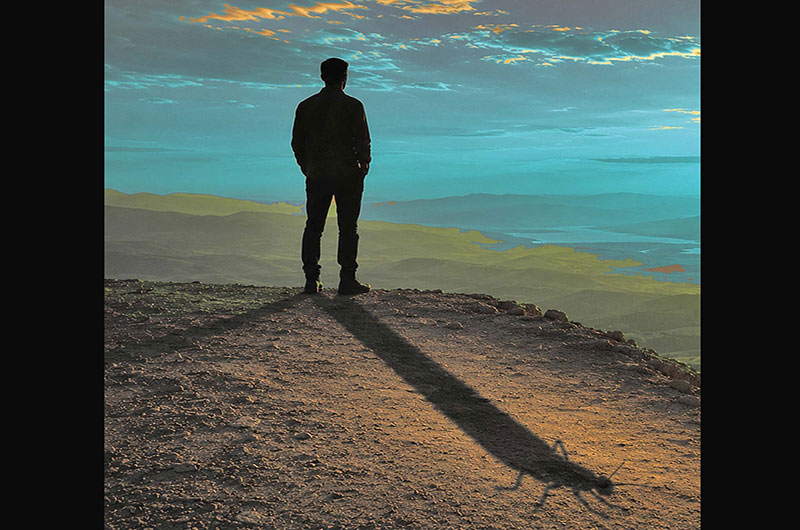


The heart of Parshas Shelach is revealed in a single sentence. After describing the land, its strength, and its challenges, the spies offer the line that exposes the deeper collapse beneath their report: “Vanehi ve’eineinu kachagavim” – We were like grasshoppers in our own eyes.
The words are brief, but they open a window into the inner world that shaped everything that followed. The land had not diminished them. The giants had not diminished them. They had diminished themselves. Long before the people cried, long before the decree was spoken, the erasure had already begun. It began in the way they saw themselves, in the quiet shrinking that happens when a person decides they are unequal to the life waiting for them.
The Torah does not analyze the sentence. It simply presents it, stark and unembellished, and leaves us to understand what it means for a person to step back from their own life. Not because the world is too large, but because they believe they are too small to stand inside it. The spies were not overwhelmed by the land. They were overwhelmed by the prospect of becoming real within it, of entering a world where their choices would matter and their actions would carry weight. In the midbar, identity could remain suspended. In the land, it would have to take form. As Rav Soloveitchik, zt”l, teaches, a self that is never asked to choose is a self that never fully comes into being.
This is the first erasure in the parsha. Not the erasure of promise or history, but the erasure of self.
The Wilderness as a Soft World
The world of the midbar had shaped the people in ways they did not fully understand. It was a world where every need was met before it was felt, where survival required no strategy, where direction was given rather than chosen. Manna appeared each morning without effort. Water emerged from a rock without planning. Clouds shielded and guided without asking anything in return. Life unfolded without the weight of decision. The people were sustained, but they were not yet required to stand. Inside such a world, it was possible to remain unformed. It was possible to live without confronting one’s own strength or one’s own fear. The midbar held them, but it also softened them. Rav Hirsch, zt”l, writes that without the resistance of real life, the human being cannot grow into moral adulthood. When the spies said “vanehi ve’eineinu kachagavim,” they were speaking from within that softness. They were describing a self that had never been tested, a self that had never been asked to build or defend or choose. And once they named themselves as small, the land became large in ways it had never been.The Weight of Becoming Real
The moment the spies confronted the land, they confronted themselves. That was the point at which the real fear began. The land did not threaten them. Its inhabitants did not threaten them. What threatened them was the demand to step into a life where their choices would matter. A life where they could no longer remain undefined. This is the core of erasure. It is not the rejection of truth – it is the refusal to inhabit it. There is a particular terror in stepping into a life that asks something of you. A terror in realizing that the world is not waiting to crush you, but to be shaped by you. The spies were not afraid of giants – they were afraid of becoming the kind of people who could face giants. They were afraid of discovering that their lives were not accidental, that their presence carried weight, that their choices could no longer be dissolved into the anonymity of the midbar. So, they projected their own fracture outward. The Talmud teaches that one who invalidates another reveals their own blemish. Their self-erasure became a lens through which they interpreted reality. They saw themselves as grasshoppers and so they assumed the world saw them that way too. This is not ancient psychology. It is the mechanism by which entire cultures rewrite truth. When a society cannot bear its own contradictions, it projects them outward. When a movement cannot sustain its own claims, it demands that others shrink to accommodate them. When a nation cannot face its own failures, it narrates someone else as the villain. The spies were the first to teach us that erasure begins with projection.Consequences, Not Punishment
There is a moment in every life when a person stands before something vast and feels the temptation to step back, to shrink, to narrate themselves out of the story. It may be a relationship, a calling, a responsibility, a truth that feels too heavy to carry. It may be a moment when the world asks us to be larger than we feel. The instinct is to say, I am too small. I am not enough. I cannot hold this. The Torah tells us that this instinct is ancient. It is the instinct of the spies. It is the instinct to erase the self before the world can demand anything of us. It is the instinct to retreat into the version of ourselves that feels safest, even when that version cannot sustain the life we are meant to live. But the Torah also tells us that this instinct is not destiny. It is a choice. The people choose to cry. They choose to collapse. They choose the smaller story. And Hashem responds not with anger but with sorrow – the sorrow of seeing a people who cannot yet see themselves, the sorrow of watching a generation surrender the strength that was already within them. There is a tenderness in that sorrow. A parent watching a child step back from a future they are capable of inhabiting. A Creator watching His creations refuse the very greatness He placed within them. The decree that follows is not the fury of a disappointed Creator but the ache of a Creator who knows that a people who cannot see themselves cannot yet carry a destiny. The Talmud gives us the language for what happens next: It teaches that a change of name brings a change of destiny. If you rename yourself small, your future shrinks to match. If a culture renames truth, truth collapses. If a nation renames its history, its future bends under the weight of the lie. This is how erasure works in every generation. Rename the thing and you reshape the world around it. Rename identity and you dissolve the human being. Rename borders and you erase a people. Rename reality and you inherit its distortion. The spies were the first to teach us that narrative is not commentary – narrative is destiny.The Restoration of Sight
Yet the Torah does not end the story there. The next generation will enter the land. The next generation will see themselves differently. The next generation will refuse to erase what is theirs. They will inherit the same promise their parents feared, not because the world will have changed, but because they will have learned to see themselves inside it. This is the quiet hope inside the story. Erasure is powerful, but it is not permanent. A narrative can be rewritten. A self can be restored. A people can learn to reclaim the parts of themselves they once surrendered. The Talmud reminds us why this matters. It teaches that the Torah was not given to angels. It was given to human beings, who must choose truth even when the world prefers illusion. It was given to people who must stand inside their own identity even when others insist on reshaping it. It was given to a nation that must refuse erasure in every generation.Standing Inside What Is Already Ours
When the spies say “vanehi ve’eineinu kachagavim,” they are not describing reality. They are describing a story they chose to believe. And the Torah invites us to choose differently. To see ourselves not as grasshoppers, but as human beings created b’tzelem Elokim. To see truth not as something to shrink from, but as something to stand inside. To see inheritance not as a burden, but as a calling. To see the land, the promise, the future, and the self with clarity, courage, and integrity. This is not a story about ancient failure, but a warning about the present. A world that renames truth will gladly rename you. A culture that dissolves categories will gladly dissolve your identity. A society that cannot face its own fractures will gladly project them onto the Jew. The world has always been eager to place its own wounds on our shoulders. If we do not see ourselves, others will define us. If we do not name ourselves, others will rename us. If we do not hold our truth, others will rewrite it until it no longer resembles anything we recognize. To see ourselves clearly is not a luxury – it is survival. To name ourselves truthfully is not pride – it is responsibility. To stand inside what is already ours is not defiance – it is faith. The giants have not disappeared. The world has not grown gentler. But we have learned to see ourselves. And that is the beginning of every redemption.