 October 16, 2026
 Categories: Features / Book Reviews
Who Can Be Moshiach?
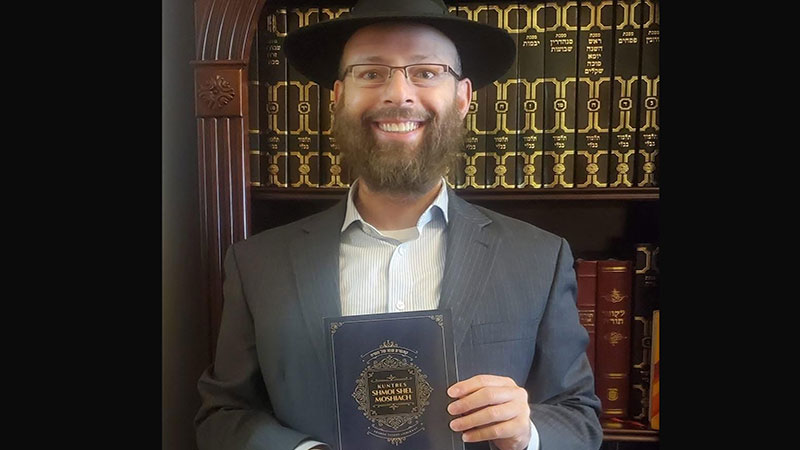


An Interview with Rabbi Aharon Yaakov Lieberman
Rabbi Aharon Yaakov Lieberman is a seasoned software engineer. However, his passion lies in Torah study, with a special emphasis on the topic of Geulah and Moshiach.
He has written an English-language book entitled Kuntres Shmoi Shel Moshiach based on his lengthier Hebrew sefer of the same name. In it, he discusses the qualifications for someone to be Moshiach. Rabbi Lieberman marshals sources for the proposition that Moshiach can come from among the dead or from the living. This work does not stake a claim about whether any particular person, living or dead, is or will be Moshiach. Rather, his position is that the view that Moshiach can be someone who has passed away has a basis in Jewish scholarship. The JP spoke with Rabbi Lieberman about his book.
What are the qualifications of someone who is fit to be Moshiach?
According to Rashi, someone who is raui lehyos Moshiach (“fit to be Moshiach”) is a person who is pious and has suffered. On the other hand, Maharsha says that someone who demonstrates rulership and has fear of sin is raui lehyos Moshiach. We know that someone is fit to be Moshiach based on his piety. He also must be from the Davidic lineage.
Can you define chezkas Moshiach?
Someone who compels Torah observance amongst the Jews and fights the wars of Hashem has the halachic status of someone who is b’chezkas Moshiach (is presumed to be Moshiach). Once Hashem’s prophecies are fulfilled (for the rebuilding of the Beis HaMikdash and ingathering of the exiles), this person is the Goel Tzedek, the definite Moshiach.
There are signs to look for through the ordinary course of nature. According to the Rambam, if someone announces he is Moshiach, that declaration carries halachic weight. He must demonstrate signs of chezkas Moshiach. The Raavad, however, does not recognize the status of chezkas Moshiach. Rather, a person must declare himself to be Moshiach and pass the “smell test”; that is, he must demonstrate the miraculous ability to judge through his sense of smell.
In Rabbi Akiva’s lifetime, the sages believed that Bar Kochba was Moshiach, but they soon rejected this idea because the military leader could not judge by smell. The Rambam rejects this test and states that Bar Kochba was killed not because he failed it, but because of his various aveiros, following Rabbi Akiva’s opinion.
If someone died without bringing the Geulah can he still be Moshiach?
Yes, provided he is considered “fit to be Moshiach.” If someone did not bring the Geulah in his lifetime, he can still be raui lehyos Moshiach. However, he would have to fulfill the Messianic prophecies at the time the Geulah is supposed to come, which include rebuilding the Beis Hamikdash and kibbutz galiyos (the ingathering of the exiles). The Rambam clarifies his halachic position in Igros Techiyas HaMeisim, explaining that an individual can experience his own techiyas hameisim (resurrection). No one disputed the Rambam on this point. Hashem can therefore bring about a techiya pratis (individual resurrection) before Moshiach comes. Logically, this leaves open the possibility of Moshiach coming from the meisim, in accordance with statements of Chazal.
Is there anyone who does not believe that Moshiach can come from the dead?
According to Chazal, as understood by Rashi and many others, Moshiach can come from the living or the dead. They just argue about who he will be. The disagreement is over what qualifications he must have. The value of Kuntres Shmoi Shel Moshiach is that it shines a light on these sources for all to see.
It is very important to note that Yoshka (Jesus) was never in the running to be Moshiach, chas v’shalom. He was a rasha. No one considered him to be fit for this role even while alive. Shabtai Tzvi as well. He was a fraud who abrogated Torah and mitzvos. He was a false Messiah. Moshiach has to be fit to be Moshiach – a tzaddik.
Reb Nochum Chernobyler and many others have said the Baal Shem Tov was Moshiach (after he passed away); the students of the holy Ruzhiner Rav believed he was Moshiach (after he died). The Minchas Eliezer (Rabbi Chaim Elazar Shapira – the Munkaczer Rebbe) considered Rabbi Shlomo Eliezer Alfandari to be Moshiach (after the latter’s passing). There’s no comparison of the resha’im mentioned above to l’havdil these holy tzaddikim. By definition a tzaddik is holy. All of these rabbanim met the qualifications to be Moshiach in their lifetimes. Their deaths do not abrogate this.
People confuse fitness to be Moshiach with the actual Moshiach, which is the cause of much confusion. Your book helps clarify things.
Baruch Hashem.
L’havdil, someone can be a presidential candidate, but not be president. To be a United States president you must meet certain prerequisite qualifications.
The Lubavitcher Rebbe passed away. Those who believe that he will be Moshiach maintain that when the time for the Geulah comes, he will then fulfill the Messianic prophecies. In other words, they believe that he will become the actual Moshiach when Hashem decides to bring the Geulah. In essence, they are making the same type of claim as the schools of Rabbi Sheila, Rabbi Yannai, and Rabbi Chanina in the Gemara in Sanhedrin, as discussed in my sefer. And after the time of Chazal, similar claims were made regarding the Baal Shem Tov and the holy Ruzhiner, as mentioned above.
How could Rabbi Yannai’s name indicate that he was fit to be Moshiach?
Rabbi Yannai’s students regarded him as fit to be Moshiach based on a hint from their teacher connecting his name to a verse associated with Moshiach. Regarding the verse that Rabbi Yannai used to convey this hint to his students, Rashi states (Sanhedrin 98b): “Even before the sun was created, his name was Yinnon. This is one of the seven things that Hashem thought of before Creation” (Rashi, s.v. Lifnei).
Explain the concept of a Moshiach in every generation.
Belief that there is Moshiach alive in each generation, as well as the belief that Moshiach can be from among the dead, are both legitimate beliefs. Each has a strong foundation in Chazal and our tradition, throughout the generations. When tracing the source for the concept of Moshiach in each generation to the Gemara, we find it mentioned together with the possibility that Moshiach can also come from among the dead
Kuntres Shmoi Shel Moshiach shines a light on the subject of Moshiach in a way that promotes unity and achdus Yisrael. By studying this concept, we can dispel any misconceptions about it and hopefully hasten the Geulah.
Kuntres Shmoi Shel Moshiach is free to download on the author’s website, ShmoiShelMoshiach.com and is also available for purchase in Judaica stores and Amazon.
Rabbi Lieberman is a sought-after speaker and has given shiurim on the topic of Shmoi Shel Moshiach around the world.