 October 16, 2026
 Categories: Collecting / Arts
Booker T. Washington and the Jews
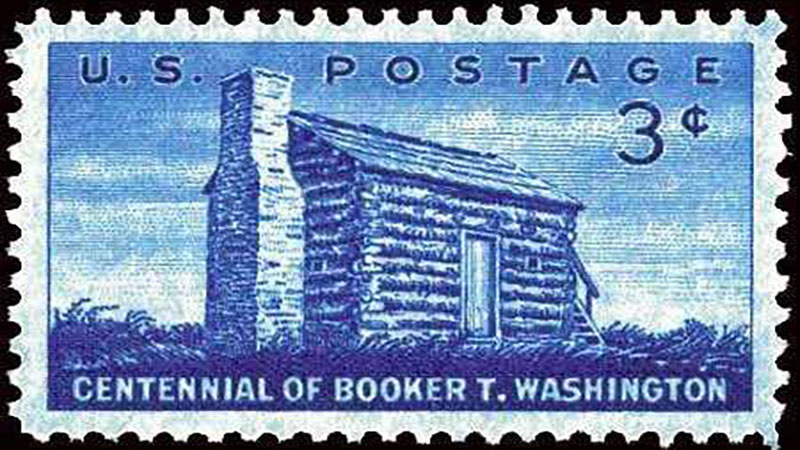


Few major American figures of the late nineteenth and early twentieth centuries have been so thoroughly studied, so passionately debated, and so persistently simplified as American educator and political leader Booker T. Washington (1856-1915). To admirers, he was the practical genius who built institutions, accumulated influence, and taught formerly enslaved Americans the disciplines of economic self-sufficiency under unimaginably hostile conditions, but to critics, particularly later generations influenced by American sociologist and civil rights activist W. E. B. Du Bois, he was frequently characterized as overly conciliatory toward and accommodating of white power.
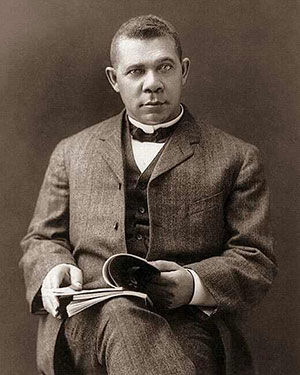
Born as a slave in Franklin County, Virginia, during the final years before the American Civil War, Washington grew up in deep poverty and experienced firsthand the instability and deprivation of slavery. After emancipation, he worked in salt furnaces and coal mines while struggling to obtain an education, and his determination eventually brought him to the Hampton Institute, where he studied under educator Samuel Chapman Armstrong, whose emphasis on discipline, vocational training, and economic self-help profoundly shaped Washington’s philosophy.
In 1881, at only twenty-five years old, Washington founded what became the Tuskegee Institute in Alabama, and, starting with virtually no resources, he almost singlehandedly transformed the school into one of the leading black educational institutions in the United States. Tuskegee emphasized industrial and vocational skills such as agriculture, carpentry, brickmaking, printing, and domestic sciences, alongside moral instruction and basic academic education, and students helped to construct the campus buildings themselves, embodying Washington’s belief that practical labor and education should go hand in hand. He believed that economic independence and practical competence would gradually win African Americans respect and civil rights in the deeply segregated South.
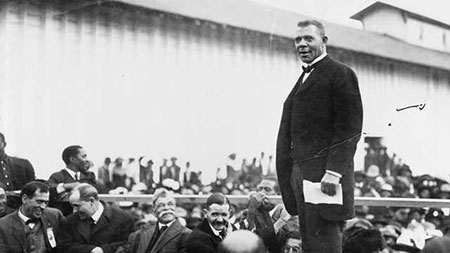
Washington became nationally famous after his 1895 speech at the Atlanta Exposition Address, often called the “Atlanta Compromise” speech, in which he urged African Americans to focus temporarily on economic advancement and vocational education rather than immediate agitation for full social and political equality. He famously advised Black Americans to “cast down your bucket where you are,” meaning that they should seek opportunity through hard work and cooperation within the South rather than through confrontation or migration, while at the same time urging white Southerners to employ and support Black citizens rather than hostile immigrants or exploitative systems. The speech won enormous praise from many white Americans, especially business and political leaders, who saw Washington as moderate, practical, and reassuring during a tense racial era.
Washington’s influence extended far beyond education. He became a powerful fundraiser, building relationships with wealthy philanthropists such as Andrew Carnegie and John D. Rockefeller, who contributed substantial funds to Black schools and institutions, and he also quietly advised presidents, including Theodore Roosevelt and William Howard Taft, on racial matters and patronage appointments. Roosevelt’s decision to invite Washington to dine at the White House in 1901 caused fierce racist backlash across much of the South, illustrating both Washington’s prominence and the hostility that Black advancement still provoked.
Among African Americans, however, Washington’s reputation was more divided. Many admired him deeply as a self-made man who had risen from slavery to international fame and who created tangible educational and economic opportunities for Black Americans in an age of lynching, disenfranchisement, and segregation. To supporters, he was a realist who understood the dangers facing Southern Blacks and who sought gradual progress through institution-building, property ownership, and economic strength, but to critics, he accommodated white supremacy too readily. His leading critic, W. E. B. Du Bois, believed that Washington’s approach surrendered essential civil and political rights and argued that Black Americans should demand full equality immediately and cultivate a “Talented Tenth” through higher liberal arts education rather than primarily vocational training. Their disagreement became one of the central ideological debates in African American history. Washington was also criticized for wielding political influence behind the scenes to marginalize opponents and to shape Black leadership according to his own philosophy.
Modern historians tend to view Washington with more complexity than either his admirers or detractors at the time. While earlier portrayals sometimes depicted him as overly submissive to segregation, later scholarship has emphasized the constraints under which he operated in the violent post-Reconstruction South. Historians now often note that, publicly moderate though he was, Washington privately supported legal challenges to segregation and funded anti-lynching efforts and that his strategy reflected both caution and pragmatism in an era when open protest could invite deadly retaliation.
Washington believed that practical cooperation could achieve results even in a deeply segregated society and his correspondence and public appearances reveal a man acutely aware of the importance of alliances across religious and ethnic boundaries. However, there is one important aspect of Washington’s life that has received considerably less public attention than his famous debates over segregation and education: his sustained and often unusually warm engagement with American Jews and the Jewish community, an engagement that did not arise accidentally.
Washington’s life, from his childhood in slavery in Virginia through his rise as the founder and leader of the Tuskegee Institute, exposed him repeatedly to questions of minority survival, prejudice, migration, economic advancement, philanthropy, and communal solidarity. He came to see parallels – sometimes romanticized, sometimes acute and penetrating – between the historical experiences of African Americans and Jews and he admired Jewish achievement with genuine intensity; he cultivated friendships with prominent Jews and he spoke before Jewish audiences. Jewish philanthropists and businessmen supported Tuskegee; Jewish newspapers covered him sympathetically, and he, in turn, occasionally used Jews as examples in his speeches and writings, often holding up Jewish perseverance, education, family cohesion, and economic adaptability as models from which Black Americans might learn.
Washington’s earliest perceptions of Jews were shaped partly by observation in the American South during Reconstruction and the decades afterward. Historians have noted that in one of his early published anecdotes involving a Jewish immigrant whose rise from poverty impressed him deeply, he described, with characteristic admiration for industriousness and self-help, a Jewish newcomer who supposedly arrived with almost nothing and through persistence and business ability achieved prosperity within a relatively short period. This anecdote reflected Washington’s lifelong fascination with what he regarded as the practical mechanics of advancement, but this early story also revealed something more complicated: some scholars, including the distinguished Washington biographer Louis R. Harlan, have argued that Washington’s initial portrayals of Jews occasionally relied on generalized assumptions or stereotypes common in the broader American culture of the era. Washington lived in a society in which casual ethnic caricatures were widespread and often socially accepted; he was hardly unique in this regard, but over time his understanding appears to have deepened considerably, moving away from simplistic character sketches toward something more respectful and historically informed.
Indeed, Washington eventually developed unusually strong ties with Jewish individuals and organizations. Some of the most important financial supporters of Tuskegee were Jewish philanthropists, merchants, and businessmen, among the best known of whom was Julius Rosenwald, American businessman, philanthropist, and the president of Sears, Roebuck and Company. Rosenwald’s relationship with Washington became one of the most consequential interracial and interfaith partnerships in early twentieth-century American history.
Rosenwald, the son of German Jewish immigrants, was profoundly influenced by Washington’s emphasis on education and self-help. After meeting Washington, he became increasingly involved with Tuskegee and eventually funded a massive program for the construction of schools for African Americans across the segregated South, and the so-called “Rosenwald Schools” became a landmark achievement in American educational history. Thousands of schools, shop buildings, and teachers’ homes were built with Rosenwald’s assistance, usually in cooperation with Black communities that contributed labor, land, or funds of their own.
The Washington–Rosenwald relationship is especially revealing because it was rooted not merely in philanthropy but in a perceived moral kinship. Rosenwald felt that Jews, having experienced discrimination and exclusion, bore a responsibility to assist other persecuted minorities, while Washington admired what he regarded as Jewish communal cohesion and commitment to learning. The partnership embodied one of the most important examples of Black–Jewish cooperation in pre–civil rights era America.
Some historians have argued that Washington’s interactions with Jews influenced his understanding of how minority communities could accumulate social power even while facing prejudice. He observed that many Jewish immigrants arrived poor, often speaking limited English. Yet, within a generation or two, they established businesses, newspapers, charitable institutions, synagogues, schools, and civic organizations. He believed and taught that African Americans could similarly build institutional strength despite discrimination, but he also understood that this comparison had limits: although Jews in America were certainly subject to antisemitism and social exclusion, they were not burdened by the same visible racial caste system imposed on Black Americans in the Jim Crow South. Still, while he did recognize the singular brutality of anti-Black racism, particularly lynching, disenfranchisement, and segregation, he nevertheless repeatedly invoked Jews as examples of persistence under adversity.
Washington’s remarks about Jews were positive and at times effusive. In speeches and writings, he praised Jewish devotion to education, family stability, mutual aid, and commercial initiative; he admired what he saw as the Jewish capacity to preserve identity across centuries of persecution; and he would occasionally refer to the long historical suffering of Jews as evidence that oppressed peoples could survive and even flourish without surrendering cultural continuity. This admiration also intersected with his broader philosophy; unlike some contemporaries who emphasized immediate political confrontation, he stressed institution-building, vocational education, wealth accumulation, and disciplined communal development. Jews, in his view, seemed to provide a real-world example of a minority group that had maintained internal cohesion while achieving economic and intellectual success.
There was also a practical political dimension to these relationships. Washington was one of the most skilled network-builders in American public life, as he cultivated industrialists, educators, clergy, journalists, politicians, and philanthropists of many backgrounds. He understood that Tuskegee’s survival depended on alliances and that Jewish supporters represented a leading part of that broader coalition. However, it would be simplistic to portray his friendships with Jews as merely transactional, and numerous accounts suggest genuine personal affection and mutual respect. Washington appears to have enjoyed the company of intellectually serious and civic-minded Jewish leaders, and many Jews, likewise, admired his resilience and institution-building achievements.
One particularly interesting dimension of Washington’s engagement with Jews involved the biblical imagination shared by many Americans of the era. Both Black Christians and Jews drew symbolic meaning from the Hebrew Bible, especially the story of the Exodus, and for African Americans, the narrative of bondage and liberation had obvious resonance as spirituals, sermons, and abolitionist rhetoric frequently invoked ancient Israelite slavery in Egypt. Thus, Washington, though less overtly theological than some Black leaders, operated within a cultural environment saturated with biblical symbolism.
Washington’s views on religion shaped his interactions with Jews. Although he was deeply influenced by Protestant Christianity and frequently employed religious language, he, unlike many Christian figures of his era, does not appear to have engaged in aggressive anti-Jewish theological polemics. It is worth noting that he lived during a period when some American Protestants viewed Jews simultaneously with admiration and suspicion. Biblical reverence for ancient Israel coexisted uneasily with social antisemitism, but he genuinely has respected Jewish religious and cultural resilience.
In some of his speeches, Washington suggested that Jewish history offered lessons in endurance, literacy, and collective memory and he viewed Jewish survival across centuries of exile and persecution as historically extraordinary. This admiration occasionally shaded into idealization and he sometimes described Jews as a model “minority” before that phrase even existed. However, some modern historians debate whether such comparisons obscured the unique circumstances of Black oppression or imposed unfair expectations on African Americans. Interestingly, some Jewish observers of the time saw echoes of internal Jewish debates in the Washington–Du Bois controversy because within Jewish communities, too, there were pitched battles about assimilation, education, economic strategy, political activism, and relations with hostile majorities. Some Jewish leaders admired Washington’s pragmatism while others sympathized more with Du Bois’s insistence on immediate political equality.
Another important point concerns immigration. Washington lived during the great wave of Jewish immigration from Eastern Europe between the 1880s and World War I, when millions of Jews fled pogroms, discrimination, and poverty in the Russian Empire and elsewhere. American cities were transformed by these arrivals, and he observed this process in real time. He refused to participate in the anti-immigrant hysteria directed at Eastern European Jews by some contemporaries; instead, he often emphasized the industriousness of immigrants, including Jews, and he seems to have viewed their success as evidence of the possibilities available in America.
Some scholars have suggested that Washington’s admiration for Jews reflected a broader fascination with diasporic survival. Jews, dispersed across nations yet maintaining communal identity, represented for him a people that had endured historical catastrophe without disappearing. Of course, as someone born into slavery and committed to building durable Black institutions, he found this example particularly compelling. His friendships with Jews also had symbolic significance in the racial climate of the era. The South of his lifetime was a world of rigid segregation and intense social hierarchy and, although public cooperation between Black and Jewish leaders could itself be controversial, he and his Jewish supporters repeatedly crossed such boundaries.
One must be careful, however, not to overstate harmony between Black and Jewish communities in Washington’s era because relations were complex. In some Southern towns, Jewish merchants occupied intermediary economic positions that occasionally generated tensions with Black customers or laborers, and in Northern cities, immigrant competition and social prejudice sometimes produced friction. However, Washington was aware of such realities and his public posture remained notably pro-semitic, conciliatory and optimistic. He emphasized cooperation rather than conflict, which reflected his personality, his strategic instincts, and his belief that alliances between minority groups and sympathetic whites could advance educational and economic progress.
Washington’s praise for Jewish devotion to learning also reflected his own extraordinary biography; born enslaved, he hungered for education from childhood and his journey from salt furnaces and coal mines to national prominence gave him a near-religious reverence for schooling. In Jewish culture, he saw a civilization that had long treated learning as sacred. This admiration may also help explain why Jewish audiences often responded positively to him; many Jewish immigrants and their children strongly valued education as a route to mobility and dignity and his insistence on discipline, schooling, and perseverance resonated deeply with those sensibilities.
One occasionally encounters claims that Washington viewed Jews as economic competitors or expressed resentment toward Jewish success, but there is a notable dearth of evidence for such assertions. Indeed, some historians have argued persuasively that his engagement with Jews helped lay groundwork for later Black-Jewish cooperation during the civil rights era. Although the alliance of the 1950s and 1960s emerged long after his death, Washington’s friendships with Jewish philanthropists and reformers provided an early model of interracial and interfaith collaboration.
Washington’s broader philosophy of race relations also affected how Jews perceived him. Many white Jewish immigrants and their descendants, themselves navigating questions of assimilation and prejudice, saw in Washington a figure advocating constructive advancement rather than evolutionary upheaval so that his emphasis on economic development and gradual progress appealed to moderate reformers. Conversely, some more radical intellectuals, including some Jews associated with socialist or progressive circles, criticized him for insufficient militancy. As such, Jewish opinion about him was far from monolithic.
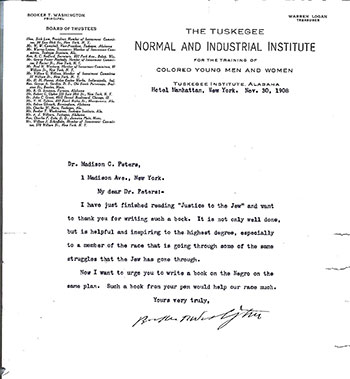
In the November 20, 1908, correspondence on his Tuskegee Normal and Industrial Institute letterhead exhibited here, Washington writes to Madison Clinton Peters:
I have just finished reading “Justice to the Jew” and want to thank you for writing such a book. It is not only well done, but is helpful and inspiring to the highest degree, especially to a member of the race that is going through some of the same struggles that the Jew has gone through. Now I want to urge you to write a book on the Negro on the same plan. Such a book from your pen would help our race much.
The importance of this letter can scarcely be overstated. At the time he wrote it, Washington was arguably the most influential African American figure in the United States and the acknowledged spokesman for Black America in the eyes of much of the American public. As such, his endorsement carried extraordinary moral and cultural weight.
The letter is especially remarkable because it highlights the sophisticated and deeply sympathetic connection between African American and Jewish historical experience that we have been discussing. Among other things, the letter demonstrates that Washington viewed Jewish history not merely as an abstract religious subject but, as we have been discussing, as a living model of endurance, discrimination, perseverance, and social advancement that could offer inspiration to Black Americans confronting segregation and racial oppression in the Jim Crow era. Historians of Black-Jewish relations often search for early examples of mutual identification between the two communities, and this extremely rare letter is unusually direct, personal, and eloquent evidence of precisely such a connection from one of the foremost Black leaders in American history.
The document also has considerable rarity and evidentiary value. Public praise for books often appeared in newspapers or promotional materials, but private correspondence frequently reveals more candid and therefore more historically valuable response. Here, Washington was under no public obligation to praise Peters so warmly, and its language unambiguously conveys authentic enthusiasm rather than perfunctory courtesy. Thus, for scholars studying the reception of Justice to the Jew, the letter is exceptionally important because it demonstrates that the book resonated beyond Jewish and Christian theological circles and reached one of the central architects of African American intellectual life.
Finally, the letter has symbolic importance far beyond bibliography or autograph collecting. It embodies an early twentieth-century moment in which two historically marginalized communities – Jews and African Americans – were being consciously linked through ideas of perseverance, education, prejudice, and moral uplift. As a historical artifact, it is not merely a complimentary note from one famous man to another; it is a rare surviving witness to an evolving dialogue between Jewish and African American experiences in the United States at a formative moment in modern American social history.
Madison Clinton Peters (1859 – 1918) was an American Protestant minister, lecturer, and prolific popular author whose career moved across several denominations and cities before he emerged as an independent public preacher in New York. Born in rural Pennsylvania, he studied at Franklin and Marshall College and at Heidelberg Theological Seminary in Ohio. Over the course of his career, he served congregations connected with the Reformed Church, Baptist churches, and eventually Episcopal circles before becoming what contemporaries often called a “free preacher,” meaning that he lectured and published outside a strict denominational structure. Peters became especially well known in the late nineteenth and early twentieth centuries for a series of highly publicized books and lectures defending Jews against antisemitic stereotypes, which was most unusual in Protestant America of that period. His works include The Jew as a Patriot, The Genius of the Jew, Haym Salomon, and most notably Justice to the Jew (1899).
Peters wrote during a period when antisemitism in the United States and Europe was rising sharply. The 1890s saw the international shockwave created by the Dreyfus Affair in France, continuing Russian pogroms, large-scale Jewish immigration from Eastern Europe into American cities, and increasing nativist hostility in the United States. American universities, clubs, neighborhoods, hotels, and employers were beginning to impose informal anti-Jewish barriers. Peters believed that much of Christian society accepted crude caricatures of Jews without seriously examining Jewish history or Jewish contributions to civilization. His response was not merely theological; in Justice to the Jew, which was intended as a sweeping historical and moral defense of the Jewish people before a largely Christian American readership, he argued that Jews had been systematically slandered throughout history despite having contributed disproportionately to religion, ethics, commerce, science, philosophy, literature, and political liberty. He framed antisemitism as both a moral failure and a form of historical ignorance.
The essential thesis of the book can be summarized in several major themes. First, Peters argued that Judaism was foundational to Western civilization; he insisted that Christianity itself could not be understood apart from Judaism and that Christians therefore owed a debt to the Jewish people. He repeatedly emphasized that Jesus, the apostles, and the Hebrew prophets were all Jews and that Christian civilization rested heavily upon Jewish ethical monotheism.
Second, he attempted to refute common antisemitic accusations one by one, and he challenged stereotypes portraying Jews as inherently greedy, unpatriotic, secretive, or socially parasitic. Instead, he argued that centuries of persecution had forced Jews into restricted occupations and abnormal social conditions and he maintained that Jews succeeded economically not because of conspiratorial behavior but because literacy, family cohesion, discipline, and communal traditions emphasized education and adaptability.
Third, he celebrated Jewish intellectual and cultural achievement. The book is filled with long catalogs of notable Jews in finance, medicine, philosophy, music, politics, literature, and science and, while modern readers may find this method overly rhetorical, it was intended as a direct answer to claims that Jews contributed little to civilization. He portrayed Jewish survival itself as evidence of unusual cultural vitality.
Fourth, he emphasized Jewish patriotism, especially in the American context. Peters was particularly concerned with charges that Jews were disloyal citizens, and he proved that Jews had served honorably in wars, contributed to American commerce and philanthropy, and supported democratic institutions (a theme that he enlarged upon in his separate volume, The Jew as a Patriot).
Fifth, he viewed antisemitism as spiritually dangerous to Christianity itself, arguing that prejudice against Jews corrupted Christian ethics and contradicted the teachings of Jesus; in this respect, the book was as much a sermon to Christians as it was a defense of Jews. Peters wrote as an unabashed advocate so that the tone of the book was highly emotional, rhetorical, and moralistic rather than academically detached. He frequently contrasted Jewish endurance and achievement with what he viewed as the injustices inflicted upon Jews by Christian societies, and, although modern historians would consider some of his arguments romanticized or insufficiently critical, the book was widely regarded in its own day as an unusually forceful public defense of Jews by a prominent Protestant minister.
Not surprisingly, reaction to the book was sharply divided. Jewish readers and many liberal Protestant circles generally responded enthusiastically, and Jewish newspapers, Jewish civic organizations, rabbis, and communal leaders often praised Peters as an unusually courageous Christian ally. At a time when open social antisemitism was common even among respectable elites, many Jews regarded Peters as a rare public figure willing to confront prejudice directly before mainstream American audiences. His books circulated widely in Jewish communities, and he became a frequent speaker at Jewish events and commemorations. Peters was particularly appreciated because he addressed Christian audiences in explicitly Christian language, arguing that antisemitism violated Christian principles, which gave his work influence beyond Jewish readerships alone.
At the same time, criticism came from several directions. Antisemitic and nativist critics attacked the book precisely because it defended Jews so vigorously and they accused him of exaggerating Jewish contributions, ignoring Jewish faults, or pandering to wealthy Jewish supporters. Such reactions reflected broader anti-immigrant and anti-Jewish sentiment in the United States at the turn of the twentieth century. Other criticism came from more scholarly or nuanced quarters, with some reviewers arguing that Peters had idealized Jews too heavily and replaced one stereotype with another, portraying Jews almost exclusively as moral, brilliant, industrious, and historically heroic.
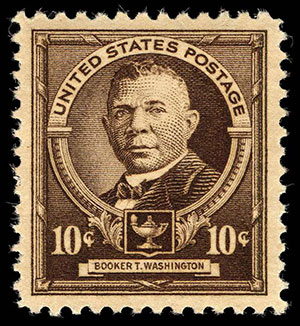
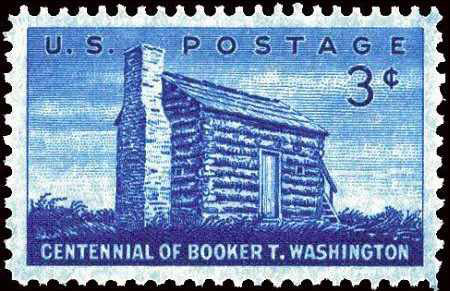
Booker T. Washington died on November 14, 1915 (at the age of 59) in Tuskegee, Alabama. His death triggered widespread mourning, including among many Jewish admirers. Newspapers across the country recognized him as one of the most influential African American leaders in American history. Jewish commentators often emphasized his dignity, restraint, and constructive vision.
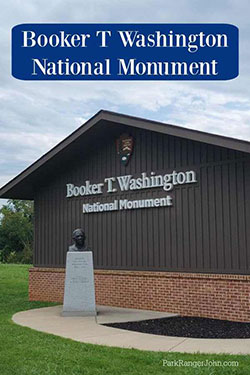
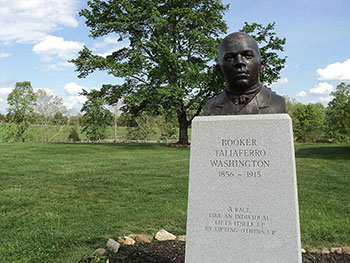
Modern scholars continue to debate Washington’s legacy. Some view him primarily as a conservative accommodationist; others emphasize his quiet resistance, institution-building genius, and political sophistication, but across these debates, his relationships with Jews stand out as unusually positive for the era. In retrospect, the Washington–Jewish connection forms part of a larger story about minority interaction in the United States. African Americans and Jews occupied very different positions in American society, yet both communities grappled with exclusion, stereotyping, and questions of identity. At the end of the day, Washington’s career illustrated how these groups could sometimes find common cause.