

 November 20, 2026
Categories: Headline / Collecting / Arts
The Organ Controversy That Forever Divided American Jewry
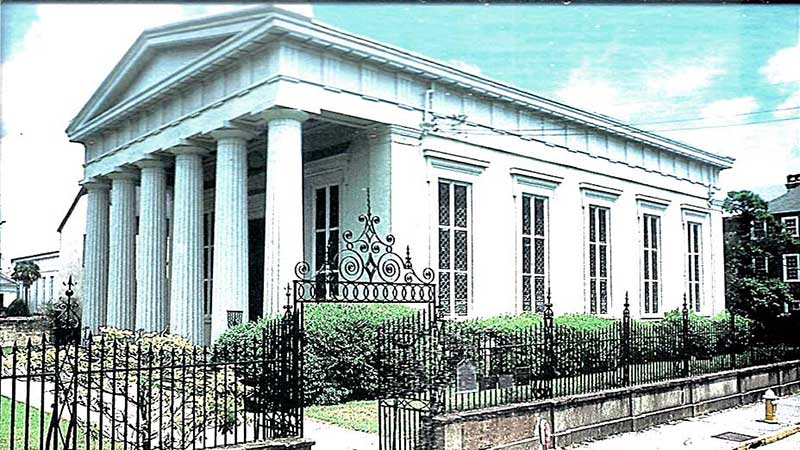


Kahal Kodesh Beth Elokim (KKBE) occupies a unique place in American Jewish history. Few congregations can credibly claim to have altered the religious trajectory of an entire faith community in a nation, but the events that unfolded within this Charleston, South Carolina synagogue during the first half of the nineteenth century helped to shape the development of Reform Judaism in the United States and triggered one of the most important legal and religious controversies in American Jewish history. At the center of the dispute stood an object that might appear almost trivial to a modern observer unfamiliar with halacha – a pipe organ – but the controversy had little to do with music and much about the symbol of negating Torah Judaism in favor of “modernity,” Jewish identity, and the future of Jewish life in America.
The story begins in Charleston, one of the oldest and most distinguished Jewish communities in North America. Attracted by the colony’s comparatively broad religious toleration and commercial opportunities, Jews were drawn to South Carolina and, by 1749, the Jewish population had become sufficiently established to organize a formal congregation known as Kahal Kodesh Beth Elokim (literally “Holy Congregation House of G-d”). The congregation was Sephardic in ritual and culture, reflecting the dominant character of early American Jewry, and many members traced their origins to families that had lived in England, the Caribbean, Holland, or the Iberian diaspora.
KKBE quickly became one of the most important Jewish institutions in the United States, with its leaders including some of the most prominent merchants, financiers, and civic figures in Charleston. Its first parnass (president) was Joseph Tobias, with early religious leadership provided by Moses Cohen and Chazan Isaac DaCosta. The community established charitable and communal institutions that demonstrated both prosperity and permanence, including the Hebrew Benevolent Society and the Hebrew Orphan Society, and, by the late eighteenth century, KKBE had become one of the largest Jewish congregations in America.

In 1794, the congregation dedicated an impressive synagogue on Hasell Street, which contemporary observers regarded as one of the most beautiful synagogue buildings in the young republic; during the Marquis de Lafayette visit to Charleston in 1825 during his celebrated farewell tour of the United States, a member of his entourage described it as “spacious and elegant.” Charleston’s Jews were prosperous, educated, and unusually integrated into American society, and, unlike many Jewish communities in Europe, they lived within a political culture that rewarded adaptation and civic participation.
That environment fostered questions that were beginning to arise elsewhere in the Atlantic world, including whether Judaism could adapt to modern conditions, whether services should be shortened, whether English should be used more extensively, whether sermons should become more central, and whether the liturgy be altered to reflect American realities and sensitivities rather than the assumptions of “medieval exile,” questions that appeared in Charleston remarkably early. In 1824, decades before Reform Judaism became an organized movement in the United States, forty-eight members of KKBE petitioned for substantial changes in worship, including support by many of its leaders, including Isaac Harby, Abraham Moise, and David Nunes Carvalho, who advocated English-language prayers and sermons, abridged services, and other reforms designed to make worship more “meaningful” to American-born Jews. When the congregation’s governing board rejected these proposals, the reform-minded members withdrew and established the Reformed Society of Israelites.
The Reformed Society of Israelites, which occupies an extraordinary, but unfortunate, place in Jewish history, represented the first organized attempt to reform Judaism in the United States. Its members created their own prayer books, conducted services in English, employed a choir, incorporated instrumental music, and men did not cover their heads during worship, “innovations” that anticipated developments that would later become Reform Judaism. Yet, although the movement remained small and eventually dissolved after only several years, its importance lay less in its immediate success than in the fact that it demonstrated the existence of a significant reform impulse within Charleston Jewry.
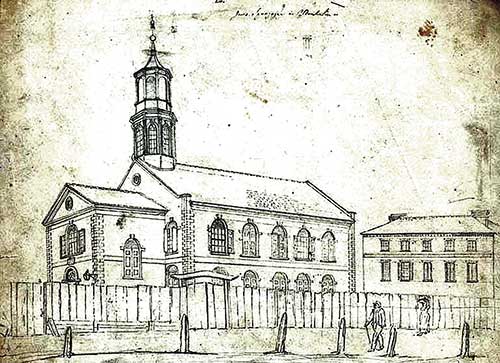
The controversy might have remained a historical footnote had circumstances not intervened. In April 1838, a catastrophic fire swept through Charleston and more than a thousand buildings were destroyed, including the KKBE edifice. The disaster created a rare opportunity: the congregation had to build anew and whenever institutions reconstruct themselves physically, questions invariably arise regarding whether they should also reconstruct themselves spiritually. It was at precisely this moment that a charismatic and controversial figure emerged as a central actor in the tale: Gustavus Poznanski.
Born into an Orthodox family in what was then South Prussia, today part of Poland, Poznanski (1804-1879) received a traditional education as a shochet (ritual slaughterer) and cantor. He left Poland in 1824 for Hamburg, whose Reform movement had already become famous – and infamous – throughout the Jewish world for introducing liturgical innovations that challenged traditional practice. He later went to Bremen, where he continued studying Reform Judaism before emigrating to the United States in 1831, where he served as a shochet and assistant chazan at the prestigious Congregation Shearith Israel in New York. In 1836 or 1837, he accepted a position at KKBE; ironically, he arrived with a reputation for Orthodoxy, with Isaac Leeser, the leading traditionalist Jewish authority in America, supporting his appointment, and many congregants initially regarded him as a defender of established religious norms.
However, Poznanski took little time in demonstrating both intellectual independence and sympathy for Reform. Musically gifted, eloquent, and deeply interested in making Judaism meaningful to American Jews, his popularity grew rapidly such that, before completion of his probationary period, he was granted lifetime tenure. By the time the congregation began rebuilding after the fire, he had become arguably the most influential figure in Charleston Jewish life.
The rebuilding process immediately reopened old questions. A group of congregants proposed installing a pipe organ in the new synagogue which, to modern ears, constituted an unremarkable proposal but was truly revolutionary in nineteenth century Judaism. Supporters of the organ believed that instrumental accompaniment would elevate worship, encourage congregational participation, improve musical quality, and make synagogue services more appealing to younger Jews. Charleston’s reformers also viewed the organ as part of a broader effort to align Judaism with modern American cultural expectations. Churches throughout America regularly employed organs, and the reformers argued that Judaism could adopt aesthetically pleasing practices without surrendering its essential beliefs.
The issue quickly polarized the congregation.
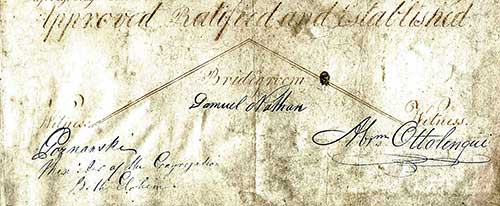
One of the leading reform figures was Abraham Ottolengui who, while serving as president of KKBE during the crucial years of the controversy, represented the increasingly confident faction that favored modernization. Opposing him were members who regarded the proposed innovation as a direct violation of Jewish law and a dangerous step toward abandonment of tradition. Although the board initially resisted the proposal, support for the organ was substantial and, when the matter went before the congregation, the vote was extraordinarily close: the organ supporters prevailed by a margin of 46-40, a narrow victory that would reverberate throughout American Jewish history. [Note that one of the traditionalist’s main arguments was that the KKBE constitution required a three-fourths majority for ritual changes and that a 46–40 vote clearly did not satisfy that requirement.]
Poznanski publicly and vociferously aligned himself with the organ faction, and his support proved decisive. Because he possessed religious authority and personal prestige, many congregants interpreted his position as evidence that reform could be reconciled with Judaism rather than constituting a rejection of it, but traditionalists appropriately viewed his actions as a profound betrayal. The dispute soon escalated beyond internal congregational politics, with questions arising regarding the legality of the vote, the authority of the trustees, and the governance structure of the congregation. Traditionalists argued that constitutional procedures had been violated and that the board lacked authority to impose such innovations; the reformers insisted that the congregation had acted lawfully and democratically.
Public reaction to the Charleston Organ Case was intense. Charleston possessed one of the largest and most sophisticated Jewish communities in the nation, and news of the controversy spread widely through American Jewish circles. Newspapers, communal publications, and private correspondence discussed the dispute extensively and, for many observers, Charleston became a testing ground for the future direction of American Judaism. Particularly significant was the reaction of Isaac Leeser, who emerged as one of the most prominent critics of the reform movement associated with KKBE. Much to his regret, he had originally helped bring Poznanski to Charleston, and he used his influence and prominent publications to criticize innovations that threatened authentic Judaism. The disagreement between Leeser and Poznanski became emblematic of broader tensions within American Jewish life.
The traditionalist opponents of the organ did not regard themselves as reactionaries resisting progress; rather, they were Torah-true Jews defending the continuity of Judaism itself. To understand the intensity of their response, one must appreciate how unprecedented the Charleston developments appeared from the perspective of nineteenth-century Jewish law. Reformers often portrayed the dispute as a matter of aesthetics and congregational preference, but their opponents saw something far more consequential. The organ represented not merely a new musical instrument but a public declaration that inherited rabbinic authority could be set aside when it conflicted with contemporary tastes.
The traditionalist faction therefore began seeking support beyond Charleston. In the nineteenth century, before the existence of organized denominational structures, difficult religious questions were often addressed through responsa, and Charleston's opponents of the organ appealed to some of the most respected rabbis in Europe for guidance. The resulting responsa were virtually universally hostile to the Charleston innovation.
One of the most important responses which the traditionalists relied upon came from Rav Moses Sofer, universally known as the Chatam Sofer, the rabbi of Pressburg and the preeminent Orthodox authority of his age. Although he died in 1839 before some of the later stages of the Charleston controversy unfolded, his earlier rulings regarding synagogue organs became enormously influential. His opposition rested on several distinct halachic grounds. (For the broader rabbinic response to the Hamburg Temple reforms of 1818 – 1821, see the relevant responsa and contemporary polemical writings, including Responsa Chatam Sofer, Orach Chaim §28).)
First, the classical rabbinic prohibition against musical instruments on Shabbat was his most immediate concern, and he cites the Talmudic prohibition against instruments, lest one repair a broken instrument (shema yetaken kli shir). (For example, this is one reason why the shofar is not blown on Rosh Hashana when it falls on Shabbat.)
Second, following the destruction of the Second Temple, Jewish tradition severely restricted instrumental music in religious settings, and the installation of a church-style organ was viewed as violating the long-standing custom of refraining from instrumental accompaniment in synagogue worship.
Third, cḥukkat ha-goyim (“the imitation of non-Jewish worship”) was perhaps his most famous argument; the organ had become identified with Protestant church worship in Central Europe, and he viewed its introduction into synagogues as a dangerous imitation of Christian religious forms.
Fourth, the Chatam Sofer repeatedly argued that religious innovations intended to alter traditional Judaism were themselves suspect; his famous slogan was Chadash assur min ha-Torah ("The new is forbidden by the Torah"). Although originally a Talmudic phrase concerning agricultural law, he employed it as a rallying cry against Reform innovations generally.
Fifth, he feared broader theological changes. The organ was not merely a musical instrument in his eyes; in Germany, it accompanied other Reform measures and he regarded the organ as evidence of a larger theological program – in which he proved to be dazzlingly prophetic.
However, Reform Judaism had already begun emerging in parts of Germany and the infamous Hamburg Temple, established in 1818, had introduced an organ and substantially revised liturgy. German Reform thinkers argued that many traditional restrictions reflected historical circumstances rather than eternal principles, and they emphasized decorum, aesthetics, and adaptation to modern society so that the dispute, therefore, connected Charleston directly to the greatest theological controversy then dividing European Jewry.
The person who most effectively nationalized the Charleston controversy was Leeser, who, though based in Philadelphia, was America's leading defender of traditional Judaism. Through The Occident and American Jewish Advocate, he published extensive reports about KKBE and Charleston traditionalists frequently used his journal to present their side of the dispute because he was a strong voice in supporting authentic Judaism. Leeser was not merely a reporter; he became a kind of national spokesman for those American Jews who feared that the German Reform movement was taking root in the United States.
The conflict eventually reached South Carolina’s courts in what became known as the Charleston Organ Case, among the most notable legal disputes in American Jewish history. The litigation, which was formally styled State ex relatione A. Ottolengui v. G. V. Ancker et al. 2 Rich. 245 (S.C. Ct. App. 1846), is often misunderstood. The anti-organ faction argued that the installation of the organ violated the congregation's historic Sephardic ritual (Minhag Sepharad) and therefore violated the congregation's charter and constitution, and the reform faction contended that the congregation's governing authorities had lawfully adopted the change. In its ruling in favor of the reform faction, the South Carolina Court of Appeals did not rule that an organ was permissible under Jewish law, but only that a civil court should not decide such a question in the first instance.
Judge A. P. Butler's opinion is remarkable because it anticipated by decades what would later become a cornerstone of American church-state jurisprudence, writing, “The court should only take cognizance of such matters as may fairly come within the scope of a judicial judgment" and explaining that courts must stay out of theological disputes because, among other reasons, "A judicial magistrate is not very well qualified to give a definite and enforceable judgment on questions of theological doctrine."
The anti-organ faction sought to introduce evidence that the organ violated authentic Jewish worship and that its introduction justified their withdrawal from the congregation, but Butler refused to permit the court to become an arbiter of Jewish ritual law. While he did acknowledge that organs had not traditionally been used in Sephardic worship, he reasoned that courts could not freeze religious practice permanently or determine what changes were or were not religiously legitimate, adding that questions such as the use of instrumental music were matters affected by "the progress of art, and the general tone of society" and were not subjects that a civil court could effectively supervise.
But perhaps the most important passage in the opinion concerned religious belief itself. Butler stated that if a group openly renounced Judaism, a different question might arise, but where both sides professed adherence to Judaism, the court would not decide who was the better Jew or whose theology was more orthodox: as he asked rhetorically, “How can a Court ascertain the faith of others, except by their professions?" The Organ Case was one of the earliest American judicial opinions to confront a dispute over Jewish religious law and to declare, in effect, that deciding what Judaism requires is a task for Jews and their religious institutions, not for civil judges. The practical result was that the organ remained, the reform faction retained control of KKBE, and the traditionalists ultimately founded a separate congregation, Shearith Israel.
The case established an early American precedent that civil courts should avoid deciding religious doctrine, and legal historians often regard it as one of the earliest American cases embracing the proposition that "the law knows no heresy" – i.e., that secular judges should not determine the correctness of religious doctrine, whether Jewish, Christian, or otherwise – and its principle was absorbed into broader American church-law doctrine. The most important Supreme Court case expressing this rule is arguably Watson v. Jones, 80 U.S. (13 Wall.) 679 (1872), a decision that transformed the Judge Butler’s approach in the Charleston Organ Case twenty-six years earlier into what would ultimately become a broad constitutional principle: civil courts should not decide questions of "faith," "discipline," or ecclesiastical law and should generally defer to the proper religious authorities.
Meanwhile, the organ itself was installed in the new Greek revival synagogue edifice that KKBE built – considered an architectural masterpiece, whose cornerstone was laid in 1840 and dedicated in 1841. During the dedication ceremonies, Poznanski delivered the statement that would forever define his historical reputation and which included one of the most famous and oft-cited anti-Torah and anti-Zionist proclamations by a Jewish leader of all time: “This synagogue is our Temple, this city our Jerusalem, and this happy land our Palestine . . . America is our Zion and Washington our Jerusalem.” The declaration electrified all who heard it; to supporters, it expressed gratitude for America’s religious liberty and confidence in Jewish belonging within the United States. But to opponents, it constituted an abandonment, even an outright rejection, of traditional Jewish hopes for Zion and the restoration of sovereignty in Eretz Yisrael. In particular, the phrase “this happy land” became inexorably associated with Poznanski and with Charleston Reform Judaism.
An equally famous anecdote emerged from the controversy. When asked where the process of reform would end, Poznanski reportedly answered that he knew “no stopping place to Reform in this enlightened age,” a remark that underscored the alarm with which he was viewed by traditionalists, understanding that – as history has, sadly, proved correct – once traditional practices could be altered, no principled boundary would remain.
After gaining control, Poznanski and the Reformers began to suggest more reforms, such as the removal of the twelfth principle of the Rambam’s Shelosha Asar Ikarim (The Thirteen Principles of Faith) regarding the affirmative duty to believe in the coming of the Messiah; delivering a sermon advocating ending the observance of the second days of Passover; conducting services in English; implementing a three-year reading cycle of the Torah; the removal of the reading of the Haftarah; and the removal of some traditional prayers and hymns from services. The traditionalists increasingly concluded that coexistence with the reform faction had become impossible, and they eventually withdrew from KKBE and established a separate congregation known as Shearith Israel. Its members intended to preserve authentic Judaism in Charleston, and many of the city's most respected Jewish families joined the new congregation and established their own separate governance structures, religious services, and communal institutions. Their synagogue soon became a refuge for Charleston Jews who feared that Reform innovations would ultimately sever American Judaism from its historic roots.
In effect, Charleston's Jewish population split into rival camps, each claiming to represent the legitimate continuation of local Jewish tradition. The creation of Shearith Israel was particularly significant because Charleston was not New York, Philadelphia, or another city with a vast Jewish population. The Jewish community was relatively small and a schism therefore affected families, friendships, business relationships, and social networks, as members of the two congregations often knew each other intimately and many were related by blood or marriage. The dispute soon moved beyond theology and became deeply personal.
Newspapers followed the controversy closely and both Jewish and non-Jewish publications reported developments. The broader Charleston public often viewed the dispute with fascination; South Carolina was accustomed to religious disagreement among Protestants, but many observers had never witnessed such a public conflict within the Jewish community. Some Christian commentators interpreted the organ controversy as evidence that Judaism was evolving toward Protestant norms, while others regarded the dispute as proof of the strength and seriousness of Jewish religious conviction, so that the controversy attracted attention well beyond Charleston's Jewish population.
Poznanski, who stood at the center of the storm, remains one of the great controversial figures in American history. He was neither a simple revolutionary nor a casual iconoclast; he possessed genuine Jewish learning and appears to have sincerely believed that adaptation was necessary for Judaism's survival in America. Charismatic, intellectually confident, and deeply influenced by Enlightenment ideals, he viewed American freedom as an unprecedented opportunity for Jewish flourishing. At the same time, his rhetoric sometimes alarmed even those sympathetic to reform; in particular, his audacious declaration that Charleston was Jerusalem and America was Palestine struck many listeners as going well beyond liturgical modernization and critics interpreted it as a rejection of traditional Jewish hopes for eventual restoration in Zion.
Nonetheless, his influence extended beyond the organ dispute itself. Under his leadership, KKBE adopted numerous reforms that later became standard in Reform Judaism, as English sermons became more important, liturgical interference increased, and worship services increasingly reflected American cultural expectations. His impact on American Judaism proved immense, as he became one of the earliest major architects of American Reform Judaism.
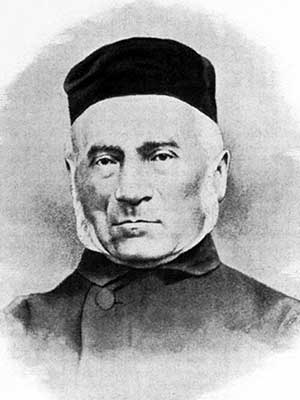
A second controversy closely related to the Charleston Organ Case arose about a decade later and centered upon Rev. Dr. Julius Eckman (1805–1877), a fascinating figure who stood at the crossroads between the emerging Reform movement and traditional Judaism. He was neither a strict European Orthodox rabbi in the mold of the Chatam Sofer nor a Reform pioneer such as Poznanski; rather, he occupied what would today be described as a traditionalist position and became the principal religious opponent of the Reform faction within KKBE.
Born in Rawicz, in the Prussian province of Posen, Eckman served in an early commercial apprenticeship in London before abandoning business and returning to scholarly pursuits in Berlin, where he immersed himself in both Jewish and secular subjects. Contemporary accounts describe him as a gifted linguist and philologist with mastery of numerous ancient and modern languages, and an 1851 profile by Leeser in The Occident and American Jewish Advocate characterized him as “an indefatigable and laborious student and a profound thinker" and emphasized his extensive knowledge of Hebrew, Jewish literature, language, and the Talmud. Although I have found no record of him ever attending any of the major Central European yeshivot, he clearly possessed substantial Jewish learning and was respected by both supporters and opponents for his scholarship.
Eckman emigrated to the United States in 1846 and subsequently served congregations in Mobile, Alabama; New Orleans, Louisiana; Charleston; and later in San Francisco, California, where his tenure proved contentious because of disagreements concerning ritual and religious practice and because his insistence on maintaining traditional observances often placed him at odds with congregants who favored the increasingly liberal tendencies that were spreading through portions of American Jewry.
Eckman was also an educator and journalist whose most important publication was The Weekly Gleaner, founded in San Francisco in 1856, which was one of the earliest Jewish newspapers in the American West and remains a valuable source for historians of early American Jewish life in nineteenth-century California. Interestingly, future founders of the San Francisco Chronicle reportedly worked for him as typesetters. He also published essays on Jewish theology, prayer, synagogue affairs, and religious education in Isaac Leeser's The Occident and American Jewish Advocate.
By 1850, KKBE found itself seeking a minister who could restore stability after years of controversy, and Eckman was elected minister despite having made it clear that he did not share Poznanski's theological views. In his inaugural remarks he reportedly stated that he wished to serve as "a teacher in Israel" rather than as an independent spiritual ruler and, indeed, he served as minister, preacher, and educator, delivering sermons, teaching children, conducting adult education programs, and lecturing publicly on Judaism, Jewish law, prayer, and the Talmud. Contemporary observers repeatedly praised the quality of his teaching and his efforts to strengthen Jewish learning and he was well-received and respected . . . until he became embroiled in the Reform Judaism controversy.
To be clear, the organ controversy had already been litigated and adjudicated by the court years before Eckman's arrival, so he played no role in the original dispute. However, by the time of his arrival in Charleston, theological questions remained unresolved and the debate had evolved into a much deeper struggle over revelation, rabbinic authority, traditional observance, the malleability of Jewish law, and the future direction of American Judaism. Eckman strongly opposed the broader theological movement that the organ symbolized and contemporary accounts show that he regarded Poznanski and his followers as rejecting essential Jewish doctrine and undermining observance. In an extraordinarily candid account published in The Occident, supporters of Eckman stated that he became convinced that prophecy was being denied, traditional religious observance was being disparaged, rabbinic authority was being attacked, and fundamental doctrines of Judaism were being challenged.
The Reform faction at the synagogue were apoplectic about Eckman’s use of the pulpit to defend traditional Judaism and they blamed him for transforming the pulpit into a forum for religious controversy. The conflict reached a climax when Eckman objected to Poznanski's participation in Yom Kippur services; according to the contemporary narrative published in The Occident, Eckman believed that Poznanski had publicly repudiated portions of the traditional liturgy and therefore should not be permitted to occupy a position of religious prominence in the service. Eckman formally protested to the synagogue leadership and ultimately refused to participate under those circumstances. What had begun a decade earlier as a dispute over an organ thus reemerged as a broader struggle over the meaning and boundaries of Judaism itself.
In 1851, a petition was circulated seeking Eckman's removal and complaining that he had departed from the terms of his retention; that his sermons and public statements had created division within the congregation; and that instead of ministering to the congregation as it existed, he was attempting to reverse reforms that had already been adopted. A counter-petition supporting Eckman was signed by another group of prominent congregants, who characterized Eckman as a defender of authentic Judaism and praised his scholarship and religious integrity.
One of the most striking aspects of the controversy is that it divided many of Charleston's leading Sephardic families. Surnames such as Cohen, Moise, Seixas, Cardozo, Lazarus, and Ottolengui appear repeatedly on opposite sides of the dispute. The battle was therefore not simply Reform versus Orthodox; it was nothing less than a pitched struggle within Charleston's historic Jewish establishment over the future character of American Judaism.
As best the surviving records indicate, the controversy was resolved internally through congregational governance rather than through a major court proceeding. Unlike the 1846 Organ Case, no significant judicial opinion emerged establishing new legal principles; instead, the surviving sources focus on petitions, congregational meetings, newspaper exchanges, and factional maneuvering. As such, Eckman's importance lies not in litigation but in theology and communal history and his demonstration that the organ controversy was only the first stage of what became a seminal rift in American Judaism. In many respects, his was the last serious effort to steer KKBE back toward traditional Judaism before it became firmly established as the flagship congregation of American Reform Judaism.
Indeed, the conflict between KKBE and Shearith Israel did not immediately disappear. For years, Charleston maintained the unusual situation of having competing Jewish congregations representing different visions of Judaism, but practical realities gradually altered the landscape as economic pressures, demographic changes, and the relatively limited size of Charleston's Jewish population made permanent division difficult. Moreover, the theological distance between the two groups was not always as vast as polemical rhetoric suggested, as many KKBE members retained substantial attachment to Jewish tradition despite supporting reforms and some members of Shearith Israel were not isolated European traditionalists but American Jews adapting to modern circumstances in their own ways.
As decades passed, passions cooled. The American Jewish community also changed dramatically as massive immigration from Central Europe and later Eastern Europe transformed the demographic balance of American Jewry. Charleston, once among the nation's most important Jewish centers, gradually lost its preeminence to northern cities such as New York, Philadelphia, and Baltimore.
Against this changing backdrop, the original organ controversy began to appear less apocalyptic than it had seemed in the 1840s to all but those who retained fidelity and faithfulness to Torah Judaism and Orthodox practice. Reform Judaism expanded throughout the United States; new congregations adopted organs, mixed choirs, vernacular sermons, and liturgical revisions; and what had once appeared shocking became increasingly common, thus proving that Torah-loyal Jews had been sadly correct to warn against the “slippery slope” and insisting on true fidelity to Orthodox practice that was solely responsible for ensuring Jewish survival.
Eventually, KKBE and Shearith Israel reunited, a reconciliation that reflected the decreasing number of practicing Jews in Charleston, practical realities, and changing attitudes. The synagogue retained the KKBE name, and the magnificent Greek revival structure completed in 1841 remains one of the oldest synagogue buildings in continuous use in the United States and one of the finest examples of Greek Revival religious architecture in America.

From a historical perspective, perhaps the most remarkable aspect of the Organ Case controversy is how accurately both sides anticipated future developments. The “reformers” correctly perceived that American Jews would eventually adapt many inherited practices to American conditions; Reform Judaism became a major movement; synagogue organs became commonplace in Reform congregations; English-language worship became widespread; and many reforms first championed in Charleston later spread across the country. The traditionalists were also correct that rather than remain an isolated change, the introduction of the organ formed an important part of a broader process of religious transformation, including the loss of entire generations of Jews through intermarriage and conversion.
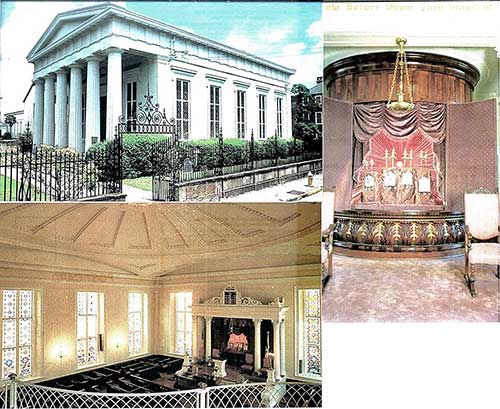
Nearly two centuries after the organ was installed, visitors entering KKBE encounter a congregation that has survived fires, schisms, lawsuits, theological battles, demographic change, the Civil War, Reconstruction, world wars, and the transformation of American Judaism. The controversy remains so important because it was not merely a local dispute in Charleston, but it became one of the earliest and clearest expressions of a question that has echoed through modern Jewish history ever since: is it even possible for an ancient religious tradition to remain faithful to its past while effecting substantive changes to make that ancient faith more modern? Although that question has clearly been answered in the negative over the span of two millennia of Jewish exile, KKBE became the stage upon which that question was first dramatically debated in America, with the echoes of that debate continuing to be heard today.