יום ראשון, ג׳ אלול תשפ״וSunday, August 16, 2026



Follow Us


Rabbi Francis Nataf (www.francisnataf.com) is a veteran Tanach educator who has written an acclaimed contemporary commentary on the Torah entitled “Redeeming Relevance.” He teaches Tanach at Midreshet Rachel v'Chaya and is Associate Editor of the Jewish Bible Quarterly. He is also Translations and Research Specialist at Sefaria, where he has authored most of Sefaria's in-house translations, including such classics as Sefer HaChinuch, Shaarei Teshuva, Derech Hashem, Chovat HaTalmidim and many others. He is a prolific writer and his articles on parsha, current events and Jewish thought appear regularly in many Jewish publications such as The Jewish Press, Tradition, Hakira, the Times of Israel, the Jerusalem Post, Jewish Action and Haaretz.
Read More

the Chanukah season can serve as an impetus to think more deeply about the nature of our position and the importance of nuance.
While there is plenty of room for cooperation and interaction with other larger cultures, it is important for the Jewish people to remember that a key role God wants it to play is to often stand on the other side and follow our own path.
Almost always, the reason we are not willing to forgive offenses against us has almost nothing to do with the offense, and everything to do with it being done to us. Once we can internalize this, we can move to a God’s-eye perspective and forgive others more easily.
And so Moshe’s ultimate message here, according to Netziv, may be that even if the curses are fulfilled, that is no reason to abandon God.
One might think that there's nothing we understand better in the world than ourselves--after all, we spend every waking minute with ourselves. But is this self-understanding really the case?
In other words, it is not our strength at all that gives us the victory, but the workings of God.

As if Our Life Depended on it
There is an important teaching here for those who seek to have legitimate grievances addressed.
Precisely because the work that the second-generation did take place was less dramatic and required human participation that it created its own more organic resilience, making it a better model

Why twelve? If what is really important is the number ten, God could have theoretically created anywhere from eleven to nineteen tribes, and we would still have had decision-making with a majority of ten...
I don’t think it would be an exaggeration to suggest that the whole reason God created man, male and female, was for us to better understand our relationship with Him.
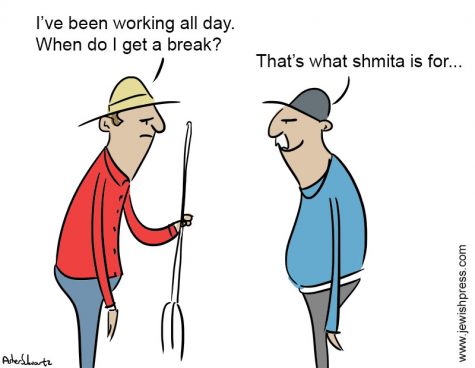
Since the commandments are all meant to engender some positive effect; when a commandment is not practiced, that effect will not be attained either.
Living at the height of European Romanticism and on the cusp of Nietzsche’s writings – which both contributed to a new much more pronounced interest in the individual – Netziv surely intuited the need to address the legitimate aspects of trends making inroads upon his students.

'--and Why We Avoid it Nonetheless
Although there is a strong basis for our propensity to be more stringent on Pesach than we are during the rest of the year, we should not turn that into a blanket attitude in which stringency is always followed, regardless of the other values at stake
The easiest way out of my problem would be to say that the Mishkan was designed based on people’s need to be impressed
Yet, if Mordechai teaches us that doubt is no reason for inaction, it is Esther that teaches us that it is actually a reason for even more effort
But the Torah was given to real people, for whom love of the outsider would not always be so obvious.
I want to focus on the end of the exile in this week’s parsha, and how similar it is to the end of Ya’akov’s exile in the house of Lavan

This story is actually a brilliant depiction of the interplay between divine providence and free will. Without taking away our ability to “surprise Him,” God – when needed – doesn’t hesitate to steer us in the direction He wants.
So while a proper reading of the Book of Bereshit introduces us to moral complexity, its end pushes us even further. It prepares us for the fact that there is even a level of moral complexity, which we should realize exists even if we may never understand it
How Yehudah Turned Bnai Ya’akov into Bnai Yisrael
Rav Hirsch famously criticizes Yitzchak and Rivkah for not educating Esav according to his innate personality, and instead trying to force him to be like Ya’akov. His insight is meant to teach that while it was Esav that made the choice to go ‘off the derekh,’ there is always much that parents can try to do before that happens.
Being bound on Mount Moriah gave Yitzchak a connection with God that would be disturbed by living outside the Land of Israel.

In fact – at its core – there is no better argument than Avraham’s. For his petition is asking for nothing else than what is good for God. For when God executes strict justice, He often “sacrifices” His own reputation for the sake of the truth.
If so, why was Noah commanded not to murder (and, likely, other old commandments) as well? Apparently, there was something not yet completely intuitive, and that was the sanctity of life.
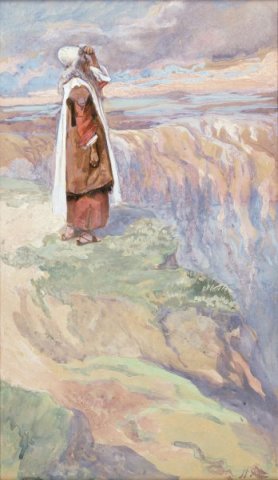
Yet in spite of Moshe’s best intentions, it is obvious that his blessings – as we have portrayed them – had little effect on the Jews once they reached the Land of Israel.
When we cannot fully understand God’s decision that accepting it shows our true allegiance to Him
Can God justifiably blame us for something we don’t know?
There is nothing wrong – and actually everything right – about loving God’s world. But to be significant, it must be a love grounded in enhanced awareness and appreciation of God.
Whether in its variation or in its norms, the world around us provides countless ways to see God. But that will only happen to someone who is looking for them. In other words if we really want to see God, we must also seek God.
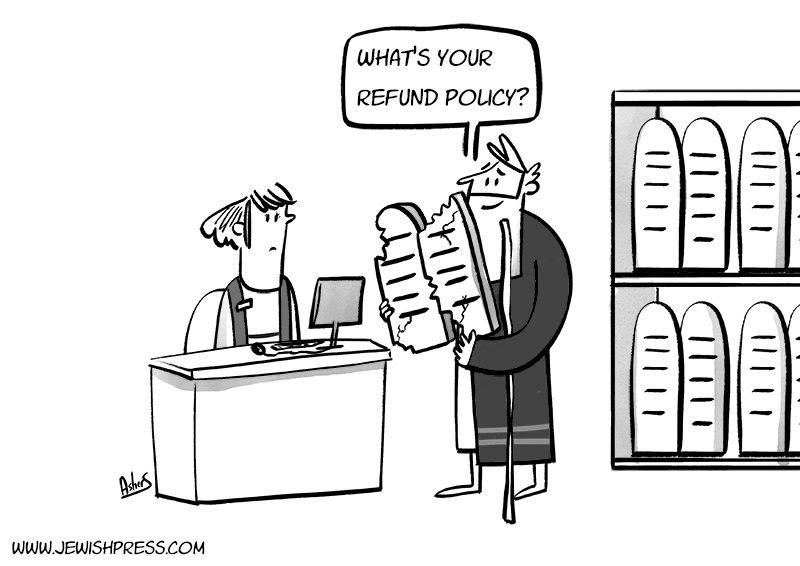
Most of Devarim is Moshe’s series of parting lectures to the Jewish people. Two things about them are clearly felt – the first is that they are long, often abstract and sometimes even appear repetitive; and the second is that Moshe accordingly uses diverse tactics to keep the Jews listening.
The notion that all men are created equal is a modern myth. The truth is that all men are created differently
a different leader of the next generation steps up and takes action. That leader was Pinchas...True leaders like Pinchas don’t come out of leadership schools. When the time is ripe, they simply emerge.
Many of the commentators find a disturbingly strong rationale in the Jews’ complaint mentioned above. The complainers were essentially blaming Moshe for setting up a murderous trap for the two hundred and fifty men that contested the choice of Aharon and his sons as priests.
In this week's parsha, there is an unusually insightful process of how a little complaint can undermine a gigantic and noble enterprise:
Why may Kohanim not attend to the dead?
It might seem easier to pray alone to God, rather than with the various distractions of a communal setting. True, Jewish law actually recognizes this and tries to minimize these distractions by recommending a set seat, prohibiting holding objects, etc. Still, the many distractions are impossible to completely eliminate. Yet in spite of its drawbacks, we derive strength from doing things together with a group.
Perhaps in the midst of the great uncertainties created by the Coronavirus pandemic, it is all too easy to remember that we are not God. But the temptation to think otherwise still exists. And once the pandemic will be over and man will continue to build better and better tools to control his fate and his environment, that temptation will regain its strength
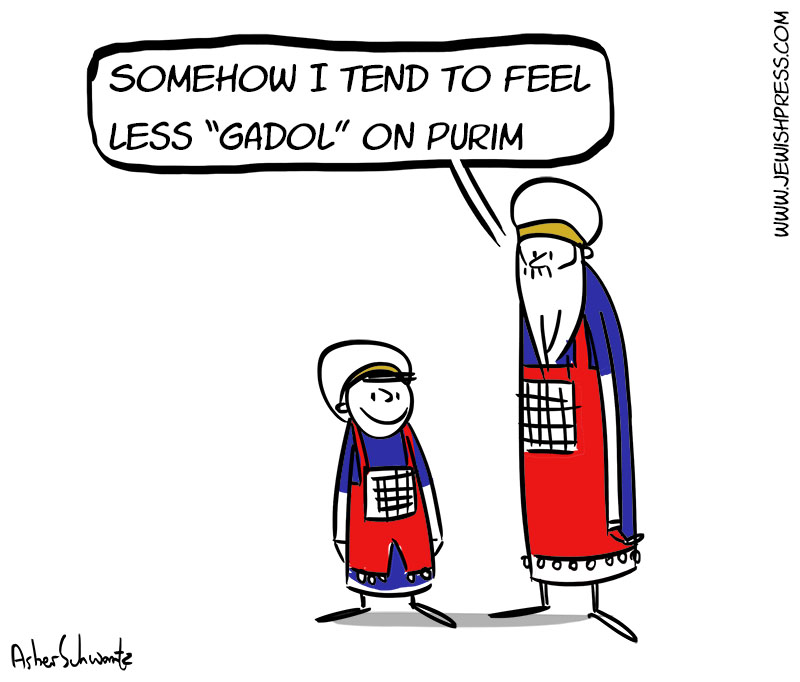
So who had it better, Moshe or Aharon?
The traditional understanding – that the Torah is referring to the monetary value of an eye – is not without its difficulties either
To what extent is a prophet of God allowed to improvise?
Though they share parents and ancestors, once the two lines diverge, the Torah tells us exclusively about Aharon’s descendants
Ya’akov’s mistake instructs us to understand that even if something appears to be good, that does not mean there isn’t a different way that might be even better
Is this the only question we should ask?
In one of the most mysterious verses in the Torah (Bereshit 35:8), we read about the death of Devorah the nursemaid, a character so minor that we have never really heard of her before

On the face of it, a conventional exchange between father and son, we see it nowhere else in Tanakh. Moreover both discussions take place at pivotal points in which the respective father-son relationships are tested to their limits.
Avraham, saw a world where people can acknowledge a huge and intractable gap between them, know it will not go away, and also build a strong and trusting friendship across tbe gap.
When Noach gets off the ark, there seems to be a whole new world order that surrounds him.
Irritation leading to growth...
“If God only commanded Moshe to present Haazinu, what was the need for Yehoshua to join in?”
Since we are taught that each person is like a universe, to casually dispense with one individual is like dispensing with an entire universe.
Many commentators wonder why not proffering bread and water is considered such a great crime. Because turning away goes from being a sign of neutrality to being an act of hostility.
How does contemporary Judaism deal with the great challenge of Torah laws no longer practiced?
One of the more fruitless political debates in the United States is whether strict restriction of gun permits would add to public safety. One of the reasons it is fruitless is that both sides muster flawed analogies to other societies.
In Judaism, since sin is not a foregone conclusion, we hold ourselves fully accountable for it. Likewise do we hold others accountable – if not to us, then certainly to God. And so the daughters of Tzelophad put this out about their father – and about everyone else.
In contrast to the previous generation – and as we will soon see more clearly – this generation was really saying, “Let’s get to our land already.”
There are two more positive lessons that can be learned. The first is to always second-guess ourselves. The second lesson is that no matter how devastating events may be, we must muster the courage and strength to keep going.
The priestly blessing in this week’s parsha begins with the famous request that God bless and keep/guard (shomer) the Jews. While the meaning of blessing is reasonably straightforward, the meaning of keeping or guarding is less clear.
But what happens if we actually become partners? As the Rabbis well understood, that should be a game changer.
Israel sought and was granted admittance into many different European structures, including Eurovision. Yet as Israel matures into a more established country, this association requires scrutiny.
Long before the Danites’ penchant for connection with gentiles would reach its climax in the days of Shimshon, the Torah warns them of its great dangers
Wishing you a Happy Passover and a Good Shabbos...
The ethics of each new birth represents a microcosm of that debate. We have good reason to hope that the education and upbringing we provide our children will ensure that they bring more good to the world than evil. But there is not a single one of us who can bring up even the best of our children to never do evil. And given that this is the case, giving birth is also an act of responsibility for the evil that one thereby adds to the world.
Events that took place after the sin of Nadav and Avihu elucidate the real issue behind whatever sin or sins they actually committed: They challenged the traditional hierarchy of children following their parents and juniors following their seniors. It is presumably this issue more than any individual sin that the Torah wants to bring to our attention.
For an interpretation to qualify as a good drash, it must present an insightful idea that is somehow enhanced by the original text.
Because sefer Vayikra is more difficult, we tend to look at it less. But because we look at it less, we also understand it less, which – in turn – keeps it difficult and less appealing. In a nutshell, that is what I call Vayikra Avoidance Syndrome.
So what is melakhah, and how is it different than avodah? And why is that only Moshe sees it that way. Finally, why is blessing something that seems to flow directly out of it?
Paradoxically, putting on the veil would help Moshe connect with spirituality but when he was actually speaking with God, Moshe would nevertheless remove it.

For most of us, sacred spaces help us to focus, whereas we would otherwise not focus at all. Hence they are worth the opportunity cost they create. But we are well advised to keep that cost in mind. The fact that we are able to focus on God in the synagogue does not mean we should forget God outside!
Without the excuse of not being completely sure about the truth of God and His commandments, there is still a doubt whether people will do what they know to be right and to their advantage.
It seems very likely that when the Jews put the blood on the doorposts, it was meant as a strong statement of protest against Egypt and about the holiness of life. In other words, whereas the Egyptians made even human life a commodity, the Jews were bidden to sanctify the essence of life even in animals.
We are sorely lacking signs from God today. They are lacking, since our courage and resourcefulness often end when we have no indication of what God wants from us. This is the tragic situation of God’s hiding Himself
Earlier commentators may well have still shuddered in awe when they thought of Ya’akov’s daughters – how could it be that they would exist and that we would not know about them?
Given Reuven's less-than-altruistic motivations, the Torah could have given us a much more negative spin on what occurred. But it doesn’t. That is because the bottom line is that Reuven did the right thing. And that is what the Torah cares about the most.
Understanding relationships leading to understanding the parsha
Avraham showed himself to be a mentor for all peoples that God created. If he had previously kept his distance, he would now go to the other extreme of marrying a Canaanite woman, and fathering and raising her children.

While their unconventional approaches isolated them, Kahane’s Jewish pride and assertiveness on the one hand, and Carlebach’s warmth and music on the other, were eventually co-opted by more conventional outreach venues
Listening to your biblical partner's voice
Why is the status or identity of this seemingly central tree not mentioned before Adam sinned. Was it permitted at that time or forbidden?
No matter how hard we work on ourselves, we can never be totally prepared for the challenges ahead. And that is actually a good thing. Not only would life be less interesting, but a great deal of its meaning would otherwise be taken away. As Rebbe Nachman said, “If you are not a better person tomorrow than you are today, what need have you for a tomorrow?”
Since not saying lashon hara is easier said than done, here is something to help you: Just remember what happened to Miriam!”
In view of the seeming sanctity that the Torah imparts to blood, why would it tell us to spill animal blood indiscriminately?
The delicate balance of the Jews place in the world: The impact of interacting with other cultures
What is the connection between feeling more connected to God and having the Temple? And why does that require sacrifices?
The Torah knows that we are likely to understand the journey in the desert as essentially one long trip. And so it tries to make us stop and realize that there were actually two journeys and not just one. The first ended with the death of Aharon; the second began with resistance from the Canaanite king
History repeats itself: Israel extends the hand of peace to a neighbor and is rebuffed
The paradoxical truth of a very, very good land--Israel.
Parshat Nasso and the issue of the sotah and coming face-to-face with our own responsibility and not just throw it on others.
Hoe the Torah establishes the value of the individual--and how that ensures humility.
Israel fully understands that with power and wealth comes responsibility; it does not panic every time it is criticized; and can finally plan for the next 70 years instead of worrying about the next 70 days.
That man is more than flesh is obvious to the Torah, but the Torah’s task is to make it obvious to man.
The retelling of the exodus at Pesach is meant to deepen our faith; and the excerpt from the Mishnah towards the beginning of the Haggadah presents a model for how to do that. It teaches us to follow the example of R. Elazar
Obviously, sin and happy are not words that go together well. But, says Rabbi Yochanan, when people admit to and atone for their sins, that is cause for happiness.
Paradoxically, with Moshe’s desperate act, something positive happened. When the people realized what Moshe was responding to, it shook them to their foundations.
Seven is possibly the most significant number in Jewish Thought.

The art--and history--of Jewish communication.

How did the Jews find grace in the eyes of the Egyptians, receiving gifts from their Egyptian neighbors as they left, when they were perceived as the source of all the plagues and destruction?
In our day of media over-reporting, we often think that we should know everything about our leaders. Perhaps it is better to know too little than too much. For when it comes to ethics, the Torah spares no one in reporting what falls short of the mark.

If Ya’akov’s words to Pharaoh were just an exercise in self-mortification about what was too late to change, there would be little to learn from them. But if, as is more likely, they represented part of a strategy of how to continue improving, there is actually a great deal we can learn from them.


 August 14, 2026