יום שישי, י״ד תשרי תשפ״זFriday, September 25, 2026



Follow Us


Rabbi Francis Nataf (www.francisnataf.com) is a veteran Tanach educator who has written an acclaimed contemporary commentary on the Torah entitled “Redeeming Relevance.” He teaches Tanach at Midreshet Rachel v'Chaya and is Associate Editor of the Jewish Bible Quarterly. He is also Translations and Research Specialist at Sefaria, where he has authored most of Sefaria's in-house translations, including such classics as Sefer HaChinuch, Shaarei Teshuva, Derech Hashem, Chovat HaTalmidim and many others. He is a prolific writer and his articles on parsha, current events and Jewish thought appear regularly in many Jewish publications such as The Jewish Press, Tradition, Hakira, the Times of Israel, the Jerusalem Post, Jewish Action and Haaretz.
Read More

If Ya’akov’s words to Pharaoh were just an exercise in self-mortification about what was too late to change, there would be little to learn from them. But if, as is more likely, they represented part of a strategy of how to continue improving, there is actually a great deal we can learn from them.
Yosef’s struggle with his brothers was ideological, whether we are to influence the world by example from the private and safe existence of our tent (the brothers), or whether take more risks by going outside and being heavily involved with the rest of civilization (Yosef)
Ya’akov did not pray for Rachel to conceive because he did not believe in "forcing God’s hand." He asks, “Am I instead of God? God knows best whether to give children or not. All I can do is ask.”
Yishmael’s challenge was whether to come back at all. Having been so clearly rejected, why would he want to have anything more to do with his father Avraham?
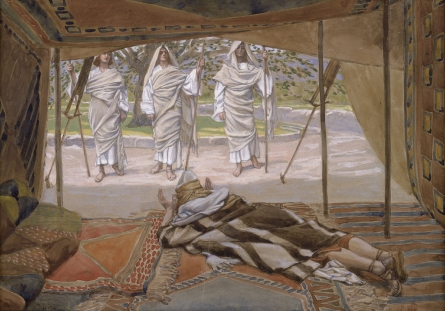
The benefits of sacrificing-but not TOO much
Rather than keeping it only to herself, Chava showed her love for her husband by sacrificing her own consumption of the fruit, allowing him to eat part of it instead.
Sukkot is a holiday that brings a unique inner peace – a peace that would seem to resemble the messianic era, a universal acceptance of God’s moral and spiritual order; an order that is best advanced by helping the Jewish people serve God and further educate mankind.
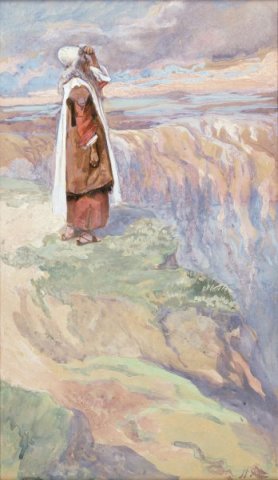
It seems important for the Torah’s central prophet to have been someone with whom gentiles could identify. And being buried outside of Israel may well have been part of that
Moshe saw all the Jews as one whole, it was the ones in front of him who served as the representatives for all those who had lived and would live in the future.
The Torah's standard for convicting a criminal is set much higher than many contemporary systems of law, that accept one witness. In practice, that means the Torah prefers to let criminals off, rather than punish the innocent
Is the source for saying Birkat HaMazon as obvious as we normally assume?
As the Jewish nation and the Jewish state become more powerful, we have a greater responsibility to contribute more resources to developing nations. It would be a Kiddush HaShem.
Moshe was not able to see that Yehoshua was fit for the job. On some level, this seems strange considering their long-standing relationship.
The water supply in the wilderness had been dependent on Miriam’s presence. Hence, as soon as she dies, the Jews had no water. In turn, that lack brought about Moshe's disastrous interaction at the boulder.
Yehoshua and Calev's mistake was what they could have done earlier: They must have known their colleagues’ negative inclination. The Torah’s silence on whether they tried to change the mind of the other spies speaks to their own silence as well.
Three laws seemingly unconnected and out of place: theft from a convert; sotah; and nazir. Why are they here, in Parshat naso?
Behar is primarily about ways to prevent Jews from descending into cycles of poverty; Bechukotai reinforces the laws of Vayikra by spelling out the consequences of following or not following the laws
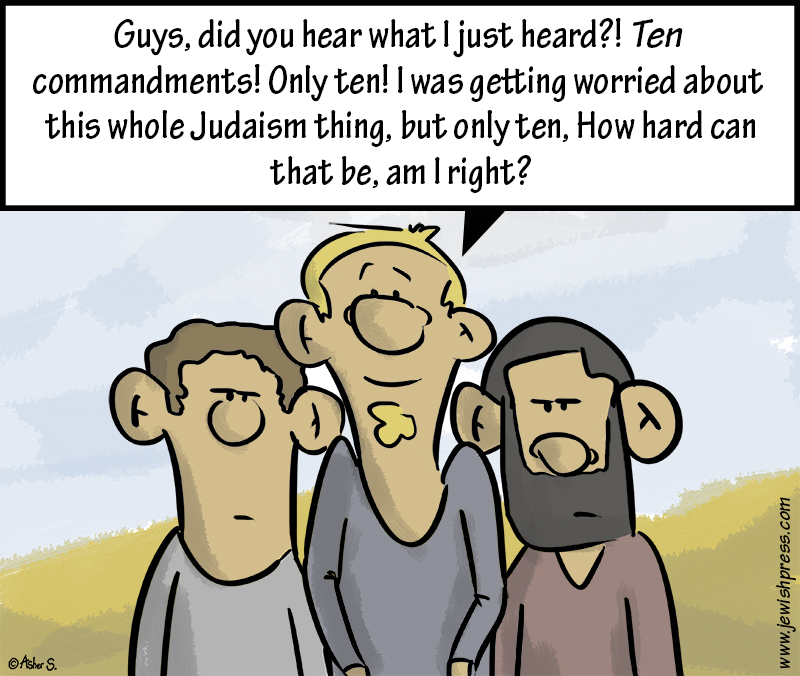
With the 10 Commandments, G-d is described as the One who took the Jews out of Egypt. In Parshat Kedoshim, He is described simply as being "holy." Both phrases set the tone for the list that follows.
The Meshech Chochmah states that had Israel not sinned with the golden calf, God would not have punished Aharon’s sons so severely.
In commenting on the story of Nadav and Avihu, Aharon’s two sons who died while presenting a fire offering to God, Rashi does something very unusual. The famous exegete extraordinaire seems to contradict himself in very close proximity. First he tells us that Aharon’s sons were either guilty of being drunk while in the Temple […]
Appreciate that Pesach is NOT meant to end on the seventh day, but at Shavuot. With that in mind, we need to work harder to accept making the days of sefirat ha-omer into days akin to chol ha-moed
There is likely some connection between the prohibition of chametz on the altar and the chametz which is more likely on our minds as we rid our homes of this most challenging foodstuff.
From the beginning of the building project, the financial and physical contribution of all Jews was sought. There was a need to show that the Torah’s tabernacle was where all Jews stand equal before God
Paradoxically, the sin of the calf ended up strengthening Moshe and the Jewish people with a new consciousness.
Man is attracted to the short cut that the supernatural road provides; there is a place for the supernatural in God’s world. It is tucked away under lock and key not for us to use.
In fact, loudness and brightness are not intrinsically Godly at all. On the contrary, the truer place to find God is in the still-small voices all around us.
Towards the end of this week’s parsha, God speaks about a malach that he will send in front of the Jewish people but it is not clear what He is referring to. We will consider one understanding
No one is surprised that the Torah wasn’t given immediately after the Jews left Egypt, even though it was the first logical time for such an event to happen. But why not earlier or later on the trek?
The role that God played towards the Jews in the desert was not far removed from that of a parent. While they were on the desert, He provided them with the challenges that would allow them to mature
When Moshe is told about the plague of the first born (4:22-23), God gives an explanation, something we do not see with any of the other plagues. Yet is it actually middah keneged middah?
Moshe complained to God that even though he would have the best human understanding of the Divine will, he had difficulty bringing it down to regular people. That role-"turgaman/navi"-Aharon filled
While Moshe may have eventually become even greater than the avos, we must always strive for the faith of his predecessors and for the inner flexibility that such true faith brings with it.
Ya’akov decides to prioritize the younger son, Ephraim, over the older Menashe
Yosef wanting to see his father Yakov again is understandable. Perhaps Yosef could not have left Egypt to do so. But did Yosef’s desire to see him justify making his father leave Israel for Egypt?
We generally assume that Yosef, as a victim of cruelty and not its perpetrator, had nothing to regret. Yet a careful reading shows he had a significant role in creating the tension with his brothers
How could Ya’akov make the same 'mistake' as his father, to favor one child over another after all the troubles that plagued him resulting from Yitzchak favoring Esav?
The actual tale of Rivkah and Esav is of a mother who continued to care and love a delinquent child who became a problematic adult, proving she will always be his mother and he will always be her son.
Like Rivkah before them, neither Rachel nor Leah created the situation that was about to have extraordinary influence on the rest of their lives and, ultimately, on the lives of countless others
On the one hand, we see that Rivkah was right about Ya’akov’s potential. On the other hand, we will never be sure who was right about Esav.
Yitzchak, did not go to Be’er Lechai Ro’ee to pray or meditate. Rather he was on a mission, and that mission was to return Hagar to Avraham in marriage.
Isn't it surprising that Avraham who prayed for Sodom's salvation did not protest God commanding him to kill his own son? For the Netziv, this was actually exactly what God wanted from Avraham. Why?
While we read of tests of Avraham, it is clear that Sarah endured tests of her own. According to Ramban, she failed her test in her treatment of Hagar
The Torah itself presents parallel narratives of the same stories, thereby showing that the same events can truthfully be constructed in more than one way.
Though a woman helps her partner and remains his equal, she nurtures and thereby becomes a man's superior. Paradoxically, therefore, woman may be just a bit closer to the image of God than man.
It was not enough for Moshe to die by himself, however; his separation from family and nation had to be total, even after his death. And so his burial spot would need to be hidden from all.
God’s foremost desire is to conduct a relationship with the Jewish people built on love and commitment. The song of Ha’azinu reassures us that the relationship will never die.
As we approach Yom Kippur, it is time for us to think creatively, the willingness to chart a new path, about what we can do better.
In every generation, the shofar blow is not like other sounds. Those sounds we listen to with our ears, but to the shofar we listen with our souls. ALL Jews always thirst for this cry of longing.
Many commentators sense a significance to the placement of the bikkurim declaration, at the beginning of this week’s pasha, right after the injunction to destroy Amalek. What is the connection?
Battling Amalek presents an important warning to any Jewish military leader that there is a need to maintain a basic respect for what it means to be human, even when dealing with mortal enemies.
Is the Torah to be read exactly as the Jews who received it would have, or, is it actually to be read in a contemporary way that can't possibly be the same as those who first received the Torah?
A musical perspective on Parshat Ekev...
Understanding why these Ten Statements were chosen-as opposed to others omitted-could well lead us to a greater grasp of the essence of this venerable text.
An obstacle to understanding Devarim is thinking of it as a book. Devarim literally means “[spoken] words” and should therefore be primarily considered in its 'orality'
Why did Moshe include part of Menashe together with Gad and Reuven in the Transjordanian settlement?
The fact it was specifically Midianite and Moabite women involved with Jewish men {Moshe and men involved with Ba'al Peor) shows that an existential bond existed between these nations and Israel.
Bilaam not only doesn't appear to be great, he seems to be base as well as foolish (outsmarted by his own donkey!). So how can the midrash claim he was really at least as great a prophet as Moshe?
Moshe was ideally suited to the role of an intermediary between God’s immanent presence and Israel but not so well suited to leadership in front of a hidden God
The communication gap here is really two-sided. It certainly starts with Korach and his group, but it subsequently infects Moshe as well.
The incident of the spies was a completely new and problematic transgression, it was not toward the rarified wilderness, but rather toward the earthly existence promised in the Land of Israel.
If Moshe was the greatest man that ever lived, his silent partner Tzipporah deserves much of the credit for it.
Enjoyment of God’s world always comes with some innate meaning – something which is lacking in the case of abstinence, the case of the Nazir.
The Torah recognizes the phenomenon of leadership and brings it to our attention subtly in the Book of Bemidbar, through the way it lists the names of the different tribes.
Had the Jews not sinned with the spies, they would have gone into the land led by Moshe at the end of Parshat Shelach. Hence the end of Vayikra would have basically been the end of the Torah
The Torah is telling us something here: Though we may sometimes act too rashly, there are times when rash action is the only way to prevent a complete catastrophe.
In this week’s parsha, the Torah further develops the statement that opens Parshat Kedsohim, the need to be 'Kadosh.'
Parshat Achrei Mot represents a transition in the book of Vayikra from an emphasis on Aharon and his sons to the Jewish people as a whole
Man in his ideal form is described as a speaker. Fitting that the sin most closely associated with tzaraat is misuse of speech.
Trump has come to the defense of the average American’s world and by doing so became their champion and the enemy of the "experts"
The outcast metzorah or zav, is essentially promised a quick rebirth within the Jewish nation.
Trump has come to the defense of the average American’s world and by doing so became their champion and the enemy of the "experts"
Vayikra, unlike Shemot, is not really about revelation. It's about the daily struggle to raise man above his own physicality.
Vayikra, the Torah’s middle book, gives the critical light to the Torah's other books around it.
Perhaps God’s own 'completeness' prevented Him from dwelling in a Mishkan waiting to be finished?
The Mishkan's building was a situation where the process was at least as important as the result
Paradoxically, it is when we confront evil we have the opportunity to make the world a better place.
The sages believed each of the Kohen Gadol's vestments brought atonement for a different type of sin
If we truly want to be involved in Torah study, than we, ipso facto, are involved in Torah study.
By first putting parents before "self" we learn to put the more abstract God before self.
Yitro may well be the prototype of the righteous gentile, maintaining a distinct non-Jewish identity
The first 30 years of the State of Israel allowed many to see God in history
Shifting the year's start from Tishrei to Nissan symbolizes a shift in perceiving the natural world.
According to the Baal haTurim the snakes created by the magicians represented Phaorah himself
Tzipporah is largely invisible & almost entirely silent, we hear her only when she rebukes Moshe
Did you ever wonder if Yosef and his brothers ever conclusively put their past friction to rest?
Yakov realized there was a Divine plan all along; God did not inflict suffering on him for no reason
Yosef’s tale illustrates that "clothes don't make the man"
Tamar initiates the process, opening Yehudah’s eyes to her essence; “clothes don’t make the (wo)man"
People have 1 name because it supposedly reflects identity. What if a person has a double identity?
Of all the many fathers-in-law in the Bible, only Yitro & Lavan are singled out for this designation
Ever wondered why the least funny Jew in the entire Torah should be named Yitchak, “He Laughed?”
At the beginning of this week's parsha, Rashi informs us that Sarah's death was no accident, but rather a result of hearing about Avraham almost sacrificing her beloved only son, Yitzchak. Based on the midrash, Rashi explains that the terrifying image of such a scene was more than she could handle. Though Sarah would almost […]
The greatest impact of an individual is generally felt when he acts as part of the larger community.
If everything depends on the final test, the Sacrifice of Yitzchok, why give Avraham other trials?
The remarkable gift of unity should be a powerful tool to further mankind and to further God’s will.
‘God doing exactly as He planned’ does not mean that all occurred without any ambivalence & tension.
Haazinu encourages Jews in times of national emergency & documents our eternal connection to God
Moshe's message lives on forever: Life's potential is a very lofty goal that we must strive to reach
The Netziv’s point: Self-assessment should be based on who we are, not based on who our neighbor is.
Suddenly on RH, more conscious of God’s presence, a greater sense of awe and majesty emerge in shul


 September 25, 2026


