יום שני, ח׳ חשוון תשפ״זMonday, October 19, 2026



Follow Us


Rabbi Boruch Leff is a rebbe in Baltimore and the author of six books. He wrote the “Haftorah Happenings” column in The Jewish Press for many years. He can be reached at sbleff@gmail.com.
Read More
What happens between these two fires very much depends on how fired up we are. Our fire is our neshama, and on Shabbos it is our neshama yeseirah.
Yes, there are moments when I wish I were younger and could relive certain experiences without making the mistakes I did as a youngster.

She probably gave no conscious thought to the message that she broadcast. She did not mean to deliberately offend anyone; it just seemed like a cute thing to do.
Chazal say (Menachos 53b) that just like an olive tree does not ever shed its leaves, so too Klal Yisrael will never be destroyed, not in this world or in the next.
“How can you know there’s no G-d? Can anyone possibly prove there’s no G-d? How can you prove that?” I wondered.
A friend told me about a niggun for what to me is a new zemer and I have recently begun singing it. It has had a profound impact on me and how uplifted I feel on Shabbos...
Why should we rejoice on Shabbos like those who received the Torah?
The next time we face a rainy day, let's not feel down.
It is clear that when we drink wine on Shabbos, we are enjoying a small taste of the World to Come.
What is the source of true happiness and success in life?
Rav Eliyahu Dessler understands that this statement of losing one’s mitzvos for speaking lashon hara is one of those statements that is not meant to be taken literally.
Cynical people always try to point out the negative.
The notion that we have wings and can fly, but fall to access them is genuinely spot-on.
Hakadosh Baruch Hu wants us to be passionate about our Yiddishkeit.
Besides for heat and light there is a deeper understanding of fire we need to discover.
It becomes quite clear that measured by time, Klal Yisrael values avodas ha’tefillah, serving Hashem through prayer, tremendously.
Sometimes we think we have more power than we actually do. Sometimes we think we have more knowledge than we actually do.
As it turned out, Mordy and Yissachar were the very last people who wanted to go on the zipline that day. Mordy went first and had a great time until…
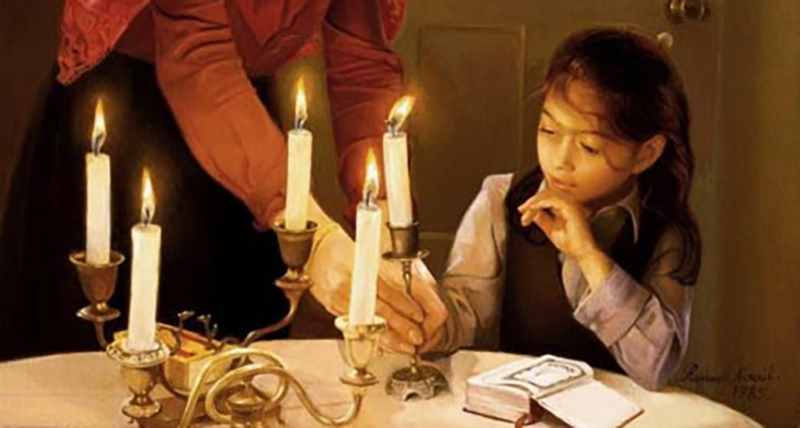
The Kobriner Rav says (mentioned in the Nesivos Shalom-Elul), if you want to become holy, if you want to begin doing teshuva, you must start with Shabbos.
The author of the zemer is telling us that although we yearn for the Beis HaMikdash and know that the ultimate redemption is not yet at hand, there is one thing which can give us strength and comfort: Shabbos.
Each nation has a specific role to fill in Hashem’s plan and we pray that through these offerings Hashem will inspire them to true service.

We wash and raise our hands to Hashem, reminding and displaying to ourselves that we have nothing without Hashem Yisbarach.
Having an evil eye means that one has low tolerance for others, and especially for their success.
We should never feel as if we are lugging around heavy suitcases of avodas Hashem.
Is the way we celebrate Purim the ideal way to spiritually experience it?
We must struggle to understand, says the Rambam, the greatness and wisdom in the words of Chazal.
The depths of Torah SheBiksav are grasped through Torah SheBaal Peh. Hashem commands Yechezkel to unite these two making them into one.
There are many potential spiritual hazards. How can we survive?
If our teshuva is real, if we feel sincere regret and have resolved to become better, Hashem will look at us as new people.
What does it mean to be a student of Hashem? It means, at least in part, to study Torah for Him.
Why was it so hard for Lot to admit subordination to Avraham
Lot and Avraham were related in their inner core, if not in what was open and visible to all.
We must never forget that each person has his specific purpose...
When we improve our shemiras Shabbos, we are taking steps to bring redemption and Moshiach closer.
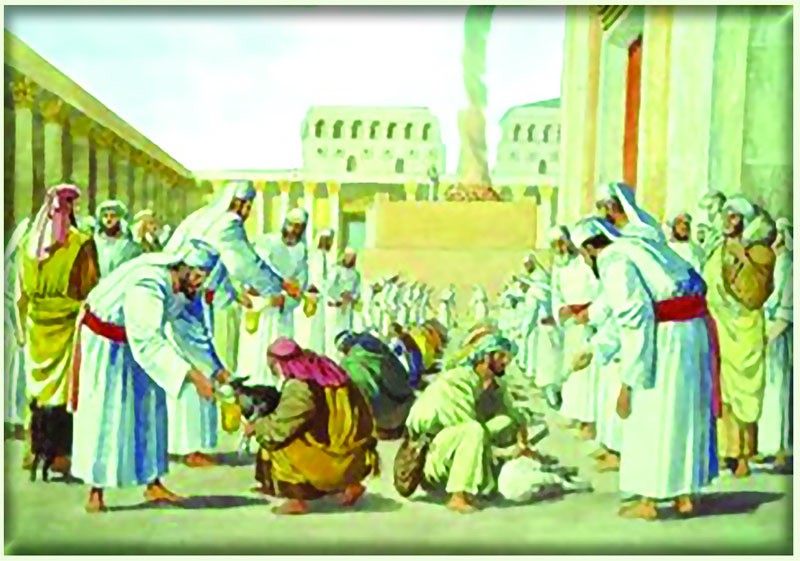
We have lost the idea of what it is to give ourselves to Hashem with totality and completeness.
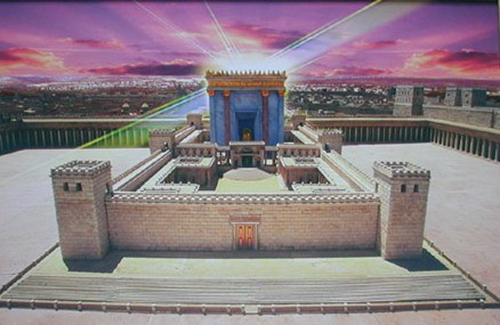
There was a subtlety in which Shlomo was lacking.
Clearly, G-d has spritual goals and plans for the non-Jewish nations of the world.

In Esav's world, thoughts follow action. Do first, think second.

Why is the kever of the Isha Hashunamis a special place for tefillos?
On Shabbos, says Rav Cohen, we exist in a world of mei’ein Olam Habah, a microcosm of the next world, a taste of Gan Eden.
Just as Noach established and created a certain merit for himself when being saved, so too Bnei Yisrael need to do the same in order to be redeemed.
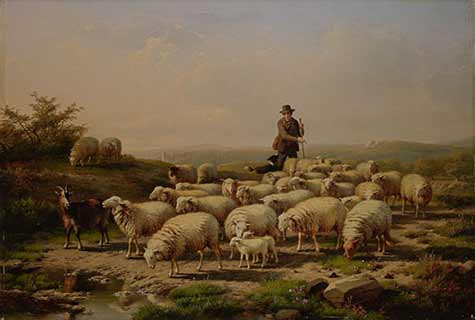
Throughout the perek, the navi describes the greatness of Hashem Yisbarach and His tender loving care and concern for His people, Klal Yisrael.
It is only G-d’s Hand in guarding our continued existence and our dedication to Torah that has allowed us to endure.
No matter how bleak things seem to be, Hashem never give up on us.
If I say the word Amos, what is the first word that comes into our minds?
The Jewish people do not usher in months like the rest of the world.
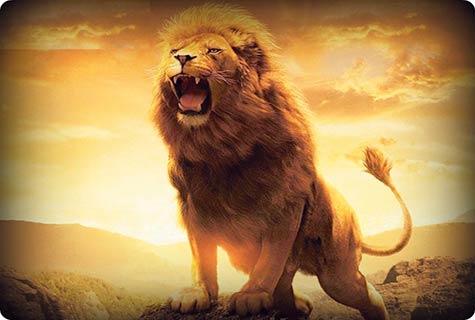
It is important to keep in mind that there are numerous midrashim that are not meant to be taken literally.
Moshe Rabbeinu reached a level that surpasses human attainment.
Utilizing the hidden light of Chanukah, we can defeat Islam and Yishmael.
Eisav was born with great spiritual potential but he made a number of wrong choices.
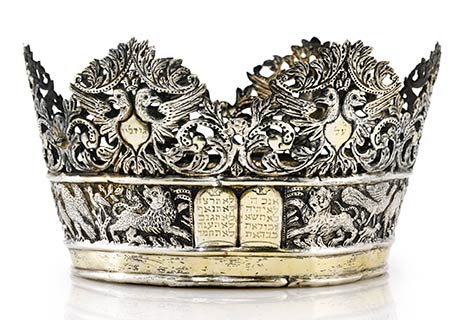
Every Jew is required to try to influence the world in a positive way.

You might argue that in truth it is not a prayer; rather, it is a statement, affirmation and declaration of fact that one day we will see the cities and streets of Yerushalayim full of ecstasy.

When we see the new moon at the start of each month, it is a sign from Hashem that we can renew ourselves spiritually.

Feeling Hashem's presence in our lives is the very purpose of the Beis HaMikdash.
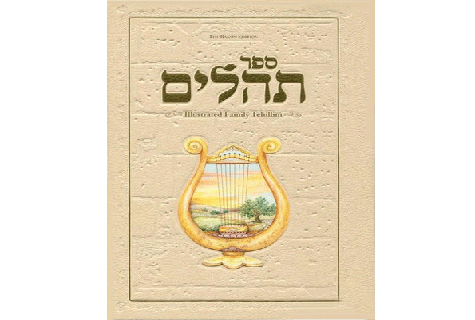
Dovid's musical Torah teachings were designed to penetrate the soul and the emotions.
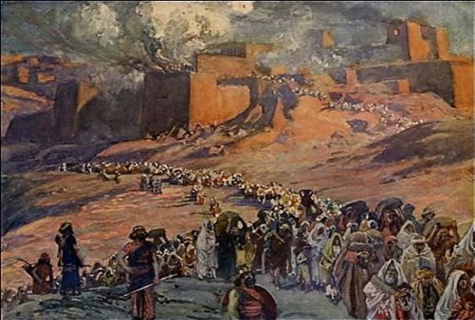
There is a great debate as to whether this story actually took place or is simply a metaphor, a prophetic vision shown to Hoshea by Hashem.
The Arizal taught this same approach, making the point that the Torah would never mention wicked people and their sins if there was not great depth involved from which we are to learn from.
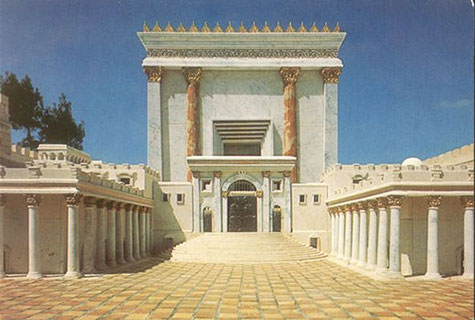
These four parshiyos are viewed as steps in a progression toward Pesach, the Yom Tov of teshuvah m’ahavah, of returning to Hashem out of love.
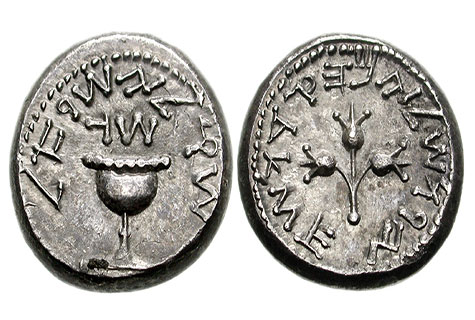
Just having basic emunah during these times of great spiritual challenges is inestimable in Hashem's eyes.

In reality, there is no such thing as an unimportant detail, an unimportant mitzvah.
"A person should sell even the beams of his own house in order to buy shoes."
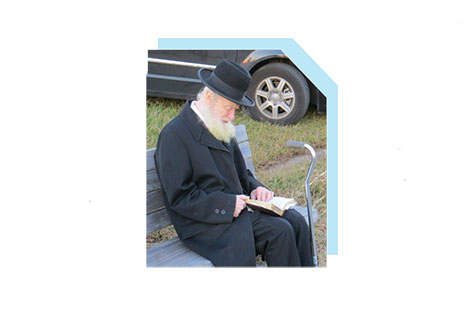
If you're always battling against getting older, you're always going to be unhappy.
Hashem created all human beings and it should sadden us when Hashem, their Father, does not see nachas from them.
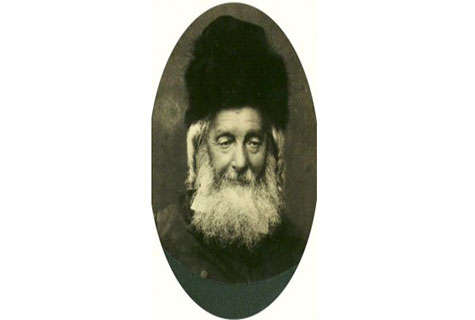
All Jews are inherently righteous and that is why we all have a portion in the World to Come.
“When a mother plays with her child there is an acute awareness of the child. But even when the mother works at a job or is distracted by some other activity, there is a natural, latent awareness of her child's existence.
The Three Weeks determines the "who we are and how we live" as Jews.

Sometimes when Chazal say that two different people are really one, they do not mean it literally, but rather figuratively.
Yehoshua knew that the outcome of the battles would depend not on military might, but on the spiritual strength of Klal Yisrael.
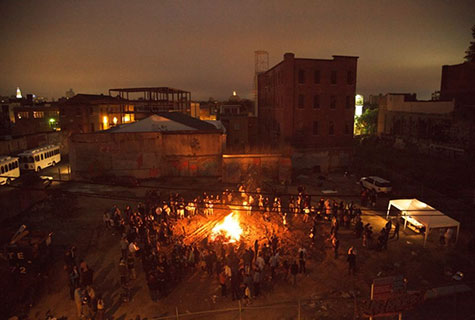
The question begs: how in the world can we accept that Bnei Yisrael en masse did not ever keep the mitzvah of shemittah?
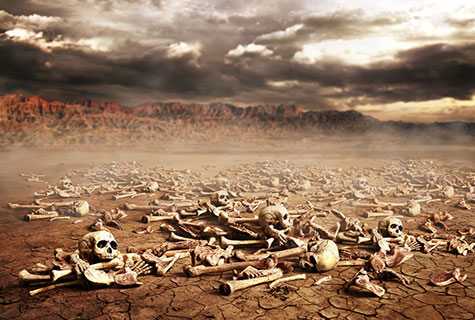
Someone who focuses only on the bones of the Torah makes his bones dry and passionless.

While our purpose in this world is to use our free will to choose good, to overcome our tests and challenges, part of that choosing should include a deep wish that we wouldn't even have the ability to sin.

King Achav reports back to his wife, Queen Izevel, thoroughly dejected. It seems Eliyahu has defeated them and their idolatrous practices. The nation would no longer worship Baal and return once again to serving Hashem. This threatened Achav and Izevel's entire hold on their kingdom.

We specifically use our legs to celebrate to demonstrate our new completeness.
Shemos Rabbah states that Yaakov transmitted the “secret of the redemption.”
What in the world happened to the Ten Lost Tribes? How could we lose ten out of twelve tribes, 83% of our peoplehood?
You thought that the Flood, the Mabul, was something that happened a long time ago. I did too—until I saw the Radak on a pasuk in this week’s haftarah. “For this to Me is like the waters of Noach. Just as I swore that the waters of Noach shall never again pass on to the earth, so too I swore never to be completely irate or fume at you.’ (Yeshaya 54:9)
Why do we call this Shabbos, Shabbos Shuvah? Is it because it’s the only Shabbos during the Aseres Yemei Teshuva? That can’t be the reason. After all, we don’t call this Shabbos, Shabbos Teshuvah. It’s specifically called Shabbos Shuvah. So you’ll tell me, shuvah, teshuvah—same thing, right? Both mean repentance. But we will see that the difference between teshuvah and shuvah is all the difference in the world.
Does the title of this article sound familiar? Anyone over the age of 30 probably remembers a certain song by a certain boys choir with the “Shabbos Yerushalayim.” The song was released circa the late 1980’s, and you guessed it, it was sung by R’ Yerachmiel Begun’s Miami Boys Choir.
Why do we call this Shabbos, Shabbos Chazon? The word chazon is the first word of the haftarah and it means to see, to experience a vision. If that is the reason we have to ask what is so special about this word?
One of the most complex Tanach personalities is the central figure of this week’s Haftorah: Yiftach, the Shofet, Judge.
Do you say Shema before you go to sleep? I’m sure you do. But perhaps you, like many, feel too tired at night to say the entire tefillah of Kri’as Shema as it appears in the siddur. If you do say the entire tefillah, you will recognize a pasuk in this week’s Haftorah. And if you don’t say the whole Kri’as Shema al Hamitah, perhaps after this column, you’ll re-consider and find yourself connecting with the following very comforting pasuk.
Happy Endings. We all love happy endings. Remember the children’s stories that end “and they lived happily ever after”?
Every year I have a special hope that the Geulah will arrive in Nissan and it appears that once again this year will not be the year. This is why I sigh.
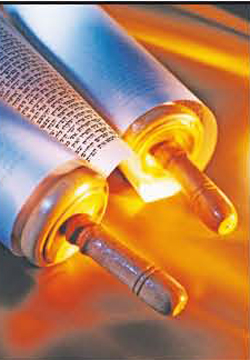
A colossal failure of mammoth proportions. Shaul HaMelech fails in his mission to destroy the nation of Amalek in its entirety and to this day, we suffer from its ever-present force of evil.
Have you ever been to a Sefardi shul - or a Sefardi simcha of any kind? There’s something special about the Sefardi personality, something which Ashkenazim don’t quite possess.

Parshas VaYechi describes the last days of Yaakov Avinu’s life and it is therefore appropriate that the haftorah is a description of the last days of Dovid HaMelech’s life (the beginning of Sefer Melochim). But is that the only association? The last days of someone’s life? If so, there are other examples of the last days of someone’s life in Navi that could have been chosen. There must be deeper connections between the lives of Yaakov and Dovid.
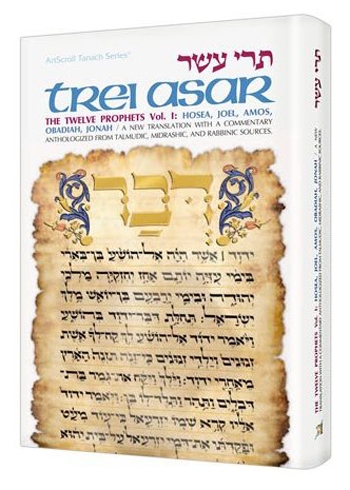
I always wonder about Jewish names. Some make it and some don’t. Some have mazel and others don’t. Some Biblical personalities’ names are very popular amongst the members of Klal Yisrael and then there are those personalities whose names never seem to be used.

The new Jewish year is still young. The new Parshas HaShavua cycle is but a few weeks old. It is indeed time for new beginnings.

Yom Kippur was but a few days ago and we were all feeling the closest to Hashem that we feel all year. And now it’s time to build the sukkah. But before we move on with the holiday cycle we need to see what we can do to retain at least some of those special feelings of Yom Kippur. This week’s haftorah guides us on just such a path.
Two major news stories involving two famous men named Armstrong occurred within days of each other recently. Was it random happenstance? Or was there hashgacha involved? We know that nothing happens outside Hashem’s realm and power. But did Hashem have a specific reason for these two events occurring together when they did?
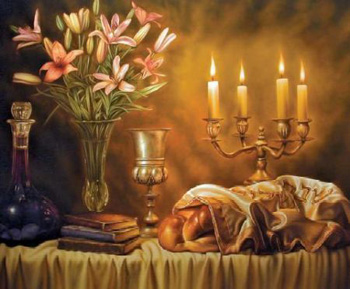
You will not have much time this week for your gathering - the haftorah is very short, only ten pesukim. (Let me be clear. I most certainly do not support Kiddush Clubs for a variety of reasons, not the least of which is the what should be obvious lowliness of leaving a shul minyan to go and have a whiskey party, and not being able to wait until after davening. Despite efforts to combat these gatherings, I know they still exist and figured I would warn “the guys” about the brevity of this week’s haftorah.)
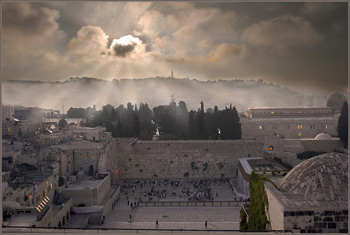
We’ve all seen the ads in the papers. Shabbos Nachamu is one of the biggest getaway weekends of the entire “frum” summer. There has long been a long-standing American tradition for people to go up to the mountains for Shabbos Nachamu.

We often sit through the haftorah wondering, “Why do we read the haftorah anyway?” Krias HaTorah of the parsha makes sense—we read a portion of the Chumash each week so that we finish the entire Torah over the course of the year. But we’re not reading a portion of Navi each week so that we can finish all of it on some kind of schedule.

We often sit through the haftorah without understanding what it is all about. “Why do we read the haftorah anyway?” we sometimes think. Krias HaTorah of the parsha makes sense—we read a portion of the Chumash each week so that over the course of the year we have completed the entire Torah. But what is the goal of reading the haftorah? We know that it is not so we can finish Navi on some kind of schedule. What then is the purpose of the haftorah?


 October 16, 2026