יום ראשון, ל׳ תשרי תשפ״זSunday, October 11, 2026



Follow Us


Looking for an inspirational speaker or scholar in residence? Contact Rabbi Staum at 845-641-5094 or at rabbistaum@strivinghigher.com. Rabbi Dani Staum is a popular speaker, columnist and author. He is a rebbe in Heichal HaTorah in Teaneck, NJ., principal of Mesivta Orchos Yosher in Spring Valley, NY, and a member of the administration of Camp Dora Golding. His writings can be found at strivinghigher.com.
Read More

We are blessed to live in a land of plenty. Pleasures and enjoyment abound, and there is little to stop us from indulging. This is not only true about sinful and forbidden pleasures, but even regarding enjoyments that are acceptable within reason.
The truth is that we all have a mental image/picture of what we would like to be. We all have aspirations to achieve certain levels of accomplishment, based on our values and goals.
Unfamiliarity always breeds anxiety and discomfort. It’s all the more so when that unease is combined with expectations and fear of not living up to those expectations.

It is always challenging to assess our own growth. Our evil inclination within us minimizes our accomplishments and highlights our deficiencies, making us feel woefully inadequate and feel like failures.

People procrastinate because they feel too anxious to do what they need/want to do. The problem is that procrastinating only exacerbates feelings of anxiety.

When we use our mouths to say the wrong things, it weakens the incredible power that our mouths wield, especially when we daven.
The true greatness of G-d lies in the fact that despite His omnipotence, He indeed loves every miniscule one of His creations, and cares for the individual welfare of each one.
As long as the Beis HaMikdash is not rebuilt and korbanos are not being offered, things are not as they should be. The greatest challenge for us is that we don’t even know what we are missing.

One of the greatest tragedies is when a new inductee stands at his/her bar/bas mitzvah smiling for pictures and enjoying the “induction ceremony,” but in reality, has absolutely no idea how to be a soldier or how to “handle” the weapons.
There’s something nice about getting a haircut. For a few days the person looks put together and fresh.
Unlike grass which any child can nonchalantly rip out of the ground, chopping down a tree is a great challenge, and uprooting all the branches beneath is an even greater challenge.

The reason for the celebration is that Torah is not merely a constitution or a book of the Rights of Man. “It is a Tree of Life for those who grasp it, and those who support it are blissful” (Mishlei).

Rabbi Wein instilled within his students and myriad admirers an appreciation of the fact that there are lessons to be gleaned from every occurrence in life if your eyes are trained to see them.

There isn’t an educator in any of our schools who isn’t a hero. Teaching is the most valuable and integral profession we have, despite the fact that teachers are often underpaid and underappreciated.

If a father embarrasses his son in shul because the latter was talking during davening, he may get his son to stop talking in the moment, but in the long term he has not taught him anything about kavod ha’tefillah

In the daily grind, we often forget about the thunder and lightning and the excitement of Torah. It becomes just another part of our day, and we forget that its message is eternal and all-encompassing.

Is living in a confined area always a bad thing? Is living a metaphorically confined existence always restricting?
In the most painful times, we walk ahead in darkness with the light of our faith. Sometimes that light may seem to dim, but we seek to fan its flame and strengthen it within us.
As one educator once said, “Every child has gifts. Some discover them later than others.” Very often, those qualities and talents remain latent and need to be recognized.
These days it’s not hard to understand how a few nonchalant and effortless clicks can have tremendous consequences. Clicking on one part of the computer screen may be completely innocuous, while clicking an inch over, into a little box on the screen can cost you big time, in more ways than one.

Eating challah without a minimum of three or four dips is practically unheard of. (Some would argue that it may be more important than lechem mishna.)
I recently heard the Meaningful People podcast in which Uncle Moishy was interviewed. It’s clear that he genuinely loves what he does and takes great pleasure in the fact that he has had such a wonderful impact on so many Jewish children for so many years.

When we smell something, it also allows us to anticipate something we may not see or hear.

Like people, relationships have ups and downs. They do not remain static and require constant nurturing and attention to maintain and enhance them.
The truth is that much of life is spent waiting. On a simple level, when the world is functioning normally, we wait on store lines, in traffic, for packages to arrive, etc. But on a more significant level, we wait for all sorts of salvations and panaceas.

There are many lessons and reflections to be gleaned from the surreal events that have taken hold of the world during the Coronavirus pandemic. One of those lessons is a reminder about the effect and influence of every single individual.
I have noted in this column that it’s a beautiful feeling to have nachas from one’s parents. I should add that the same is true about having nachas from one’s siblings.

Rabbi Moshe Weinberger notes that although to the uneducated person it seems that a tree’s entire growth is dependent on the nourishment it receives from its roots in the ground, that is actually not the case.

It’s not exactly the advice you might have expected from a leading Torah personality. But the truth is that one immersed in Torah wisdom has a keen and deep understanding of human personality and motivation.
One of the most famous and oft-quoted Yiddishisms is der mentsch tracht un Gut lacht – Man plans and G-d laughs. Its clear message is that we have no guarantees or assurances that we will be able to follow through on anything.

Every pasuk, every Mishna and every line of Gemara; every mitzvah, every chesed, and every word of tefillah – make us part of the royal family.

At one point, I left my seat and made my way down to try my luck and see if I could get onto the field. I was indeed able to, and I walked right up to the dais.
Of course, we have to do our part to ensure our safety, in whatever ways are necessary and appropriate. But on a spiritual level, our response is always to strive to increase light – the very light our enemies seek to extinguish.

Judaism believes that it’s not so much what I know as what/who I am! Book knowledge isn’t worth much, if that knowledge doesn’t cause a transformation within the person.

A lack of derech eretz or moral clarity in children is frequently a reflection of what they witness, or fail to witness, in their parents.
For those of us who have the merit and privilege to study the timeless words of Gemara, the thumb plays a particularly significant role. We can hardly imagine learning Gemara, trying to explain a particularly challenging novel exegetical explanation, without passionately thrusting our thumb downward and then upward.
This is not the time for lengthy speeches. Now is the time to proceed.

During my youth I couldn’t wait until my bar mitzvah when I would be able to start putting on tefillin. I still have a clear memory as an eleven-year-old sitting on my bed thinking my bar mitzvah is never going to arrive.

Every Shabbos, we put aside all technology. We are perhaps the only community in the world who are active members of society all week and yet won’t check emails, social media, or the news for twenty-five hours.
I’m not a Washington fan, so why did I care about their Cinderella-like saga? Because being in the world of education, it symbolizes a vital truth that can’t be stressed enough: That ultimately the hundreds don’t matter.
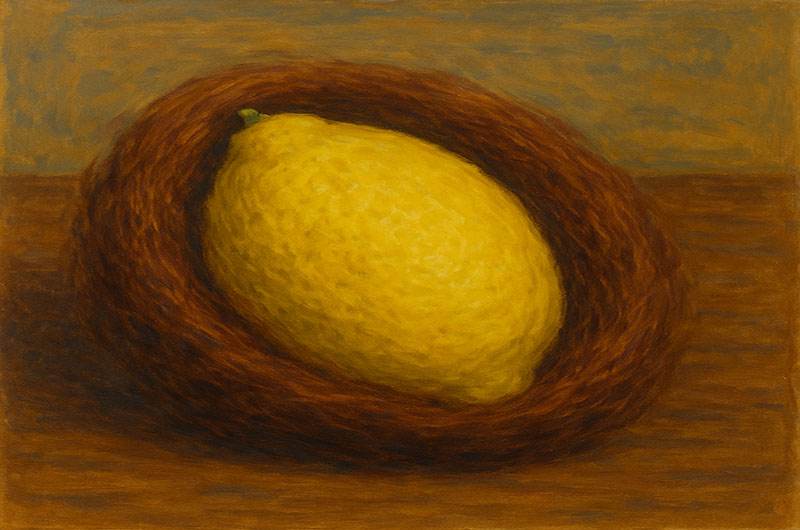
The one thing that has not changed is how careful we are and need to be when handling an esrog. The Medrash relates that the esrog symbolizes the heart, which reflects our emotions. We always have to be vigilant and mindful of the feelings of others, and we also need to be cognizant of, and honest about, our own emotions.

The mitzvah of sukkah is most unique. It is the only mitzvah one performs with his entire body (with the exception of living in Eretz Yisrael).
Our main argument for forgiveness is that our sinful behaviors do not define us; they are an aberration, an external infection as it were.
We take it so for granted that we judge, that it doesn’t even occur to us that it’s not our place to always decide matters relating to other people’s lives.

The great month of Elul has begun. The spirit of preparation for the Days of Mercy and Judgment have begun to envelop us, and with it the knowledge that it’s time to focus on teshuvah.

G-d is not in a popularity contest. In fact, He Himself endows man with the ability to deny His Presence or to believe in any falsity he chooses. That itself is the epitome of awesomeness, in its true meaning.

It’s an understatement to say that Rabbi Wein has been a major influence in my life. I find myself quoting him constantly. When I had questions about Torah outlook or life matters, I would ask Rabbi Wein. Now that opportunity is lost.
Promoting ruach (team spirit) and hype are extremely important to help fire up and motivate the team to feel they can win Color War. It’s always fascinating to see a relatively quiet staff member standing on a bench, his face painted his team’s color, screaming a chant with hundreds of campers excitedly following his lead.
A person would think twice before he spoke about someone else, knowing that one statement of lashon hara can cause him to contract tzaraas.

There’s a limit to how long a person can survive when he is outside of his natural element. When the earthly provisions are depleted, it isn’t long before he will die, unless he returns to a natural earthly environment.

During the years that I was a division head, 98% of the campers in my division who were homesick were completely fine and enjoying camp within a week. But that first week can be gut wrenching.
It’s that sense of altruism and unity that gives us hope that we will merit to witness Mashiach.

Rabbi Sauber told his class, We are about to learn about the greatest act of self-sacrifice that ever occurred.
Obviously, staying up all night isn’t about qualitative learning, but about demonstrating excitement. One only stays up late, or all night, for something truly important or exciting.

Who is the biggest victim of identity theft? Every one of us. One of the greatest tactics that our evil inclination employs is to confuse us about who we really are, and what defines us.

It’s vital that a fielder and batter know how many outs there are. Whether a fielder will make a play to second or decide to hold the runner, and whether a runner will be running if there is a pop-up, depends on how many outs there are.

If he never davened, it will be very challenging for him to start getting into the habit of doing so. If a person goes through the motions, however, even without feeling it, when the inspiration eventually sets in, it will be far easier for him to become a serious ben Torah.

If we want to savor life, the only way is to slow things down.
Perhaps when [Mashiach] comes, we will all sing hava nagila together.

The common thread between those who persevere beyond all odds and accomplish incredible things is that they have an unyielding sense of mission and responsibility. They aren’t merely doing what they want to do; they are striving to accomplish what they feel needs to be done. They feel the weight upon their shoulders.
It is not coincidental that both national periods of mourning are connected with deficiencies in interpersonal relationships.

There is always going to be times of maror in our lives. But we have to continue to wait and daven for the incredible seudah that is to follow.

I don’t remember when that way of talk began, but I’m pretty sure it was only in the twenty-first century. In our culture, being a thing has become the basic unit of cultural ontology.

In 2011 the Maxwell House Haggadah translation underwent its first significant update since its original publishing. “Art, thou, and hast” were replaced with more conversant contemporary English.
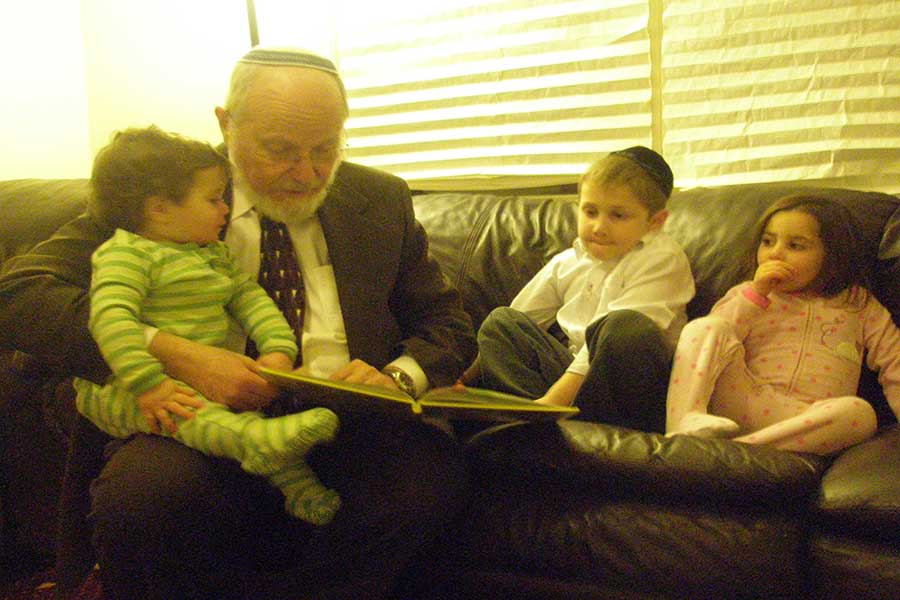
It was well known that Jack Benny celebrated his thirty-ninth birthday every year. When Benny died in 1974, he had turned thirty-nine a total of forty-one times.

Shlomo HaMelech is teaching that chinuch is not just about compliance, but more about instilling values into our children’s souls, so that it becomes part of them for life.
Throughout sefer Mishlei, Shlomo HaMelech contrasts the fool with the wise man. According to the wisest of men, the fool doesn’t refer to one with limited intellectual capacities, but rather one who doesn’t think through the consequences of his actions.

When we think of who we are and what defines us we often think of our physical bodies. Ask someone who he is, and he will generally point towards his heart. But is that really who we are? Is our body what defines us?

How often do we try to live life on our terms, even when the reality of the situation is clearly otherwise?
In life, we are constantly seeking out the proper path to follow. But this world is somewhat fluid and unstable, with new challenges and vicissitudes arising constantly.

The problem was that after years of being neglected by his father because of football, Mike didn’t have any love for the game. Still, despite his resentment towards football, he loved his father, and so after Joe’s passing, Mike began to attend every game.

The greatest challenge is to recognize one’s inner greatness and get past all the impediments that get in the way of that growth.

Based on those advertisements, I have come to a realization of the ideal manner in which a person in our community should spend his year. I may have missed some events, so don’t take any omission to mean they shouldn’t be on this list:

Most of us meander through life with a tube of figurative cover-up. We don’t like admitting our vulnerabilities, so we pretend they don’t exist.

Sometimes we may wonder why we need to daven so much. Isn’t praying three times a day on a weekday a bit much?
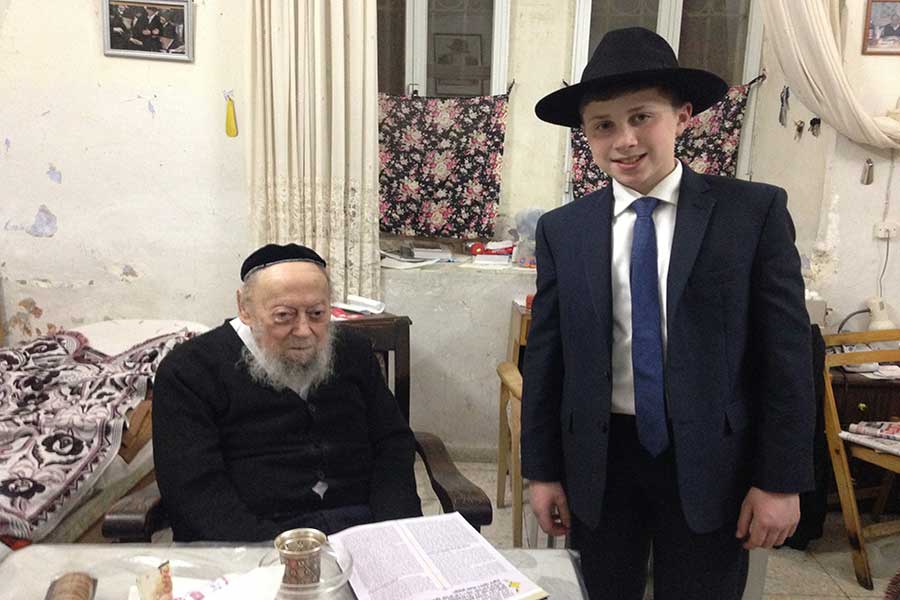
It’s one of the sad realities of life – we often fail to take advantage of the things closest to us. The things we can do at any time often become the things we don’t do at any time.

The doctor cautioned us that the treatment contained risks, including that it might not remedy the situation. He told us that we had to decide if we wanted to proceed with it or not.
My family has been blessed to spend our summers at Camp Dora Golding in the Pocono Mountains in Pennsylvania, where I am part of the camp administration. The drawback was that as a shul rabbi it wasn’t easy to be away from my kehilla for two months.
A story can be true in the sense that all the details are technically factual. Yet the way it’s conveyed may not be the way it happened.
Many people feel that they would know exactly what to do if they won the lottery. The many stories of lives destroyed by sudden windfalls notwithstanding, they feel that they would know how to proceed.

The lesson is that living according to the mandates of G-d is not to confine and restrict, but to ensure that we live an elite connected life within the confines of biblical morality.
The problem is that we don’t really feel like we are talking to anyone when we are davening. Rav Pinkus quips that a person only needs a siddur when he’s talking to the wall!
We would like to serve Hashem with a clear mind, when we feel relaxed and calm. In fact, to some degree we expect that when we try to do what is right, G-d should ensure that life is smooth and easy. After all, if we are trying to do His Will, shouldn’t He at least make it convenient to do so?!
We didn’t think much about it, and, in fact, we wouldn’t have even noticed that he didn’t bring anything. But then on Sunday night we discovered many candy wrappers on the floor and an empty platter on the floor in Shalom’s room.

The words that the mesaymim (one making the siyum) recites beautifully laud the greatness of Torah and our privilege in meriting to study its timeless wisdom.
It is the beginning – not only of our annual Torah reading which we recommenced with Bereishis – but the beginning of our efforts to effect lasting changes. It is the beginning of an opportunity to really make this the year we truly hope it will be.

I am always intrigued by people who are handy. I am also intrigued by people who are artistic. I guess it’s because I’m so untalented in those areas.
In the physical world, we are often warned that smoke kills before fire. In the spiritual world too, the spiritual smoke generated by our sins is more noxious and damaging than even the sins themselves.

There are many people who feel similarly about selichos and the many special tefillos recited during this time of year. It’s not easy reciting added prayers, many of which contain unfamiliar words.
One of the simplest yet most profound pieces of advice I ever heard is you don’t drown by falling into the water; you drown by staying there.
It is vital that we never forget that our goal is growth, not perfection! As long as we can honestly state that we are doing the best we can with what the Aibishter has given us, we can feel confident that we are doing our part.
I had always dreaded color war. What had suddenly changed? The obvious answer was that for the first time I had been involved in color war.
When I walked into the pizza shop not too long ago, I noticed two high school girls holding bentchers and reciting beracha acharona meticulously. It was a chizuk to me about the importance of reciting berachos carefully even in a public and somewhat harried setting.
I have a hard enough time balancing all of the responsibilities in my own life. Am I obligated to strive to fully internalize the pain of others? If I am, how can I ever be happy and dance at a wedding or appreciate a sunny day, when there is so much suffering and sadness in this world?
The fact that the rebbe knows that his students are looking up to him, and that he serves as an example for them, compels him to act the part, even if he would not otherwise do so.
Letting things go is generally a virtue, at least regarding releasing acrimonious feelings towards others. However, when it comes to personal struggles and overcoming negative character traits or following through with a life-long dream and aspiration, letting it go in the face of adversity is not a virtue at all.

How does Tisha B’Av and its meaning endure when we have little understanding of what we are missing? It’s because of the laws of mourning that we observe.
If we seek to live our lives based on our own abilities and means, we are very limited. However, if we live with the awareness that it’s Hashem’s world, and we are merely trying to play our part in the divine plan, then we tap into the infinitude of the divine.
Someone once noted that a goal without a time frame is usually a mere fleeting dream. Even the best of intentions and aspirations are nebulous unless there is a manageable goal within a specific time frame.

By Thursday afternoon (a day earlier than expected) camp reached the 2,500 berachos mark. The entire camp enjoyed a special dessert on Shabbos in celebration.


 October 9, 2026