יום ראשון, ז׳ חשוון תשפ״זSunday, October 18, 2026



Follow Us


Rabbi Niehaus, who originates from Los Angeles, is the Rosh Kollel of the Zichron Aharon Yaakov night kollel in Kiryat Sefer, a rebbi in Yeshivas Tiferes Yisroel in Yerushalayim, and the author of the just released “Oasis: Experience the Paradise of Shabbos” by Mosaica Press. He can be contacted at kollel.zay@gmail.com.
Read More
I can probably read your thoughts: “Elul? I’m still in the Catskills! We haven’t even gone shopping at the Back-to-School sales yet!” That is true, but on the other hand, this week is Shabbos Mevorchim Elul, when we announce Rosh Chodesh Elul. Before you know it, we will be deep into Elul! Let us see how we can utilize this Shabbos to start getting ready.
Through learning Torah we connect to Hashem, which immediately ignites our neshamos and causes us to move around, like a flickering flame that darts to and fro.
Yankel opened his front door and found his neighbor Berel waiting for him. “Yes, Berel, what can I do for you?” asked Yankel respectfully. “Reb Yankel, I am so sorry to bother you, but, you know, I used to have a cow, and well, she died, and now I don’t have a way to provide […]
The holier a person is, the more he can praise Hashem, the One who is the epitome of holiness.
You did not understand the Chafetz Chaim! He was not referring to the physical aspects of the war – he was referring to a war against emunah, of true faith in Hashem.
When we learn and heed the commands of the Torah we connect to Hashem by working to understand what He has revealed to us in the Torah.
What can we do to ensure that our precious tefillos reach their destination?
It is important to point out that using a siddur presents a certain challenge. As we said, the idea of tefillah is that we are talking to Hashem.
One who recites the Hallel reserved for outright miracles every day declares that he believes that Hashem only gets involved on those rare occasions – the rest of the time, the world runs on autopilot.
This dvar Torah is liluy nishmas my rebbi Hagaon Harav Moshe Twersky zt"l HY"D, who was killed four years ago this Shabbos in the Har Nof Massacre.
When we bow to the left, we arouse mercy, as we are facing the right of Hashem (since He is facing us), which represents His mercy.
Every year on Rosh Hashanah we once again coronate Hashem as the King. How?
Really, we should be saying thank you non-stop, but obviously that would make it difficult to live a normal life.
He chose us as His royal nation and gave us His Torah which brings us even closer to Him.
What is interesting is that many feel that as much as they try to improve their tefillah they are not seeing the amount of progress they would have expected.
We speak to Hashem but Hashem does not talk back to us. Wouldn’t it be better if He also spoke to us?

Why indeed should a person who lacks a Torah lifestyle want to get up in the morning?

One should rise in the morning with the might of a lion to serve his Creator.
We may have thought that the first thing Mordechai would do after hearing about the decree of annihilation would be to run to Queen Esther and work on annulling it through their diplomatic and political connections. But that is not what happened.
If we can make Hashem's presence even slightly more real to ourselves, it will be a great accomplishment!
When people approached him regarding disputes, he would tell them to concede, saying that no one ever lost by giving in.
Everyone should know about Hashem!
One who does not follow the recipe that Chazal gave us will end up with tasteless, cheeseless blintzes.
This is the perfect time to practice really enjoying mitzvos.
Shema Yisroel, Hashem Elokeinu, Hashem Echod.

This explains why the geulah is mentioned in almost half of the brachos of Shemoneh Esrei, as these prayers are what Hashem is waiting for.
Seeing the honor afforded a gentile king or queen provides us with a tangible example of what is in store for us.
But how, indeed, do we push all our worries and plans out of our minds while we daven?
A slave must fulfill his master's command without cutting any corners.
After living as slaves for so many years, we could now be transformed into avdei Hashem - Hashem's slaves.
We must aim our tefillos like an intercontinental Ballistic Missile and send it straight to the Kodesh Hakedashim.
Whether it is a sefardi shul with enchanting makams, a Chassidic shteibel with fire and passion, or an Ashkenaz minyan with beautiful tunes and heartfelt tefillos – serving through silence just does not exist!
We now have risen to an even higher world, and our perspective of the world is getting clearer.
Without vast preparation, one cannot even think of going to outer space.
B’chol dirachecha da’eihu, vehu yiyasher orchosecha – In all your ways know Him and He will smooth your paths
The first step in repentance is to say to Hashem that until now we lived as if we were not in front of You, but now we have come back.
Sure, we are much better than the atheist who only sees the truth when it may be too late to start living a life of faith.
The Gemara (Brachos 30a) states that when a person prays he should always include himself as part of the community.
People who suffer from anxiety say that they simply do not have a moment of peace. They feel like they are locked in a prison and are terrified to be with themselves.

Were it not for the great and infinite love that Hashem has for us, we would not have received the Torah, nor would we dare ask for the gift of Torah on a regular basis.
“These days of counting are similar to the days of Chol HaMoed that are in between the first and last day of Sukkos . . .”
Witnessing the ten plagues, that spark was fanned into a roaring flame of faith, and they woke up, until they actually lived based on that faith. How?
It helps us live with the reality that what we do have comes from His never-ending kindness.
How can we feel that we are actually having a conversation with Hashem when we do not see Him?
Tefillah is not voluntary or something we do when we feel like it. It is one of the 613 mitzvos.

Each floor contains magnificent treasures that are not found on any other floor. Every level is set up in a perfect order and one leads to the next.
Although the word melacha is translated as work, in reference to Shabbos it connotes something entirely different.
When a person puts a brand or emblem on an object, it is to show that it belongs to him and no one else, and this is what happens on Shabbos.
Not only is eating melavah malkah a great mitzvah, there are "instant rewards"!
During these days, we examine ourselves to see what our true desires are and what areas in our lives need to be rectified.
Each Shabbos we add the tefilla of “Ritzei” to Birchas HaMazon. In it we ask Hashem that on this day of Shabbos He should be pleased with us and save us. What exactly do we want to be saved from? Before we answer this question, let’s talk about this Friday, the 15th of Av. Many […]
Without a foundation, one cannot hope to build a structure.

"If I give you a box of candles will you light them each erev Shabbos?"

"Keeping" Shabbos means to guard it and make sure to keep every aspect and detail of it.

This is a night of giving thanks to Hashem!

Even though it sometimes seems as if we have been abandoned, nothing could be further from the truth.
One should not give the money before Purim morning or after sunset.

How is it possible to finish all my work in six days?
“This is why I spoke about Shabbos,” he said. “I felt that if Hashem put this into my head right when I woke up, it was because this is what He wanted me to tell the world!”

The Imrei Emes explains that it is called “shalosh seudos” because it has the power to sanctify all three Shabbos meals.

The Sefer Charedim writes that during the tefillah of Mincha on Shabbos, all the tefillos of Klal Yisroel are accepted!
During shmittah we refrain from agricultural activities and collection of loans, and on Yom Kippur we refrain from all physical pleasures.

Not only do we accept You as our King, it is our greatest desire that the name of Your Kingdom be spread throughout the entire universe.
When a child needs encouragement whom can he turn to?

Is the fact that we can spend time with our families just a fringe benefit of Shabbos or an integral aspect?

Now that she has entered her husband’s domain, they become extremely close.

The more we are aware of Hashem's involvement in our lives, the more we will act accordingly.

When Hashem took us out of Mitzrayim, we received not only a physical freedom but also a spiritual one.

Such a misunderstanding would render our words worthless, for we would not be declaring that Hashem is truly the Master of the Universe.
Friday night corresponds to Shabbos Bereishis – therefore we discuss the creation. Shabbos morning corresponds to the Shabbos when we received the Torah, so in Shachris we mention that. And finally, Shabbos afternoon corresponds to the Shabbos of the World to Come, so in Mincha we talk about the Oneness of Hashem, which will be clearly revealed at that time.
First let us explain what shira is. Rav Shimshon Pinkus zt”l writes (She’arim B’Tefila, page 65) that shira is when we relate praises in a detailed manner, as opposed to zimra, where we praise in a more general way.
On the ninth of Teves Ezra HaSofer was niftar. The Gemara (Megilah 15a) tells us that Ezra was actually Malachi – the last prophet. With his passing, the glorious era of nevuah, prophecy, came to an end.
Why is it so important to sing specifically during the seudah? If we understand this minhag and how to fulfill it, we will discover an amazing new aspect of Shabbos.
The special days of Tishrei have come and gone. But hopefully, we managed to elevate our level of spirituality so that we now feel closer to Hashem, even if just a little bit.
Every Shabbos we look forward to the delightful seudos where we enjoy delicious food and drinks, sing zemiros, say divrei Torah, and spend wonderful time with our families. This coming Shabbos, Yom Kippur, will be quite different. We will spend most of the day in prayer and repentance, begging Hashem to forgive us for our sins, and we may forget that it is also Shabbos. However, from the fact that we ask for forgiveness “on this day of Shabbos,” we see that there is an integral connection between Shabbos and the atonement of Yom Kippur.
We live in a time when something just six months old is considered outdated. Our generation strives for the most comfortable and easy way of life, and thus we are never satisfied with the “old-fashioned” devices.
Ah, Shabbos Nachamu! Finally the three weeks of mourning have finished, and the seven-week period of comforting, of nechama, has begun.
“Just one Shabbos and we’ll all be free!” We all know MBD’s classic song, which swept the Jewish music scene in the 80’s, and it is actually based on the following midrash (Shemos 25:12):
The sand is rapidly running through the hourglass, as the centrifuges in the secret Iranian nuclear plants spin furiously. It is quite clear that the Iranians are on the brink of attaining nuclear capability, and we are well aware of the danger that would face Klal Yisroel in that event, chas v’sholom. All the sanctions, threats, and computer worm attacks do not seem to be stopping them, and it is terrifying. And when we see how vulnerable we are to terrorist attacks anywhere in the world, we become even more terrified.
Here in Eretz Yisroel, one of the most exciting days of the year is Lag Ba’omer. Massive bonfires blaze in almost every empty lot, and multitudes of people throng to Meron to daven and rejoice. The commentators tell us that the reason we celebrate is because the students of R’ Akiva stopped dying on this day.
“Ten Steps to Emunah” was the course Hashem gave us in Egypt. Each of the Ten Plagues was meant not only to punish the Egyptians, but also to teach us a different lesson of faith in the Creator. We might think, therefore, that the Torah would have attested to our great level of faith right when we left Egypt.
Someone sent me this e-mail: “The ABC’s of Purim: They tried to kill us. We survived. Let’s eat.”
The soft strands of music waft through the air as the kallah, dressed in stunning white, is led by her joyful parents to the chuppah. But something is strange here – where is the chosson?
It is a short winter Friday, the house is upside down and it is almost Shabbos. Your kids are lying around or playing and are not interested in helping. So you put on Rav Yom Tov Ehrlich’s famous Yiddish song “Shabbos Kodesh, Shabbos Kodesh.” Soon the invigorating melody fills the room and things start moving. “The tanaaim – the amoraim – everyone is getting ready for Shabbos Kodesh – Shabbos!” His vivid description based on the Gemara in Shabbos (119a) of the holy rabbis of the Talmud each preparing for Shabbos, is enough to motivate even the laziest child to get up and start helping. (Okay, okay – it only works once in a while!)

If you ask ten people what the main focus of Chanukah is, nine would probably answer, “lighting the menorah.” While that is certainly an integral part of the chag, the Gemara (Shabbos 21b) tells us, “The next year they established these days as a Yom Tov, l’hodos u’lihalel – to thank and praise.” What an eye opener! There is more to Chanukah than lighting the menorah, playing dreidel and eating latkes? Yes! These are days established primarily to thank and praise Hashem!
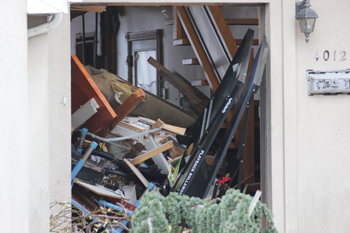
“Sandy gives New York a real thrashing!” screamed the headlines. “Hmmm, who exactly is Sandy and why is she thrashing New York,” I wonder. How about this one: (an exact quote) “For all those left homeless, for all those left scared and frightened, there is an enormous lesson from this hurricane – mother nature will do what she wants, when she wants, and our modern world can only bow before it.” Now I am really confused – who is this mother and why is she acting so mean – aren’t mothers supposed to be nice? And more so – what exactly is this “enormous” lesson? Why should I bow to her?

When we put away our sukkak and machzorim over a month ago, many of us let out a sigh wishing that these wonderful days of simcha and closeness to Hashem would never end. But in truth Hashem does not want it to be Yom Tov all year long. He wants us to take what we received during those special days and integrate it into our daily life. It sounds nice, but how are we supposed to do that? The answer is through Shabbos! This wonderful day, which comes every week, has the ability to lift us once again to those same spiritual heights and help us recharge our batteries for the coming week.

Sukkos! What an exciting Yom Tov! So many different mitzvos, each with their own color and flavor. Dwelling in the sukkah, taking the 4 species, dancing at the simchas beis hashuava and on Simchas Torah … Nevertheless, there is one theme which runs through all these aspects. “Vesamachta bechagecha atah uvincha, uvitecha, ve'avdecha, va'amasecha, vehaLevi, vehager, vehayasom. veha'almanah asher bish'areycha - You shall rejoice on your festival along with your son and daughter, your male and female slave, and the Levite, proselyte, orphan and widow from your settlements” (Devorim 16:14).

We all know that there are some synagogues that, unfortunately, only reach full capacity several days a year. There is something about these days that arouses even many unaffiliated Jews to attend High Holiday Services. In fact, each one of us also feels the holiness, and it helps us to be on our best behavior. We make sure to come on time to davening and we daven slower than usual. We are extra careful in our observance of halacha and how we treat the members of our family.
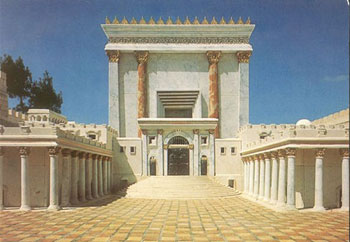
The story is told of a Chassidic Rebbe who stayed one night in the attic of a simple farmer. Promptly at chatzos (midnight) the Rebbe sat on the floor and began saying Tikkun Chatzos (a prayer said most nights by pious individuals, mourning the destruction of the Bais Hamikdash.) Immediately, a fountain of tears began to flow from his eyes, as he unabashedly mourned our great loss. Soon, his crying became so loud that it aroused the farmer and his wife from their sleep. The concerned farmer quickly knocked on the door and asked if everything is okay. The Rebbe answered that he is simply mourning the Bais Hamikdash.

There is a tradition from the Vilna Gaon that Milchemes Gog and Magog at the time of Moshiach will last only 12 minutes. In that short amount of time 1/3 of the world will be destroyed, 1/3 severely wounded and 1/3 will survive. Until recently this was incomprehensible - how could such destruction happen so quickly?


 October 16, 2026