יום רביעי, כ״ז אלול תשפ״וWednesday, September 9, 2026



Follow Us


Rabbi Gil Frieman is the pulpit Rabbi of Jewish Center Nachlat Zion, the home of Ohr Naava. He is certified as a shochet, sofer, and has given lectures in the United States, Canada, and throughout Eretz Yisroel. Rabbi Frieman is currently the American Director of seminaries Darchei Binah, Afikei Torah, and Chochmas Lev in Eretz Yisroel, and teaches in Nefesh High School, Camp Tubby during the summers, and lectures weekly at Ohr Naava. In addition, Rabbi Frieman teaches all tracks in Ateres Naava Seminary. He is a highly anticipated speaker on TorahAnytime.com where he speaks live most Wednesday nights at 9:00pm EST.
Read More
While we wish the nations of the world success and prosperity, we realize that this feeling has not always been reciprocated.
I watch my children use blocks to build a large structure, observing the trepidation with which they add each block. As the structure becomes larger there is a greater risk of it collapsing, thus bringing an end to an hour of playful labor. I anticipate what will happen when one child adds a block to the top floor, compromising the integrity of the building and resulting in the collapse of the entire structure. The argument that ensues is predictable, as each child blames the other for “ruining” the fun. As an adult, I wonder about the need to attribute blame. Will assigning blame be instrumental in rebuilding the structure?
Kids today... that’s not the way we behaved when we were younger!! That is the mantra I hear repeated as parents bemoan the spoiled nature and lack of responsibility of today's children. The problem is - it is not a fair comparison.
My family and I had recently enjoyed an outing to the bowling alley, courtesy of our friend, the owner. Children of all ages enjoy this weatherproof sport, and even preschoolers can easily score strike after strike as bumpers support the heavy ball as it creeps its way towards the pins at the end of the lane.
We all yearn to feel that we are part of something special. We all seek respect and acceptance for simply being who we are.

A congregant once told me that he was spending a large amount of time trying to explain Judaism to a coworker. His colleague thought that all Jewish holidays had the same theme, and he proudly summarized this theme at his family's two-minute Seder: "They tried to kill us, Hashem saved us, we won, now let's eat!!" He proudly bragged that this sentence was the family's personal, abbreviated Haggadah.

Many trees upstate were damaged by the hurricane that swept through the East Coast at the end of last summer, and I was involved in finding the safest equipment to clean up the mess. I love trees and found the chore of cutting them down very difficult, especially knowing that the stately 60 year old trees would be impossible to replace. Even though we planted new trees, I don't know whether I will be there to enjoy these new saplings when they are 60 years old.

I rarely take the extended warranty when purchasing new electronics. I figure that this warranty must not be worth much if they feel the need to pressure me into buying it. They must know what I have learned the hard way: there is no such thing as a real guarantee. In my more naive days, I purchased this "peace of mind," as they call it, but never cashed in. Usually, by the time the item broke, I had forgotten about the extended warranty and purchased a replacement.
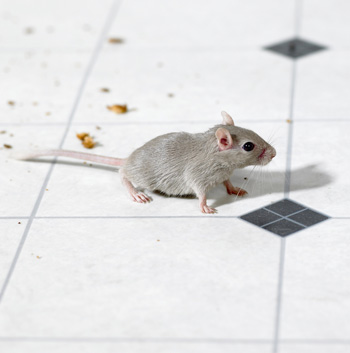
It is hard to believe that Elul is upon us and that the Day of Judgment is only one month away. In a short 30 days we must face our Creator and have our deeds evaluated in the hopes of a receiving a merciful blessing for a good and healthy year. We spend the month of Elul focused on repentance, and we learn the holy books of mussar to inspire us to grow and change.
They say that one mother can take care of five children, but five children cannot take care of one mother. One of the most challenging situations, and perhaps the most unnatural, is when children need to take care of aging or infirm parents. Why is this so difficult and why do so many of us fail at caring for our parents when they need us most?

On the 43rd day of the Omer I asked a child how many days there were to go. He immediately answered that 37 days remained. In response to my inquiry about his calculations, he excitedly announced that there were 37 days left to the school year! While all of us--he included--were counting down to the monumental day of receiving the Torah, he was also counting the days until he would be absolved of learning the very same Torah in the formal school environment!

Have you noticed that we seem to have preferential memory for the unpleasant things that happen to us? Try as we might to provide our children with good experiences and positive memories, it is the memories that evoke fear, pain, sadness, etc. seem to be the ones that stand out.
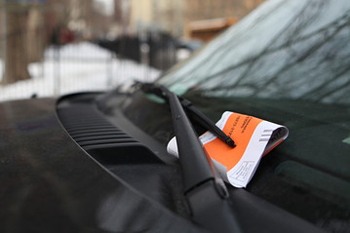
Is it really possible for any self-respecting New Yorker to love parking tickets? I have seen those orange rectangular pieces of paper become the nemesis of society. As a result, those trying to earn a meager living giving out these tickets have become Public Enemy Number One. We view them as “out to get us,” deliberately attempting to make our lives miserable.

Do you really care about your fellow Jew? Take the following test to see if your Ahavas Yisroel Quotient is on par with requirements established by Chazal.

I am the best! You are the best too! There were over 600,000 neshamos at Har Sinai, and each one was different. In order to be inspired to grow we must sense the best in ourselves; in order to be a mentch we must see the best in others.


 September 4, 2026