יום ראשון, ב׳ תשרי תשפ״זSunday, September 13, 2026



Follow Us


Rabbi Moshe Meir Weiss is now stepping-up his speaking engagement and scholar-in-residence weekends. To book him for a speaking circuit or evening in your community, please call Rabbi Daniel Green at 908.783.7321. To receive a weekly cassette tape or CD directly from Rabbi Weiss, please write to Rabbi Moshe Meir Weiss, P.O. Box 658 Lakewood, New Jersey 08701 or contact him at RMMWSI@aol.com. Attend Rabbi Weiss’s weekly shiur at Rabbi Rotberg’s Shul in Toms River, Wednesday nights at 9:15 or join via zoom by going to zoom.com and entering meeting code 7189163100, or more simply by going to ZoomDaf.com. Rabbi Weiss’s Daf Yomi shiurim can be heard LIVE at 2 Valley Stream, Lakewood, New Jersey Sunday thru Thursday at 8 pm and motzoi Shabbos at 9:15 pm, or by joining on the zoom using the same method as the Chumash shiur. It is also accessible on Kol Haloshon at (718) 906-6400, and on Torahanytime.com. To Sponsor a Shiur, contact Rav Weiss by texting or calling 718.916.3100 or by email RMMWSI@AOL.COM. Shelley Zeitlin takes dictation of, and edits, Rabbi Weiss’s articles.
Read More
When we bentch, one of the people we should have in mind to bless and to thank, besides Hashem of course, is our wife. She is the one who prepares our repast, cleans up after us, and creates the aura that makes the meal pleasant.
The Rokei’ach teaches us that the author of Aleinu is none other than our great leader Yehoshua.
We are acknowledging that Hashem is our Boss, not just when we’re in the synagogue but when we leave shul and go to our workplaces or to our homes.
Anger, says Rashi, causes a person to err. It causes a person to forget their learning. It is extremely harmful to the body and it also causes the brain to be put on ‘pause.’

Rav Avidgor Miller points out that the Hebrew word for anger, kaas, contains the same letters as the Hebrew word ‘eches,’ which means poison.
When we think this Shavuos about the revelation at Sinai, let’s remember that the Torah was given surprisingly in the midst of billowing smoke and blackness.
We should train ourselves to look forward to doing our mitzvos. The premier example of this attitude is the mitzvah of sefira. That on a national level we demonstrate in unison an excited countdown towards Torah.
You have two people who spent their Sunday night from 8 to 9 p.m. One administered the Heimlich maneuver and saved a person from choking and another person attended the Daf Yomi. In the scales of merit, it is the latter person who comes out on top.
Rabbi Weiss: The Hebrew word ‘leitz’ is made up of a lamed and a tzadik which means ‘learned’ and righteous’ for the scoffer thinks that he knows better and that he is really in the right.
...the only pasuk in the Torah that has the same gematria as the two words Eretz Yisroel, is the verse, Hashem Ish milchomah, Hashem Shemo – G-d is the Master of war, Hashem is His Name.
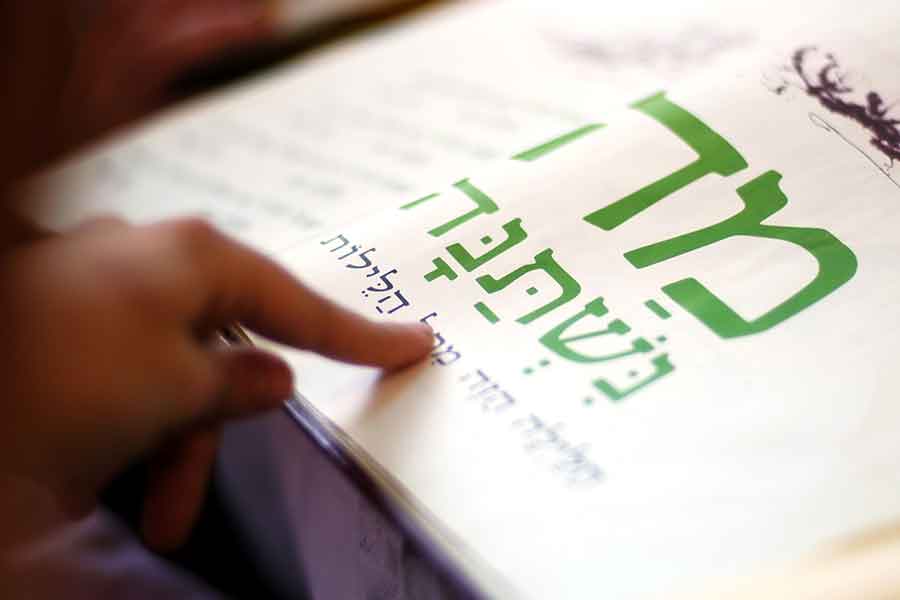
It is incumbent upon every parent to prepare a “lesson plan” of meaningful Torah directions to give over to their family on this most meaningful night.
Indeed, the very name for Heaven, shamayim, is a composition of aish and mayim, fire and water, which though usually in opposition are fused together peacefully in the Heavens.
On this Night of Heritage, when we have the opportunity to etch the fundamentals of our faith into our children and grandchildren’s memory banks, it behooves us to spend time in preparation for this monumental task.
Since Hashem despises the evil person as He is, so to speak, nauseated from the praise of the wicked, it is a good idea to preface our Seder with teshuvah.
We are in the land of “What have you done for me lately?” where the standard is “What’s in it for me?”
It was Mordechai's pivotal decision not to bow or budge before Haman that catapulted the Jews into a situation of possible annihilation, and it was he who commanded Esther, his own wife, to risk her life to save her people.
The old adage, the best present you can give to your children is more of your presence, is an extremely vital concept. So too is the famous acronym for the word “family” – “Father and Mother I Love You.”
Esther was concerned that history should know the true story – that she was propelled by Divine forces to be the instrument to save Klal Yisroel.
It is considered very mature to salt away money for our retirement. But let’s ask ourselves: If we retire at 65, how long will retirement be? Another 50 years?
In our society, one of the biggest problems is the burgeoning jail population. Society is saddled with sheltering and catering to the needs of its malefactors and, sadly, the system is largely ineffective.

If the drowning of the Egyptians was because of the drowning of the Jewish babies in the Nile, shouldn’t the Egyptian soldiers have drowned in the Nile rather than in the Red Sea?
When Jews came to America and they were confronted with the WASP society that didn’t allow them into the country clubs, some made the mistake of thinking that if they became more American they would be more accepted.
Rav Shimon ben Gamliel in Pirkei Avos states, All my life I grew up among great sages and I never found anything better for one’s body than the virtue of silence.
All things are equal, we should certainly pick for our children purely Jewish names. Even the surnames should be distinctly Jewish.
Learning of mishnayos is one of the greatest protections one can do against the possible future punishments of Gehinom.
When the wicked Bilaam asked a request for himself, he said, “May my soul die the death of the righteous and may my Afterlife be like theirs.” Even the wicked Bilaam knew the reality of the Afterlife.
We know from our great tzaddikim that it is beneficial and meaningful to stare at the lights of the menorah. One of the reasons is because it helps us to actualize in our minds the reality of the afterlife.
The Mishkan is the blueprint for the Jewish home.
It is the job of the G-d-fearing person to combat the blinding attempts of the yetzer hara at every turn of our life.
When we are tired, do we still push ourselves to get up early and join a minyan, or do we succumb to temptation and say our prayers quickly at home before dashing off to work?
It was the enmity of the brothers to Yosef and their selling him as a slave, that was the primary cause for their descent to Egypt and being forced into slavery by the cruel Pharaoh.
Why would Yaakov want to leave the environment of the womb, a place where a celestial angel teaches the fetus all of the Torah?
Perhaps even more perplexing is the fact that we are taught that the only way to earn entry into the rarified grave of the Meoras HaMachpelah is to be one of the elite few who died by misa b’nashika, through the kiss of Hashem.
If we are expected to pray for someone and we neglect to do so, we are robbing them of something that is rightfully theirs.
It would seem that the crimes of idolatry and immorality are more heinous than theft, yet the generation would have escaped destruction if their sins had only been between man and G-d.
Let’s remember the litmus test for whether Hashem is happy with us is “If people are at ease with us, Hashem is at ease with us.” People are at ease with a gentle person!
One of the highlights of a Jewish man’s day is the public sanctification of Hashem’s Name. He does this with the answering of, “Amein, yehei shemei rabbah…” And Bereishis stands for, “Ameim, yehei shemei rabbah b’kol tefillah.”
Teshuvah mei’ahava is the pure teshuvah where one regrets the transgression itself. It is this type of teshuvah that amazingly can convert a sin into an actual mitzvah.

Perhaps we might suggest that since this mitzvah symbolizes the Clouds of Glory that came without complaining, Hashem made it a free mitzvah to ensure that no one should complain about a mitzvah that commemorates no complaining.
Many wealthy people comfort themselves with the fact that they give move charity than the average person.
It goes without saying that we shouldn’t listen to other people’s secrets, nor should we pollute our ears with vulgar speech, and we shouldn’t allow gentile ballads to defile our souls.
A huge white malach came into the courtroom, and Hashem turned to the millions of bad angels and proclaimed, ‘Dismissed!’
One of the great challenges of our generation is protecting the gateways of our eyes. This is oh, so important, but it's only the beginning of our work with our eyes.
My single biggest recommendation for this time of year is that people should make a ‘To-Do-Better List’ to have in their Machzor on Rosh Hashanah and Yom Kippur.
Let’s remember that as Rosh Hashanah approaches that we’re not just asking Hashem to allow us to live another year. We beg Hashem that 5782 should be a better year: better health, better wealth, better marriage, better nachas, better friends.
In a very real way, davening is one of the final frontiers of Jewish life. Many learn a lot, engage in significant charity and have fine families, but their prayer is still very subpar.
The word meodecha in reality does not mean money. Rather, the word meod means ‘very much,’ as in the phrase tov me’od, it is very good. Thus, when we say that we are loving Hashem b’chol meodecha, we mean with all that is the very most dear to us.
It’s up to us to condition our children that rain is an exciting, life-giving force that satisfies the needs of so very many in a short amount of time.
I think we would suggest that a person who lives righteously deserves to be honored. But Ben Zoma knows human psychology and he knows that just because we see a person behaving properly doesn’t mean that we will honor the person.
Relationships with acquaintances that cause us stress should be, if at all possible, discarded.
How wonderful it is to cultivate in marriage a "Teflon" personality, where the small nuisances of life slip off and are not made a big deal of.
If a husband and wife have peace, then they have the Divine Presence in their midst. Therefore, we all should do whatever we can to safeguard the serenity and the tranquility of the home. This also is the best way to model good behavior for our children and grandchildren.
To the amazement of all in attendance, the Rebbe connected the answers with the names of those who asked the questions.
The old man answered that he was a kohen and he wanted to give everyone a blessing before he would be killed.
We’re in the country, without the invasive eyes of our more scrupulous city neighbors. We must therefore make a commitment to ourselves that we won’t allow this fact to affect our religious behavior.
At the foot of Har Sinai, we achieved the dream of achdus – national oneness. One of the primary messages of Shavuos, therefore, is: Strive to replicate this achievement.
The tribe of Levi reasoned that since they weren’t enslaved by Pharaoh, they weren’t entitled to share in the booty which was taken as reparations for the harsh labor experienced by their brethren.
And that may be why only we Jews who are commanded to be holy also have commands that seek to purify our hears and minds.
In BHA”B season, the age-old argument on whether to open or close the shul’s windows tends to rear its ugly head. The fact that such disputes occur in shuls is not coincidental.
The computations of the sofrim were not restricted to gematria alone. There are myriads of number-related secrets in the Torah.
If children grow up saying whatever they want, it will be very hard for them to restrain themselves when they’re older even if they learn how egregious speaking lashon hara is.
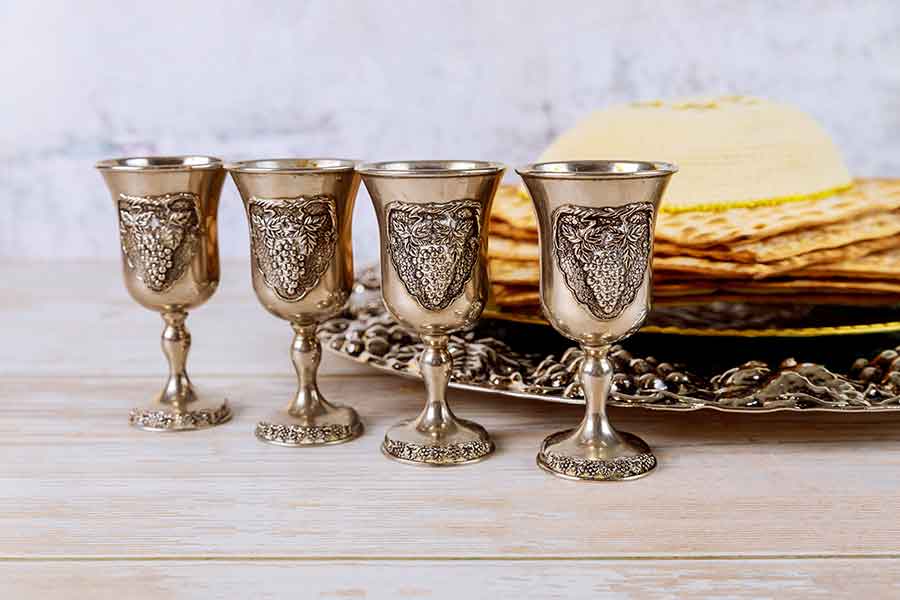
The Seder is not just an educational and intellectual experience; it’s also a unique opportunity to say thank you together with our loved ones to Hashem for the fact that He chose us as His nation and gave us His wonderful mitzvos.
Torah study shouldn’t be saved for our retirement. We should run to learn.
The Chovos HaLevavos teaches us that prayer without thought is like a body without a soul and a peel without fruit.
We must therefore constantly remind ourselves that it’s the Jewish way to stand by the side of a mate through thick and thin.
While this story is quite remarkable, we must wonder: Why did Hashem allow Ezra’s holy Sefer Torah to be defaced in the first place?
Many argued that it would be downright dangerous not to attend as their absence might raise the monarch’s ire after all the trouble he went through to accommodate their needs.
The Hafla’ah writes that since we want our prayers to rise to the heavens, they must be infused with a ruach, a spirit that causes them to ascend to Hashem’s Throne of Glory.
How could Moshe rush to convert him so quickly? Because it was a matter of life and death.
Measure for measure, the Jews didn’t lift a finger against the millions of Egyptians who pursued them to the sea. Instead, the Egyptians drowned themselves by walking into the watery abyss.
Clearly, the plagues weren’t the result of chance; they pointed to the hand of Hashem.
As a young man, raised with royal treatment in Pharaoh’s palace, Moshe Rabbeinu didn’t allow himself to relax in splendor. Rather, he went out to his suffering brethren and shared in their fate.
What can be greater than the crown of Torah? After all, we’re taught, “Talmud Torah kneged kulam – The study of Torah is equal to all else.”
Shabbos should be so full of warmth and inspiration that our children should feel they can’t do without it.
When we hear of school bus tragedies, we should pray for the safety of our children. When we hear of someone suffering from Covid-19 or another dreaded disease, we should pray for health. When we see flashing lights on the highway, we should pray for safe travels.
Another answer for why Yosef is considered so great is that while it's true that the vision of his father came from Heaven, it only came after he exhausted every effort at his disposal. When those weren’t enough, Hashem stepped in and gave him Divine assistance.
How, might you ask, in the middle of Italian neighborhoods would Rav Mintz be able to ferret out Jewish families?
Mesiras nefesh doesn’t only mean putting one’s life on the line for one’s spiritual beliefs. Rather, anytime a person pushes himself beyond his natural physical tendencies to fulfill the will of Hashem, he is following in the footsteps of the great Macabees, the heroes of Chanukah.
The very first lesson is that we must be very careful not to hurt someone’s feelings. Sometimes, hurting someone deeply can have a long-lasting effect and impede us from success in our own lives.
Reb Yosef went over to him and gave him the 200 golden coins. The man looked at him incredulously and said, “I don’t even know you. Why are you doing this kindness?”
Since we can’t see it, Covid-19 fatigue has caused us to want to believe that it’s not a problem anymore, notwithstanding the fact that all of us know people are still being hospitalized and even dying.
While visiting Avraham, Hashem saw that he was unhappy without guests, so He sent three angels disguised as desert nomads to provide Avraham with the opportunity to do hachnasas orchim.
Over the years, I’ve convinced many people to try out Daf Yomi with my advertising. That’s why I carry such a heavy Gemara and that’s why I don’t go by way of the back roads.
In Yiddish, there’s a word “eidelkeit.” There’s no similar word in English. “Eidelkeit” is a synthesis of gentleness, refinement, and nobility of spirit. It’s a crowning virtue for man.
Life is a series of tests. Yet, every day we ask Hashem in the morning, “Al tivi’einu lo lidei nisayon – Do not lead us to a test.” What kind of a request is this? Isn’t that avoiding the purpose of life?
While this story carries a painful and penetrating message, you might ask, “Rabbi Weiss, what are you advocating? That we shouldn’t dance on Simchas Torah?” Of course not!
The Torah completely blows us away with the statement that the enemy will come “ka’asher yideh hanesher – like the eagle sweeps,” a perfect description of the sudden attack of the two huge airliners.
Only once a year, during these 10 days, is Hashem is available to everyone no matter how sullied he or she is.
Hashem won’t punish someone if the punishment will indirectly harm innocent people who depend on him.
Before we put on tefillin, we should keep in mind that we are putting it on our heads because the neshama is in our head with the rest of our senses and strengths.
The Chofetz Chaim writes that a person isn’t rewarded with reward unless he gives in proportion to his means.
Elul, as the last month of the year, is a time to show Hashem that we are ending the year with the same hopes and aspirations we had in the beginning of the year, putting our best foot forward before the Day of Judgment.
What if you find it difficult to forgive someone?... How can you sincerely forgive someone who hurt you in such a terrible way?
Shimon HaTzaddik likely spent a lifetime educating the masses, yet Pirkei Avos contains just one mishnah that records his teachings.
When we hear that Teflon pots may cause cancer or that the surgeon general warned of the possible dangers of a product, we become very wary. So it goes without saying that when the Torah cautions us about something, we should be very concerned.
This lashon hara led to Bnei Yisrael crying over nothing, which in turn resulted in the divine punishment of bechia l’doros, crying throughout the generations over the destruction of two Temples and many other Jewish calamities.
There is more to be learned from Hashem’s diagnosis. A blessing is critical in helping us properly focus when we do a mitzvah.
Any generation in which the Temple was not rebuilt is a generation in which it is considered to have been destroyed.
Every infectious disease doctor – without exception – has stated that keeping apart from one another and wearing masks will significantly decrease the spread of this horrible disease.
Our shuls and yeshivos were closed for three months and, even now, we can only enter them with masks. Perhaps Hashem is telling us, “Things are not in order with your relationships.”


 September 11, 2026