יום ראשון, ב׳ תשרי תשפ״זSunday, September 13, 2026



Follow Us


Rabbi Moshe Meir Weiss is now stepping-up his speaking engagement and scholar-in-residence weekends. To book him for a speaking circuit or evening in your community, please call Rabbi Daniel Green at 908.783.7321. To receive a weekly cassette tape or CD directly from Rabbi Weiss, please write to Rabbi Moshe Meir Weiss, P.O. Box 658 Lakewood, New Jersey 08701 or contact him at RMMWSI@aol.com. Attend Rabbi Weiss’s weekly shiur at Rabbi Rotberg’s Shul in Toms River, Wednesday nights at 9:15 or join via zoom by going to zoom.com and entering meeting code 7189163100, or more simply by going to ZoomDaf.com. Rabbi Weiss’s Daf Yomi shiurim can be heard LIVE at 2 Valley Stream, Lakewood, New Jersey Sunday thru Thursday at 8 pm and motzoi Shabbos at 9:15 pm, or by joining on the zoom using the same method as the Chumash shiur. It is also accessible on Kol Haloshon at (718) 906-6400, and on Torahanytime.com. To Sponsor a Shiur, contact Rav Weiss by texting or calling 718.916.3100 or by email RMMWSI@AOL.COM. Shelley Zeitlin takes dictation of, and edits, Rabbi Weiss’s articles.
Read More
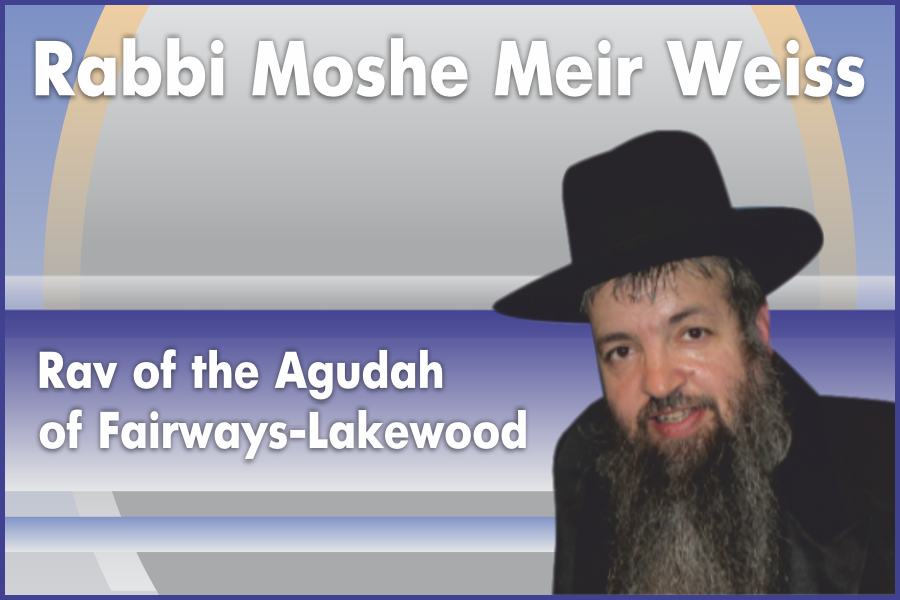
What is so exceptional about the blessing Magein Avraham that the Shulchan Aruch says that we have to say Shemoneh Esrei over again if we didn’t have kavanah? The answer is because the first blessing is the password to get into Hashem’s Palace, to have an audience with HaKadosh Baruch Hu.

Swimmers should be cautioned about the absolute need for proper supervision and the great danger of going solo to the pool. Also, remember that long exposures to the sun can be unhealthy. Use a sun blocker!

When we think this Shavuot about the revelation at Sinai, let’s remember that the Torah was given surprisingly in the midst of billowing smoke and blackness.
This is vital information for parents and educators, to know how to direct their children to the right school and the correct teachers.
Please, return us the real thing which is bringing our sacrifices in the Beis HaMikdash.
A beautiful example of how heaven is exclusively a place of peace can be found in a Gemara in Maseches Sotah. We are informed of a fascinating fact: Daily, in the desert, together with the mon fell women’s beauty treatments because that which beautifies a woman fosters more love and harmony in the home, which promotes peace.
The ensuing requests also fit nicely for we follow this up with the request, L’ma’an yeichal’tzun yididecha – In order that You deliver Your friends.
I’d like to offer a mighty challenge. The next time you go to shul to pray, tell yourself that you’re planning to use your mind as much as your mouth in the synagogue – for proper service of Hashem has more to do with the mind and the heart than with the mouth.
We therefore first ask Hashem that we avoid sinful speech and forbidden thoughts, and then we can turn to requesting that our mouth be filled with the beautiful words of Torah and Its holy thoughts.
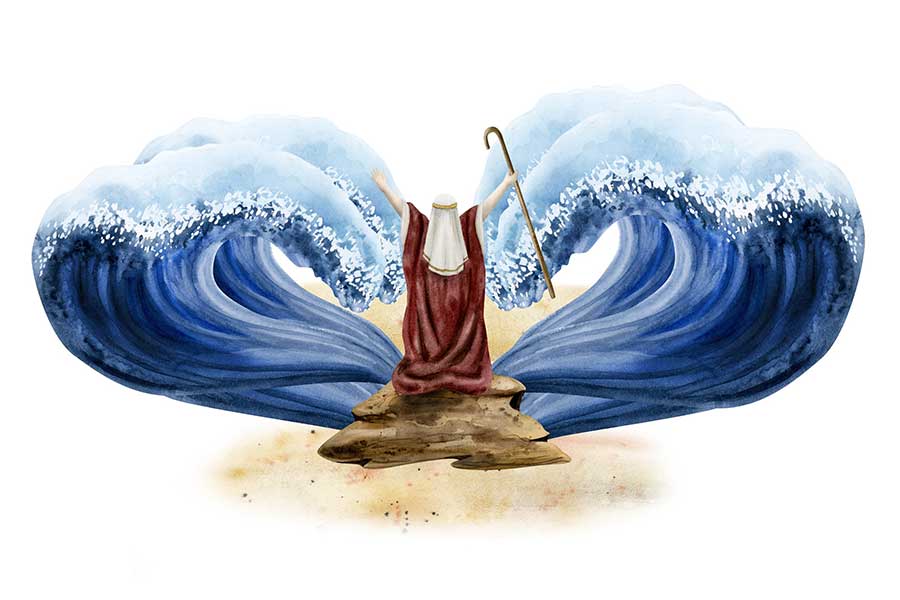
The Ramban and other Rishonim explain that once the plagues started Hashem’s protection over us never ceased. Indeed, even between the major plagues, Hashem peppered the Egyptians with other problems so that they wouldn’t trouble us further.

Just like when we head out on a trip, we have our Waze programmed so that we know each step of the way, or we get our AAA Tripkits, so too, when we navigate the Seas of Life, we should crystallize in our minds what steps we want to take and which vital pursuits we want to achieve in the mission of life.
I believe the reason why we zoom in on the transgressions of the tongue is because it is the most ruinous of sins.
The fact that the pasuk is 42 letters alludes to one of the Ineffable Name of Hashem which has 42 letters.

The Gemara in Pesachim teaches us that leaven is a symbol for the evil inclination: Just as yeast agitates the dough, so too the yeitzer hara agitates the soul of man trying to get him to sin.
The great Rav Shamshon Rafael Hirsch, zt”l, zy”a, wrote in his ethical will that the only thing he asks from his righteous children is that if one of them is hurt by another sibling, they should forgive and make up, and that will bring the truest pleasure to their parents in the next world.
The Zohar in Parshas Noach reveals that the word chein is the same letters as the word Noach. This is to teach us that the best way to find favor in the eyes of people is to be an easygoing (noach) person.
We can be certain that it was not a quest for fame that motivated Esther HaMalka. One explanation of Esther’s desire for the accounts of Purim to be included in the Scriptures is that she recognized the timeless lessons of the story of Purim.
The saintly Shaloh HaKodesh, of blessed memory, writes that you could break people down into two distinct groups. There are those who when they pray, they pray to Hashem; and when they bless, they bless Hashem. Then there are those who pray but Hashem is nowhere in their thoughts, and when they bless they are not focusing on blessing anyone.
The Olas Tamid adds that we should daven to be spared from death by the sword and by wild animals. We are taught in Masechtas Derech Eretz Zuta, in the chapter of peace, that if Hashem didn’t bless the world with peace we would be ravaged by the sword and by animals.
During their courtship and their engagement, they were ablaze with giving. This created an atmosphere of love. After the chupah however, they sadly change tracks and shift into the taking mode – and that is when the love starts to dissipate.
Of the righteous it says, V’atem hadevekim ba’Hashem Elokeichem chaim kul’chem hayom – You who are attached to Hashem your G-d (by living correctly) are all alive today. Thus, v’chol hachaim yoducha selah means all those who are truly alive will thank You.
Miracles are those events that are outside the realm of tevah, that which is natural. Nifla’os, on the other hand, are the wonders of natural phenomena such as the intricacies of our equilibrium controlled by the inner ear, the marvels of the human brain, our wondrous heart, and so much more.
The Da'as Zekeinim, Avudraham, and Kolbo reveal that the gematria of the word modim is 100, referring to the one hundred blessings where we thank Hashem every day.

As we are asking Hashem to favor our prayers, we must know that after we do a mitzvah it is a special time of favor to ask Hashem for something.
We say, Shema koleinu Hashem Elokeinu – Listen to our voices, Hashem our G-d. The name Hashem denotes the attribute of rachamim, mercy, while the name Elokeinu is the attribute of din, strict justice.
One of the ways we can perceive the differences between the values of a Torah Jew and the average non-Jew is by contrasting the Top Ten New Year’s resolutions touted for the secular calendar and the commitments a Jew makes before Rosh Hashana.
When we say this blessing hoping for salvation, we should reflect that so many people today are in financial distress because we don’t have the shulchan that brought financial stability to Klal Yisrael.
For us, the words of the Maharal ring true in our contemporary times! Hashem is revealing to us, notwithstanding the tragic and heartbreaking casualties of precious Jewish lives, that He is with us every step of the way.
The Maharal reconciles the two Gemaras by explaining that indeed, normally, it is necessary to broadcast the miracle to the outside.
We can say Modim for our health. What about for our car and for our phone? Most of us would be crippled, so to speak, if we were missing just one of these. We could also incorporate into our Modim prayer that we are able to pay the mortgage or pay the rent.
The Yaros Devash teaches us that Yerushalayim is called Kisei Hashem, the Throne of Hashem.
There are people who, while they voice Hashem will help, they really put their trust solely in the doctor, or in the medicine, but not in Hashem.
In the last few decades, the lowest estimation is that the elite and Ivy League colleges received eight billion dollars in Arab funding. A whopping four billion dollars came from Qatar, the source of the recently proclaimed ‘Global Day of Jihad.’
That Hagar went against her natural inclination and remained faithful to Avraham was a supreme exhibition of breaking her nature and doing good.
The nosei b’ol thinks about the wife of a soldier or his mother waiting in fear for the next text message to hear that they are still alive.
History teaches us that it is a fatal mistake to become too comfortable in our surroundings and not to believe in an imminent redemption.
We should beseech Hashem that the elderly and the sick children shouldn’t be woken up in the night to run to bomb shelters and sealed rooms.
Now we know that the key to success is change. By changing, by bettering ourselves, we will reach our highest goals. And we also know what gives us the ability to change.
The pasuk completely blows us away with the statement that the enemy will come Ka-asher yideh hanesher – Like the eagle sweeps, a perfect description of the sudden attack of two widespread huge airliners.
We must know that the Gemara teaches us, Yitzro shel adam misgaber alav b’chol yom v’im ein HaKodosh Baruch Hu ozro, eino yachol lo – A person’s inclination prevails upon him every day and if Hashem wouldn’t help him, he wouldn’t be able to prevail.
Many of us, after making an honest and blunt cheshbon hanefesh, a personal reevaluation of our behavior during the past year, might be filled with despair and despondency at our chances for a good judgment.
When we ask Hashem on Rosh Hashana and Yom Kippur for renewed life and menuchas hanefesh, a contentment of spirit, our petition is much more effective and successful if we give Hashem a strong reason to grant our request.
It’s only the yeitzer hara that fools us and makes us think that we have so many better things to do.
When we make the mental calculation of whether we can improve, we tend to think only about our ability. Then, we might correctly assess that it’s beyond our ability.
Every good Jew should start their day with the declaration of, Modeh ani lifonecha... This praise deliberately omits Hashem’s Name so that we can proclaim it even before we wash negel vasser and our hands are yet still tomei.
It’s a great feeling to know that we’ve strived to reach this prized closeness to Hashem and spiritual protection.
If you might wonder what the body of the star represents, Rav Yisroel Salanter famously said when you are busy appointing Hashem above, below, and in the four directions, don’t forget to appoint him boss over yourself as well.
What if you find it difficult to forgive someone? Let’s say for example, someone caused you to lose an exciting job opportunity, or perhaps they wrecked your chances at a good shidduch. How could you sincerely forgive someone who hurt you in such a terrible way?
It seems that Hashem could have lived in harmony with us and could have looked away from our indiscretions towards Him. He simply could not bear to ‘stick around’ and watch when His children weren’t getting along one with another...
Perhaps we still call our silent devotion Shemoneh Esrei, or Eighteen, even though in reality it is now nineteen, out of respect for the Anshei K’nesses HaGedolah, or because eighteen is the gematria of chai, life, emphasizing that we are actually praying for our lives and our livelihoods.
The Malbim defines Judges as those who govern the laws of jurisprudence between man and his fellow, while the Advisors are those who give us counsel to succeed in our relationship with Hashem.
How surprised I was when he answered with a flourish that the most important blessing of the Shemoneh Esrei is T’kah b’shofar gadol l’cheiruseinu, our bracha that we beseech Hashem to initiate the final Redemption!
We start the blessing asking Hashem to bless us with a profitable good year... Why are we praying for this every day when the Gemara teaches us -Mezonasov shel adam kitzuvin lo mei’Rosh Hashana – The livelihood of the person is fixed on the New Year and sealed on Yom Kippur.
We add Ki sihilaseinu Attah – For You are our praise. Rab Yechezkel Abramsky, zt”l, zy”a, explains that we are clarifying that we understand our deliverance from sickness ultimately comes from Hashem. The doctor is only His agent.
In general, the smarter way to pray, is in anticipation, before we have a problem.
We cap off this request by pleading that Hashem should do it lema’an Sh’mecha, for the sake of Your Name. This refers to His Name of Shalom, Peace. Please Hashem, for the sake of Peace, remove the friction between me and others.
It would seem to me that the controversy centers on why we should say ‘please’ or ‘now’ just by this blessing and not by the other requests in our Shemone Esrei, such as to forgive us, or to cure us.
Why do some many people behave in such a paradoxical way? The answer is simple. When a spouse or a parent compliments their mate or their child, the act is about the other person.
One school of thought is that Shavuos is the yahrzeit of Dovid HaMelech. Therefore, we lein Megillas Rus which reveals to us the wonderful beginnings of Dovid HaMelech.
It would seem to me that the word slach points to the former opinion – that it is a total forgiveness, since it is the same letters as the word chasal, which means to ‘finish completely.’
We need specially to ask Hashem to assist us in our Torah efforts for there is nothing that the yeitzer hara, the evil inclination, tries to stop us from accomplishing more than the study of Torah.
Yaras Daas writes that one should also have in mind for the Torah success of their children, their descendants and their disciples.
Hashem’s manifestations of holiness serve as a model for how we can be holy.
On Pesach we convey to our children the great lesson of hakol kol Yaakov, the voice is the voice of Yaakov.
It is my custom to pour the second cup of wine before the mah nishtanah. Most people do this. It begs the question though. Since the second cup is for maggid, and maggid starts by ha lachma anya, why don’t we pour it before this paragraph (which is indeed the minhag of the Shiboleh Leket and the Orchos Chaim).
It was on the night of the Seder that Avraham was rescued from the four mighty kings. It was on this night that the Jewish people were saved from Sancherev and his 400 battalions. It was also on this night that Achashveirosh had difficulty in sleeping and the seeds of Haman’s downfall were sown.
In Heaven, everyone is programmed to praise Hashem. Thus, it is not so special that everyone is singing Hashem’s praises.
The Gemara teaches us in Masechtas Taanis that the day of rain is great like the day of the creation of Heaven and Earth.
I believe the explanation for the front-seat positioning of Techias HaMeisim, the resurrection, is that it is the single greatest asset that a person has. Everything else is only temporal-for 120 years.
What’s a chesed tov, a good kindness? Is there such a thing as bad kindness?
I’ve been asking myself how sophisticated is my prayer and, to be brutally honest, upon contemplation, I was very disappointed at my prayer accomplishments through the decades.
When we take the time to thank Hashem for all that we have, or when we ask Hashem for continued health, this is living one’s life to the fullest.
It is not fair to expect that our Rabbi should be a lamdon like Reb Chaim, a master of parables like the Dubno Maggid, a storyteller like Rabbi Krohn, and a posek like Reb Moshe – all in the same person.
We see that the miracle of the Yam Suf was achieved through the righteous ability of conquering the temptations of one’s heart.
Of course, the good parent praises and rewards the child for a job well done. But, what about the math teacher who turned your child around?
Mincha relates to the years of middle-age, and Maariv focuses on one’s golden years. Thus, while davening, it would be proper to focus on one’s children and grandchildren during Shacharis, and upon elderly parents and grandparents during Maariv.
There are some people who don’t easily cry. So, if they are motivated by a moving play or a poignant novel to cry, they should utilize those cries and extend them for the Temple.
It is further interesting to note that the one parsha of the Torah which is has the word ‘death’ refers to the tragic passing of two of the righteous sons of Aharon; Nadav and Avihu. One might wonder why, over here, the chapter is called ‘Achrei Mos – After Their Passing.’
As we leave Chanukah, we should reflect upon how much we have extra.
The obvious question is why didn’t the Sages immediately declare the festival the very same year that the miracles occurred?
It has been said that that which Hitler, yemach shmo v’zichro, was not able to accomplish with the stick, American culture has been successful with honey.
We can also have in mind fulfilling uvo sidbak, to cleave to Him. The Gemara wonders how we can cleave to Hashem when He is a consuming fire and the Gemara answers, ‘To be like Him.’
It goes without saying that no matter how expensive the Blue Label or single malt scotch is at the kiddush, one should not over indulge.
After announcements, we say Ein Keilokeinu. This prayer contains a lot of words, and sometimes the chazzan rushes through it all too fast. It is for this reason that I’m fond of those who sing the Ein Keilokeinu with its famous chant since it slows people down from the end of davening rush.
When you come to shul, don’t hang out in the hall. If you paid money to go to a concert or a sports event, you would not idle the time away outside in the hallway. When you come to the House of G-d, surely it should be no different.
Fathers should bless their children – giving each one a moment of unique attention. Children have testified that they avoided temptations by conjuring up the loving image of their father blessing them before Kiddush.
According to the version that Og saved his mother, it would explain why Og had such longevity, living all the way to the time of Moshe Rabbeinu, since he did such valiant kibud eim, honoring his mother, clutching her for a full year through the tumultuous flood.
Since Hashem’s syllabus for life starts off with so many warnings about jealousy, it is obvious that Hashem, our Manufacturer, is informing us that one of the ugliest pitfalls to avoid is the sinful trait of coveting that which is not ours.
Since the principal focus of this festival is peace, I would like to share some thoughts I had about the shofar that are helpful tips on how to promote shalom in our lives.
We need to guarantee that we are not complacent with our prayers. Therefore, we must constantly work on better kavanah and focus, learning the meanings of the words and working on a sincere belief that our prayers will really make a difference in our daily lives.
When giving charity it is much more effective if we give it with a smile and a kind word.
When it comes to someone’s time, there is little that one can do to extend their divinely allotted ration of life. But tzedakah can accomplish even this...
One of the greatest problems at this time of the year is that the Yetzer Hara tells us to put off doing teshuva. But we must act now, before the deadline. Our version of April 15 is approaching fast, and we must pay our due.
Different times of the year represent different actions. In order to succeed in life, one must learn the art of the times.
Since caretaking is a twenty-four/seven occupation, the smart caretaker needs to learn how to delegate often and wisely. Save your strength and time for when you are needed most.
As much as possible, it is also important to give the patient as much hope as possible. When caring for someone with a specific disease, try to find someone who battled it successfully and have them visit your patient to give them encouragement.
Initially feeling very overwhelmed is normal for a caretaker. It is, after all, often a 24/7 obligation, often with no light at the end of the tunnel.
Let’s look with this eye at the backdrop of the scene for Kabbolos HaTorah. What was the background when Hashem gave the Torah to the Bnei Yisrael at Har Sinai?
The Three Weeks is not simply a time to ponder our loss. The Yerushalmi Tractate Peah (chapter 1) teaches us -Any generation in which the Temple was not rebuilt in its day, it is considered as if it were destroyed again in that era.
I would like to conjecture that in this fervent prayer where we beseech Hashem to listen and to understand, to learn and to teach His Torah, we remember the fact that each of us already learned the entire Torah from a malach during the nine months that we were in the womb.


 September 11, 2026