יום רביעי, י׳ חשוון תשפ״זWednesday, October 21, 2026



Follow Us


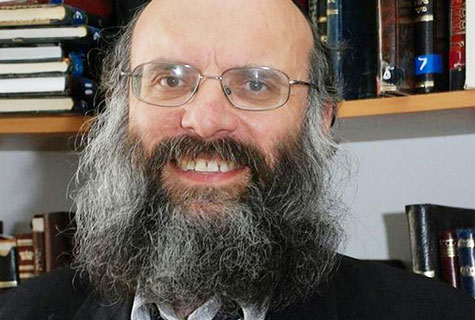
Rabbi Fuchs learned in Yeshivas Toras Moshe, where he became a close talmid of Rav Michel Shurkin, shlit”a. While he was there he received semicha from Rav Zalman Nechemia Goldberg, shlit”a. He then learned in Mirrer Yeshiva in Brooklyn, and became a close talmid of Rav Shmuel Berenbaum, zt”l. Rabbi Fuchs received semicha from the Mirrer Yeshiva as well. After Rav Shmuel’s petira Rabbi Fuchs learned in Bais Hatalmud Kollel for six years. He is currently a Shoel Umaishiv in Yeshivas Beis Meir in Lakewood, and a Torah editor and weekly columnist at The Jewish Press.
Read More

Pinchas fulfilled the halacha of kana’im pogim bo whereby a kana’i (zealot) is granted permission to kill people performing specific aveiros.
The Zohar says that only someone who dies of natural causes was killed by the malach hamaves. People who are killed by others were not killed by the malach hamaves.
The Vilna Gaon argues that that there is even more reason to permit doing pidyon haben via a shliach since pidyon haben is essentially repaying a debt.
If that is the case, though – if a mechallel Shabbos is toned because he is like one who is ovdei avodah zarah – why, Rav Akiva Eiger asks, is a person who desecrates Shabbos in private stoned?
But even after one follows all of the rules and performs the mitzvah correctly, the essential part is that we adhered to Hashem’s command and performed His will.
Why don’t we require the nazir to start his term again and why doesn’t the regular person who enters the Mikdash receive a punishment?
Women are exempt only from the first general obligation to learn Torah, not the second, more specific one.
I would like to point out that this part of the tochacha has been visited upon us today, and it is important that we realize it.
If a person steals an item and then dies, his children must return the stolen item.
On the other hand, perhaps the fetus she is carrying is a male, and she is obligated to ensure that he does not become tamei.
Since we daven Shacharis and Musaf together, perhaps they are considered one tefillah.
The Gemara says that Rabbi Yehuda agrees that the berachah on shechita said at the beginning suffices to cover both types.
First, the makka occurred on the first night of Pesach, not on Erev Pesach. Why, then, fast on Erev Pesach?
However, if one did not recline during three or four of the cups we would require him to drink them again and recline.
There are several answers given to that question and some may or may not apply to answer the question raised regarding a bris performed on Shabbos “illegally.”
The halacha is that if a person can prevent the chaser from killing the victim without killing the rodef he must.
I would suggest that even if one is confident that he can keep his clothing dirty, there is still reason to change one’s attire.
This is the parshah we read on Purim morning, before we read the Megillah. Therefore, if a person missed Parshas Zachor, he can make it up for it on Purim with the leining of parshas Vayavo Amalek.
A person is only rewarded for listening to Hashem’s command if he does so with the intention to do so.
David Hamelech desired to build the Beis Hamikdash and, as a result, it was built.
But why then were kohanim allowed to be counted in the Beis Hamikdash via their fingers? Why is counting fingers different from counting people?
This statement implies that, but for the mitzvah, they would be in violation of the aveirah of shaatnez by wearing these garments.
One could suggest that we distinguish tamei animals from the items they produce.
Many poskim maintain that if a person buys an inexpensive suit he need not check it for shatnez since the vast majority of inexpensive suits are shatnez-free.
The Gemara (Berachos 20b) states that Ezra instituted that people who contract a certain type of tumah (baal keri) may not study Torah until they immerse in a mikveh. The Mishnah says that a person in such a state of tumah may not say Krias Shema; rather, he must mentally think the words. The Gemara […]
I believe that not all agree with the opinion of the Ran and Rabbeinu Tam that the rule of af ha’eim hayu b’osah haneis applies to the obligation to eat three seudos with lechem mishneh.
The worse that will result in relying on the rov in regards to tereifos, however, is an aveirah b’ones – an unwilling aveirah.
The Mishnah Berurah explains that one who davens out loud is demonstrating that he is of small emunah, since he is implying that Hashem cannot hear his quiet tefillah.
Refraining from nursing from a non-Jewish woman is merely going beyond the letter of the law.
It is evident from the Gemara and from the berachah that Yaakov Avinu gave to Asher that properly honoring Shabbos is not only a great mitzvah, but sound financial advice as well.
Some have pointed out that the Gemara says that priyah was not an obligation until Maamad Har Sinai.
As is evident from the Rambam, when one lights Chanukah candles higher than 20 amos it is not considered a ner Chanukah at all.
There is a glaring difference between the Beis Yosef’s answers.
In any event, how do we explain the fact that Hashem changed Avraham’s name entirely but merely added another name to Yaakov’s?
A neis b'nistar causes a reduction in one’s zechuyos; therefore, one should not daven for it.
It seems clear from this explanation that time spent in heaven does not constitute time in regards to aging and other time-related calculations in this world.
The fruits and grain that the non-Jews had planted and toiled on belonged to them.
The Shita Mekubetzes there asks why the Gemara did not cite a source to permit the consumption of milk from a pasuk in this week’s parsha.
I believe one of our questions can be answered by noting that Avraham was only commanded not to marry a gentile or a maidservant in Bereishis 17:7 – after he was already married to Hagar for 13 years.
It was only after permission was granted to eat animals that man was permitted to fully own animals.
Birds, which were created on the fifth day, can accept tumah when they become food.
Tosafos quotes an explanation from R’ Meshulem that the halacha requires that the one who is called up to the Torah for those pesukim must read them himself and cannot have a baal korei read them for him.
The Minchas Chinuch writes that although it seems that gathering in the Beis Hamikdash is necessary, perhaps the mitzvah can be performed anywhere in Yerushalayim.
The Rambam also says that one must verbalize his confessions in order for it to be valid (vidui b’peh).
The Chasam Sofer (Yoreh Deah 106) explains that the Torah never commanded us to lend non-Jews money; it only allowed it.
Since giving the machatzis hashekel will not change his financial situation, he is obligated to do so even though it is more than a fifth of his income.
We can suggest that since Hashem Himself appointed Dovid there is no question. The rules are only in place for when we must chose a king ourselves.
Perhaps a careful reading of the pesukim in the parsha will shed light on this dilemma.
The second parshah of Shema is referring to keeping the rest of the mitzvos, and there the Torah does not require that one spend all of his money in order to perform the mitzvos.
Why would Moshe Rabbeinu have thought that the vow that disallowed him to enter Eretz Yisrael was annulled simply because he was allowed to conquer and enter the land of Sichon and Og?
In addition to the restrictions of Tisha B’Av, there are several restrictions that one may not perform during the week that Tisha B’Av falls in.
We do not find that Pinchas was chastised for what he did; on the contrary he was greatly rewarded.
The Shulchan Aruch in the very first siman states that one should rise in the morning like a lion, implying that simply rising form bed requires strength of a lion, in line with the Midrash.
Tosafos answers that nevertheless the sprinkling is a part of his taharah process.
Performing ketores outside the Beis Hamikdash, and at the wrong time is an aveirah.
Ten of the twelve spies returned with a negative report, stating that this would be impossible.
The flavor of the mon was not artificial; the mon would now consist of the actual flavors from the desired food.
Tosafos suggests several answers as to how a minor can own an item, m’d’Oraisa.
The question is: What about pidyon haben? Can one give the five sela’im required for pidyon haben to a kohen’s daughter?
The mitzvah that parents must give their son a bris milah is a mitzvah that they must perform for someone else – namely their son.
The Bach writes that he mentioned his insights to many of the leading gedolim and no one disproved him.
The Bais Halevi answers that we must properly define what is considered to be “in the middle of a mitzvah.”
In this case one could reason that by applying halach achar harov we could permit the forbidden bird as well.
Why would it not be sufficient to simply state lehoros from which we derive that in such a state one may not issue any psak?
The Netziv answered that there is a difference between a piece of bread that was cut already in front of you, and one that was cut from beforehand.
Why is it necessary to invite people to eat from the korban Pesach?
The Ran asks why the Gemara concludes that since we are unsure which two of the four we must recline for, that we must recline for all four.
The Chasam Sofer answers that one of only prohibited from wearing a garment that contains shatnez if he does so while wearing the garment for pleasure purposes.
The Aruch Laner asks: How can Rashi say that the third Beis Hamikdash will descend as fire from heaven when every Jew prays several times a day for the rebuilding of the Beis Hamikdash?
The Ohr Hachayim rules that one may not manipulate the system; rather he must state his opinion as he see the ruling in the case; not as he would like the outcome of the verdict to become.
He suggests that the general admonition only dictates that a father may not actively enable his son to perform an aveirah.
Rather than submit to this fate and suffer torture and humiliation, Shaul decided to fall on his sword.
And if a person can take steps to perform the mitzvah, he should do so (even if he won’t be held accountable for not performing it due to circumstances beyond his control).
The Brisker Rav suggests that the barad, in fact, only fell on people, animals, and vegetation.
Why is it necessary to perform an aveirah punishable by lashes in order to be deemed a legal rashah and be pasul l’eidus m’d’Oraisa?
Why was Yaakov not afraid that granting Yosef’s sons the status of shevatim would cause jealousy among his children?
Rav Akiva Eiger is assuming that the logic of the halacha that both the son and his mother are obligated to honor his father and therefore he must honor his fathers wishes first, is a mathematical equation.
It is clear that Tosafos maintains that only someone who lives in a house must light Chanukah candles.
But how could there have been any validity to Yosef’s allegations?
If one converts for the sole purpose of marrying a Jew the conversion is invalid.
Rashi in Shabbos 9b writes that the reason why the tefillah of Ma’ariv is a reshus is because it was instituted corresponding to the burning of the eimurim from the korbanos – which was performed at night.
We find that in certain circumstances before the Torah was actually given, people were permitted to make calculations as to what would better serve Hashem, even if it were against a mitzvah or aveirah.
It is difficult to write about such a holy person, for I fear I will not accurately portray his greatness...
The implication of the Shulchan Aruch (Orach Chaim 233:2) is that one may not daven Minchah before six and one half hours into the day.
Some Rishonim are bothered by the opinion of the Rambam that bnei Noach are commanded not to eat basar min hachai.
According to the Raavad if one who is uncircumcised breaks something he will be exempt from paying for it since he was chayav kares at the same time as he was obligated to repay for the item he broke.
Others suggest that one cannot separate Shabbos from Yom Kippur by accepting Shabbos early.
While women are exempt from actually learning Torah, they are obligated in a different aspect of the mitzvah.
The Chafetz Chaim answered that there are two forms of teshuvah; teshuvah m’ahava and teshuvah m’yirah.
Since it is a Rabbinic prohibition we may follow the more lenient opinion.
They ask, how can Rabbeinu Gershom forbid marrying more than one wife, when the Torah explicitly permits it in this parshah?
First, how could a beis din of 23 judges present a guilty verdict in a capital punishment case? After all, only a majority of the 23 judges ruled in favor of his verdict.
According to Rabbi Yishmael one was not permitted to eat such an animal prior to entering Eretz Yisrael, while according to Rabbi Akiva one was permitted to eat animals if he would perform nechirah.
Tosafos there takes issue with Rashi’s view that the letters that are formed in the knots of the tefillin are considered part of the name of Hashem.
The Rambam says that in order to honor Shabbos, one must wash his hands, face, and feet with warm water on Friday.
The talmid is not allowed to speak up due to any fear. If he remains silent, he is in violation of this prohibition.
It is apparent from the Maharsha that he does not see galus as atoning for killing accidentally; otherwise, this Gemara would not bother him.
There are several rules that one must adhere to when making a neder.
We need to understand why Moshe Rabbeinu decided to ask that his sons inherit his position after this new halacha was introduced.
If it is not prohibited when there is a purpose for inflicting the tza’ar, why was Bilam chastised for tza’ar ba’alei chaim?


 October 16, 2026


