יום שני, כ״ד תשרי תשפ״זMonday, October 5, 2026



Follow Us


Rav Reuven Taragin is the Dean of Overseas Students at Yeshivat Hakotel and Educational Director of World Mizrachi - RZA. He lives with his wife Shani and their six children in Alon Shvut, Israel.
Read More

When we identify with Akeidat Yitzchak as a paradigm of our religious commitment, Hashem perceives us accordingly.
The parsha explains that the contribution achieves kaparah – atonement for sins.
To pray meaningfully for the return of the Beit HaMikdash and the restoration of the Temple service, we must first understand the significance of the Mikdash and the purpose of the avodah performed there.
All of our nation’s suffering is rooted in the destruction of the Beit HaMikdash. More precisely, our suffering is rooted in what the destruction reflects – distance between us and Hashem.
How can Torah Jews see the return of the Jewish people to Eretz Yisrael as negative?
Though Mordechai received no prophecy regarding the correct course of action – hence the term perhaps – this does not prevent him from issuing clear directives to Esther. He reflects on the situation and discerns what action Hashem expects from both of them.

Chazal teach us that tree planting is the best way to emulate and draw close to G-d (V”R 25:3). Hashem planted trees when He created the world, and we are commanded to do so upon entering Eretz Yisrael.

There were righteous men before Avraham, but Avraham was the first to establish a nation by passing his legacy to his descendants through his children.
Though man shares the responsibility to populate the world with all living beings, his responsibility is more significant because only he creates others in G-d’s image.
Chesed is both a way of showing our love for Hashem’s creations and also emulating His creation of the world as an act of chesed.
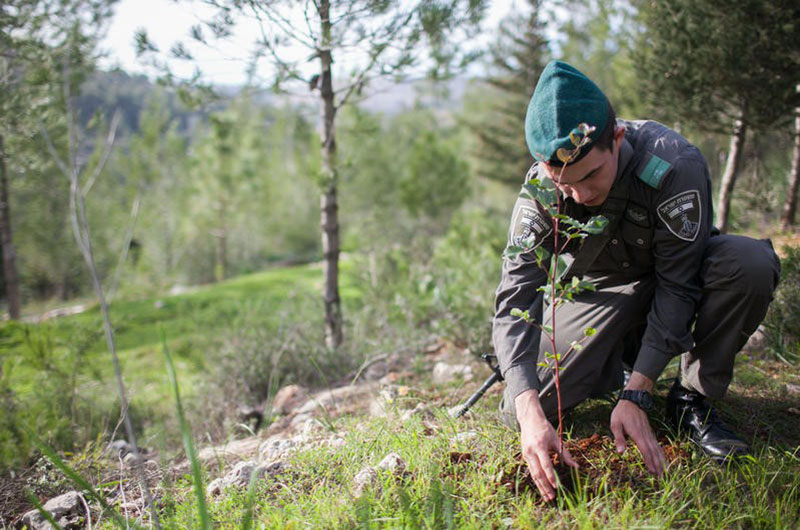
Chazal go even further by asserting that planting takes precedence even over welcoming Mashiach. They taught that a person who hears that Mashiach has arrived while he is planting should finish planting and only then go to greet Mashiach (ADR”N 2:31).
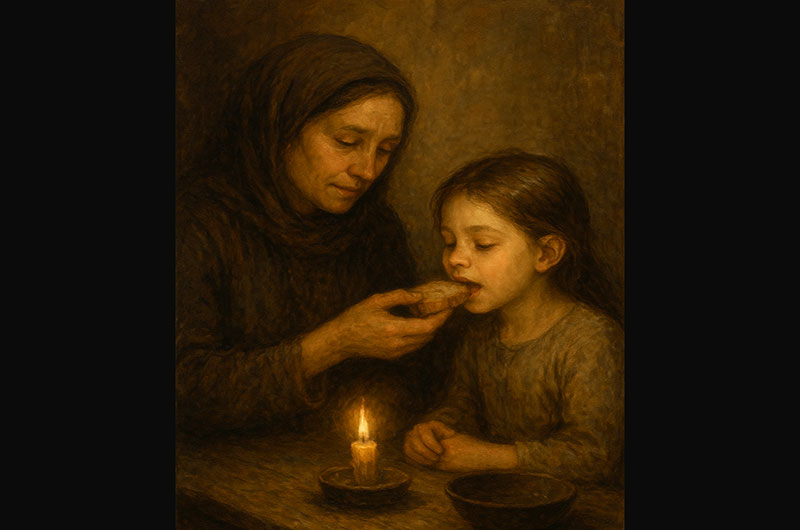
The Jewish people’s relationship with Hashem also began with a korban – the Korban Pesach. Though the Jews were passive during the first nine makot, for Makat Bechorot and Yetziat Mitzraim to occur, they needed to sacrifice the Korban Pesach.

Hashem’s ownership over the land has halachic implications as well. It is how the Torah (Vay. 25:23) explains why the Yovel year keeps us from selling land permanently. The land is Hashem’s; we are merely subletters.
We coronate Hakadosh Baruch Hu and ask for His forgiveness together, not as individuals. Hashem is truly king only when we coronate Him together.
The Jewish people have had highs and lows, including moments when our future seemed bleak. Our focus on our children and raising them according to Torah values ensured our continued survival and success.
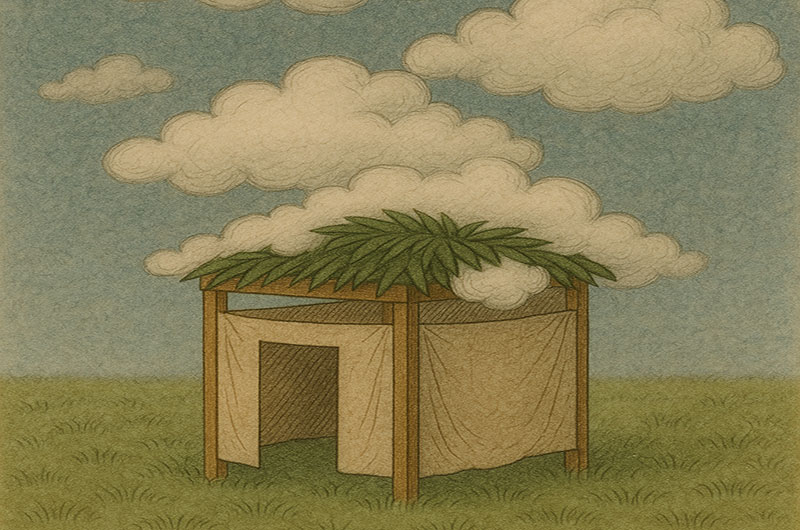
Though the loss of even one soldier or civilian is a tragedy, we must recognize the miraculous way Hashem has protected the Jewish people over the past two years.
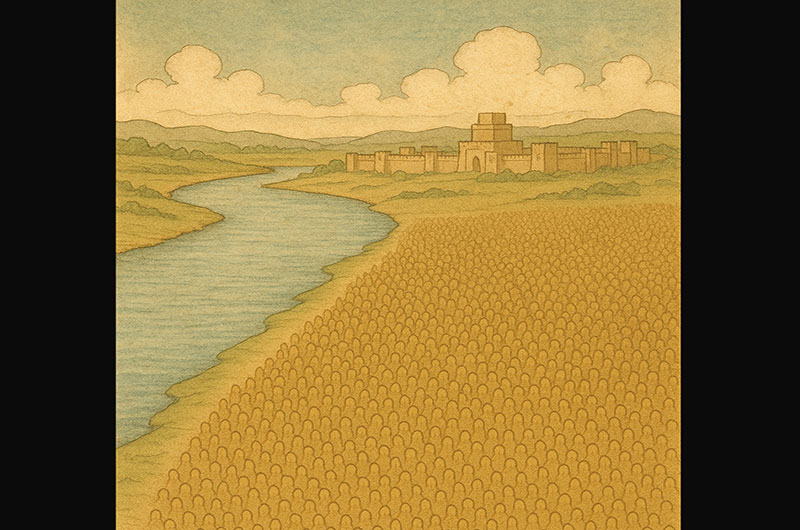
Hashem realizes that the commitment to improve does not always last, but He chooses to accept teshuvah because He cares for His creations and their survival.

Although idol worship is less common and enticing in contemporary society, the prohibition against avodah zarah remains, at least conceptually, relevant.
One can live free of restriction and obligation and even own slaves, but actually be a slave because he feels beholden to society’s expectations. Conversely, many are physically enslaved but truly free because they maintain their spiritual independence.
All of us should express our appreciation of talmud Torah’s importance by enabling those devoted to its study to focus on that important mission.

Even a single person’s Torah learning makes the whole world worthwhile!
This is why Rebbe Yossi ben Kisma rejected a substantial monetary offer to move to a city lacking a strong Torah presence. He explained that he prioritized Torah learning and good deeds over money because we take only the former with us to the next world (Avot 6:10).
The Churban “All the Roman commanders who saw the internal conflict among the Jews viewed it as a gift from heaven and urged an immediate attack. But Vespasian wisely counseled patience: ‘If we wait, we will find our enemy fewer in number, after they have worn themselves out through their internal struggle. It […]
As opposed to the word “peace,” which is related to the word “appeasement,” the Hebrew word “shalom” means whole or complete.
Working six days and resting on the seventh reminds us that Hashem did the same when He created the world. Shabbat is a weekly reminder of how the world came to be. It was created by Hashem, and is not just here on its own.
Man’s fate is in his own hands – he decides for himself and for the world. Hashem did not create us as finished products, but with the need and responsibility to develop ourselves properly.

The last piece addressed our relationships with peers – including spouses, friends, and family. In addition to those relationships, we should also have meaningful relationships with the generations that precede and follow our own.

Shouldn’t Shavuot’s commemoration of Matan Torah mandate a spiritual celebration?

In a city torn by conflict, we remember: Yerushalayim is meant to unite us – with each other, and with Hashem.

One who truly loves Hashem, loves everything He creates. By loving and showing respect to His creations, we, in essence, show respect to Hashem Himself.

When we are tired and hungry, we are anxious to revive and sustain ourselves. This anxiety can cause us to lose sight of our life’s bigger picture and purpose, and eat like animals rather than human beings.
While our primary obligation is to ourselves, Hillel reminds us of our obligation to the broader community and the world.
Of course, Hashem wants us to fight for ourselves and blesses us with the physical strength and heavenly assistance we need. We see this at the end of Parshat Beshalach in the wake of Amalek’s attack.
Often, people use hashkafa to refer to what distinguishes between different hashkafot (Litvish, chassidishe, modern Orthodox, religious Zionist, etc.). People are eager to understand and appreciate their unique approach. That said, most hashkafic issues, including most central ones, are things all Torah Jews agree upon.
The servitude we experienced in Mitzrayim should sensitize us to human suffering. We know what being a foreigner feels like and should thus care for those in similar situations.
The first generations of men made such sinful choices. Eventually, their sins corrupted the entire world. When man lost his way, other creatures followed suit. This man-induced reality caused Hashem to wash away all living beings.
The righteous women not only saved Moshe; they also inspired him. And they inspired many others as well – including their own husbands.
Tefillah is central to our identity. It is an essential reflection of the human soul and part of what characterizes man as distinct from animal. Hashem provides for the whole world; only man appreciates and prays for it.

If Esther failed to act, Hashem would find another way to save the Jews, but she and her family line would be lost.
Over the past century, the desert has become an oasis, and the desolation a blessing. Israel has developed innovative agricultural expertise and water conservation technologies and has planted over 250 million trees. Eretz Yisrael is the only country that entered the twenty-first century with more trees than the century before.
We have spent most of our history as oppressed people. For almost two thousand years, we were scattered across the world; in over one hundred countries. Despite all this, we survived and continue to identify with our people and heritage.

The Jewish people possess unique resilience. While all nations experience decline, Jews are distinguished by their ability to recover and rebuild. Unlike other civilizations that fade after their historical peaks, the Jewish people have consistently risen after setbacks.

The universe is impressive on two levels: the macro and the micro. Its sheer size, even of the relatively small amount we know, is massive. Within just our planet, the number and diversity of creations and creatures are incredible.
The very experience the Avot lacked, their descendants had. The Jewish people in Egypt had the history of Hashem’s interactions with the Avot to build upon. He had fulfilled His promise to give the Avot the land of Israel, and they had successfully inhabited it.
The Torah’s claim about the revelation at Har Sinai also reinforces our belief in Hashem (in addition to our faith in the Torah’s Divine origin). The claim that an entire nation (as opposed to a limited group) consisting of millions of people (as opposed to a small group) is hard to fabricate, as people would wonder why they had not heard about it from their own ancestors.

Physical and political sieges are the results of spiritual separation. They are a continuation of the ancient pre-Churban siege and are due to and reflective of Hashem’s separation from us.
Because G-d-consciousness is central to the Torah, it commands us to create and interact with objects that remind us of Him.

As the State of Israel achieved more international recognition, including peace deals with Arab neighbors, many Israelis saw this recognition as the basis of our rights to the land. They no longer felt a need to rely upon the Bible as the basis of their rights and, thus, of their identity.
Hashem equated His relationship with us to that of a father with his son. Though Hashem created all human beings in His image, He chose us as His children (Avot 3:14). All humans resemble G-d; we, the Jewish people, have a personal relationship with Him.
It is not only our land and our money that belong to Hashem; everything was created by Him and thus belongs to Him. This is why we are prohibited from benefiting from the world before we recite berachot, which recognize Hashem as Creator (Ber. 35a).
Rabbeinu Yonah (Avot 1:1) adds that siyagim are essential not just because they protect us from sin but also because their enactment expresses our commitment to and concern about avoiding sin.
If we see mitzvot as a burden, we are missing the point and cannot forge a meaningful relationship with Hashem.
Torah learning and mitzvah fulfillment are life's purpose and essential content. Though we need food and water to survive, mitzvah observance and Torah learning are why we are here and what give our lives meaning. A life without Torah learning is not an authentic life.
According to the Rambam, mitzvot contribute not only to our spiritual development but also to our personal growth.
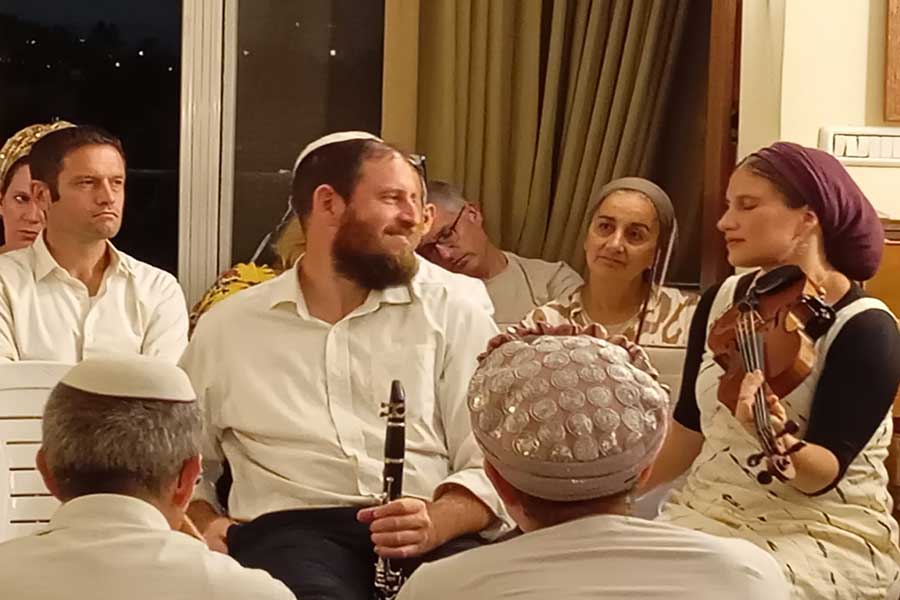
In these difficult times, we, too, turn to Rachel Imeinu and her contemporary namesakes, the two Rachel Goldberg mothers, and ask them all to keep crying on our behalf.
Though we fulfill mitzvot for Hashem’s sake, He does not need our fulfillment, and it does not help or contribute to His existence in any way.
Practically, denial of the mitzvah means that one will never come to fulfill it. Even tzaddikim make mistakes from time to time, but because they recognize their sin as such, they eventually repent and repair their ways.

We must remember that this world is merely the corridor to the palace (Avot 4:16), the gateway to the next world. This world and its pleasures are not the ultimate end goal.
Mitzvot call upon us to recognize our dependency upon Hashem and subjugate our will to His.
How many great miracles have we experienced over the past months? Soldiers have shared so many stories of salvation. We have also experienced much larger miracles. The unprecedented defense against hundreds of missiles and drones fired simultaneously by Iran and her proxies in April and the successful neutralization of thousands of Hezbollah missiles in August are just two of the many.
Like our forefather Avraham, our national and communal origins are also rooted in our mitzvah observance. We transitioned from a family to a people in Mitzrayim, which we entered as a family of seventy and exited as millions.
Our life includes more than just fulfilling mitzvot. We also have goals we aim to achieve.
We are not only able to help ourselves, we are also responsible for doing so. Though many assist us throughout our lives, in the end, we are responsible for ourselves.

Hashem taught Moshe and us this lesson through the construction of the Mishkan and the giving of the luchot. When Hashem told Moshe to assemble the Mishkan, Moshe protested that it was too heavy for him to lift. Hashem told Moshe to do what he could: Make it look like you are trying to erect it.
On the most basic level, challenges inspire reflection and appreciation. The need to work hard to regain something lost or return to a previous position deepens our appreciation for what we had and where we were beforehand.

Suffering may be painful, but when we realize that Hashem is behind it, the month truly becomes Menachem Av.
Getting up from a fall can often feel very difficult. Understandably, many think that after falling, they cannot rise again.

Even those less academic and studious can master the Torah and even those less disciplined have the capacity to fulfill all of their mitzvot.

Part of what makes each of us so important is that we are all unique... Hashem created us this way because we each have unique missions in this world.

Building a Mishkan, circumcision, tzedakah, and farming are not our only significant actions. Every good deed we perform, no matter how small, is important and impactful. Each of these deeds contributes to the betterment of the world and should be appreciated and recognized.
We do not just resemble G-d. We also have a personal relationship with Him.
Angels emanate from and inhabit pure spiritual worlds above. G-d’s presence and their mission are both clear to them.
The Jews assumed that Hashem hated them because they saw themselves as unworthy of His love.
Baruch Hashem, we are witnessing a revolution in this area. Though no soldier can match the Vilna Gaon’s or P’nei Yehoshua’s piety, we have thousands of IDF soldiers who are both deeply committed to halacha and Jewish values and are genuine talmidei chachamim.
Many associate the freedom Rebbe Yehoshua mentions with the exemption Torah scholars enjoy from taxes and other communal responsibilities (Avot 3:5 and Bava Batra 8a). We exempt scholars from these responsibilities so they can be free to focus on their studies.
Many interpret the word tza’ar in the literal sense – pain or suffering. Our reward is proportional to the pain we endure.

Rebbe Yaakov’s teachings aim to help us develop the proper perspective on our world. We should realize that it and its pleasures are not the ultimate goal.
Being up at night without learning Torah is a misuse of the night. We work during the day and have free time at night; we should use this time to sleep or to learn Torah.

We must not allow our mourning and pain to overshadow the process we are privileged to be part of.
Identification with Hashem’s will affects both the form and scope of our avodat Hashem.

The Hamas attack and subsequent war have generated two military needs. In the immediate short term, the army must replace thousands of soldiers. In addition, the military needs to increase the size of its forces.
Torah is not the only pillar. Avodah is also important. Study alone is not enough to sustain the world and our existence.
Judaism is not just about individuals understanding and worshipping G-d. It is about belonging to a people who descend from and still identify with their avot and imahot.
Those looking to find the source of antisemitism often miss the massively disproportionate representation of Jews in almost every index of human achievement. Instead of learning and benefitting from the great success of a contributing minority, many choose a path of envy and jealousy, which leads to hatred.
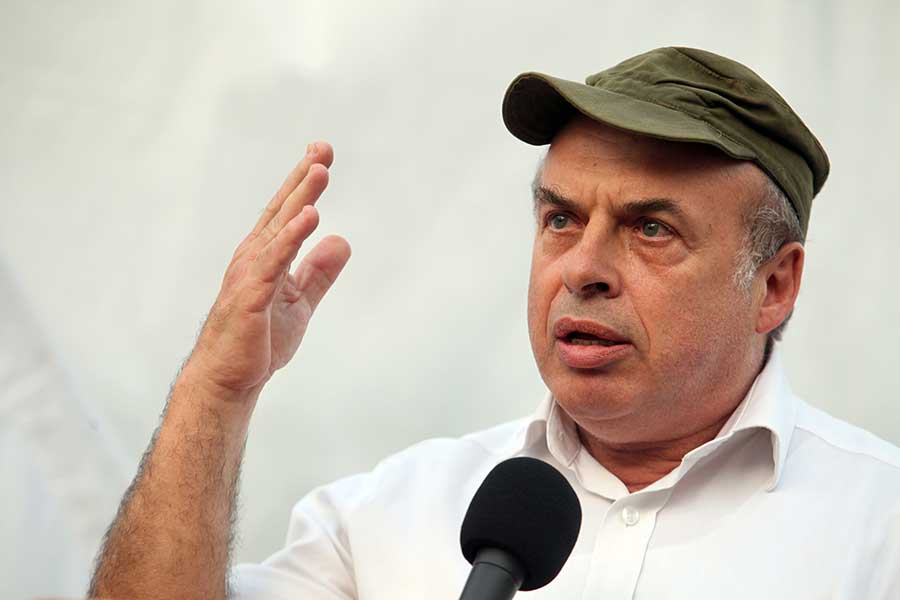
The Christian thinker Blaise Pascal was awed by the eternity of our people: “These people are not eminent solely by their antiquity, but are also singular by their duration, which has continued from their origin till now.
Sometimes, suffering is decreed from above – often as a punishment for sin. Hashem punished the first man and woman for their sins on their first day of existence and has continued to do so ever since.
When man ate from the tree of knowledge of good and bad, he realized his full potential to pursue sin. This choice damaged both him and the world.
Though there would always be antisemites, we were confident that the educated and tolerant mainstream had learned the lesson of the Holocaust. We assumed we would never again be hypocritically singled out. We were wrong.

Every soldier and civilian is precious, and each death and funeral is painful, but Daniel’s hit home harder. He and his family, like me and mine, are olim. They made aliyah ten years ago from South Africa in order to join the Jewish people in Eretz Yisrael. Their connection now runs deeper. They join the many families who have made the ultimate sacrifice for our people and our land.

First, we should work on maintaining our focus on Hashem during tefillah and kriyat shema. After succeeding at this, we should aim to think about Hashem while learning Torah and reciting brachot.
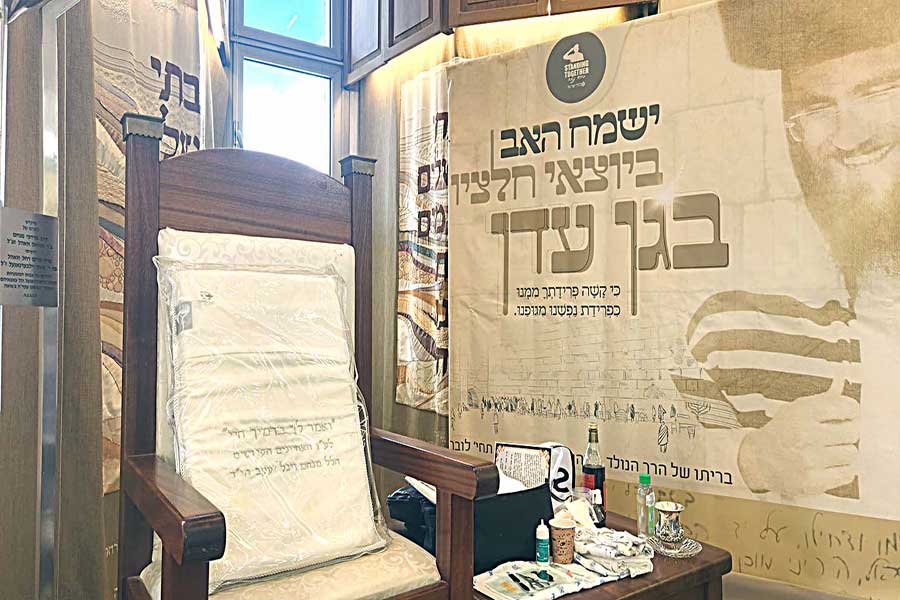
The most powerful moment was hearing the baby’s name: Amatzyah. The word amatz has two meanings. In Tanach, it means strength and courage. Adding Hashem’s name (Kah) to the word implies that Hashem will give the baby strength.
Though Judaism attributes great value to Torah learning and accumulating wisdom (Talmud Torah k’neged kulam), actions are more important.
In addition to fulfilling mitzvot, we should want what Hashem wants, value what He values, and even feel what He feels.
Kavanah is also the great equalizer. Though we differ in terms of what we are able to invest and accomplish, we are all equally able to have the right kavanah.
Like the prohibition against idolatry, chillul Hashem is one of the few aveirot we are commanded to sacrifice our lives to avoid.
The idea that our recognition and service to Hashem help us grow is emphasized by Moshe’s description of Yirat Shamayim (fear of heaven).
Our free choice includes not just matters of personal growth but also all decisions about how to live our lives.
Though our work does not determine how much we earn and we should avoid overworking, we are meant to work hard.


 October 2, 2026