יום שישי, ה׳ חשוון תשפ״זFriday, October 16, 2026



Follow Us


Rabbi Simcha L. Weinberg, is founder and President of the leading Torah website, The Foundation Stone. Rav Simcha is an internationally known teacher of Torah and has etablished yeshivot on several continents.
Read More
If we succeed in developing a strong sense of justice in our homes and communities, perhaps our prayer for God to restore justice will be justly heard and accepted.
All agree that the Chanukah candles represent insights

“What new light has been added to your life?”
Dare I say that, the fact that we keep the Temple alive 2000 years after its destruction, continue to connect to God even after the Holocaust, and we pray even on this horrible day, INSPIRES God?
We are taught that only a cry accompanied by joy in our ability to cry to God can open our restraints; The cry must itself be an expression of restrained joy
The Tisha b'Av experience is a spiritual affliction, "Acedia," a "sadness, a disgust with life, which comes from our inability to get along with ourselves, our disunion with God."
Rabbi Shimon bar Yochai, the teacher of the Zohar who we honor on Lag B'Omer, plants seeds of infinite growth in our minds so each of us can begin our time travel with Torah with a taste of her eternally expanding wisdom embedded in our souls
In this week's portion, the man, having been officially declared impure, is now ready for the end of his nightmare beginning his process of purification--on the sidelines.
Our Matzah is not Shmurah if we are unconcerned with those who have nothing to eat, or no Seder to join.

We explore life through the lens of Torah through the entire year. Now that Pesach approaches, we pause and listen as this week we hear God's loving call as if For The First Time.
Ideas we feel compelled to share, insights we're desperate to impart, powerful experiences we reveal are all contagious, Torah conversations that are contagious build a Home for the Divine Presence.
Torah is to be taught as healing, as a relationship, as nurturing. It is this Torah I love and that gives me life.
Moshe was leading them, and I suspect that he knew exactly where to go. The cloud was not a GPS, it was a reminder of the benefit of having our heads in the clouds: The cloud was an invitation to extend their reach, to remind them that each time they
The man before whom the brothers bowed was no longer the youthful dreamer. The reinterpreted Joseph dreampt no longer about himself, the dreams were now about something beyond the dreamer
It is Judah's honesty that triggers Joseph's decision to reveal his identity.
Who are these beings? Men to Avraham; Angels to Lot. Why do they play such important roles in Genesis? Why are the stories of the beginnings of humanity so rich with unfamiliar characters?
God doesn't need a slave to order and say: Build an ark! He could have made it in a second. God desires a partner. It is up to us to rise to that role. Noah's greatness was that he figured it out.
Once I learned to treat every person I meet as more than chance and as an opportunity, I was able to expand my collection of superheroes.
The primary quality of anyone judging another is that the judge first know how to judge himself. If he cannot honestly examine his own behavior, how can he possibly judge someone else's?
I wish all of us, parents and teachers, would listen to everything our children ask and say. I dream of our hearing them so well that we can begin to visualize and relate to them as who they can be when they fulfill all their potential.
" Nachamu, Nachamu, is not a repetition, but a Song of Act Two--uf new beginnings and of hope.
Yes, things change, sometimes too quickly to comprehend, unless we realize that all the Sh'vilei Emunah, Paths of Faith, offer opportunities to explore new paths and discover how each can take us back to Sinai.
When the Torah constantly asks that its words "Be new in our eyes, as if we are receiving the Torah today," it is not simply asking that we are open to a new reading of a verse, or application of a law. The Torah is asking us to live in a state of Paradigm Shift, a life in which our approach to prayer changes each day, as should our approach to all the commandments and texts.
We stand everyday as did Nadav and Avihu, searching to elevate our actions into meaning, desperate to 'make a difference," trying to get the heavens into our heads
Moses was stuck outside the Tabernacle with the people who built it. He understood at that moment the message of the Half Shekel, or, my fifty cents. He was not standing as the great Moses or the awesome Moses who could meet with God in Heaven. He stood outside as one of the people who all contributed a Half Shekel, fifty cents. It was at that moment that Moses became the most humble of men. I can almost hear the coins jingling in his pocket.
"The Lord settles lonely individuals into the House (Psalms 68:7)." His House that "dwells in the heart of each individual" is meant to provide a place for the lonely; those disconnected from themselves
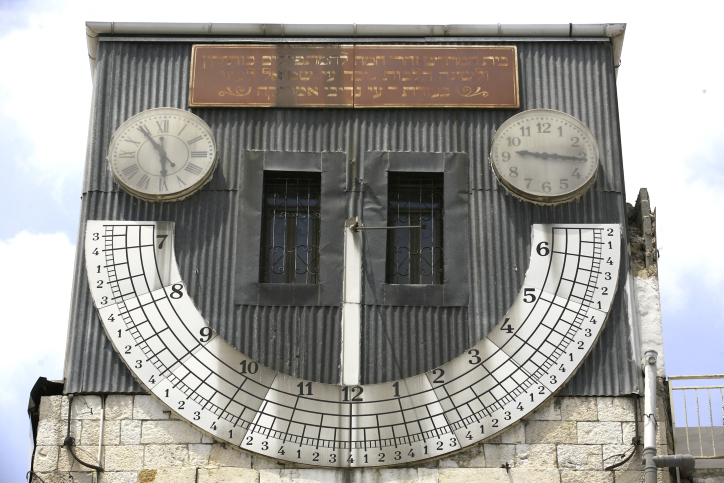
Directing us in the right direction like a compass, teachings on the Parshat Ki Tisa from Rabbi Weinberg
I love and, am energized by, wrapping myself in my Tallit (Prayer Shawl), and tying on my Tefillin (Phylacteries) because of their message. I focused this morning on whether I had the ability to energize them, whether I could wear them as a celebration of my growth, and found myself vibrating with their energy.
I can see how much I have and celebrate my plenty by bringing a small slice of heaven to others who have even less.
Absolute truth is dangerous in the hands of people who do not realize how much they do not know. Just as I cringe when someone declares that he knows the reason for the Holocaust, I shudder when people authoritatively declare people they don't know to be heretics and sinners. Knowing that I don't know opens the door to listening and learning, an opportunity to discover more about God, people, and me.
I finished reading that the Israeli chief rabbinate invalidating numerous conversions, opened the weekly portion, and enjoyed a hearty chuckle when I remembered that the portion of Revelation and the Ten Statements is named for a convert, a failed one, Yitro. Things sure have changed.
I am desperately searching for a filter that purifies the twisted Lishon haRah we use to speak of God: the positive attributes in which we unhesitatingly express our belief.
Miriam and the women who followed her recognized that Israel would be unable to move forward until they forgave God for their suffering and their fear. So they sang of God desiring to share His power with them so that they too would be able to "hurl horse with rider into the sea," as Israel does to Amalek in the closing scene of the portion.
Where is our Exodus? If the question is about miraculous salvation and the punishment of our enemies, I have no answer. If the question is a quest for experiencing greatness, the answer is the Mitzvot
God hears, and responds. God hears our prayers, and in so doing, gives voice to a powerful message of love. Can you hear it?
Each prayer, Shabbat, Torah study and Mitzvah offer us, in our imperfections, to connect with the Eternal. Jacob insists that we first reject the shame we've carried since Adam and Eve, and understand that there is a place in Paradise even for the imperfect.

Could Judah REALLY expect the Viceroy to grasp his subtle threats and insults when translated? He didn't.
Could Judah really expect the Viceroy to grasp his subtle threats & insults when translated? He didn't.
On Parshat Vayeishev with a nod to Chanukah.
Jacob was sending a message to his family and to us: Esau was of sufficient stature to merit angels to greet him. Jacob's years in the house of the scoundrel Laban taught him how to view his brother from a different perspective. He began to appreciate Esau's greatness,
If I had Jacob's dream, I would not have been able to go back to sleep, and, I'd like to believe that I would have responded to the historic promises rather than make a conditional promise emphasizing bread and clothes. I would expect a "Thank You," from Jacob, instead of falling asleep and then playing "Let's Make A Deal,"
All Toledot - Relationships - begin with our relationship with ourselves.
"A father of philosophy, the father of the Hebrews and his slave get together,,," sounds like the start of an ancient joke but read on...
It sounds quite nice, but I wonder whether Abraham had it easier than do we. He had a warning and a reason as well from the only reliable spiritual authority. God appeared to Abraham and told him that a storm was coming to Sodom because of her evil. As far as I know, God did not appear to anyone to warn that the East Coast would be punished for her 'evil'
We glorify God, not in numbers, but in expansiveness. We too, are bringing our First Fruits when we're not busy battling each other over what is ours or who speaks the truth. Our Bikkurim begin with affording room for people to explore and grow.
This week's portion, Re'ei, speaks of our need for a sense of place, how difficult it often is to find, and how we must protect others' sense of place. It also guides us in how to manage the experience of no place
The two and a half tribes--Rueben, Gad, and part of Menasseh-- listened to the accusations and realized that they were already being forgotten.
Having 'real' vision permits an entirely different, improved view of events and the world.
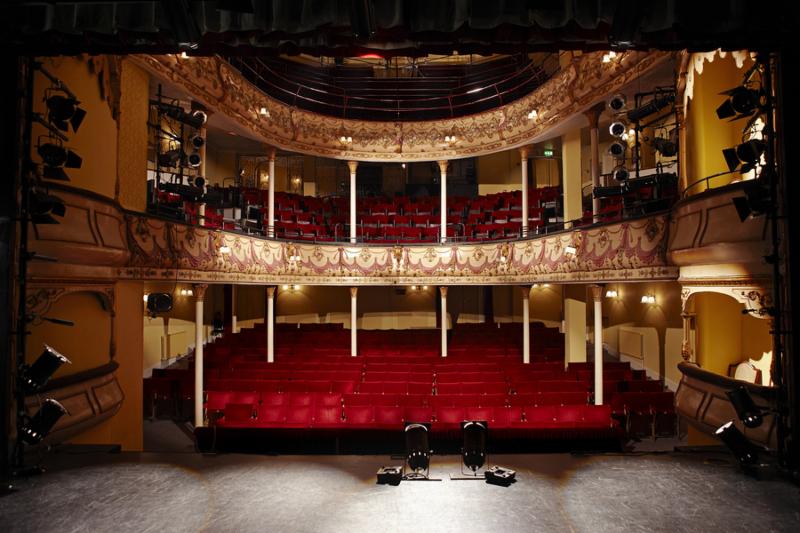
Balak was furious. Balaam was defeated in his mind by a greater prophet, Moses, who would record Balaam's words and shame for eternity, despite not being present at the performances. Rather than perform his blessings or curses, Balaam projected a picture of the future with his ideas in it; he offers his vision of the End of Days (14) with all his hints to Israel's future failings hidden within his words of praise.

It is impossible to be involved in life without somehow sensing endings. We need not be permanently scarred by our beginnings, nor scared of what seems to be the death of a relationship.
Displacement as motivation? Just ask Korach's sons.
Change is good; being a "Changer" is better.
"What's in a name?" Apparently, the essence of relationships...
Moses acted properly in his role of prophet but he failed in his role as a husband; he did not see Tziporah's suffering, her black cloud.
The magic of Sinai began when the people camped "with unified hearts and minds" facing Sinai. A single camp of shared purpose. I suspect that this is the message behind the Sages' teaching that Shabbat is the key to redemption: We do not share a common purpose other than a belief that the world can become a place of peace, a Shabbat world
The true definition of holiness is to cross the boundary between heaven and earth. We are forbidden to combine species connecting their lowest common denominators, their purely earthly definitions. We are encouraged to make combinations that allow each world to meet beyond their highest common denominators so that, together, they can connect heaven and earth.
Chag Sameach-Happy Yom Ha'atzmaut and Shabbat Shalom
Learning to give THANKS and preparing ourselves for Pesach.
The Tabernacle was more dangerous than the Red Heifer because absolutely everything about its construction and functioning seems so mysterious
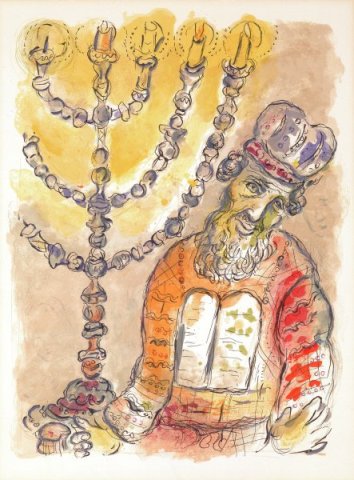
The questions about appropriate clothing should not begin with the externals, thecostumes, but with our inner lives, our growth, aspirations, beliefs; what do we see when we look at our souls?
We can achieve if we only reconnect to that belief that we can succeed only when we reach beyond ourselves rather than hide behind walls of fear-- and hesitation.
Each prayer, each Shabbat, each festival, each mitzvah, is an opportunity to reconnect to that very different wedding at Sinai
Understanding time, tefillin, and Torah and how they inexorably lead to: Empowerment
A devar torah you can 'count on.' Shabbat Shalom from the Foundation Stone
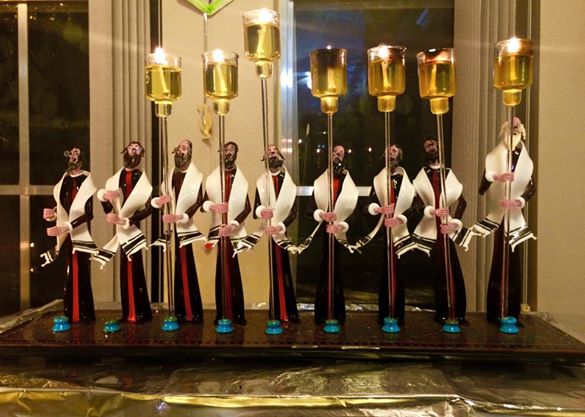
Like Yosef, the Chashmonaim were dreamers. Chanukah is the story of dreamers: defeating a mighty army, recapturing and rededicating the Temple, finding a single jar of ritually pure oil in the rubble

There are many who celebrate the wise, the heroes, and the mystics, and they forget that we must also celebrate the typically non-celebrated, the people who keep the spirit alive, the very spirit that nurtures the more celebrated.
Esau handled the meeting with Jacob far more grace than most people manage an argument with a spouse. Not bad behavior for a person we are taught is one of the most evil biblical characters!
Jacob did not have problems with 'doorways.' He experienced one emotional earthquake after another, and managed to maintain focus. No 'event boundary' issues for our hero. How did he do it?

Who are these beings? Why do they play such important roles in the stories of Genesis? Why are the stories of the beginnings of humanity so rich with characters so unfamiliar?
When we are driven out of our complacency by a wrong we don't know what the perfect world will look like. We only know that we can't allow the world as it stands to continue. The need to leave home is clearer to us than our destination. Lekh Lekha.
Adam's two Fermatas resonate in the two Noahs, and the notes continue to reverberate in our souls as we struggle to retain our connection to the Garden,
The Spartans used their mistakes as lessons for the future. Pinocchio chose to ignore the lessons and continue to do as he pleased. Who are we on Yom Kippur, Spartans or Pinocchio?
When we understand that the greatest expression of God's might is God's compassion, we open ourselves to receive the gift of Lives of Compassion. Once we have been granted Lives of Compassion; compassion for others and for ourselves we can become a society united in compassion, and wickedness will evaporate.
We stand in the final moments of 5777, prepared to transition to 5778, perfect moments to offer our gift to God, honoring all we have gained over the past year, and how we intend to apply that growth in the future, using the coming year to grow in ways yet unimaginable to us.

This week's portion, Re'ei, speaks of our need for a sense of place, how difficult it often is to find, and how we must protect others' sense of place. It also addresses the sanctity of the Land of Israel
Re'ei is about the opportunity to restore the 'Hearing To See; rejected by Adam and Eve, and again by Israel at Revelation. If we master the higher hearing of Eikev, we will be granted the clear Vision offered in Re'ei.
The Tribes of Israel knew that Moses would die because he told them. Why tell them and force them to confront their fear of life after Moses just BEFORE a major battle?
The challenge of these Three Weeks leading to Tisha b'Av? Learning to see the hope beyond the suffering,developing the vision of a healed world, so that we too can find the right words in our mouths to share our vision
Balaam, the dedicated thespian, could not overpower the prophecy of Moses because Moses was not a performer. Moses saw his role as building the stage on which his people, present and future, would perform.

Our portion is about lives in which we experience moments of greatness and moments of insignificance; accomplishments and failures; Torah is not only for the 'perfect' person; It guides and nurtures the rest of us as well.

A nation lacking a consistent message will not flourish, and will ultimately lose its sense of safety and elevation. Even a beautifully motivated desire must be measured by its affect on the future.
I can empathize with the Children of Israel wanting to send spies to see the land they were to conquer. Once they could see with x-ray vision, "The entire people saw the thunder...the sound of the shofar" but now, no longer
Moses acted properly in his role of prophet but he failed in his role as a husband; he did not see Tziporah's suffering, her black cloud.
I look toward Shavuot as an opportunity to not only absorb the Torah's wisdom, but as a chance to apply its wisdom so well that God the Teacher will look at us say, "Yet more have I received from My students"
Revelation both Divine and self. Shabbat Shalom and Chag Sameach

The laws of the Sabbatical year allow for some questioning even while demanding faith. How can one believe even while questioning?
This nameless man, born in scandal to a Jewish mother and Egyptian father not a member of any tribe, brought his claim to Moses who ruled against him. He was Jewish, but he had no place in camp or the world
Shabbat, when we separate ourselves from so much of our earthly concerns and focus on our highest aspirations, we find the holiness that allows our earth to rise so high as to kiss the heavens.
We approach Yom Ha'atzmaut, celebrating a generation that experienced absolute evil yet was still able to join together without distinctions and build a vibrant country, thriving because it welcomes others who live betwixt and between, politically, spiritually and religiously
Vayikra, "He called," ends with a mini-Aleph, teaching us that Moses could hear the Call because he learned at Sinai to listen to the other side of silence, the world's smaller sounds and the people he led
Whether it's cabbage or Kohenic clothing,the recipe of colors Scarlet, Purple, and Turquoise render impressive results.
I open my bible as a potential convert; open to the possibility of learning what will allow me to continue to become more. I begin my prayers in a state of repentance, ready to climb mountains.
Why did Pharaoh consistently ask Moses to pray for a plague to stop, rather than himself pray? Wouldn't that have been simpler?
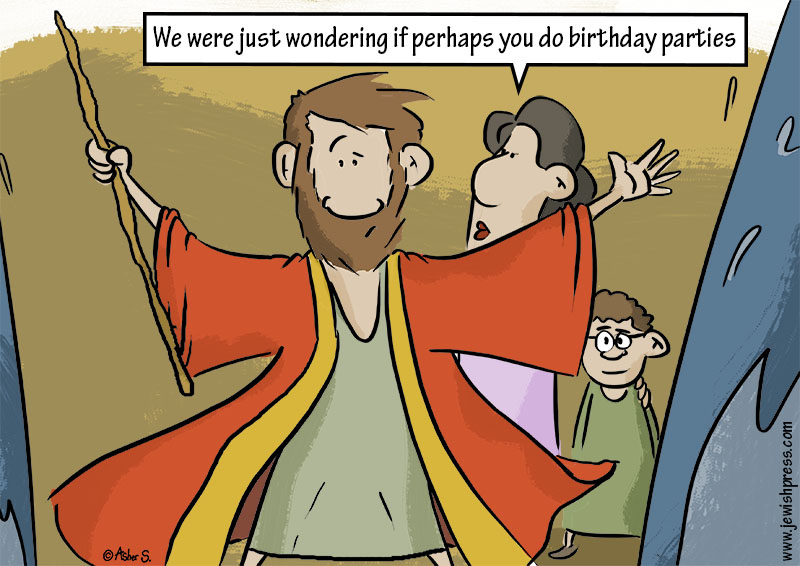
People who endlessly pray for miracles tend to ignore the message of Moses' staff. They do not realize that each time Moses uses that staff he is pointing to an opportunity of self-transformation.
Jacob lives. He lives in all who can drop the heavy burden carried by all since Adam and Eve, the belief that our imperfections will block us from tasting Paradise.
Jacob's power was powerless until it was used to empower his children. Talmud's great power to nurture complex thinking is powerless until it is used to empower us to think, question, and challenge
Laban’s behavior is the paradigm of anti-Semites through the ages. It was not so much what Laban did that the Haggadah is referring to, but what his behavior gave rise to, in century after century.


 October 16, 2026