יום ראשון, כ״ד אלול תשפ״וSunday, September 6, 2026



Follow Us


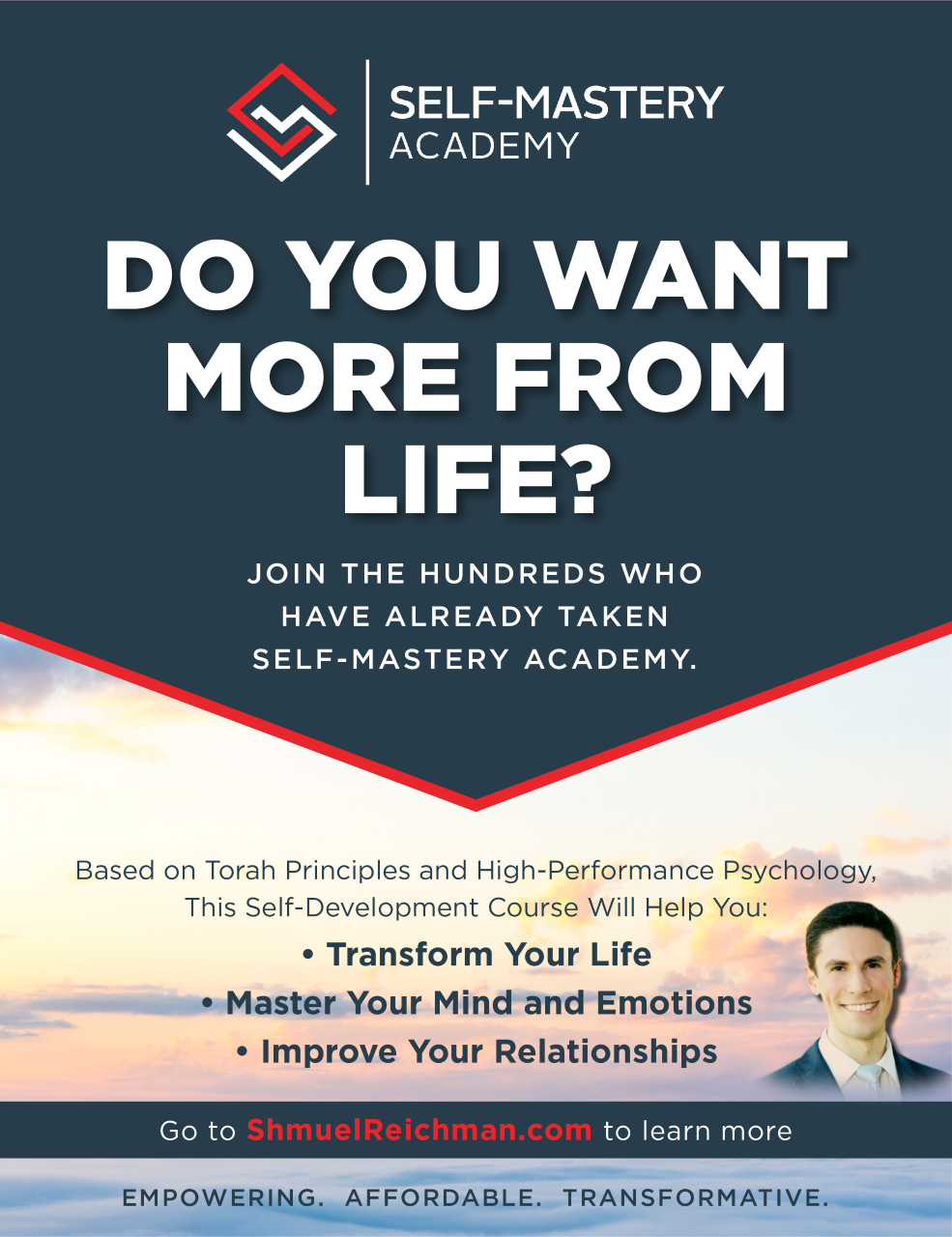
Rabbi Shmuel Reichman is an international speaker, bestselling author, business coach, the CEO of SMA, and a TED talk speaker. His online content reaches millions of people every month, and he lectures internationally on topics of Torah thought, psychology, leadership, and business. His bestselling book, “The Journey to Your Ultimate Self,” serves as an inspiring gateway into deeper Torah thought. Rabbi Reichman has semicha from RIETS; Masters degrees from the University of Chicago, YU’s Educational Psychology and Bernard Revel Graduate School; and was an Ivy Plus Scholarship at Harvard. As a business and leadership coach, Rabbi Reichman provides a unique one-on-one coaching program where he helps high-achievers, coaches, and business owners achieve their financial and personal goals. To learn more or to get in contact with Rabbi Reichman, visit his website: ShmuelReichman.com.
Read More
True happiness is what you experience when you are actualizing your potential, working toward becoming the person you are meant to become.
As I sat there thinking, I finally realized the lesson I was supposed to learn. Beauty is not about the physical; it’s about how we live our lives, how we choose to see the world.
Is Hashem within time and space, limited to this world alone, as Pantheists believe? Or is Hashem completely transcendent, beyond time, space, and this physical world, as many of the ancient philosophers believed?
Every religion as well has its own perceptions and views on these topics, and just as a person’s views serve as a gateway into understanding their inner beliefs and values, a religion’s views serve a window into its inner beliefs and value system.
It is always important to reinforce our commitment to the journey of faith. There is no greater act of emunah than living a spiritual, holistic life in an often chaotic, fragmented world.
Everyone wants to contribute something significant to the world. This desire is an inherent part of being human.
You begin with your inner thoughts and experience. You then form the specific words that will encase your thoughts as you give them concrete form and throw these words out into the world around you in the form of vibrations.
In order to achieve this ideal flow, one must perfect all three stages of the process. You must first connect to Eden, which requires going beyond the surface of reality and connecting to the transcendent – to Hashem and His Torah, to the spiritual root of the physical world.
The goal is for the essence of Eden to flow untainted through the Nahar into the Gan – for the spiritual to be powerfully and completely expressed through the physical.
In order to accomplish anything great, we must first identify a clear target and then determine the path required to get there.
Once we understand the purpose of speech, we can begin to comprehend just how abhorrent lashon hara truly is. Lashon hara takes the very tool of connection – speech – and uses it to disconnect people from each other.
Every single thing that we see and experience in the physical world stems from the spiritual root – the transcendent dimension of Torah.
The spiritual concept of beauty, and its relevance to marriage, is central to the connection we aim to develop through the process of Succos.
As we approach Yom Kippur, we recognize that it is unquestionably one of the most important days of the year. And yet, in many ways, it is a mystery.
At root, all of Klal Yisrael is one, an interconnected self. Each of our individual neshamos are part of a bigger whole, like individual cells that make up a single human body.
There is a common misconception that lashon hara refers only to sharing false information about another person. People claim that if something is true, however, there is nothing wrong with sharing it.
When we perform an action, we act as an extension and manifestation of the one who willed and commanded it.
The spiritual concept of intoxication is related to the theme of transcendence and the expansion of consciousness. Although done inappropriately, Nadav and Avihu were attempting to transcend their physical state and connect to Hashem on the deepest level.
Nowadays, we no longer have korbanos, as the world is in a lower spiritual state. How then do we maintain the connection between Hashem and this world? What replaced the korbanos?
You can’t see, touch, or smell your mind or consciousness. You will never see someone else’s inner world.
We have so much potential in our lives, but only by transforming the limitless possibilities into something real can we ever accomplish anything.
What makes Shabbos a root mitzvah, why is its punishment so severe, and why do we see it as the measuring stick for all of Torah observance? What is the secret of Shabbos?
The Jewish People were indeed on the loftiest of levels — a state that we can hardly imagine. They had just witnessed earth-shattering miracles and received the Torah from Hashem Himself on Har Sinai.
Cheit Ha’Egel, the sin of the golden calf, is perhaps the most infamous event in the Torah, a sin compared to the original sin of Adam HaRishon and one that has repercussions throughout Jewish history.
Hashem created the world, including humanity and our psychology. So why couldn’t He simply create us in such a way that we do enjoy gifts and free handouts as much as we enjoy things that we have earned through hard work?
What is the Jewish perspective on the goal of life? Do we limit ourselves to our own individual happiness, or should we be striving for something even deeper and greater?
Adam and Chavah are created as one before being split apart to model the oneness that we are striving towards as husband and wife.
How can it be that Hashem made a mistake – that He originally wanted to create the world with din but then changed His mind?
A gift isn’t real; something chosen and earned is. We’re in this world to choose, to assert our free will, and to create ourselves.
Have you ever felt like everything worthwhile in life eventually fades? The energy of youth fades into old age, the excitement of beginnings fades into routine, and the inspiration of a new goal fades into habit.
The forty-nine days of sefiras ha’omer parallel the forty-nine-day process that the Jewish People went through upon leaving Egypt, before receiving the Torah. What is the meaning behind this process?
We don’t mark how many days remain until Shavuos; we count how many days have elapsed since Pesach. What is the meaning behind this strange method of counting?
The Gemara explicitly states that the Luchos were cubic or rectangular. If so, why does almost every shul depict the Luchos with two rounded tops, as an almost heart-shaped figure?
Each individual dibrah on the right parallels the corresponding dibrah on the left. Together, they make up a unified whole of connection to both Hashem and one’s fellow man.
We are commanded to treat every pasuk and word in the Torah with equal awe and respect, and yet there is a prevailing custom to stand in shul as the Aseres HaDibros are read, seemingly attributing unique significance to them.
The Maharal explains that Yetzias Mitzrayim was not merely a physical process, in which the Jewish People departed from the land of Egypt and traveled to a different physical location. It was a spiritual metamorphosis – an existential transition, the birth of a people.
Do you prefer to stand out from the crowd or to be part of the crowd?
The world we live in is exquisitely structured and ordered down to the finest details. Anyone who has studied physics, biology, or chemistry, or any form of science for that matter, has gotten a taste of the beauty and sophistication of our world’s order.
After Hashem performed the ten makkos and took the Jewish People out of Mitzrayim, Hashem’s providence was flamingly clear in the world.
Clothing can serve two simultaneous purposes: It can conceal the embarrassment of our inner light no longer shining through our physical bodies, and in doing so it can also cloak us in dignity.

This is true beauty, where the inner and outer melt into a oneness, where the physical perfectly reflects the inner spirituality and projects something deeper than itself.

The root of the word nisayon (challenge) is neis the Hebrew word for miracle. We are therefore left with two seemingly contradictory views. Either a nisayon is within one’s capacity, which means that it is NOT truly a miracle if one overcomes it, or it does require a miracle to overcome, in which case it is not within one’s capacity. How do we reconcile this seeming contradiction?
You must pick up on every hint of clarity you receive, put the pieces together, and form the image in your mind while still walking in darkness.
Teshuva as well is a method of reengineering our will, rewiring our “wants”. It’s about the decision to be better, to be great, to become our best and truest self.
When you hear someone else speaking, you must collect all the pieces of sound together and reconstruct them into a connected picture in your mind so that you can grasp their meaning.
If I were to ask you, "What is the wealthiest place in the universe?", what would you answer?
Growth occurs only in the face of resistance and pressure. There is no growth in the comfort zone.
Our job is not to overcome the challenge, our job is simply to push ourselves as hard as we possibly can … and trust that Hashem will carry us the rest of the way.
Why did Hashem create a world in which inspiration, physical sensation, and emotional delight always fade? What is the deep spiritual idea behind this pattern?
To genuinely venture on the path toward your true self requires a leap of faith into the unknown, ready to embrace whatever future Hashem has in store for you.
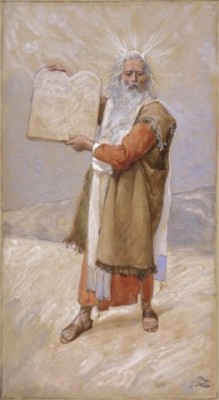
In Parshas Yisro, Klal Yisrael hear the ultimate truth, the Aseres Hadibros (Ten Commandments), as they embrace their lofty mission in this world.
If we can change what we want, we can change who we are. When we make new decisions, we create a new reality for ourselves.
Krias Yam Suf was in fact a necessary step before the Jews could receive the Torah. What is the significance of the water of the Yam Suf, especially in regards to the Jewish People's journey from Mitzrayim to Har Sinai?
Did the great ones become great despite their challenges or because of them? What is the secret to their success?
The Nature of nature
The first stage was a gift, an illusion; the third is the product born of the effort and time you invested.

We each get to choose who we will become. Let us be inspired to straighten the bent path

The more power, the more potential. The value in any power is only in the extent to which it can be controlled. Otherwise, the more power you have, the more destruction you will have.
As Einstein famously said, "if you judge a fish on its ability to climb a tree, it will spend its whole life believing it's foolish". We cannot compare ourselves to someone else, as we are completely different people.
If we analyze them closely, we begin to realize that Yaakov wasn't simply blessing his children, he was showing each of them their unique purpose, their unique mission.
Leaders are appointed by the people and are therefore completely subject to the will of the people. They walk ahead, pretending to lead, while in fact, they are merely puppets.
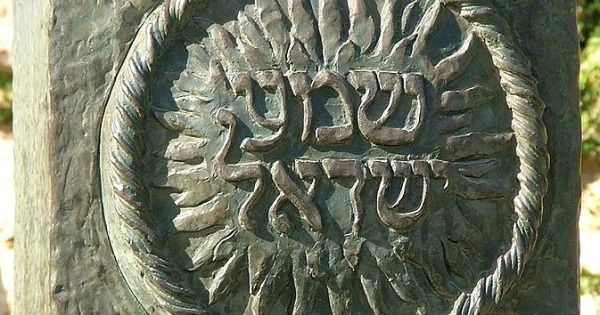
On a national scale, one day, we will see how centuries of tragedy were actually bringing us closer and closer to our ultimate destination, similarly, on a personal level, the same is true for each of us;
The greatest victory over the Greeks wasn't to simply prove that transcendent Torah exists; it was to reveal that ... even limited human beings can connect to the infinite.
Ideally,nthe physical wisdom of the Greeks and Yefes are to reside within the tent of Shem, for science and the wisdom of the world to be in harmony with Torah. The problem occurred when the Greeks tried to destroy the Torah, which contradicted their ideology, and the Jews were forced to fight for their beliefs. This was the battle of Chanukah.
You were given a taste of your own perfection, of what you could, should, and hopefully will become. And from this transcendent realm, you were birthed into the physical world.
What is the meaning and purpose of our desire for physicality, and how does it relate to our drive for spirituality?

Every physical action affects the spiritual realm, creating cosmic ripple effects; The same is true of the physical world. Every action creates a corresponding reaction in the spiritual world. In essence, our physical world is like an upside-down puppet show

And this was the very battle between the perception of Yaakov and Esav. They both wanted both the spiritual and the physical.
The partnership that could have-should have-been
You know deep down that you are unique, that you were created for a reason, and that you have a unique mission in this world – yet again, it is impossible to prove.
The physical is not an end in itself- it is meant to serve as a vehicle for transcendent, spiritual, conscious living. This is the battle we face on a daily basis, a battle of perception.
If Hashem tells Avraham that he will have a child, how can Avraham even think of suggesting otherwise? And what does it mean that Hashem took Avraham ‘above the stars’?
Avraham was burying his wife, facing the death of his life’s partner, there was a deeper layer here. He was also planting the seeds for their eternal connection.

How often do we create mental cages of our own? How often do we allow other people's opinions of us to become our reality?
This is the deeper meaning of the mabul: Hashem was not destroying the world; he was recreating it. The generation of the Flood had become so corrupted that Hashem decided to start over again with Noach.
May we all be inspired to follow in the footsteps of Avraham, and have the courage to embark on our own Lech Lecha journey,
You must limit your endless potential in order to make something real.

A central question in the story of Noach is why Hashem specifically chose to destroy the world through a FLOOD. Hashem could have chosen any form of destruction, and yet, He chose water. Why?
The process of life: The ideal is revealed, taken away, and then remains as our goal as we journey through life, trying to recreate that ideal. The KEY is to be inspired by the goal, not discouraged by the struggle.
All we know is where we're leaving from, where we are right now. Only once we arrive, we will retroactively see where the journey was taking us all along.
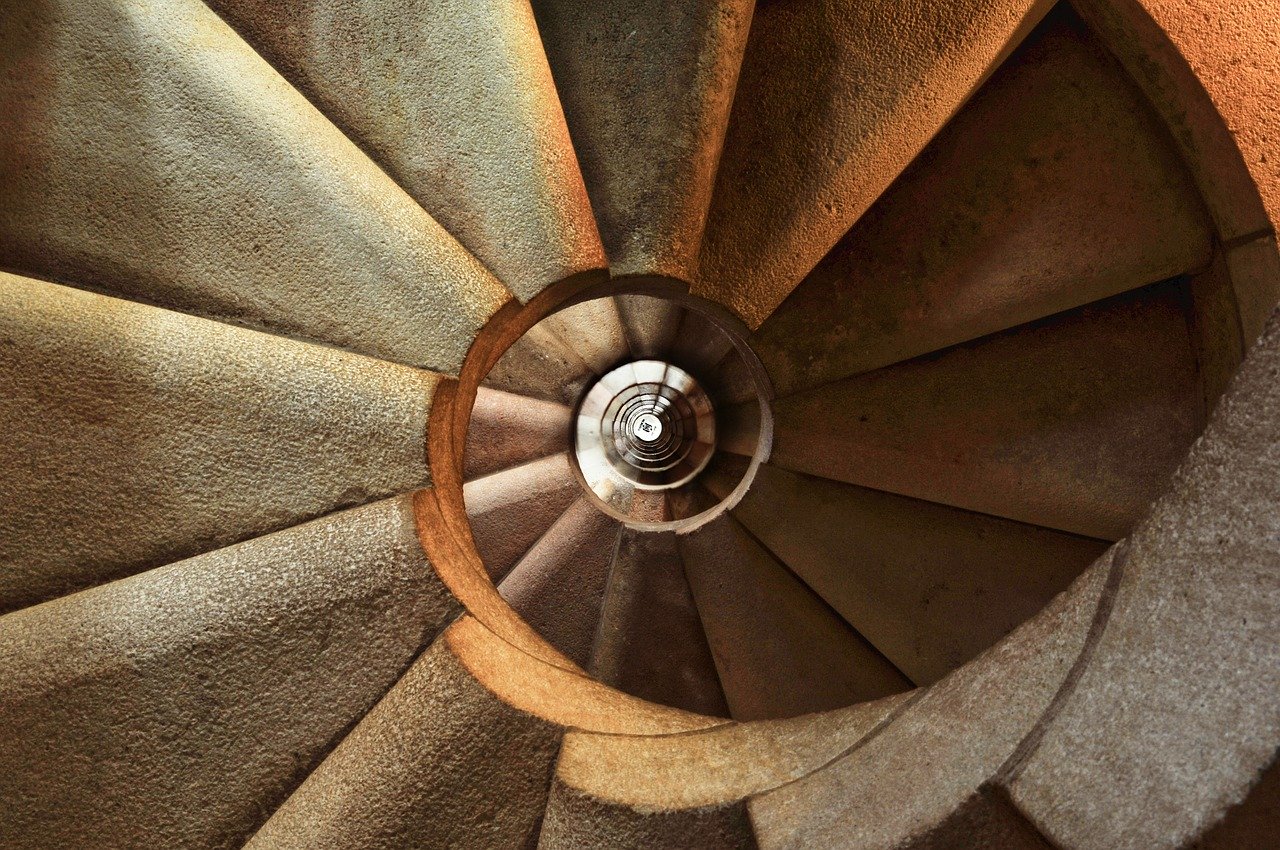
The same is true for all spiritual circles. The ideal is not to transcend the circular system, but to uplift it, to transform the circle into a spiral, to find innovative ways of creating newness within the circular system, not beyond it.
Most importantly, though, when the malach struck you, you didn't lose this Torah; rather, you lost access to it. Instead of disappearing, this knowledge and clarity became buried deep within your subconscious.
Our goal as humans is not to escape the physical, but to use it as a means of connecting to the transcendent.
We're in this world to choose, to assert our free will, and to create ourselves.

Elul and Rosh Hashanah center around the concept of teshuva, and Parshas Nitzavim is clearly linked to this theme as well. The pesukim in Nitzavim discuss the theme of teshuva, the importance of choosing life - choosing what is right, and connecting ourselves back to Hashem. As Parshas Nitzavim is connected to the transition from Elul into Rosh Hashanah, let us delve into the idea of teshuva.
Elul is the time of teshuva, of self-awareness and recalibration, of inspiration and will. Ki Savo is the parsha of tochacha (rebuke). The connection between teshuva and rebuke appears self-evident, but exploring these topics in depth reveals an ever richer and perhaps less obvious connection. To better understand the connection between tochacha and teshuva, we must first understand the concept of flattery.
A leader is anyone who is on a mission, who empowers others, and who always looks for ways to contribute to the greater good. Leaders are great parents, great teachers, great friends. We are all potential leaders, we are all potential revolutionaries. We can all create change in the world.
Free will - choice - is the root of teshuva. Teshuva is about reengineering our will, recreating our desire, rewiring our wants. It’s about the decision to be better, to be great,
"I want the very best." That's what we tell ourselves, isn't it? As human beings, we understand that there is a spectrum of quality for everything, and we want only the best. We desire the best relationships, teachers, friends, food, clothing, experiences, the best of everything. But what makes something the best? Sometimes, it's the […]
Must there be a reason for everything?
In a world devoid of prophecy, it becomes exceedingly difficult to understand or even relate to the propehcy
Our mission is to make this Shavuos the next step in our evolutionary spiral through time. We must not only re-accept what we have already accepted, we must take it to the next level,
Numbers don't tell the full the story
We don't seek leaders who transcend human struggle and temptation, sit on mountaintops meditating on their naval. Our leaders are individuals who embrace the physical, uplift it, and connect it to the infinite.
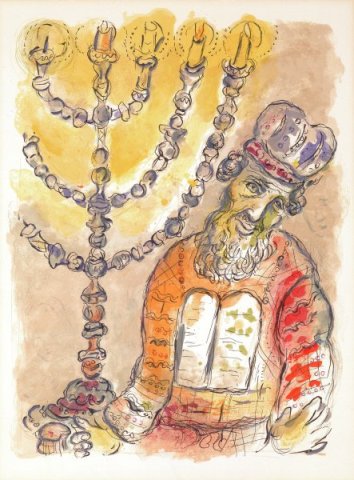
It's never too late to grow, it's never too early to contribute. The valuable skill is knowing how to create the ideal balance between these two
This is the gift of speech. Speech is the mechanism that enables us to connect with other people, to overcome the barrier between us, so let us respect and not abuse it.

Inspiration-like a flash of lightning
The most fundamental aspects of Torah are expressed in the most deceptively simple manner. Our job is to delve into these hidden aspects and reveal the inner depth behind them. There is probably no single object in the Torah which is more overlooked than Moshe's staff-yet how often do we ponder its paramount significance?
The Rambam says something absolutely shocking. He claims that everyone is capable of becoming a tzaddik like Moshe Rabbeinu. How is this possible? Not all of us are able to become leaders, let alone become the greatest leader in human history. So what does the Rambam mean?


 September 4, 2026