September 11, 2026
 Categories: Featured / Headline / Parsha / Torah
Bamidbar and the First Map


Every new sefer in the Torah opens a doorway.
Bereishis opens the doorway of beginnings. Shemos opens the doorway of becoming. Vayikra opens the doorway of the inner world and the discipline of holiness held close. Each book shifts the frame of the story, and the direction in which the neshama is asked to turn.
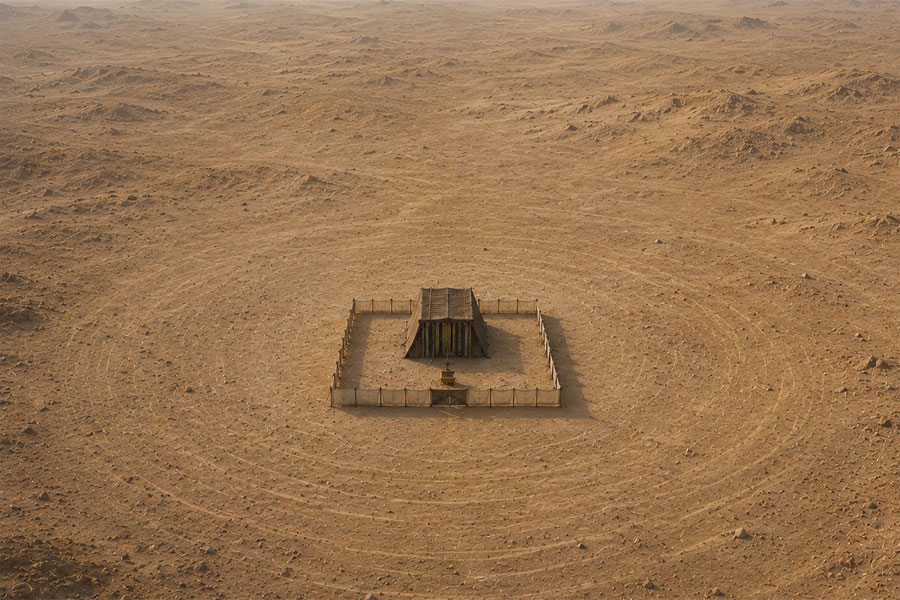
Sefer Bamidbar opens a doorway of a different kind. It leads into the wilderness that will shape the next stage of the nation’s life. The midbar stretches in every direction, a landscape with no roads and no familiar landmarks. It is the Torah’s first map. It is not a map drawn on parchment. It is a map drawn in people – a map of where they stand, how they orient themselves, and what they face.
Parshas Bamidbar begins this map. The parsha opens with placement: east, west, north, and south. A center defined. A perimeter traced. Before the journey can begin, the Torah teaches that in an uncharted world the first act of becoming is learning how to locate yourself. Parshas Bamidbar is not about the drama of movement; it is about the quiet work of orientation. It is the moment when a people learns how to hold its bearings when the landscape gives them none.
Only after the map is drawn in human coordinates does the story begin to move. Parshas Bamidbar is the place where a nation steps into the vastness, but first with a sense of where it stands.
To understand why the Torah begins here, we must understand the nature of the place where this map is drawn.
The Wilderness as a Blank Map
The midbar is often imagined as a place of danger and emptiness. The Torah presents it differently. The wilderness is not chaos. It is unwritten space. It is a place where nothing is predetermined and where no human power has left its mark. Chazal teach that the Torah was given in the midbar because it is ownerless. It is open and unclaimed. It belongs to no one and therefore can belong to everyone. That openness is spiritually demanding. In a world filled with landmarks, we know where we are by reference to what surrounds us. In a wilderness, there are no external cues. There are no mountains that anchor the horizon. There are no cities that orient the traveler. There are no familiar paths to follow. The midbar forces a different kind of knowing. It requires a sense of direction that comes from within and from the community that stands around us. The wilderness strips away the inherited maps of Mitzrayim and the imagined maps of Canaan. It is the space where the people must learn to draw their own. It is the place where they must learn to stand without relying on the structures that once defined them. This is why Parshas Bamidbar begins with orientation. Before the people can move, they must learn how to stand. Before they can journey, they must learn how to locate themselves in a world that offers no ready-made coordinates. The midbar is not the absence of meaning. It is the invitation to create it.Drawing the First Coordinates
The opening chapters of Parshas Bamidbar appear at first glance to be a census. In truth, they form the first map in the Torah. Each tribe is placed with intention. Yehudah in the east. Reuven in the south. Ephraim in the west. Dan in the north. The Mishkan stands at the center and the Levi’im form a living circle around it. Chazal and Ramban note that this formation reflects the arrangement of the angels around the Divine Presence in the vision of Yechezkel. The camp becomes a reflection of a higher order. This is not simply organization. It is a spiritual structure. The Torah teaches that where we stand shapes how we see. What we face shapes what we become. The arrangement of the camp is a way of inscribing holiness onto a landscape that has no markings of its own. It is the first act of turning the wilderness into a place of meaning. Then the Torah turns to the inventory. It is not an inventory of objects. It is an inventory of souls. Who is present? Who is counted? Who carries which part of the Mishkan? Each family of Levi is entrusted with a different responsibility: the beams, the curtains, the sacred vessels. The map of the camp is drawn not only in placement but in the weight each person carries. To be counted is to be given a place and to be placed within the story. To be given a place is to be given purpose. The census is not a number. It is a declaration that every person is a coordinate in the life of the nation.Knowing Where You Stand
There is a difference between wandering and journeying. Wandering is movement without orientation. Journeying is movement with direction. The Torah opens by teaching us how to tell the two apart. It insists on placement before progress. The camp must learn where it stands before it can move. The banners rise before the people do. The families of Levi must know the weight they hold before they can take a single step. This is not an administrative detail. It is the beginning of spiritual life – orientation before motion. Direction is not something we discover on the road. It is something we establish before we begin. The wilderness will test a person’s bearings. The journey will challenge a person’s sense of place. When we know where we stand – our center and our responsibilities – the unknown becomes far less frightening. The Levi’im embody this truth. They carry the Mishkan, but they also serve as its living coordinates. Wherever they stand becomes the center of the camp. Wherever they move becomes the axis around which the nation travels. They remind us that the map of the Jewish people is not external – it is carried within the community itself. In our own lives, we often want to move before we know where we stand. We want clarity without orientation and progress without grounding. The first step is not forward. The first step is locating ourselves in relation to our center, our Torah, and our community.Losing and Regaining the Map
Sefer Bamidbar begins by giving the camp its structure. The rest of the sefer reveals how easily that structure can slip. The Torah does not shy away from this. It shows how quickly a people can lose its bearings and how patiently Hashem restores their sense of place. The Meraglim lose their sense of direction. They see the land not as a promise but as a threat. Their crisis is not about geography. It is about orientation. They cannot locate themselves within the story that Hashem is writing for them. Korach loses his place as well. His rebellion is not simply about leadership. It is about position. He wants a different coordinate on the map of the nation. He refuses the role he has been given and tries to redraw the lines around himself. The people complain many times. Their complaints are not only about food or water. They are about disorientation. When the map dissolves, fear rises. When the center is forgotten, anxiety takes its place. The wilderness exposes how fragile our sense of direction can be. Each time Hashem recenters them. The cloud lifts and settles. The fire appears at night. The camp is arranged again. The responsibilities of each family are repeated. The Torah is patient with human disorientation. It understands that learning to hold one’s bearings in a shifting world is slow and vulnerable work. Losing the map is woven into the journey. So is the slow work of finding it again. The Torah does not ask for certainty. It asks us to return to the center that never moved.The Maps We Draw Today
We live in a world that often feels like a midbar. It is unmarked and unpredictable. The landmarks that once oriented us can feel less stable than they once were. The pace of change is fast. The ground beneath us shifts. Many people feel as if the familiar map has faded. The Torah gives us coordinates. Shabbos is a coordinate. It is a point on the map that does not move. It reminds us each week where we stand in relation to time and to Hashem. Halacha is a coordinate. It offers structure when the world feels fluid. It gives shape to our days and direction to our choices. Kehillah is a coordinate. It is the people who stand around us and help us locate ourselves when we feel unmoored. It is the presence of others that steadies us. Zikaron is a coordinate. It is the stories we inherit and the promises we carry. It is the history that anchors us when the present feels uncertain. Achrayut is a coordinate as well. What we carry and what carries us shape the map ahead. The Torah teaches that the weight we hold is part of how we find our place. We draw our maps not by predicting the future but by knowing our center. We draw them not by controlling the landscape but by orienting ourselves within it. We draw them not by eliminating uncertainty but by learning how to stand in it with clarity and purpose.The Doorway of Direction
The wilderness is vast. The world is unmarked. Yet the Torah gives us a center that does not shift. It gives us a set of coordinates that do not fade. It gives us a way to locate ourselves even when the landscape feels uncertain. The Mishkan stood at the center of the camp; Torah stands at the center of ours. A people does not find its way by searching for new landmarks. It finds its way by remembering the center that has always guided it. The first map of the Jewish people was not drawn on the ground. It was drawn in the heart of the community that carried the Mishkan through the wilderness. Our maps are drawn the same way. We carry our center with us. We carry our Torah with us. We carry one another. And when the world feels like a midbar, that is how we find our way home.