 October 16, 2026
 Categories: Headline / Perspectives
Beginning Again – Simchat Torah
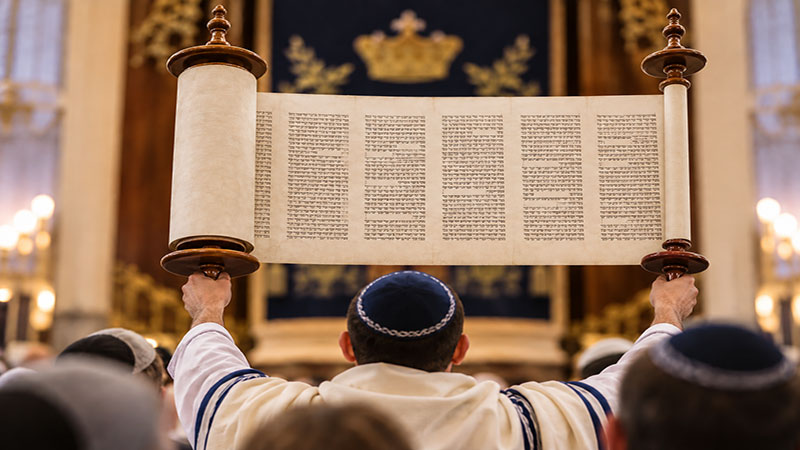


Simchat Torah teaches us that every ending creates the possibility for a new beginning and the same is true in business, where an apparent dead end can sometimes prepare an organization for its next chapter.
In October 2022, Mark Zuckerberg appeared to have broken Meta. He had committed tens of billions of dollars to building the metaverse – a virtual world that few consumers seemed to want. Advertising revenues were weakening, TikTok was capturing younger users, and Meta’s share price had fallen by more than 70 per cent from its peak. Investors accused Zuckerberg of sacrificing one of the world’s most successful businesses to finance his personal obsession.
The critics were not entirely wrong. The metaverse did not arrive in the form that Zuckerberg had predicted, and the company’s Reality Labs division continued losing billions of dollars. Yet Meta had also assembled vast computing capacity, attracted some of the world’s best engineers, and prepared itself for a future in which artificial intelligence would require enormous resources.
When the AI revolution arrived, Meta was ready to change direction. It rebuilt its advertising and recommendation systems around artificial intelligence, developed its AI model, and recovered more than a trillion dollars in market value. Zuckerberg’s original strategy had failed, but the capabilities and culture developed around it helped Meta succeed in a different future.
This illustrates an important principle of investment analysis. A resilient company is not one whose leaders never make mistakes, because no such company exists. It is one with enough institutional strength, talent and adaptability to survive those mistakes, and sometimes even transform them into unexpected opportunities.
The same principle applies to countries. On October 7, 2023, Israel’s government failed in its most fundamental responsibility: protecting its citizens. The intelligence, military and political failures were catastrophic, and no assessment of Israel’s leadership can honestly ignore them. Yet the failure of the government did not mean the failure of the nation or the end of its story. On the contrary, in the years since the massacre, Israel has demonstrated remarkable economic vitality and social renewal.
On October 27 this year, Israelis will return to the polls and begin another political cycle. New parties have emerged, old alliances have shifted, and competing leaders are offering different visions of the country’s future. To some observers, another Israeli election represents further evidence of instability, but Simchat Torah – celebrated just three weeks beforehand – suggests another interpretation.
The Torah ends with the death of Moshe, the greatest leader the Jewish people have ever known. He confronted Pharaoh, brought the Torah down from Sinai and guided the nation through forty years in the wilderness. No leader could have appeared more indispensable, yet the Torah concludes with his death before the Israelites enter the Promised Land.
The Jewish story does not die with Moshe. Once we have rolled the Torah back to the beginning and read about Creation, we then read the Haftarah from the opening chapter of the Book of Joshua, which describes what we might call the peaceful transfer of power to a new government.
“Moshe My servant has died,” G-d tells Joshua. “Now arise, cross the River Jordan, you and all the people.” One leader has departed, another assumes responsibility, and the national mission continues. Joshua inherits Moshe’s Torah and responsibilities, but must apply them to a new reality.
This is how a healthy country changes governments. An election does not recreate the nation from scratch, nor can a new government erase what happened under its predecessor. It creates an opportunity to recognize failure, learn from it, and entrust the next stage of the national mission to new leadership.
Israeli politics is unquestionably messy. Coalitions collapse, ministers disappoint and governments sometimes pursue strategies that fail disastrously. Yet, like Meta, Israel possesses enough institutional and human depth to change direction, recover from mistakes and discover possibilities its leaders may never have anticipated.
Simchat Torah therefore offers an important message ahead of Israel’s election. Leadership matters and leaders must be held accountable, but the Jewish people, backed by G-d, are greater than any individual leader. Moshe dies, Joshua takes over, and the story begins again.
Israel’s next government will also make mistakes. One day, it too will be replaced. But the scroll will remain open, the people will continue building, and the remarkable national story will enter its next chapter.
Rabbi Leo Dee is the author of “The Business Case for Israel,” which explores the demographic, economic and spiritual forces shaping the future of the Jewish people. It is available on Amazon around the world and from Bookpod in Israel.