 October 16, 2026
Categories: Collecting / Arts
David Laskov and Yiftach
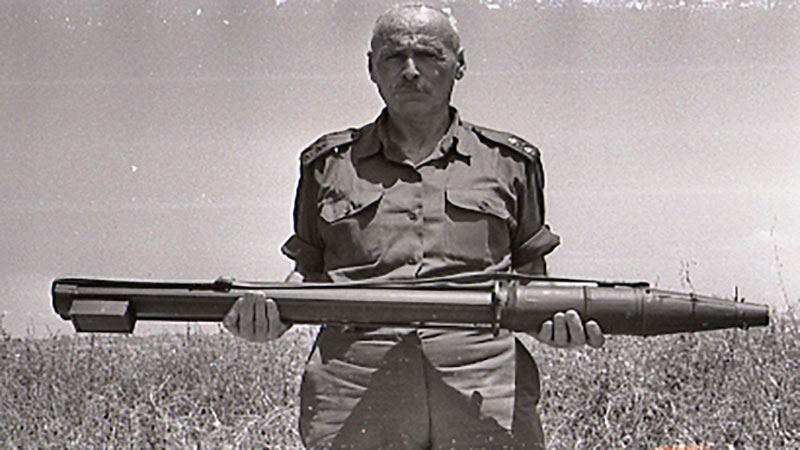


David Laskov (1903-1989) occupies a unique and place in Israeli history. He was not a novelist, rabbi, politician, or battlefield commander in the conventional sense, and for that reason his name is far less familiar outside Israel than those of figures such as Moshe Dayan, David Ben-Gurion, or Yitzhak Rabin. Yet, within the world of Israeli military technology and defense innovation, he became something approaching a legend, and the military development unit known as “Yiftach,” which he founded in 1958, long preserved his memory as almost a founding patriarch of Israel.
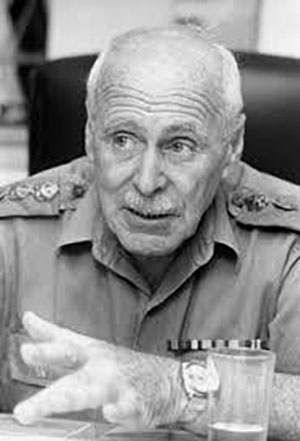
Decades after his death, his portrait still reportedly hangs on the walls of the unit’s base beside models of the rockets and weapons systems first associated with his work. Modern Israeli officers have described the unit as a kind of Israeli equivalent of the fictional “Q branch” from the James Bond stories, and they still explicitly trace that culture of improvisation, technical daring, and practical wartime invention back to Laskov himself.
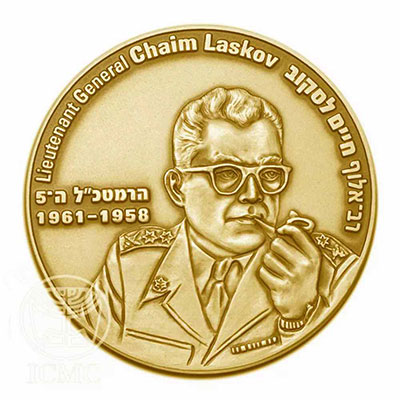
Laskov’s life also illuminates a broader story that runs through twentieth-century Jewish history: the transformation of vulnerable Jewish minorities in Eastern Europe into a technologically sophisticated sovereign state capable of not merely defending itself but also of reshaping the modern battlefield. Although the surviving public documentation about him is surprisingly thin, the broad outlines of his biography reveal a man profoundly shaped by Jewish history, Zionist state-building, and the persistent insecurity that haunted Jews throughout Europe and the Middle East during the first half of the twentieth century.
Born in Omsk, Siberia, Laskov moved to Tomsk, where he spent two years studying medicine until he was expelled from the university because of his membership in the Zionist movement. He went to Leningrad where he studied architecture for three years – a gifted sculptor, one of his statues stood in the central square of his native Omsk – while continuing his Zionist activity in the underground. As a member of Maccabi, he also served simultaneously as a sports and physical training officer and continued his work underground afterward when the Russian government outlawed the Maccabi movement and most of its leaders were arrested.
While working with the Macabi movement, he met his future wife, Tzipora, a nurse, social activist, and labor-Zionist leader. In 1929, she joined a Histadrut hospital at Ein Harod and later worked at HaEmek Hospital, but her most enduring civilian contribution may have been in maternal and child welfare, as she helped to establish some of the earliest "Mother and Child" clinics (the predecessors of Israel's Tipat Halav system) in Hadera and Haifa. During World War II, she helped to establish the Organization of Soldiers' Wives; she worked on programs supporting military families; and she was also involved in creating institutions and homes for soldiers' children, including facilities at Kfar Yehezkel and Haifa.
Tzipora was active in the Nurses Organization and in organizations representing working mothers; in 1948, she became the northern district supervisor for Clalit Health Services; and, during the 1960s, she established what is described as one of Israel's first community family-therapy clinics in Haifa and worked there until approximately 1967. Active in the labor-Zionist movement, particularly the party Ahdut HaAvoda, she served in the pre-state Assembly of Representatives, and, although she was elected to the Third Knesset in 1955, she resigned before taking the oath of office so that, as a result, she is remembered as a member-elect of the Third Knesset rather than as an active parliamentarian.
Deciding together to flee Russia, the couple made their first escape attempt to cross the river to China in 1927, but they were arrested and sentenced to two months’ hard labor. After serving their sentences, they were able to reach the city of Harbin in northern China, but they made aliyah shortly after at the end of 1928. Laskov began his career as a laborer in Binyamina before he was accepted to the Technion for further studies in architecture, after which he opened a private office in Haifa and worked on planning buildings there.
Laskov belonged to a generation of Jews who matured during the collapse of old empires, the rise of militant nationalism, and the intensification of European antisemitism. Even Jews who were highly assimilated, patriotic, educated, and professionally successful increasingly found themselves reminded that many European societies still viewed them as outsiders, and this atmosphere profoundly influenced Zionism throughout southeastern Europe. Among younger Jews especially, Zionism increasingly appeared not merely as a romantic national revival movement but as a practical answer to chronic insecurity.
Like many technically trained Jewish immigrants making aliyah, Laskov entered a society desperate for engineers, inventors, and military improvisers. Israel’s earliest decades were marked by severe material shortages, as the state faced repeated wars, embargoes, and isolation and sophisticated weapons were often unavailable. Under those conditions, invention became not a luxury but a survival strategy.
The Jewish dimension of this effort cannot be overstated. Israel’s defense establishment in the 1940s and 1950s operated under the shadow of extraordinarily recent catastrophe. Many immigrants were Holocaust survivors or refugees from Arab lands and many had lost entire families so that Israeli political and military culture developed an ethos that Jewish vulnerability could never again be permitted to reach the level it had reached in Europe during World War II. This atmosphere shaped nearly every aspect of early Israeli defense thinking.
That environment also carried unmistakable Jewish and Zionist overtones. Early Israeli rhetoric often celebrated the transformation of Jews from persecuted minorities into scientifically advanced defenders of their own sovereignty; the image of the Jewish engineer-inventor became nearly as culturally important as the image of the kibbutz farmer or frontline infantryman; and Laskov came to embody a fusion of these identities: technically sophisticated yet entirely devoted to national defense.
Laskov emerged as one of the most inventive figures within that culture. He became known as an engineer and weapons developer of unusual creativity and he eventually won the Israel Defense Prize three times, an extraordinarily rare distinction that reflected the esteem in which he was held inside Israel’s military establishment.
Laskov joined the Haganah and in 1940, after the outbreak of World War II, he enlisted in the British Army after changing his date of birth to make himself look younger to facilitate his conscription – and becoming one of the first volunteers from Eretz Israel to do so. He went on to spend five years in the British army with posts in Eretz Yisrael, North Africa, and Italy, first as a driver and later as an engineer. In 1945, he returned to architectural work and founded a cooperative architecture and engineering company in Haifa.
Laskov participated in all of Israel’s wars, from the War of Independence to the Peace of Galilee. With the commencement of Israel’s War of Independence, he enlisted in the senior defense forces and, despite being beyond the age of enlistment, he served as a field engineering officer and was involved in planning and managing the fortifications of the Lower Galilee and Jordan Valley communities. With the establishment of the IDF in June 1948, he was appointed engineering officer of the Golani Brigade, participated in the many battles of the brigade in the Galilee and the Negev, and was one of the conquerors of Eilat in March 1949.
After the end of the war, he continued his service in the IDF, holding various positions in the engineering corps, including as an engineering officer of the Southern Command, a field commander of the engineering corps, and an engineering officer of the Northern Command. One of the highlights of his activities in the Northern Command was the paving of an access road from Kibbutz Hulata in the eastern part of Lake Hula in the waters of the lake using unique empty barrels to establish the road over muddy, oily land.

In 1957, Laskov was appointed deputy chief engineering officer, in which capacity he continued to develop original weapons. A year later, he founded the Yiftach Unit, a name that evokes both biblical and modern Jewish resonances: in the Hebrew Bible, Yiftach (“Jephthah”) was a judge and military leader and, in modern Israeli history, the Palmach’s Yiftach Brigade became famous during the 1948 Arab-Israeli War. Israeli military naming practices often intentionally linked contemporary institutions to ancient Jewish or Zionist historical memory, reinforcing a sense of continuity between biblical history, modern nationalism, and statehood.
The Yiftach Unit was devoted to military research and development, particularly rockets and specialized battlefield technologies and, according to modern descriptions of the unit, Laskov gathered around himself a group of highly talented engineers focused on practical wartime invention. In many respects, this reflected broader patterns across Israeli society as the Jewish State developed a reputation for technological ingenuity partly because necessity forced it to do so. Military survival depended upon rapid adaptation; engineers frequently worked closely with soldiers in the field; and improvisation became institutionalized.
It is virtually impossible to enumerate all his contributions and innovations in the areas of sabotage, mediation, intelligence gathering, and mining, etc., some of which remain shrouded in secrecy. Some of the developments have become standard weapons in Israel’s repertoire, including “Laskov cubes” in canal strongholds and explosive devices such as the Viper and the Galil Bridge. He also made important contributions to the war against terrorists and, among other things, helped El Al to develop a sub-pressure cell to neutralize explosive devices.
Laskov was wounded in the battle for Jerusalem during the 1967 Six-Day War while using special charges against the positions of the Jordanian army, and he took an active part in the War of Attrition in the Suez Canal, working to fortify the fortifications of the canal line. At the age of 70, he participated in the battles of the Suez Canal and the Galilean Bridge, which spread across the Canal, and he served IDF units on the western side of the Canal.
Laskov remained personally connected to military service for an unusually long period to the point that Israeli reports later referred to him as “the world’s oldest soldier,” noting that he died only months after his discharge from the Israel Defense Forces at age eighty-five. Whether or not the phrase was literally accurate, it reflected the mythology surrounding him. In Israel, military service has often functioned not merely as employment but as a civic and national vocation, and the fact that he remained associated with military innovation until late in life suggests an almost lifelong identification with Israel’s defense mission.
Precise details regarding his family religious observance are not widely documented in readily accessible sources, an absence that is revealing in a way because many early Israeli military technologists and engineers of his generation emerged from homes that were traditionally Jewish in culture and ancestry but not necessarily strictly Orthodox in daily practice. Zionism in the early and mid-twentieth century often created a new secular or semi-secular Jewish identity centered on Hebrew revival, national defense, agricultural labor, science, and collective responsibility rather than exclusively on synagogue observance. Nothing publicly available suggests that Laskov became a religious ideologue or rabbinic thinker; rather, his Judaism appears to have manifested itself primarily through Jewish national commitment, service to the Jewish state, and participation in the enormous project of collective Jewish self-defense.
That distinction matters historically because Jewish identity increasingly split into multiple forms in the generations before Israeli independence. Some Jews expressed Judaism primarily through halachic observance and traditional learning; others expressed it culturally through Yiddish or Hebrew literature, socialist politics, or intellectual life; and still others, especially within Zionist circles, came to regard military capability itself as a deeply Jewish necessity. The old stereotype of Jews as stateless, physically vulnerable, dependent upon the goodwill of others, and unable to defend themselves became intolerable to many Zionists after the pogroms of Eastern Europe and, later, after the Holocaust. Laskov belonged to precisely the generation that sought to overcome that condition.
The striking aspects of Israeli history is the extent to which technological innovation acquired almost spiritual overtones. Tiny Israel, surrounded by larger enemies and lacking strategic depth, increasingly relied upon intelligence, innovation, engineering, and improvisation, which produced an unusual national admiration for inventors and military technologists. Figures like Laskov became embodiments of a national ethos according to which Jewish survival depended not only on courage but on ingenuity.
The Yiftach Unit itself evolved over decades. Originally associated with rockets and experimental weapons, it later adapted to changing technologies and modern battlefields, and recent descriptions of the unit portray it developing drones and rapid battlefield solutions for contemporary Israeli forces. Officers explicitly draw lines of continuity between the rockets developed under Laskov in the 1950s and modern drone warfare. Such continuity is historically important because it demonstrates how deeply the culture he created became embedded within Israeli defense institutions.
Modern accounts of the unit emphasize its mixture of engineers, soldiers, civilians, ultra-Orthodox programmers, and even volunteers on the autism spectrum and, in some respects, this reflects another major development in Jewish and Israeli history: the gradual incorporation of highly diverse Jewish populations into shared national institutions. Israel has often struggled with tensions between secular and religious Jews, Ashkenazim and Sephardim, immigrants and native-born Israelis, but defense service repeatedly functioned as a unifying framework (except for the loathsome refusal of Charedi Jews to serve, another story for another day). Indeed, the defense establishment often became a proverbial “melting pot,” one of the few places where the worlds of religious, secular, Middle Eastern, European, Ethiopian, Russian, and many others interacted intensively.
It is also worth noting that the very existence of the Yiftach Unit reflected a larger Zionist ideal regarding Jewish labor and capability. Early Zionism rejected the notion that Jews should remain dependent middlemen, passive intellectuals, or permanent exiles, and Zionist thinkers often glorified productive labor, agriculture, military service, and technical expertise. Laskov therefore represented the technologically sophisticated form of that ideal.
Some historians have argued that Israeli military technology became a kind of collective answer to centuries of Jewish powerlessness, and, whether or not one accepts such broad interpretations, figures like Laskov undeniably participated in the creation of a new Jewish reality. The old image of Jews dependent upon foreign rulers for protection gave way in Israel to an image of Jews designing their own weapons, commanding armies, and defending sovereign territory.
The continuing reverence for Laskov inside Israeli defense culture suggests that his influence extended far beyond any single invention or innovation. Founders often shape institutional mentality more than specific technologies, and modern officers in the Yiftach Unit still describe an atmosphere of rapid experimentation, practical adaptation, and close attention to battlefield realities, a continuing culture that reflects Laskov’s original approach.
Laskov’s contribution to the security of Israel, the IDF, and the engineering corps received widespread recognition and appreciation. He was awarded the Israel Security Prize for the development of weapons (1964); the Israel Defense Prize was awarded to the Engineering Corps for the fortification of the canal line (1969); he was awarded an honorable mention by the Defense Prize Committee (1972); his team received the Labor Prize from Yiftach (1973); he won the Israel Defense Prize for the second time in the development of the amphibious bridges with which the IDF crossed the Suez Canal in the Yom Kippur War; and he was again commended by the Judges Committee of the Israel Security Prize for his life’s work in the development of weapons (1984). During the period of Mordechai Gur’s tenure as Chief of Staff, he was awarded the rank of Brigadier General; he was awarded the honorary doctorate degree from the Technion in Haifa; and was awarded the title of “Yakir of Haifa.”
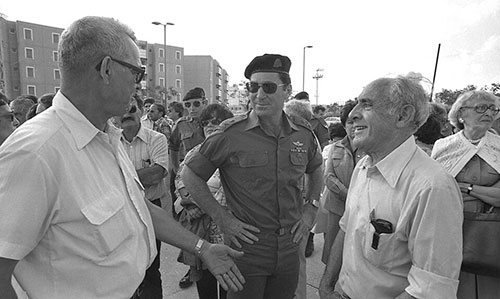
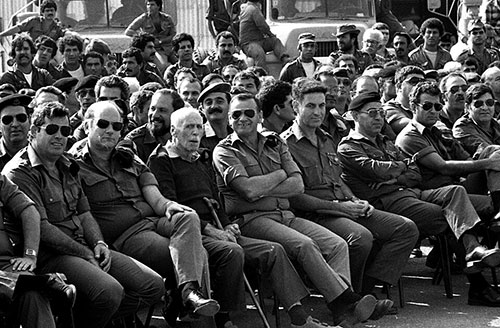
Laskov died in 1989 and he was buried in the cemetery in the village of Samir near Haifa. The funeral ceremony was attended by hundreds of soldiers, including the soldiers of the Yiftach unit and the veterans of the unit and the engineering corps. Israeli leaders who attended included Yitzhak Rabin, then-defense minister; Major General Ehud Barak, then-deputy chief of staff; and Major General Gad Navon, mayor of Haifa. Laskov’s wife, Tzipora, died about five months later, and they left two children and six grandchildren.
Today, when Israeli officers walk past his portrait at the Yiftach Unit headquarters, they are not merely honoring a retired engineer; they are honoring a generation of Jewish builders who believed that survival required ingenuity, discipline, and self-reliance. In that sense, Laskov’s legacy which extends far beyond rockets or drones, belongs to the larger story of how Jews in the twentieth century attempted to remake their historical condition itself.