 October 9, 2026
 Categories: Features
Blank Spaces in an Edition of Rabbeinu Bachya to Counter the Censors
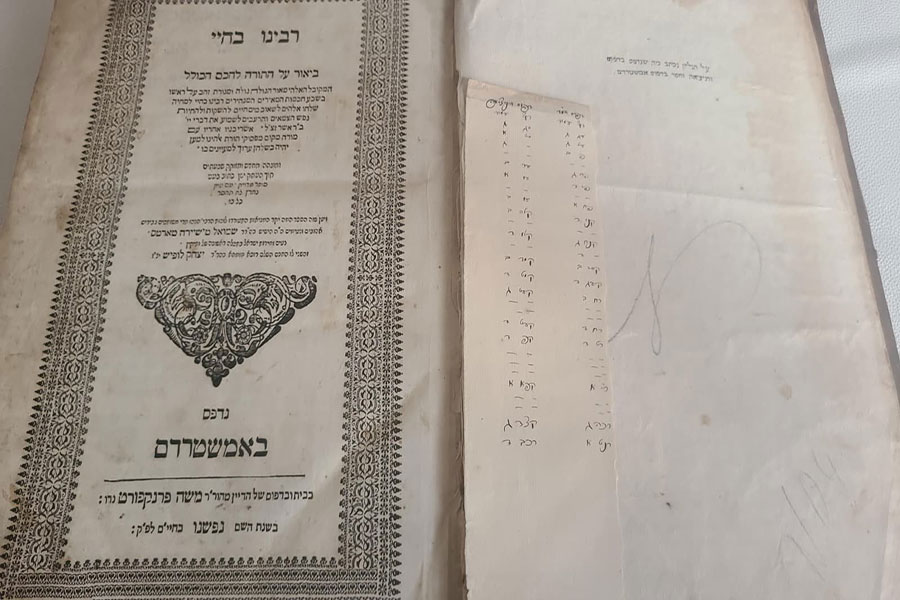


This week, while examining a remarkable copy of Rabbeinu Bachya al HaTorah that recently entered my collection, I encountered a fascinating glimpse into the struggle between Jewish learning and the realities of censorship in early modern Europe.
The volume was printed in Amsterdam in 1726, during a period when Jewish printers often found themselves navigating the sensitivities and restrictions imposed by the societies in which they lived. Works of Torah scholarship that had circulated freely for centuries suddenly faced scrutiny from ecclesiastical and civil authorities. References deemed objectionable by local rulers or church officials were frequently removed before publication. What makes this particular edition especially intriguing is the manner in which the censorship was carried out.
Rather than silently altering the text or replacing problematic passages with revised wording, the printers chose a different approach. Wherever material was omitted, they simply left a blank space on the page. As one reads through the commentary, the eye occasionally encounters an unexplained void, a visual reminder that something once stood there, something the printer was not permitted to reproduce.
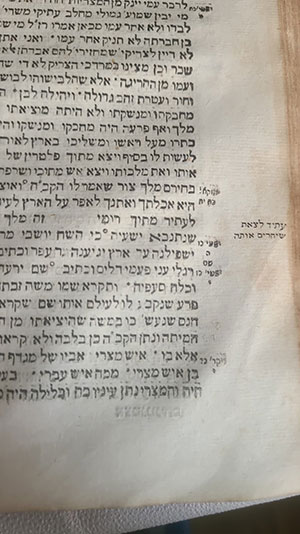
At some point in the centuries that followed, a learned owner of this particular copy took it upon himself to restore what had been lost. Comparing the Amsterdam edition with an earlier Venice printing, he carefully identified every omission and supplied the missing passages by hand. His additions were not hastily scribbled notes in the margin. Rather, they were executed in beautiful, disciplined penmanship, with a precision that reflects both scholarship and devotion.
Even more impressive, this anonymous reader devised a system to guide future users. In a handwritten table of contents of sorts in the volume, he created references allowing one to locate the omitted passages and compare the Amsterdam and Venice editions side by side. His work transformed the book from a censored printing into a hybrid text, part printed sefer, part manuscript restoration project.
There is also reason to suspect that his efforts were intended for more than his own private study. The guide he created appears systematic enough that it could have served as a model for other owners of the same edition. In effect, he may have been providing instructions for correcting every censored copy he encountered. Long before the age of digital collaboration, this reader was engaged in a quiet campaign of textual restoration.
For bibliophiles and students of Jewish history, discoveries like this are reminders that books are not merely containers of information. They are witnesses to the lives of the people who owned them, studied them, protected them, and sometimes fought to preserve them. Every stain, signature, annotation, and repair can reveal a chapter of Jewish history that would otherwise be lost. In this case, the blank spaces left by the censor proved only temporary. A determined reader, armed with another edition, a sharp pen, and an unwavering commitment to preserving Torah, refused to let those omissions stand.