 October 16, 2026
 Categories: Featured / Parsha / Torah
Don’t Stir the Pot: Looking Forward to Purim!
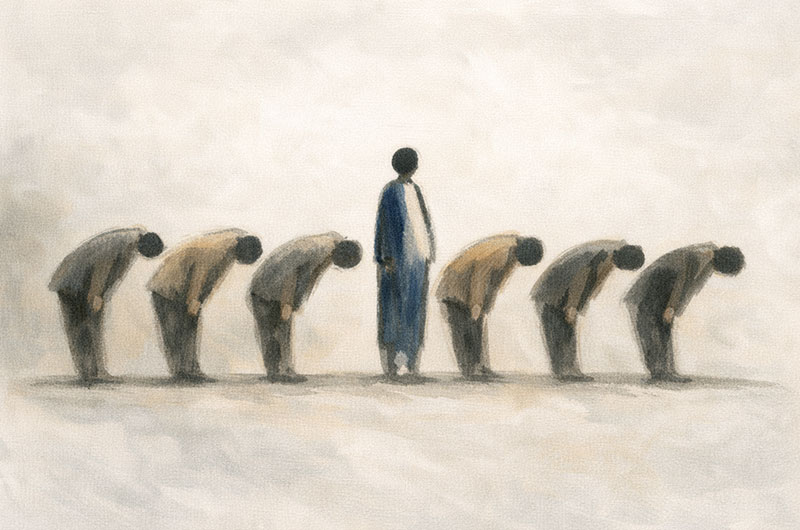


With great excitement, Purim is rapidly approaching! So, as we take out our copies of Megillas Esther and the many amazing commentaries, I’d like to share with you a powerful observation I once noticed with the help of Hashem.
After Achashverosh elevates Haman above all the nobles of the land, he issued a royal edict proclaiming that all men must bow down to Haman. Courageously, Mordechai, at his post by the king’s gate, does not bow down to this wicked man who wears an idol around his neck. The other noblemen noticed this defiance, “Vayomru avdei hamelech asher b’shaar hamelech l’Mordechai, ‘Madua atah oveir eis mitzvas hamelech’ – And thus, the king’s servants at the king’s gate said to Mordechai, ‘Why do you disobey the king’s command?’” Their amazement at Mordechai’s refusal to obey the king’s command continued day after day, as the next verse testifies, “Vayehi bamram eilav yom yom – And they said this to him day after day.”
Finally, they couldn’t bear Mordechai’s being an exception to the rule, so they informed Haman directly of Mordechai’s obstinacies and effrontery. As the pasuk tells us, “Vayagidu l’Haman – And they told Haman about it.” It is only then that the pasuk tells us, “V’yar Haman ki ein Mordechai koreiah umishtachave lo vatimalei Haman cheimah – And Haman himself saw that Mordechai did not bow down and prostrate himself before him, then Haman was filled with rage.”
Isn’t this an amazing sequence? On his own, Haman never noticed that Mordechai didn’t bow down to him! We can picture the scene. Hundreds of noblemen standing in a line, dressed in their court finery, all prostrating themselves and Haman strutting with his head up high in the clouds. He never would have noticed Mordechai’s omission if not for the slander of the other courtiers. So, we can make the startling conclusion that the entire event of Purim, the intended genocide of the Jewish people and the miraculous reversal that led to the downfall of Haman and the Amalekis, all hinged on the slander and the snitching of the noblemen at the king’s gate.
We see from here how terrible it is to be, what the Yiddish expression refers to as a kuchleffel, one who stirs the pot. Unfortunately, this kind of awful behavior is found all too often in our daily lives. When a woman says to her friend, “Have you noticed that your husband is getting a little thick around the middle?” she is stirring the pot and planting the seeds of dissent between husband and wife. Similarly, when one points out to his friend, “How come your wife never waits for you after shul?” he is being a dangerous kuchleffel.
When I shared this observation with my chosheve good friend, Rabbi Dr. Yitzchok Kurtzer, Shlit”a, he commented that it reminded him of the Gemara (Sanhedrin 82a) wherein someone found the skull of King Y’hoyakim. The finder attempted to bury the skull to no avail, for as soon as he placed it in the ground, it popped right out. He deduced, then, that it must be the skull of the king who was cursed that he would never be buried successfully. The finder thought, however, that because of koved malchus, honor to the office of a king, it would not be proper to leave it lying around. So, he brought it home, wrapped it in silk, and put it on a shelf.
One day, his wife was cleaning and noticed something wrapped in the silk. Upon opening it, she was shocked and aghast at her find. She mentioned this macabre discovery to her neighbor who told her, “It must be the skull of your husband’s first wife with whom he’s still in love and from whom he can’t bear to part.” Upon hearing this, the wife quickly fired-up the oven and cremated the skull. When the husband came home and discovered what had happened, he concluded that it was yet a further fulfillment of another curse against Y’hoyakim: “Zos v’od acheres – This and yet another thing will happen,” which now was discovered to mean that the skull was unable to be buried and would eventually be cremated.
In regard to our subject, the neighbor’s unsavory and meddling suggestion – that the skull was that of the first wife – was a ghastly example of a kuchleffel at its worst. It behooves us to take a close look at our pattern or conversation and make sure that we purge any such behavior from our own interaction with others.
I’d like to point out one further caveat. There is a magnificent exhibition of middah k’neged middah that is revealed at this juncture in the megillah. We concluded that Haman’s ultimate downfall hinged upon the pivotal act that the courtiers slandered Mordechai to him. It is fitting that Haman’s downfall was started through slander since the Medrash tells us, “Lesa mon d’yoda lishna bisha k’Haman – There was no man who knew how to successfully and skillfully slander like Haman.” Thus, when Achashverosh protested to Haman that he was afraid to start up with the Jews, Haman assured him not to worry since the Jews are “Y’sheinim min hamitzvos – Sleeping while performing the mitzvos,” and doing them in a robot-like, habitual way. Furthermore, Haman said, the Jews were m’fuzar, divisive, and thus the shechina would not protect them. How fitting that this legendary slanderer should get his just desserts through a cycle of events initiated with words of slander by the Persian noblemen!
May Hashem help us guard our tongues from speaking evil, and in that merit, earn the rewards of long life, good health, and everything wonderful.
Transcribed and edited by Shelley Zeitlin.