יום שישי, כ״א תשרי תשפ״זFriday, October 2, 2026



Follow Us


By Barry Rubin
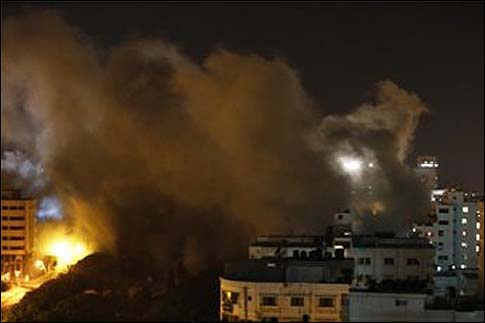
Of course, everyone knows that this ceasefire won't last. The key to anything more durable is if the Egyptian government decides that it wants to avoid another war because of its own interests.
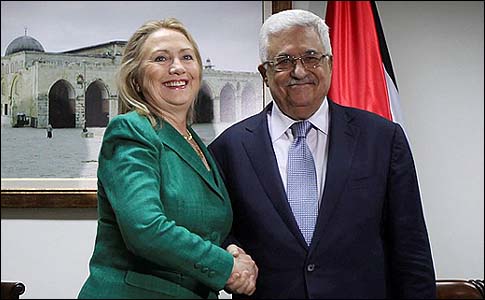
Muhammad As’ad Bayoudh al-Tamimi is a Palestinian columnist living in Jordan. In the past he has often clearly expressed the opinions of the man on the Arab street. Following the interview that Muhammad Abbas gave to Channel 2 (aired on Nov. 2, 2012), in which he gave up the right to return to live in […]
By Barry Rubin
If 2011 was the year of the Arab Spring, 2013 looks to be the year of the Arab Fall.
By J. E. Dyer
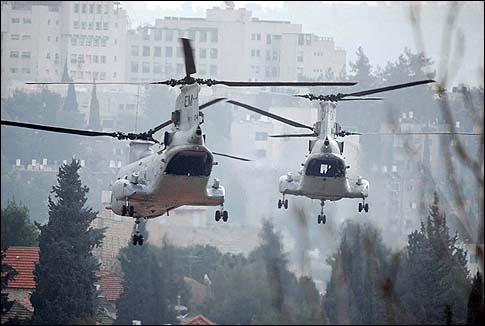
Why are we sending an amphibious readiness group (ARG) with a Marine expeditionary unit (MEU) embarked to sit off the Levantine coast? U.S. officials say it’s to be prepared for any eventuality, including the need to evacuate American citizens, as the conflict between Hamas and Israel heats up.
By Barry Rubin
This strategy has often worked against a Western adversary or Israel.
By Barry Rubin
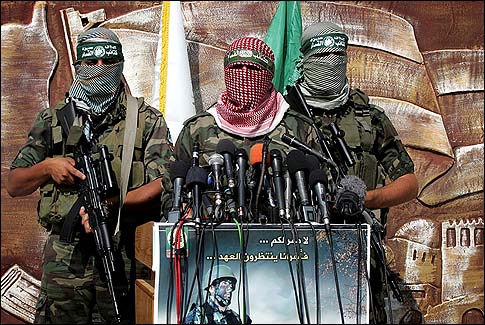
Originally published at Rubin Reports. A lot of people have asked the purpose of Israel’s defensive war against Hamas. Some, including those supposedly expert on the region, have been mystified. They cannot seem to figure out what is going on or what the goal of this Israeli operation could be. The answer is simple. Given […]
By Barry Rubin
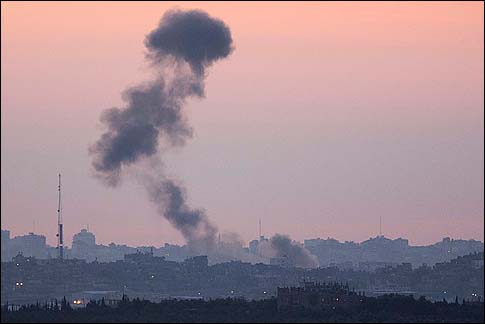
There will be no “permanent end” to this rocket war madness or all of the other varieties of madness that are getting worse in the region.
By Barry Rubin
Can Israel sustain this situation? Of course, that is basically the framework in which it has been living and prospering for 64 years. Is it preferable? Of course not. What is the world going to do to make it better? Nothing.
By Barry Rubin
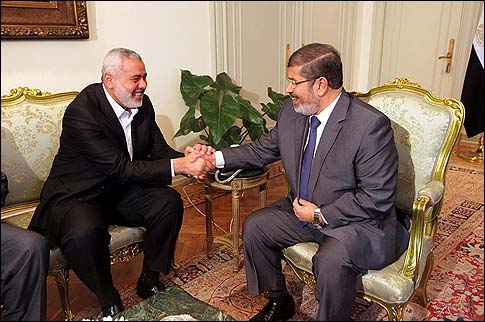
Neither side takes U.S. policy very seriously.

By J. E. Dyer
No summary of today’s events would be complete without mentioning the backstory on the IDF’s operation name.

By Barry Rubin
The most important foreign policy effort President Barack Obama will be making over the next year is negotiating with Iran. The terms of the U.S. offer are clear: if Iran agrees not to build nuclear weapons, it will be allowed to enrich a certain amount of uranium, supposedly for purposes of generating nuclear energy (which Iran doesn’t need) and other benefits, supposedly under strict safeguards.
Straight from the Jerusalem Boardroom #171

By J. E. Dyer
Attacks from Gaza on Israel have ramped up significantly in the last several days. An Israeli patrol was hit by what was thought to be a roadside bomb on Tuesday (three were wounded), near the border fence with Gaza. On Saturday, terrorists in Gaza fired an anti-tank missile at an Israeli jeep with four infantrymen in it, as the patrol operated in the area of the roadside bomb attack. The four soldiers were wounded, one severely. More than 80 rockets have been launched from Gaza into Israel since the attack on the jeep on Saturday, 10 November. At least three Israeli civilians were injured in the rocket attacks. Geography is beginning to rear its head again, as Israel has also sustained incursions into the Golan from Syria in recent days.

By Barry Rubin
With President Barack Obama reelected there is every reason to believe that he will continue the tax, regulatory, and economic policies of his first term. That means the U.S. economy is unlikely to improve quickly, steadily, or even at all during the next four years. The problem is not just Obama’s own strategy on these issues but also the lack of business confidence in his plans.
By Barry Rubin
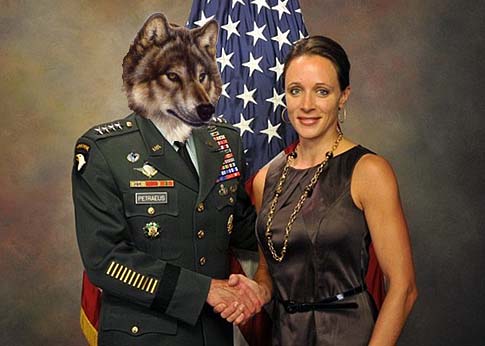
Originally published at Rubin Reports. General David Petraeus was the hero of the victorious surge strategy in Iraq. But he also has the distinction of becoming America’s first Politically Correct field commander. His strategy in Afghanistan was in line with that of the Obama Administration by putting the emphasis on winning Muslim hearts and minds […]
By Barry Rubin
Over and over again I’ve written about what President Barack Obama should do. Now the voters have given him a whole new chance. He could take it and change his policy. I don't believe he will do that but let me lay out both what he's been wrong and what he should do, just in case Obama is seeking a different approach.
By Barry Rubin
The story was broken by Alex Fishman, defense correspondent of Yediot Aharnot, Israel’s largest newspaper. Fishman is considered to be a reliable reporter with good sources in the Israeli government.
By Barry Rubin
Once upon a time, Arab nationalism ruled the Middle East. Its doctrine saw Arab identity as the key to political success. Some regarded Islam as important; others were secular. Yet there was no doubt that national identity was in charge. All Arabs should unite, said the radical nationalists who ruled in Egypt, Libya, Syria, Iraq, and elsewhere, to destroy Israel, expel Western influence, and create a utopian single state in the region. Instead, of course, the period was characterized by battles among the radical Arab states for leadership. The less extreme ones sought survival through a combination of giving lip service to radical slogans, paying off the stronger regimes, and getting Western help.
Saddam fell, the evil regime that he established fell with him and the people of Iraq could finally breathe freely.
By Barry Rubin
There is a debate over the causes of terrorism and anti-Americanism in the world. One possible view is that the principal problem is that of genuine conflict. The adversaries hold certain ideological ideas—say, revolutionary Islamism—to which American society and policies are antithetical. The collision (as with Communism, Nazism, and aggressive Japanese militarism in earlier decades) is inevitable. The United States is inconveniencing the totalitarians both because of what it does (policies) and because of what it represents (freedom, democracy, capitalism).
By Barry Rubin
One of my most fun professional memories was when I walked endlessly, circling round and round and round that hall in Algeria in November 1988 with a burly, no-nonsense, and brilliant newspaper correspondent named Youssef Ibrahim, who was then working for the New York Times. Friendly, funny, sarcastic, and with absolutely no illusions or romanticism about the absurdities of Arab politics and the idiocies of Arab political ideology, Ibrahim’s only shortcoming is that there are not one thousand more exactly like him. If he was the kind of person leading Arab countries and people they would be far more prosperous, peaceful, happier and democratic.
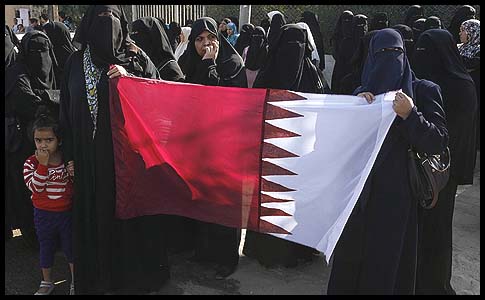
The visit of the Emir of Qatar to the Gaza Strip is certainly an important landmark on the course that the Hamas movement has been advancing since it took over the Strip in June of 2007. Hamas is trying its utmost to establish the independence of the Gaza Strip, vis à vis the PLO, the Palestinian Authority, Israel, Egypt, the Arab world and everyplace else as well.

By Barry Rubin
A reader asks: “I agree that democracy and economic development are not panaceas for the Middle East, just as they are not for any other location on the planet. But aren't they a start? And since it is possible to chew gum and walk at the same time, does it hurt to at least pay lip service to doing things to bring the rest of the Middle East into the 21st century? And what would those things be in your opinion?” As you noted, both candidates in the presidential election spoke of economic development as a top priority in their Middle East policy. This sounds good to voters but is pretty meaningless.
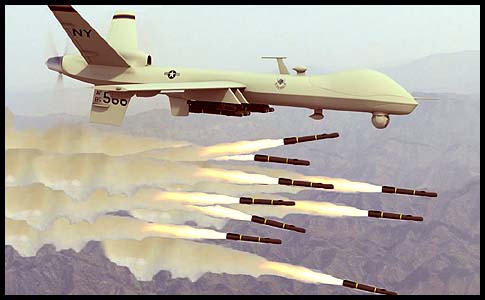
By Barry Rubin
One of President Barack Obama’s main themes has been to convince Middle Eastern Islamists and Arabs generally that America is not their enemy. But the reason this strategy never works is that the radicals, be they Islamists or nationalists, know better. They see the United States as their enemy and they are right to do so.
By J. E. Dyer
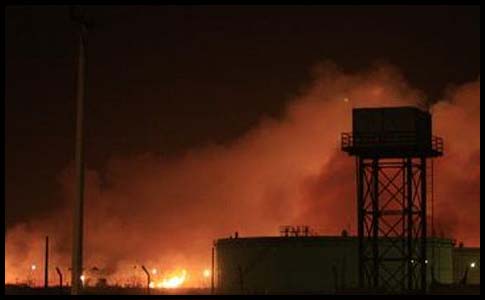
In the early dawn of 24 October, an arms factory in Sudan was attacked in the Yarmouk Industrial Complex approximately 6 miles south of central Khartoum. Video of the exploding building makes it clear that it was an arms factory, with an extended series of powerful secondary explosions characteristic of ammunition dumps. A Sudanese official claims that four Israeli aircraft conducted a strike on the factory.
By J. E. Dyer
Romney sees the Navy as a core element of our enduring strategic posture. For national defense and for the protection of trade, the United States has from the beginning sought to operate in freedom on the seas, and, where necessary, to exercise control of them. We are a maritime nation, with extremely long, shipping-friendly coastlines in the temperate zone and an unprecedented control of the world’s most traveled oceans, the Atlantic and Pacific.
By Barry Rubin
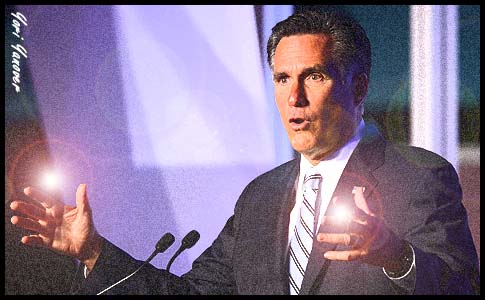
A full analysis of the foreign policy aspects of the third debate between President Barack Obama and Republican presidential nominee Mitt Romney. Remember that the idea that someone “won” the debate in terms of an outside observer’s standpoint or even based on a poll is misleading. The only important thing is whether either candidate swayed additional voters to his side.
By J. E. Dyer
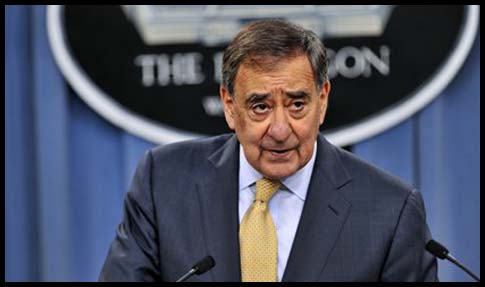
The news keeps getting worse. The Washington Free Beacon reports today that Defense Secretary Leon Panetta has “blocked” four senior military officers from answering questions on the Benghazi attack posed by Congressman Howard “Buck” McKeon (R-CA), chairman of the House Armed Services Committee (HASC).
By Barry Rubin
Are supposed negotiations with Iran the “October Surprise” intended to win the election for President Barack Obama, an Iranian trick for buying time, or both? The answer is both. It’s an incredibly transparent ploy though with the cooperation of the mass media such a gimmick might well have some effect.
By Barry Rubin
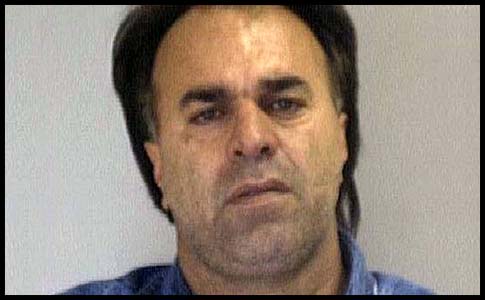
Perhaps you remember an incredibly sensational story from back in October 2011 that after a brief period in the headlines disappeared completely. The U.S. government arrested an Iranian-American citizen in Texas and charged him with being an agent of the Iranian government who planned at Tehran’s behest to hire a Mexican drug gang to assassinate the Saudi ambassador in a fiery terrorist attack in Washington D.C. It would have been another September 11, albeit on a far smaller scale. Knowing about such an operation should have been a real game-changer for U.S. Middle East policy.
By J. E. Dyer
We’ve reached a watershed here, where we either live in our own heads affirming reality, regardless of spurious inputs from demagoguery or sentiment, or we give up on reality and let demagoguery and sentiment take over at the decision table. Did the president pull off a performance last night, in terms of sounding passionate and full of conviction? To some extent, yes. Does that mean he won the debate, or even achieved a draw with Romney? No.
By Barry Rubin
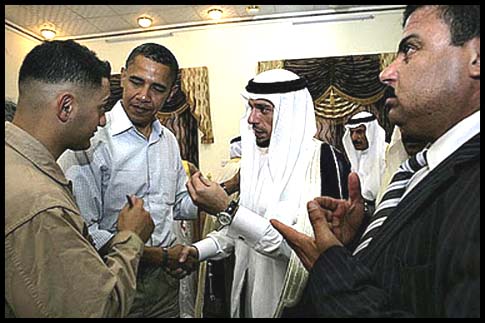
While foreign policy did not figure large in the second presidential debate, the Middle East again emerged as the overwhelmingly main international issue. In the beginning of the debate, President Barack Obama claimed that he put a high priority on energy independence, an assertion well refuted by Governor Mitt Romney. A president who wanted energy independence, from the unreliability of Middle East supplies, could easily expand oil drilling on federal land; the use of new technology to produce oil and gas; a major pipeline from Canada; and the continued production and use of coal for generating power. To do none of these things and put his effort into restricting traditional energy sources and push hard for untested, long-term, and failed “green energy” schemes subverts energy independence. But the main emphasis in the debate was on the Benghazi assassinations.
By J. E. Dyer
The short answer is: because he’s got nothing. There is no record to run on, no argument to make for four more years. The ideology that drives him is outdated and bankrupt. He has, in fact, implemented his policies – Republicans have had little means of stopping him – and those policies are the problem. But there’s a slightly longer answer too.
By Barry Rubin
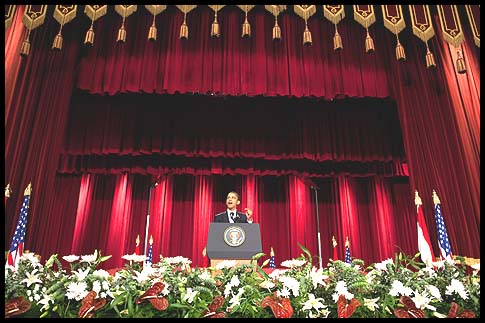
One argument we will be increasingly hearing is that President Barack Obama couldn’t have done anything to change events in the Middle East. This is ironic of course because when things were going well he wanted to take credit as the inspiration for the "Arab Spring."
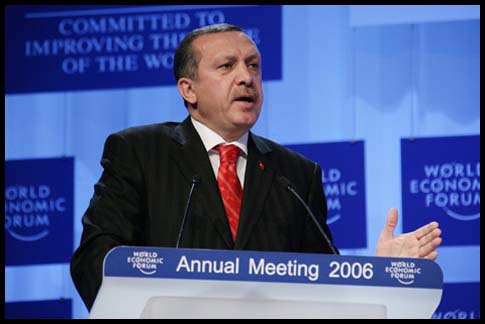
Recently, on this stage we have dealt with the increasing tension between the Sunnis and the Shi'ites in the Middle East. The coalitions, which are hostile to each other, reflect this inter-ethnic tension: on one side is the Shi'ite coalition that comprises Iran, Iraq and Hizb'Allah, which support the bloody, Shi'a-aligned Alawite regime, and on the other side is the Sunni coalition whose members are Turkey, Saudi Arabia and Qatar, as well as a few other countries who offer background support, principally Jordan and Egypt. The war of Gog the Shi'ite against Magog the Sunni has been in progress since March 2011 on the soil of Assyria, modern Syria. Today we will focus on the Turkish-Kurdish-Egyptian triangle.
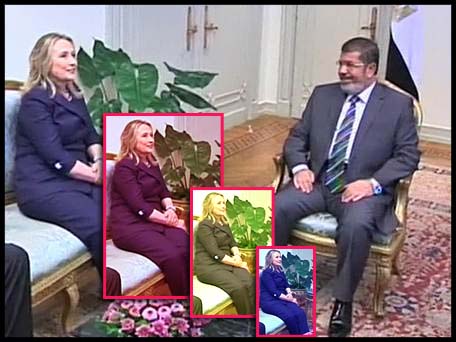
By Barry Rubin
The Obama Administration's Middle East errors are deepened and the lessons of experience once again rejected in Secretary of State Hillary Clinton’s latest defense of these wrong-headed policies in a speech given at my first employers, the Center for Strategic and International Studies in Washington D.C. Her argument is that the United States should ignore violence and extremism while helping to build democracies. The problem is that most of the violence and extremism comes from forces that the Obama Administration supports or groups basically allied with those forces. The violence and extremism is the inevitable outcome, not a declining byproduct, of this process.
By Barry Rubin
In other words, bad developments are sometimes reported though there is an attempt to explain it away. This does leave some margin for readers and viewers to use their brains. Are these explanations credible? Why do things keep getting worse? If Obama is such a big supporter of Israel why does he keep subverting its interests? If Obama has made people in the region love America why do they keep hating America? Come to think of it, if Obama is such a big supporter of America why does he keep subverting U.S. interests?

By Barry Rubin
Mitt Romney gave a speech at the Virginia Military Institute today which focuses on U.S. Middle East policy. There are some good points in this speech that are definite steps forward. Romney sounded like a president should, someone who grasps power politics, deterrence, credibility, supporting allies and opposing enemies, and all the basic principles that have been largely vanished by the Obama Administration in exchange for unworkable and dangerous concepts. (Watch video)
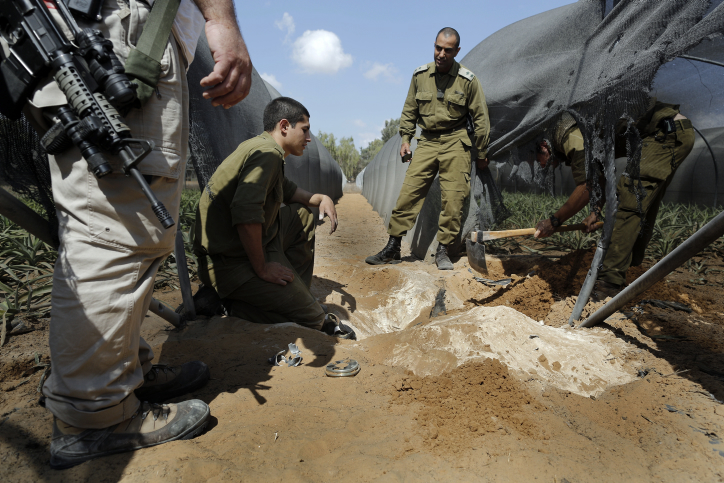
Hamas's rocket barrage against Israel on Monday marked an escalation in the group's ongoing war against Israel, both quantitatively in the amount of rocket fire, and qualitatively in Hamas's willingness to claim responsibility for the attack.
By Barry Rubin
The Obama-Romney debate has been analyzed from many angles, especially about who won. Yet in the course of the event, Obama said what might be the most revealing slip he has ever made. This one phrase tells more about Obama and the ideology of his left-wing supporters than every other word they have spoken in the last four years.
By J. E. Dyer
Instead of sticking with our commitment to a new Libya, one in which Americans have friendship and influence – one in which we can walk free, and so can Libyans – we have closed our post in Benghazi and drawn down our embassy staff in Tripoli to “essential” personnel only. It will be of some interest to see how long it takes al Qaeda or other terrorist savages to attack us in Tripoli.
By Barry Rubin
When solidarity along group lines takes priority and the line is that all of “us” must unite against the “other” no matter what truth, logic, or justice dictates then that means serious trouble. And guess what? That is the line of the Obama Administration and its Newest Left supporters.
By Barry Rubin
The first thing Prime Minister Benjamin Netanyahu does is send a warm message of congratulations to the reelected president.
By Barry Rubin
Republican presidential candidate Mitt Romney has written an op-ed piece about what’s wrong with President Barack Obama’s Middle East policy and what he would do if he is elected president. There aren’t many surprises but it reminds us how far Romney has to go before he can be said to have articulated a clear foreign policy of his own.
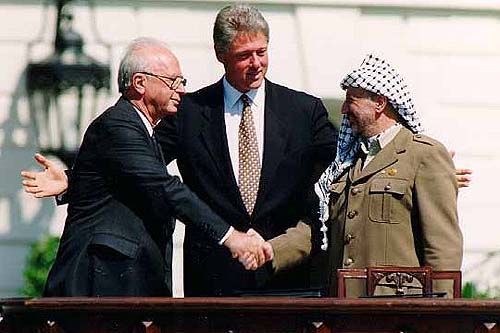
The actual problem is the failure of the Palestinian project to establish one unique "Palestinian people," with a shared national identity, on the basis of which civil systems can be established, like an economy and legitimate self-administration.
By Barry Rubin
President Barack Obama’s speech is a fascinating document. The theme is this: absolutely nothing can go wrong with political change in the Middle East and that the United States helps moderate forces, defined as anyone who isn't actively trying to kill Americans. The fact that some-to-many of those revolutionary forces favor killing Americans is outside his purview. And the fact that his policy has supported militantly anti-democratic groups far more than the (far weaker) moderate ones is airbrushed away.

By J. E. Dyer
The year 1984, by Gregorian reckoning, came and went, and Americans seemed to have dodged the Nineteen-Eighty-Four bullet. We weren’t being interned for reeducation by a Ministry of Love. Although conservative, constitutionalist, limited-government ideas came under relentless attack in the mainstream media and the academy, those who expressed the ideas remained free to do so. (They in fact became freer with the lifting under Reagan of the genuinely Orwellian-named “Fairness Doctrine.”) In 2012, the atmosphere has changed.

By Barry Rubin
The United States is only at the start of a nasty conflict in Libya which is going to be very anti-American. It is shocking that there is so little recognition of that fact and an apparently sincere belief that all the problems there are due to a You-Tube video. Having a big problem is bad enough; refusing to recognize that one has a bad problem is potentially fatal.

By Barry Rubin
The Obama Administration is backing (Islamist) Turkey as the distributor of weapons supplied by (opportunistically pro-Islamist) Qatar.
Middle East expert Dr. Mordechai Kedar outlines how weak U.S. policy in the Middle East has encouraged more aggressive behavior on the part of radical Islamic groups.

Many of the problems of the Middle Eastern states can be traced to the mistakes of the European state charged with developing them between the World Wars. The fierceness with which the Alawite minority - led by Bashir al Assad - will fight to retain control can be explained by their fear of Sunni Muslims. Way back in 1936, Assad's grandfather, Suleiman Assad warned France, which was then the power in charge of Syria, of the dangers of a Sunni Muslim takeover of Syria in 1936. He also spoke warmly about Jewish accomplishments in then Palestine and the injustice of Arab-Muslim violence towards Zionism.

By Barry Rubin
Of course, Romney was correct in what he said. Indeed, he was merely stating the obvious. In the current upside-down era, telling the truth is heresy, or at least there are powerful establishment figures who try to make it seem so.
By Barry Rubin
These waves of demonstrations are relatively small ways of advancing the ideological readiness of the masses to accept the radical Islamist groups’ program.

By Barry Rubin
Libya tells the story with a terrible irony but we should understand precisely what is going on and how the situation in Libya differs from that in Egypt. For it is proof of the bankruptcy of Obama policy but perhaps in a different way from what many people think.
By Barry Rubin
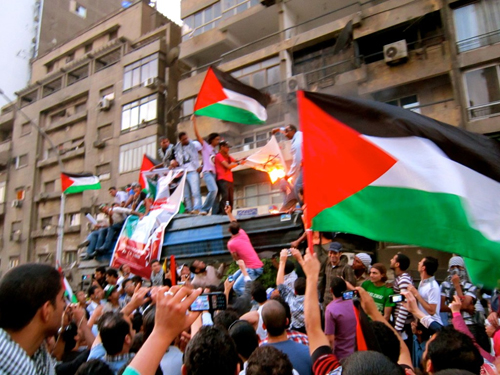
Egypt tells us everything we need to know about the horror of Obama's Middle East policy. The latest development is that a group of several Salafist and Jihadist groups--including the local affiliate of al-Qaida--announced a demonstration outside the U.S. Embassy. This was explained as a protest against some obscure film made in America by a crackpot that criticizes Islam but has never actually been shown to an audience and probably never will be!
The Shi'a ethnic-religious tradition of pretending to be Sunni in order to avoid violent attack, even death, has resulted in a culture of deception which continues today, especially in Iran. This is reflected in Iran's dealings with the International Atomic Energy Agency and the West regarding its nuclear program and more recently when it hosted the Non-Aligned Movement conference in its capital. At the conference, Egyptian President Mohammed Morsi - a Sunni - attacked Iran's ally Bashir al-Assad and his regime for slaughtering its own citizens in Syria as well as Assad’s unnamed supporters, i.e. Iran. Iran purposefully mistranslated the speech in Farsi to make it seem that Morsi was talking about Bahrain, not Syria.
By Barry Rubin
Barack Obama is not a Communist, a fascist, a Muslim, a Marxist, a Progressive or even a socialist. Obama and those who control much of America’s academia, mass media, and entertainment industry—plus a number of trade unions and hundreds of foundations, think tanks, and front groups—are believers in a new, very American form of leftism.

By Barry Rubin
The basic grand strategy for the Middle East should be to form and lead a very broad and very loose—not institutionalized—alignment of forces opposing Islamism.
Mark 2012, however, as the year the Obama administration took its most overt steps yet to tell the Arab and Muslim World the the U.S. was severable from Israel. How much of what the US and Israel developed over the years was shared with countries overtly hostile to Israel?
By Barry Rubin
When I read the platform I am shocked and disappointed. I can pick at the issues of popularity, Afghanistan and Iraq. But the failure to deal with revolutionary Islamism is ridiculously glaring (they didn’t use the tiniest fig leaf to cover themselves), making a mockery about the democracy and human rights’ pretensions. The treatment of Middle East allies is shockingly insulting. The issues of Syria and Egypt are simply dodged. There is not a single mention of the opposition in Iran. All terrorists not involved directly in the September 11, 2001, attacks are ignored. There is not the slightest hint that any regional strategy exists at all.
A more important and stronger phenomenon than Islamization is the escape of the factional genie from the bottle in which it was confined while dictators controlled the region.recognized the "factional genie" well , whether in the Shi'ite version or the Sunni version. The dictators took every means at their disposal, principally torture chambers, in order to deal with the factional jihadism which has no boundaries of law or ethics. Today, dictators are taken down one by one, and jihadism is flourishing.
By Barry Rubin
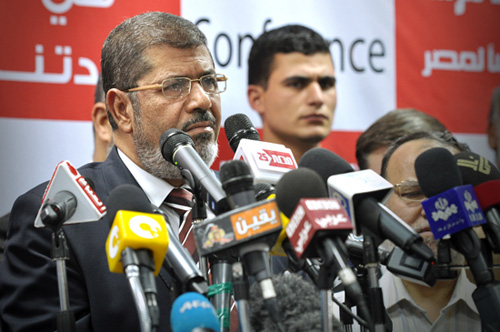
Egypt, the Arab world’s most important single country, has been turned from an ally of America—albeit an imperfect one of course—in maintaining and trying to extend Arab-Israeli peace into a leading advocate of expanding the conflict and even potentially going to war.
By Malcolm Lowe
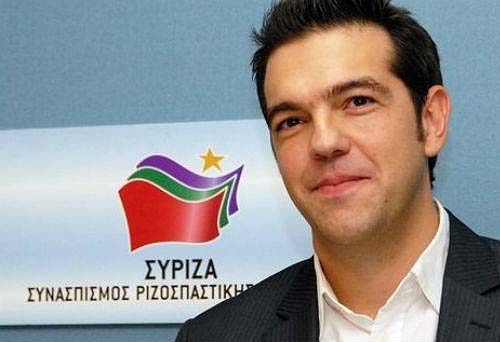
After Greece's second parliamentary election this year (June 2012), there was a collective sigh of relief in Europe. The political parties that negotiated the bailouts of Greece in 2010 and 2011 had secured a majority in the new parliament and formed a government that was committed to avoiding a Greek default. Europe's political leaders could now hasten to damp down the next brush fire in the Eurozone, the crisis of the Spanish banks. What those political leaders overlooked was that the Greek political scene has undergone a revolution.
By J. E. Dyer
There has been a tremendous growth in vague, elliptical, and/or tendentious narration of what’s going on in the nation and the world. The people can be pardoned for being tired and confused.

By Barry Rubin
The information released about the Democratic convention seems to show it is designed to prove how radical the party is, to play to the most limited possible sector of the population.
By J. E. Dyer
The U.S. is being made to look weak in Egypt, and is actually acting weak with allies and foes alike.
Russian worries about Israel gas potential may be causing it to lesson support for Iran; More U.S. companies are investing in Israel; Will Congress pass the US-Israel Water Cooperation Act?

The first step to remaking Zionism in the future is learning what Zionism meant in the past.
By Barry Rubin
Muslim communities in Europe and America hardly ever renounce terrorism or fight the Islamists. Why? Because those radical forces are in power, often with collaboration from Western leftists.

By Soeren Kern
Areas of France have become lawless and off-limits due to non-Muslims due to Muslim violence. The government has finally embarked on "North-American style" campaign to bring the areas under control, designating an initial 15 areas "Priority Security Zones."
By Barry Rubin
It’s the age of revolutionary Islamism, especially Sunni Islamism. And you better learn to understand what this is all about real fast.

By Soeren Kern
A recent study revealed that nearly half of all Turks living in Germany say they hope there will be more Muslims than Christians in Germany in the futureIslam is becoming an increasingly important component of the value structure of Turks in Germany, especially among the younger generation of Turkish-Germans, who hold religious views more radical than their elders' views.
By J. E. Dyer
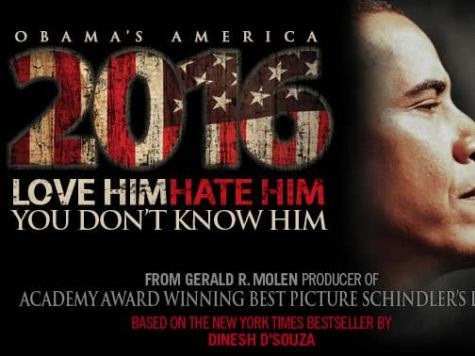
Dinesh D’Souza’s film, 2016: Obama’s America, is very good at putting the viewer in the milieu of Jakarta or Nairobi, which continue to feel “different” enough to engage the American viewer’s sense of distance and wonder. Conveying the difference of Barack Obama’s childhood and his idea of cultural roots – the difference from American life – is the movie’s most effective accomplishment.

Israel’s economic growth during the 2nd quarter of 2012 was 3.2%, surpassing the 2.5% expectation, compared with a 2.8% growth during the 1st quarter. Growth per capita increased 1.4%, reaching almost $30,000. Exports of goods and services –40% of Israel’s economic activity - surged 10%, following a decline during the previous three quarters.
Dr. Mordechai Kedar on the visit of a recent Israeli delegation to Turkey and why Israelis faithful to their religion and not the disciples of Left may be Israel's best chance at improving relations with its neighbors.
By Barry Rubin
America, this is not the Victorian age of dark satanic mills and brutal capitalists who laugh while watching children starve.
By Amos Harel
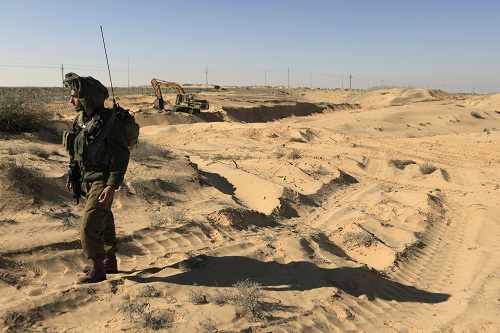
Israel had previously ignored, or sometimes secretly approved, Egyptian violations of the treaty. These always concerned deploying more battalions than agreed, but only for a short period of time, in order to fight the terrorist groups. This time, Cairo is aiming for a more serious goal.

In the last five years there have been multiple Muslim plots to bomb synagogues. The NYPD is investigating bombs in synagogues, not bacon, because there really is a disturbing trend of anti-Semitic hate crimes. The best evidence that there is no similarly disturbing trend of Islamophobic attacks is that the NYPD is bagging and tagging bacon at a Staten Island football field.
While the Obama administration continues to say that the Islamic group Boko Haram's jihad against Nigeria's Christians—which has seen countless churches destroyed, and thousand Christians killed— has nothing to do with religion, the group once again made clear that it is all about religion.
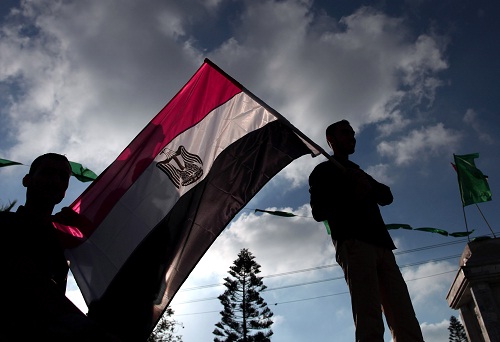
The fact is the U.S. and Israel have been somewhere between sanguine and cautiously happy regarding increased Egyptian concern about jihadists in the Sinai, and have accepted an Egyptian buildup that includes aircraft and helicopter gunships. Israel Radio reported that the deployment includes anti-aircraft and anti-tank missiles near the border.

Much ink has been spilled about the desirability or even the inevitability of a separate State for Palestinians, whose identity stems from the middle of the 20th century, but what has been much less discussed by the international community -- and for the most part ignored -- is a similar claim by the Kurds, a people with a truly separate ethnic identity as well as a long history.
By Soeren Kern
Underscoring German officialdom's anxiety over home grown Islamic terrorism, the German state of Lower Saxony recently published a practical guide to extremist Islam to help citizens identify tell-tale signs of Muslims who are becoming radicalized.
By Barry Rubin
Saaed Eddin Ibrahim, arguably the Arab world’s leading sociologist and certainly the leading advocate of liberal-Islamist alliance against the old Arab military regimes has now totally changed sides, warning that the Islamists want to hijack power and establish dictatorships. He pleads for Westerners to wake up.
Many Israelis do not know the rules of the game of the Middle East: the more we show enthusiasm for something, the higher its price rises, and the opposite holds true as well: the less interest we express in something, the lower the demanded price will be. If we announce day and night that we want peace with our enemies or to obtain the release of a kidnapped soldier who is in their hands - the price for the peace or the soldier will be more than we can pay.
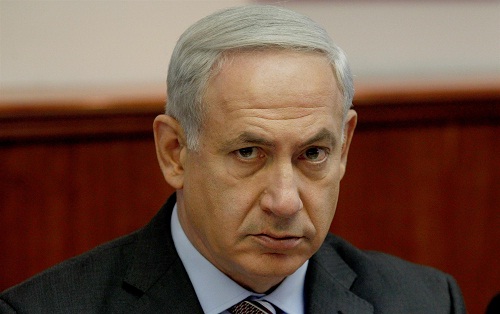
From time immemorial, the Jewish People has faced powerful adversities in asserting its sovereignty over the Land of Israel, and by undertaking unilateral national security actions. Conviction-driven defiance of adversity has earned the Jewish People deep respect.

Mahmoud Abbas and Salam Fayyad's attempts to prevent Palestinian workers from going to the settlements has failed largely because they were not able to provide them with alternative employment. Despite the billions of dollars that were showered on the Palestinian Authority in recent years by the international community, Abbas and Fayyad still have not been able to solve the problem of unemployment in the Palestinian territories.

J Street should get out of the business of telling Israel how to balance existential risks regarding the security of its citizens. It should stop undercutting American policy with regard to Iran. And as an organization that claims it is both pro-Israel and pro-peace, it should recognize that its superficial approach to this complex problem is bad for peace, bad for Israel and bad for American efforts to prevent a nuclear Iran without the need for a military attack.
By Barry Rubin
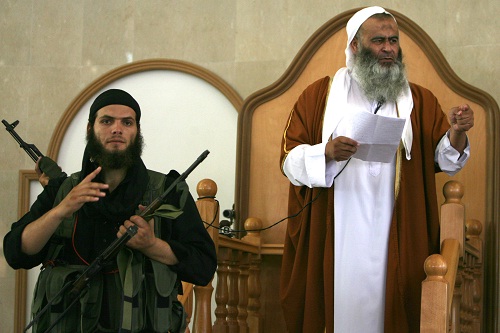
A friend of mine listened to the sermon given at the Ramadan evening prayer in a village near the north Syria town of Idleeb August 7. The closer one gets to ground level in the Middle East the crazier things become. Sure, by the time the Western-educated, suit and tie wearing leader sits down with the Western reporter everything sounds calm and cool. But the earth is boiling.
By Rotem Sella
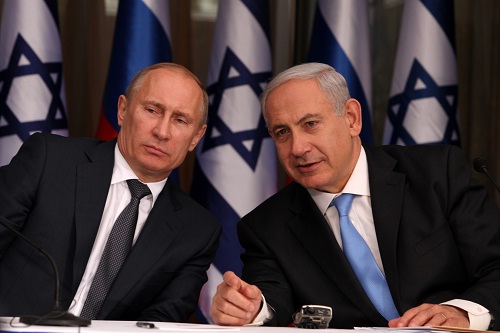
Prominent Americans like David Petraeus have been saying non-stop that Israel does not have the capability to destroy Iranian Nuclear capacities, and surely not Iran's ambition to go nuclear. But if Israel can indeed delay the project while in the meantime having taken out of the picture one of Iran's most important allies, then things might look very different from the office of Prime Minister Netanyahu.

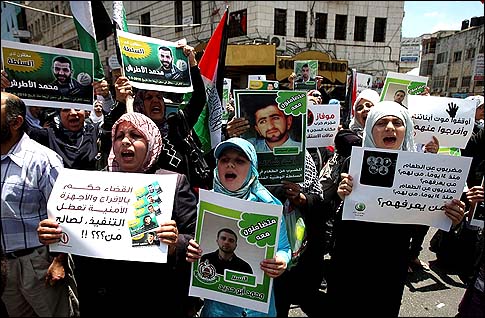
Those who think that Hamas and other Islamic groups do not have a strong presence in the West Bank are completely detached from reality. True, these groups are lacking in arms and ammunition in the West Bank, but they still enjoy broad public support among Palestinians.
By Barry Rubin
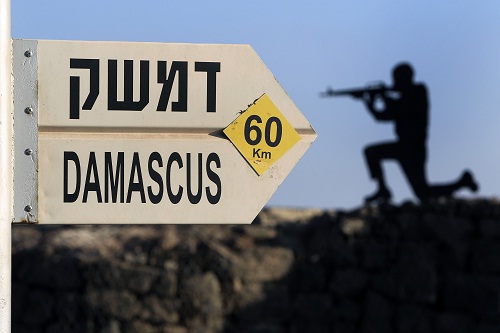
I want to discuss three articles that I basically agree with to point out how they miss the key issue and thus are somewhat misleading. I’m glad to see these three articles being published but it’s a case of -to quote Lenin- two steps forward, one step back.

The Israeli media portrays Israeli brass and ex-brass who oppose Prime Minister Binyamin Netanyahu and Defense Minister Ehud Barak on the Iran issue as a group whose assessment is based solely on a cold hard analysis of the situation. Unfortunately, there is a reasonable possibility that the Israeli brass and ex-brass themselves have piggy-backed their agenda to the Iranian debate.
By Soeren Kern
In recent weeks, the Obama administration has claimed that al Qaeda "is on a path of decline that will be difficult to reverse" and the US State Department has even declared that the "war on terror is over." But the recent arrests in Spain of three suspected al Qaeda terrorists, accused of plotting an airborne attack on a shopping mall near Gibraltar, suggests that Obama's triumphalism may be premature.
By J. E. Dyer
Iran’s relative situation has deteriorated. To regain a sense of leadership and invulnerability – as well as to vindicate Shia Islam over the recent Sunni triumphs in the region – Iran needs a big strategic win. She needs a trump card over the emerging Sunni centers of gravity in Cairo and Ankara.
By Soeren Kern
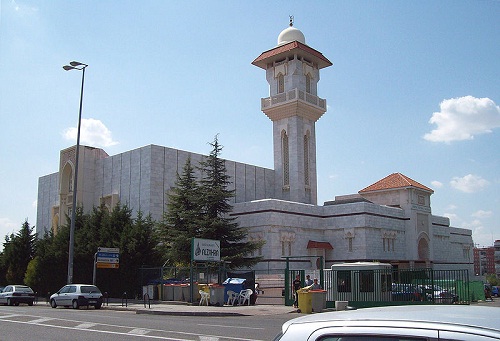
The issue of forced marriage is especially acute in Catalonia, where the Muslim population has skyrocketed in recent years. Catalonia, a region with 7.5 million inhabitants, is now home to an estimated 400,000 Muslims, up from 30,000 in the 1980s.
By J. E. Dyer
Prosperity has met its match. Regulation will kill prosperity by stealth unless we the people wake up to what’s going on. We are wildly, insanely overregulated today, and if we don’t attack the idea of the regulatory state on those terms – on the premise that regulation itself is mostly a bad thing, and we need far less of it than we have – then we will never recover.
The Egyptians are finally learning that terrorism is a double-edged sword, and that those who approve of terror activities will one day find themselves targeted by the same terrorists.

The circumstances that were created after the murder of the Egyptian soldiers and the failure of the terror act against Israel proves the truth of the saying: "Success has many fathers, but failure is an orphan." We can only imagine how great would be the cries of joy in Gaza if 18 Israeli soldiers had been killed, heaven forbid, instead of Egyptians.
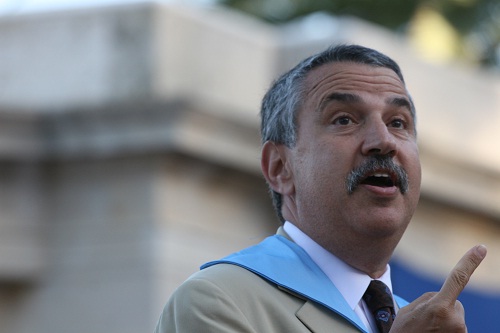
Tom Friedman’s pro-PLO stance dates back to his active involvement, while at Brandeis University, in the pro-Arafat radical-Left “Middle East Peace Group” and “Breirah” organizations. It was intensified during his role as the AP’s and NY Times’ reporter in Lebanon. There he played down Arafat’s and Abbas’ rape and plunder of Lebanon and their strong ties with international terrorism, while expressing his appreciation of the PLO’s protection of foreign media in Beirut.

By Barry Rubin
Al-Destour, an independent Egyptian newspaper, has just had a full issue seized on charges of “fueling sedition” and “harming the president through phrases and wording punishable by law.”
 October 2, 2026