יום ראשון, י״ז אלול תשפ״וSunday, August 30, 2026



Follow Us


The brilliance of Yaakov’s approach – and by extension, any type of individual or group effort – is that it appealed to three different modes of salvation.
Golden presents a compelling saga of poor but determined immigrants who fled pogroms and harsh conditions in their homelands for a better life in a land of opportunity.

You can’t say “Jewish French,” “Jewish British,” “Jewish Italian.” They are “French Jews,” “British Jews,” and “Italian Jews” – because they’re seen as Jews first and residents or citizens of their countries second.
Where did this incredible strength come from? What drove these Jews, who had nearly lost all of their national identity and spiritual connectivity, to risk their lives by standing up against one of the strongest and most fearsome governments of its time?
This marked the first time I experienced the palpable sense of living, breathing history in my hands. “This is actually for sale?” I asked. “But how do I know it’s real?”

To say he was beloved because of the way he loved his students does not sufficiently capture the reality.
By Jason Maoz
While not all criticism of Israel stemmed from anti-Semitism, Podhoretz contends the level of animosity towards Israel rises exponentially the farther left one moved along the spectrum.
Does it not seem ironic that just on the day all of Israel is joyously celebrating another year of having concluded the public reading of the entire Pentateuch, we must mournfully and even tearfully commemorate the death of the individual who imparted to us God’s Torah in the first place?
Of all the Jewish holidays, I would say Sukkos is far and away the least appreciated.
In the recent Gaza war and its aftermath, we saw a totally illogical reaction from the world.
Rav Shlomo Wolbe states that every member of Klal Yisrael is dependent on the entire nation just as a leaf depends on the tree from which it grows.
Rather than serving as a deterrent against terrorist attacks, Israel’s military strength and capabilities are instead looked at as an unfair advantage in the asymmetrical war in which it finds itself.
By Sara Lehmann
You’re not going to change public opinion. The media are so biased you can’t get your story through. But what counts is America.

Although I was not a Zionist, like most others I knew in Agudath Israel in which I was active, I was zionistic.
While there is no formula that will work for everyone, there are some strategies that if followed carefully and consistently can help our children – and us – gain the most from the upcoming school year.
By Ed Lion
The world wars caused unimaginable anguish for the Jews but God also scripted a great glory for our people.
Times reporter Anne Barnard reported (7/15) that Israel was to blame (so her Palestinian sources asserted) for its continued “occupation” of Gaza – which, Barnard failed to note, ended nearly a decade ago.
By Sara Lehmann
I understand how two governments can negotiate a ceasefire, but terrorists by definition are not playing by the same rules as you are.
For breaking his oath of allegiance, Tzidkiyahu was forced to witness the death of his sons before he himself was blinded and exiled to Babylon.

The anti-Israel camp does not need to win America fully to its side. Merely to neutralize it would radically alter the balance of power and put Israel in great jeopardy.
Our rabbis told us it’s going to be very difficult before Mashiach comes. Should we fool ourselves?
What defines kana’ut these days? Throwing rocks at passing cars on Shabbos? Burning an Israeli flag on Yom Ha’Atzmaut?
At a minimum, every child in our yeshivas needs to be taught how important it is, to the Jewish people and Israel, to utilize their right to vote and to cast an informed vote in every local, state and national election.
By Ed Lion
The risks were great, but certain death awaited them if they remained. The gamble paid off, though the family was separated for the next four years of the war.

By dvora
What I cannot concede is the honesty of a reporter who cites a study in support of a proposition without telling his readers that the study actually concluded the opposite.
My primary interest was in providing for my community, both spiritually and physically.
As a guide to others and a foremost member of the Great Assembly, Ezra provided strong leadership and a moral conscience to a people that had lost its way.
By Ed Lion
Beyond the severe discomfort there was also the danger of getting sunk by enemy submarines prowling the seas.
While grateful not to be returned to Germany, the passengers understood they were still in the middle of a danger zone.
For our purposes, we will focus on Jewish-related subjects and call it “What’s Your Jewish Perspective?”
By dvora
First, we want to be sure that the company is answering a real need; that the company is solving a real big problem.
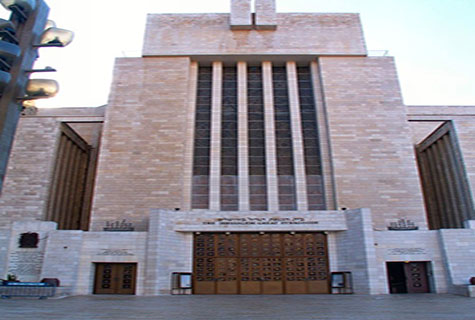
“Fulfill my requests for good, grant my request, be mindful of us for deliverance and compassion...remember us for a good, long life…give us bread to eat, clothes to wear...”
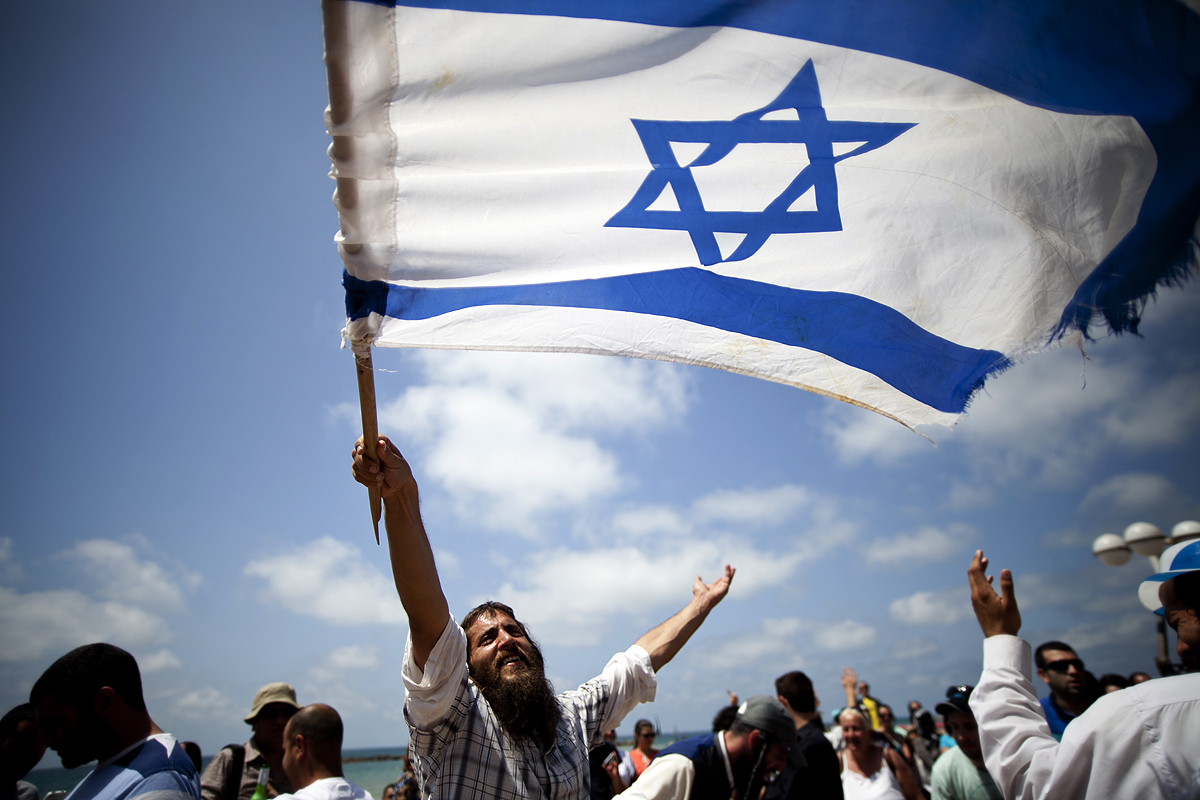
R. Hadaya strongly argues in favor of establishing a festive day in commemoration of the establishment of the state of Israel.
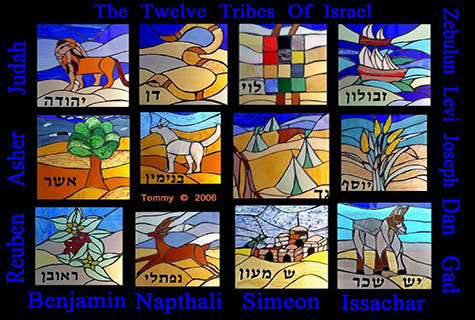
Perhaps worse than all the above is the acute lack of unity among Jews
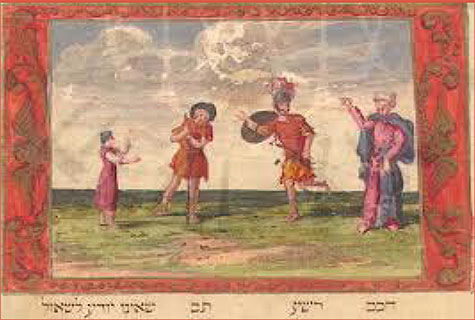
Too often, as parents and teachers, we think it means talking at our children, delivering to them good and worthy content that they should simply hear and assimilate into their minds and hearts.

We now are in the season of advocacy of preschool, referring specifically to the education of children who are four years old.
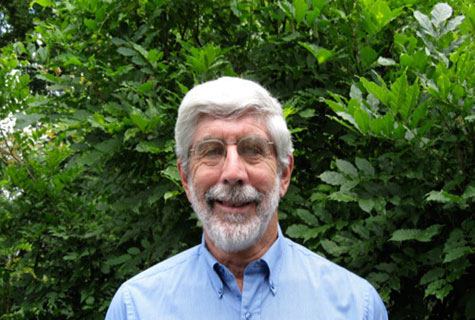
During much of the 20th century, elite American colleges and universities carefully policed their admission gates to restrict the entry of Jews. Like its Big Brothers – Harvard, Yale and Princeton – Wellesley College, where I taught history between 1971 and 2010, designed admission policy to perpetuate a white Anglo-Saxon Protestant elite.
I can testify from experience, however, that despite such experience and/or training, top-tier leaders often begin their tasks unprepared for the rigors of their new position, particularly when the experience and training focused on instructional leadership (such as classroom observation and curriculum) rather than organizational stewardship and management.

The unwarranted hatred among us that caused the destruction of the Second Temple clearly still plagues us.
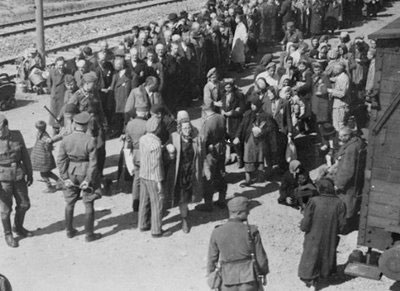
In the course of the ages there wasn’t a Jewish community more convinced of its capacity for survival than the Jewish community of Hungary in the 19th and 20th centuries.
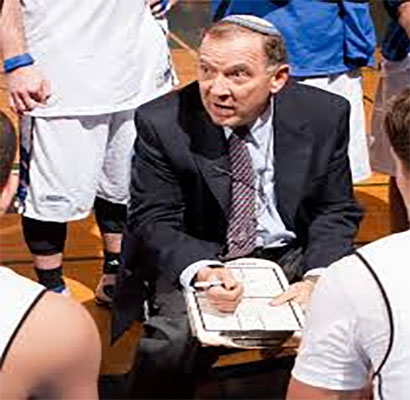
Halpert doesn’t know why he was fired, and YU apparently won’t explain

The Newport Touro synagogue was never officially named "Touro" – the community called itself Yeshuat Yisrael. By the mid-19th century, however, the Newport synagogue was recognized, though never formally, as the Touro Synagogue.

By Alex Grobman and Malky Tannenbaum Haimoff
“To be a Jew is to open one’s tent on all four sides so that any stranger in need of food and shelter can enter from every direction. To be a Jew is to believe that the world can be redeemed. To be a Jew is to be carried by the current of the ancient Jewish river that keeps on flowing. The journey will continue.”

What was unique about the MLA’s and the ASA’s approach was the breathtakingly Orwellian notion that not only was Israel itself guilty of the many alleged transgressions assigned to it by its libelers, but a boycott against Israeli academics was warranted because the academic establishment itself is complicit in Zionism’s excesses and a core element of the bemoaned occupation, oppression, and denial of Palestinian self-determination.
The road back is paved with love, understanding, hugs, and honest communication.

This past autumn the Pew Research Center’s Religion and Public Life Project released the findings of its survey of American Jews. “A Portrait of Jewish Americans” immediately won the attention of a good number of American Jews and became the focus of considerable media coverage.

Humility is perhaps the least understood quality a person may possess. Often it is perceived as a form of meekness, a reticence that stems from a lack of self-confidence or an unwillingness to stand up and assert oneself. But that is far from what true humility is.

At the end of the harvest, winter begins. The earth becomes cold and hard, nights are long, and the sun seems far away in the southern sky. The sap ceases to flow in the trees. But in this season of temporary "death" Hashem sends down harbingers of coming life in the form of tal u'matar livrachah - dew and rain for a blessing - upon the earth.
A president who today used the language of FDR or JFK would be derided. If he were a candidate, the media elites would bury his chances of winning the election. He would be a laughing stock to the aimless young people whose uninformed opinions on public affairs seem to matter more than they should.
An educator must not be satisfied until that soul he refuses to handle, love, nourish and develop is registered in another school, one more caring and embracing.
Of course, believing in God doesn’t make one Jewish. Many people identify themselves as Jews for a host of reasons other than believing in the God of Israel, and they are just as Jewish as the most pious Jew. Being Jewish is a birthright, not a belief right. According to halacha, anyone born of a Jewish mother is Jewish. Period.
Yossi Klein Halevi’s Like Dreamers (Harper) explores the lives of seven Israeli paratroopers in the Six-Day War who, his subtitle suggests, “Reunited Jerusalem and Divided a Nation.” It offers a fascinating variation on the theme of Israel at a fateful crossroads, in search of itself, following the wondrously unifying moment at the Western Wall in June 1967 when Jewish national sovereignty in Jerusalem was restored for the first time in nineteen centuries.
Throughout the past week we have thanked Hashem for the improbable defeat of the powerful Seleucid forces by a small, untrained band of Jewish fighters. We also celebrated the story’s one open miracle, when the menorah’s lights burned for eight consecutive days following the Temple’s rededication.
"Logically" speaking, after the millennia of hatred and destruction directed against us, there should not be one Jew in the world today who still keeps the Torah.
Two months ago, the Pew Research Center issued a comprehensive study of American Jews and ever since the American Jewish community has been debating the findings. I have contributed my share to this debate, which concerns matters of critical importance.
Most areas of the city have a mix of peoples living in them who have daily contact with one another and who share the space. It just makes sense to have good relations with neighbors.
By Ed Lion
Seventy-five years ago on November 10 the Nazis unleashed a wave of terror, destruction and death known as Kristallnacht upon Germany’s Jews, a fearsome presage of the Holocaust. On that day, the childhood of my then-12-year-old father, Kurt Lion, of blessed memory, was abruptly and savagely ended.
When Secretary of State John Kerry appeared before the Senate Foreign Relations Committee in September to make the case for U.S. intervention in Syria, he offered a historical analogy.
There are many specific and readily identifiable reasons for the failure of “Oslo,” a term that – though originally signifying the accords signed twenty years ago between Israel and the Palestinians – has become a commonplace shorthand for the Middle East peace process.
By dvora
In recent years an important mitzvah has been largely forgotten by Klal Yisrael. Actually, it is not just a mitzvah that has been lost but an entire Torah value that impacts the very way we understand our world.
The exchange was brief and simple in its content, yet profound in its implications. One morning this past summer, I davened at a shul in Passaic, New Jersey. Passaic was our new home as of mid-July, following nearly a decade of school leadership in other communities. After tefillah, I opened a conversation with someone who had also just concluded his tenure as a principal out of state. He informed me he had left the field of education entirely and had moved to the tri-state area to go into business with a relative. In the course of our talk, he mentioned that another colleague, also young by comparative standards, was not returning to the school he had helped found out west.
During the Yom Kippur War and its immediate aftermath, Rav Amital would travel from base to base, visiting his students. His frequent visits brought him into close contact with senior IDF commanders, and soon after the war he was asked by the upper command echelons of the IDF to be the rabbinic liaison between the army and the hesder yeshivot. The military even allowed him unfettered entry, in uniform, into IDF camps.
As the Torah teaches, poverty will never be eradicated, nor will our obligation to assist those in need.
They were lining up for gas masks in Israel. Apparently, at the very time of year we are supposed to be full of simcha, Hashem wants us to be aware of the possibility of danger. Indeed, during the Yom Tov of Sukkos, we read cataclysmic haftaras dealing with the ultimate war, the Milchemes Gog Umagog. Where does that war take place? In the Holy Land, of course, where the eyes of the world are always focused.
A fisherman living near the banks of a river was making his way home one evening, exhausted from his long labors. As he trudged along the path, he dreamed of what his life might be like if he were suddenly rich. Just then, his foot brushed against a leather pouch. He picked it up only to discover it filled with small stones. Falling back into his reverie, he absent-mindedly began throwing the pebbles into the water.
Throughout our nation’s long history we have resided in countless countries and lived under numerous governmental regimes. For the most part, our existence in the diaspora has been difficult at best, intolerable at worst.
Achdus, unity, is a term that warms the heart. It is an ideal we all aspire to achieve but often find so elusive.
By Ron Rubin
For two thousand years, Jews exiled from their homeland and lacking political sovereignty were easy targets for elitist rulers on the right and the pseudo-egalitarian mob on the left. When Emancipation came and Jews exited the ghettos, Jewish self-made pitfalls were no less horrific, as many embraced the trendy “isms” of secular society only to spiritually assimilate and disappear from history. Yet despite the persecutions, on the one hand, and the enticements of some host countries’ cultures, on the other, the Jewish nation lives.
Do you know what you are? I, for one, am not sure what to make of myself. Recently, while filling out a questionnaire on an Orthodox-content website, I was asked to identify myself by choosing one of several options – haredi, chassidish, Lubavitch, yeshivish, Sephardic, or Modern Orthodox.
With the constant drumbeat of articles about “Orthodox” female rabbis appearing in the media almost weekly – essentially the same articles making the same points to the same eager audience, all to make the phenomenon of such “rabbis” seem commonplace – it is important to take a step back and examine how we arrived at this destination.
At the mikveh they were discussing Egypt. So many things seem to be unraveling. It’s not just Egypt but the entire Middle East. No, it’s not just the Middle East; it’s the entire world.
Eighty years ago, in January 1933, Adolf Hitler was appointed chancellor of Germany. Barely a month later Franklin D. Roosevelt was inaugurated president of the United States. For the next twelve years, until their deaths eighteen days apart in April 1945, they personified the horrors of dictatorship and the blessings of democracy.
A thousand years ago, the great Rabbi Sa’adia Gaon taught that our Torah is reasonable and that the human intellect, by itself, can discover the great truths taught in Scripture. Given enough time and brilliance, the human mind can, unaided, arrive at the precepts and concepts revealed by God at Sinai.
We are still in galus. Another year has gone by, a difficult year in many ways, but Mashiach has not yet arrived, the Beis HaMikdash has not yet been rebuilt and we are still languishing in exile.
A Jerusalem chassidic rabbi banned uniformed IDF soldiers from his group’s study halls, synagogues and yeshivas.
The prophet Jeremiah lived in the dark, tumultuous period that led to the destruction of the first Temple in 586 BCE. He lived a painful journey from hopeful youth who dreamed of the reunification of the kingdoms to rejected prophet who tried desperately to eradicate the corruption and social injustice rampant in society.
If the eyes are the window to the soul, then children’s eyes are the window to the Almighty Himself.
In every society there is always an internal struggle between individual liberty and collective responsibility. It exists here in the United States, in the form of mandated jury service, for example, and it is at the forefront in Israel where the raging debate regarding mandatory conscription for military service touches on all aspects of societal existence, including religion, economics, and notions of equality.
By Sara Lehmann
Ralph Peters is a jack of many trades and master of them all. He is a retired U.S. Army lieutenant colonel, a writer of both fiction and non-fiction (his newest novel, “Hell or Richmond,” set during the Civil War, has just been released) and a military analyst. A columnist for the New York Post since 2002, Peters has written for USA Today, The Wall Street Journal, The Washington Post and numerous other publications. He also serves as a Fox News strategic analyst. The Jewish Press spoke with Peters on a variety of issues.
A just-released Israeli commission report vehemently disputes the France 2 video made in 2000 of a Palestinian father and his son crouching for shelter from bullets allegedly fired by Israeli soldiers. This is a media controversy but it parallels the decades-long dispute between Israel and the human rights organizations that have issued reports on violent clashes in the West Bank, Gaza, and Lebanon. Simply, the reporting process on these confrontations has broken down.
To eat is to live – to keep our physical bodies alive. For without the body, there is nothing. No experience. No memory. No joy and no hardship. But man, unlike animals, eats to live and to enjoy. So how should a Jew respond when he is challenged as to why he imposes upon himself not just ceremonies dedicated to the enjoyment of eating but even more to the limiting of what he can eat?
What is the relationship between Pesach and Shavuos? Rabbi Naftali Jaeger, rosh yeshiva of Sh’or Yoshuv, relates in the name of the Ishbitzer Rebbe a striking metaphor:
Several weeks ago my wife, Chavi, and I attended the sad funeral of Mrs. Martha Melohn a”h. Besides being a dear friend of Chavi’s, Mrs. Melohn was the matriarch of a very well-known philanthropic family. This is not the place for a full-fledged eulogy of this remarkable woman, but I begin this article with reflections on a conversation I had with her just several months before her unfortunate demise.
By Rabbi Dr. Aaron Rakeffet-Rothkoff
There are two key questions to consider when examining Rav Joseph B. Soloveitchik’s relationship with Religious Zionism. The first is why the Rav was so firmly anti-Zionist when he arrived in America. The second is how the impact of the Holocaust and birth of Israel caused the Rav to fundamentally change his perspective.
A pattern of private remarks about Jews made by Roosevelt may explain why 190,000 immigration spots were left unfilled despite the plight of European Jury.
People are generally attracted to articles that cover subjects with which they can identify on either a personal or professional level. Of course, there are articles that are interesting in their own right and have little or no connection to a particular reader’s life. More often than not, though, subjects that touch people personally will be that bit more attractive.
The debate in the Jewish community over Franklin Delano Roosevelt and his response to the Holocaust has been bitter and emotional, a family divided against itself. On the one hand, FDR was the polio-stricken man who, after being knocked flat on his back, rose and revived an America that had been knocked flat on its back and then led it to wartime triumph over Hitler and to global destiny.
By Jason Maoz
I was shamed into becoming a baseball fan by my mother, a Holocaust survivor who came to America in 1953 and who to this day doesn’t know the difference between a home run and a strikeout.
Last year, not long before Passover was to begin and my thoughts were already on the coming Seders and great drama we would be observing, I happened to be just outside a building when I observed the following small scene unfold before me.
“Therefore we are obligated to give thanks…to the One Who performed all these miracles for our forefathers and for us. He took us out from slavery to freedom…and from servitude to redemption.” – Haggadah shel Pesach
My wife was called for jury duty when she was pregnant with our fourth child. Since her due date was looming, her doctor wrote a letter to the court, asking for an exemption. When I went to the courthouse office to deliver the letter, I was taken aback by how long the line was.
“Radical,” from the Latin word for “root,” means going to the foundation. The foundation is what we have to think about when celebrating a simcha. Instead of peripheral concerns – photographing the proceedings, for example – we should attend to the meaning of the event.
Those of you who feel the way I do will immediately relate to this: I hate having to listen to pedantic women discuss their Pesach cleaning before Tu B’Shevat is even a blip on the horizon.
“In those days, when King Achashveirosh sat on his royal throne which was in Shushan the capital, in the third year of his reign, he made a feast for all his officials and servants, the army of Persia and Medea; the nobles and officials of the provinces being present, when he displayed the riches of his glorious kingdom and the honor of his splendorous majesty for many days, a hundred and eighty days.
By Mark Schulte
Most obituaries on Ed Koch paid scant attention to his military service in World War II.
What does it mean when we say that man was created in the image of God?
With the debate over gun control at fever pitch following the atrocity in Newtown, Connecticut, I thought readers of The Jewish Press would find the following account of my experience during the Los Angeles riots of 1992 both timely and interesting.
Murderous violence has been with us since the generation after Adam and Eve first trudged, ashamed and burdened, east of Eden, banished from the Garden because of their disobedience. Few things through the ages have defined us so much as our ability to visit horrific cruelty upon our fellows.
For Jews, the ancient tribal territories of Judah, Benjamin, Ephraim, and west Menasheh – a.k.a. Judea and Samaria or the West Bank – form the very heartland of the homeland.
By Mark Schulte
In the introduction to their recently published Jewish Jocks: An Unorthodox Hall of Fame, Franklin Foer and Marc Tracy hyperbolically describe American basketball between the world wars as a “majority-owned subsidiary of New York Jewish culture.”
 August 28, 2026