 October 16, 2026
 Categories: Headline / Perspectives / Op-Eds
Israel: A Mediterranean Power


Iran’s war on world shipping has moved from think-tank scenario to everyday reality. Repeated threats to the Strait of Hormuz and ongoing attacks near the Bab al-Mandab are reshaping the map of global energy and trade.
In that shifting map, Israel’s future extends westward into the Mediterranean – a narrow, semi-enclosed sea linking Europe, Africa, and Asia that now sits at the center of Israeli security, energy, and economic life.
This idea has deep roots. About a century ago, one of Israel’s founders, Ze’ev Jabotinsky, described the Jews as a Mediterranean people, oriented toward Rome and Marseille as much as toward Damascus and Baghdad. He understood that sovereignty would depend on access to warm-water ports and the ability to move people, goods, and forces across this strategic basin.
That insight took practical form in an unlikely place: the Betar naval academy in 1930s Italy, where young Jews trained in seamanship long before a Jewish state existed. It was a striking investment by a stateless people in a future navy. The gamble proved justified. Some of those cadets later formed the backbone of the Israeli Navy, which evolved from improvised immigrant vessels into a modern force equipped with missile boats, submarines, and precision strike capabilities. The path runs from borrowed docks in Civitavecchia to permanent bases in Haifa and Ashdod.
Today, that maritime foundation carries growing weight. Longstanding assumptions about the security of global sea lanes are being tested. As threats to Gulf shipping intensify, alternative routes are gaining importance. The eastern Mediterranean stands out in that context, with its energy reserves, infrastructure, ports, and shipping lanes supported by Israeli naval power.
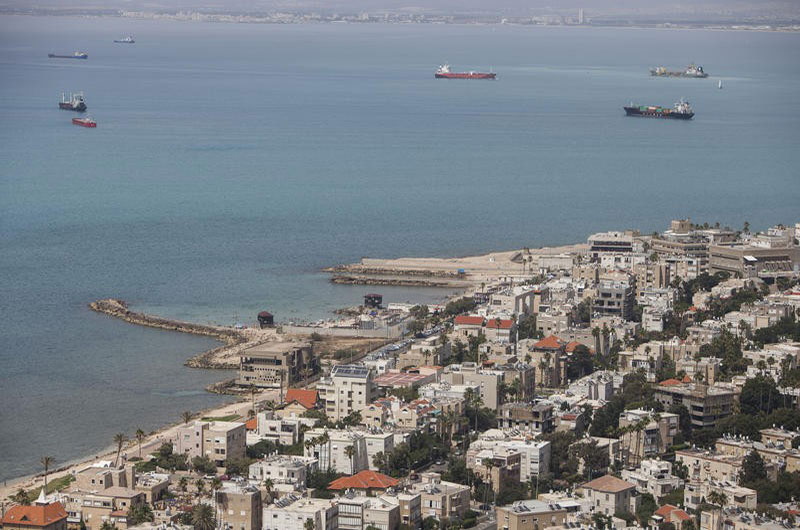
The Israeli Navy operates well beyond coastal defense. Its responsibilities span the eastern Mediterranean basin, including protection of approaches to Haifa and Ashdod and the security of offshore energy infrastructure. A separate command in Eilat covers Israel’s access to the Red Sea and the approaches to the Bab al-Mandab.
Measured globally, the fleet is modest in size. Within the eastern Mediterranean, it ranks among the most capable forces, with clear advantages in technology, training, and readiness. Larger fleets operate in the region, yet Israel’s navy is structured for high-intensity missions and rapid response.
Its German-built, Israeli-modified submarines provide survivable deterrence and the ability to operate covertly at distance. Surface forces – Sa’ar-5 and Sa’ar-6 corvettes and missile boats – secure offshore gas platforms and maintain continuous awareness across the Levantine basin.
Elite naval commandos have played a central role in Israel’s military history. During the War of Attrition and the Yom Kippur War, they crossed the Suez Canal to strike ports, destroy infrastructure, and gather intelligence under direct threat. In Lebanon, they conducted raids against coastal targets that were otherwise difficult to reach. Over time, these units have refined a doctrine built on stealth, speed, and precision.
This maritime capability is closely integrated with that of the United States. Haifa serves as a regular port of call for the U.S. Sixth Fleet, and joint exercises range from missile defense to boarding operations and sea-lane protection. Israeli vessels operate within a broader American-led security framework that supports regional stability and the flow of global commerce.
Energy has reinforced this strategic position. The development of major offshore gas fields such as Tamar and Leviathan has shifted Israel from energy dependence to regional exporter. These fields supply domestic electricity generation and support pipeline exports to Egypt and Jordan under long-term agreements.
Around this energy base, a network of Mediterranean relationships has expanded. Cooperation with Greece and Cyprus includes joint exercises and coordinated energy initiatives. Ties with Egypt have developed into steady operational coordination. Engagement with European states reflects shared interests in secure sea lanes and regional stability. Israel now participates as a permanent and capable actor in Mediterranean diplomacy.
The Mediterranean also shapes daily life inside Israel. Much of the population lives along a narrow coastal strip where the sea is always close.
Along that shoreline, a continuous band of development has taken shape – beaches, promenades, and marinas set against dense urban centers. In cities such as Tel Aviv, people can leave work and be at the water within minutes, whether for a swim or simply to unwind.
Even in periods of tension, the coastline remains part of ordinary life. That proximity reinforces a broader reality. For Israel, the Mediterranean is embedded in the country’s internal life.
This concentration of activity depends on a fragile ecological system. The 2021 spill, or illegal dumping, of hundreds of tons of crude oil by a Syrian-owned tanker about 50 kilometers off Israel’s Mediterranean coast killed wildlife, including sea birds, turtles, fish, and a young whale, damaged coral reefs, and contaminated Israeli beaches, forcing prolonged, widespread closures.
The disaster, which cost Israel nearly $14 million in emergency funds, highlighted the vulnerability of the marine environment and showed that a single incident can have national and international consequences. High waves caused by a powerful storm that struck days after the spill carried the residue from the weathered oil to shore as tar, blanketing roughly 160 kilometers of coastline from Rosh Hanikra in the north down to Ashkelon in the south, with additional impact on southern Lebanon. Teams of volunteers removed around 1,400 tons of the sticky, semisolid substance from Israel’s beaches.
Marine scientists have long warned that the eastern Mediterranean faces mounting stress from rising temperatures, invasive species, and heavy human use. Increased shipping, offshore development, and military activity narrow the margin for error. Sustained engagement with the sea requires parallel efforts to protect it.
Taken together, these developments mark a significant transformation. Over the course of a century, Israel has moved from aspiration to capability at sea – from early training programs in foreign ports to a modern navy, from energy scarcity to offshore production, and from isolation to active participation in Mediterranean affairs.
As pressure on global choke points continues, the Mediterranean assumes greater importance. Israel stands on its shores as a maritime power whose future is tied to that sea – strategically, economically, and as part of its national life.