יום רביעי, ה׳ תשרי תשפ״זWednesday, September 16, 2026



Follow Us



Rabbi Fishel Jacobs of Kfar Chabad in Israel believes the Jewish world is experiencing a “family purity revolution.” He should know. Since 1998, Rabbi Jacobs has published five books on the laws of family purity. Today, he serves as a halachic advisor to four different websites, all designed to help women keep the mitzvah more […]

By Tzvi Fishman
How can a Jew in a hotel, or someone visiting a patient in a hospital, know if the Shabbat elevator is kosher?

This week we asked: Leaving aside any halachic considerations that may be involved, is it a Jewish value to have a large family?
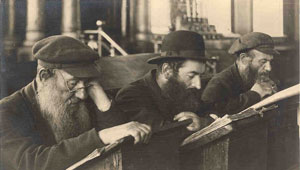
Incubator Chicks 'These Are The Living Things You May Eat' (Chullin 42a)
Halachic authorities immediately spoke out against cremation when cremation facilities were first opened across Europe in the late 19th century. Indeed, they even opposed interning the ashes of a cremated body.
Even if we assume a rabbi has truly repented, should he necessarily be reinstated to his prior position?
A Gentile’s ‘Kashrus Certificate’ ‘We Do Not Give Innards to a Gentile’ (Chullin 33a)

Yitzi, when entrusting his ball with Eli, took a known risk upon himself. Therefore, Eli is not liable...
The Siren’s Wail ‘If a Festival Falls on Erev Shabbos…’ (Chullin 26)
"How do we resolve the apparent contradiction between these two rulings?" asked Mr. Schwartz.
This week we asked: Should a G-d-fearing Jew have the Internet at home?
Meat From Heaven? 'Only Young Ones Are Acceptable…' (Chulin 22a-b)
"If we share the wall, that means half is mine and half is yours," said Mr. Hauser. "At most, you can prop the beams on your half of the wall, but not on my half!"
Aiding Or Abetting? 'Due To Suspicion, We Check' (Chullin 12a, Rashi)
Chaim had no right to let you use my room. If you continue sleeping in it, you'll have to pay me $50 a night, like a hotel.

Is it appropriate to eat kosher imitation bacon, crab, or any other such food?
A 'Heated' Discussion 'The Place of Shechita Is Hot' (Chulin 8b)
Customs regarding sitting or standing for Kiddush and Havdalah have clearly been very much in flux for the last several centuries.
The poskim disagree about whether the obligation to light Chanuka candles is limited to the home.
The Talmud (Gittin 61a) states: “We bury dead gentiles along with dead Jews because of the ways of peace (darchei shalom)."
Anticipating The Rebuilt Temple 'One Who Learns About The Chatas…' (Menachos 110a)
This week’s question is: “Is enrolling in a secular college ever appropriate in today’s day and age?”
What About The Blood ‘They Were Not Really Babylonians…’ (Menachos 100a)
The caterer ran back to Boaz. "The cholent is permissible!" he exclaimed. "I already dumped it into the garbage," Boaz replied.
A Matter Of Inflation ‘Since It’s Baked, It Expands’ (Menachos 94a)
Mr. Siegel took an urn, three hotplates, and some boxes of vases and flowers from the garage. He took them to the shul and set them up in the room where they were eating.
Nekudot In The Sefer Torah ‘Why Is There A Dot Over The Vav?’ (Menachos 87b)
A Matter Of Definition Oil Set Apart For One Minchah Is Invalid For Another’ (Menachos 79b)
Hashem’s Holy Name ‘A Gentile May Bring Either Votive Or Freewill Offerings…’ (Menachos 73b)
"Still, at the time of the loan and the subsequent meeting, both were associated with the institution," objected Mr. Gold.
Shortchanged? ‘You Shall Count 50 Days’ (Menachos 65b)
"We never promised you a position," replied Mr. Hauser. "Also, you gained knowledge from the course."
Monies In A Pushkah What Constitutes Giving? (Menachos 59b)
When the Millers returned home, they tried to locate their initial communication with the landlord. Finally, Mrs. Miller found a paper with various rental options and price quotes.
In recent years, some have called for reinstituting the ancient practice of likut atzamos. In the time of the Mishnah, a two-stage burial process was practiced in Eretz Yisrael.
The Greater Reward “The Ketores …Since It Is Infrequent It Is Most Dear” (Menachos 50a)
Tzitzis On A Blanket? ‘…to Exclude a Nighttime Garment’ (Menachos 43a)
When the branch was almost completely cut, it broke off, twisting as it fell. It hit another branch, bounced off, and crashed to the ground 15 feet away. One end landed on a lawn chair and cracked it.
Is A Shortened Lulav Kosher? 'Remnants of Tzitzis Are Kosher' (Menachos 38b)
When all is said and done, refraining from wearing any kind of shoe on Yom Kippur is, strictly speaking, a stringency.
In recent years, there has been a flurry of halachic discussion on whether pregnant and nursing women should be permitted – or even encouraged – to drink small amounts of water on Yom Kippur to avoid endangering their lives or the lives of their fetus. Let us first review the laws of one who is […]
A Sefer Torah That Fell 'As Though Bitten by a Snake' (Menachos 32b)
Apples And Oranges ‘Two Menachos Were Mixed But The Handfuls Were Not Taken’ (Menachos 23a)
If a borrower dispossesses his assets to evade his creditors, his cunning plans are void, and they can collect the assets.
Mrs. Miller returned home and related to her husband what happened. "I'm in a dilemma," she said. "What should I do with the large size dress? Must I give it to Mrs. Schwartz or can I keep it for our daughter?"
Some Rishonim write that one may speak lashon hara to prevent potential damage or injury.
"The lease was up two months ago, and we didn't renew it," argued Mr. Landman. "You don't need any notice! Say thank you that I let you stay until now!"
What is true for getting out of our geographical bubble is equally if not more true for breaking through our religious bubble. We live under artificial labels and tend to limit our religious exposure to those who think, practice and observe just like us. When we pigeonhole ourselves we deprive ourselves from taking the best of what different Torah groups and cultures have to offer.
Danger Or Dilution? 'From That Allowed To Jews' (Menachos 5a)
Heshy's head was swirling with the many new requests. Is it better to give more charity or loans? How much should I lend? To whom? What risks should I take?
If a time was set for the partnership – for example, until the end of August – you must stay until that time and then you may dissolve the partnership.
A Light Unto The Nations ‘The Sound Thereof Traveled From One End…To The Other” (Zevachim 116a)
"What's the difference?" said the treasurer. "Let each person think he is a sponsor. No one knows who donated first!"
To Him Shall You Hearken 'One Who Offers Nowadays…' (Zevachim 107b)
In The Privy 'Rav Quotes Elazar ben Rabbi Shimon' (Zevachim 102b)
A Saline Solution 'Its Soaking Is Its Laundering' (Zevachim 94b)
"A qualified expert can annul a vow on his own," replied Rabbi Dayan. "However, no one is an expert nowadays, so that we need a panel of three, like a beis din."
"You had the home for all of July," reasoned Mr. Wolf. "It's only fair that we should have it for the remainder of August."
Even Eruv Tavshillin ‘One Might Have Thought That We Remove The Tendons…’ (Zevachim 86a)
"The videographer called and said he was in an accident," replied the Mr. Schott. "Thank G‑d nothing serious, but it delayed him two hours. He'll be here in 10 minutes."
A litigant is allowed to explain what he said in court provided his explanation clarifies his initial statement rather than contradict it.
A Matter Of Doubt ‘When You Make [Four] Applications…’ (Zevachim 80a)
A Light Mixup ‘Anything That Is Counted…’ (Zevachim 73a)
The Fat of the Land 'Only Those Whose Chelev Are Forbidden…' (Zevachim 70a)
"They ordered a serving for you," his wife pointed out. "If you don't go, you’re causing them a loss. At least send a gift to cover the serving."
Accordingly, when the defendant changes his general denial in court that he never owed the plaintiff anything before witnesses contradict him, the court will not assume he is lying.
Mr. Landau decided to consult with Rabbi Dayan. "Is the sale invalid because I meant all-leather?" he asked.
A Matter Of Merit 'They Added Four Amos' (Zevachim 61b)
Two Talleisim ‘The Residue Of The Blood He Spills…’ (Zevachim 51a)
A Necessary Prelude? ‘Intentions Of Korbanos’ (Zevachim 46b)
The rule with respect to a chashud al hashevuah is that the right to take an oath is transferred to the plaintiff.
Reaching One’s Objective ‘The One In Thought And The Other Silently’ (Zevachim 41b)
"We have a container of cream cheese, but we'd rather have butter," said Mrs. Miller. "They're worth about the same. If you give me butter, I'll give you cream cheese."
Around 1552, leading rabbis in Egypt issued a cherem against people using rabbinic judges not approved by official channels.
Call To Alms ‘Having Declared It A Burnt Offering, He Rethought…’ (Zevachim 30a)
There is no defense to a claim based on a properly-drawn up promissory note signed by witnesses who testify that the signatures on the note are theirs or whose signatures have been confirmed by the court comparing them to signatures it has on file.
"The Rema writes that if there are two groups, each group is entitled to half, even though one group may have more members than the other," replied Rabbi Dayan.
An Aging Problem? ‘I Have Chosen Him To Stand, But Not To Sit’ (Zevachim 23b)
"I think that you are considered the borrower," said his uncle. "You asked me for the money and I handed it to you."
It is dealing with the case of a defendant who had judgment entered against him because, like the defendant in our se’if, he made a statement that was subsequently contradicted by witnesses.
Do Clothes Make The Man? ‘When [Kohanim Are] Wearing Their Garments’ (Zevachim 17b)
Each of the witnesses, in turn, testified that they saw Mr. Lander lend Mr. Braun $2,000 on Chanukah. Mr. Braun's advocate cross-examined them, but their testimony stood intact.
If you eat bread – even cake – as part of a filling meal, it’s called kevias se’udah and you have to wash and bentch.
Olas Shabbos B’Shabbato ‘An Offering Of Appeasement’ (Zevachim 7b)
That bottle was entrusted to you. You didn't fulfill your responsibility properly. You might be liable for the whiskey!
Depth Or Breadth? ‘A Sinai Or An Oker Harim’ (Horayos 14a)
If he had known that witnesses were present who might subsequently contradict him, he would not have acted in this manner, he says – but he didn’t know.
I think there’s a sefer that says wearing them is “dangerous” and some people think that means spiritually dangerous.
Rav Moshe says it’s muttar, strictly speaking, but since so many people don’t shave on Chol HaMoed, it’s better not to, he said.
The witnesses testify that they saw the plaintiff give money to the defendant but they don’t know the nature of the transaction.
"I'm not sure whether a single Seder group can split," said Mr. Kadosh. "But look! I see Rabbi Dayan; maybe he has an idea."
A Convert’s Benefit ‘Blemishes Are Only Post Sinai’ (Horayos 10a)
He points out that medieval Ashkenazic authorities never saw an olive. Olives do not grow that far north; they only grow in the Mediterranean region.
What about the Gemara that says you can squeeze out a cluster of grapes on Erev Shabbos and make Kiddush on Shabbos? They said that’s only if you didn’t treat the grape juice chemically to prevent it from fermenting.
By denying the existence of the loan altogether, the defendant in 79:1 admitted, by implication, that he did not repay it – because nobody repays a loan he says he never took.
The Mitzvah To Obey The Wise ‘If Beis Din Issued A Ruling’ (Horayos 2b)
"What about the Jewish clients?" asked Mr. Cohen. "That's a problem; they're keeping their chametz in our warehouse!"
Not Wanted – Dead Or Alive ‘A Mouse That Fell Into A Cask Of Beer’ (Avoda Zara 68b)
Pinchas called Rabbi Dayan and asked: "If my brother takes a $30,000 loan from the bank intended for me, and I reimburse him for the monthly installments, do we need a heter iska?"
 September 11, 2026