 October 16, 2026
 Parshas Beha’aloscha: Bringing Kedusha Home


There is a striking shift in Sefer Bamidbar.
For much of the beginning of the sefer, everything appears ordered, dignified, and full of promise. Klal Yisrael has left Mitzrayim, received the Torah at Har Sinai, survived the debacle of the Golden Calf, and built the Mishkan. Each sheivet has been counted and has taken its place around the Mishkan with its own flag and renewed sense of purpose. The Leviim are counted and prepared for their sacred role. The trumpets sound, the camp begins to travel, and the nation seems ready to move forward toward its future in Eretz Yisrael.
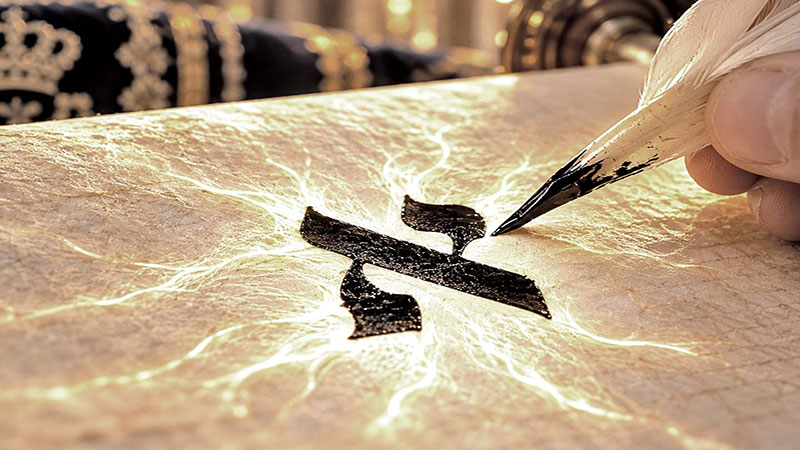
Then come the upside-down nuns, framing the familiar words of “Vayehi Binsoa Ha’Aron” and suddenly the tone changes. The journey that had begun with such promise starts to unravel. The people complain. They grumble. They long for the watermelons and onions they imagine enjoying in the “good old days” of Mitzrayim. Moshe Rabbeinu reaches a point of anguish and cries out that he can no longer carry the burden alone. The people gorge themselves on quail, and many die. Soon afterward comes the painful episode of Miriam, followed in the next parsha by the tragedy of the Meraglim.
What happened?
On the surface, the complaints are about food, discomfort, and the hardships of travel. But the Torah often asks us to listen beneath the surface. When complaints become constant, there is usually something deeper taking place. The words people use are not always the whole story. Sometimes the frustration we hear is only the outer layer of a more painful sense of loss.
One of the major transitions taking place in these parshios is the replacement of the Bechoros by the Leviim. The Torah states this explicitly in Parshas Beha’aloscha:
“For every firstborn among Bnei Yisrael is Mine, among man and animal; on the day I struck every firstborn in the land of Egypt, I sanctified them to Me. And I took the Levi’im in place of every firstborn among Bnei Yisrael.” – Bamidbar 8:17-18.
Originally, the Bechoros carried a special Kedusha. They were sanctified at the time of Yetzias Mitzrayim, when Hashem struck the firstborn of Egypt and spared the firstborn of Klal Yisrael. Before the Mishkan was established, the Bechoros were associated with bringing korbanos and serving Hashem in a unique way. They were, in a sense, the spiritual representatives within each family.
That model is very significant. Kedusha was not meant to be limited to one central institution or to one special group. Every family was meant to have within it a representative of holiness. Every home was meant to include someone who embodied a higher calling. The sacred was not meant to live only in a distant sanctuary. It was meant to be woven into family life itself.
But then came the Eigel HaZahav.
Rashi explains that the Bechoros had originally belonged to Hashem, but – they erred with the Eigel. At the moment of crisis, when Moshe Rabbeinu called out, “Mi LaHashem Elai – whoever is for Hashem, come to me,” it was Sheivet Levi that stepped forward. The Bechoros, who had been entrusted with a special spiritual role, did not rise to the moment in the same way. From that point onward, the Levi’im took their place.
The Sforno adds a powerful layer. He explains that the firstborn of Mitzrayim were struck because they were the most honored members of society. They were the ones others looked up to, and therefore the responsibility of the nation rested upon them. They should have protested. They should have led. They should have used their stature to resist evil.
Although Am Yisrael had also sunk to the forty-ninth level of tumah, to the point that the angels famously wondered why they were more worthy of being saved than the Egyptians, the Bechoros of Klal Yisrael were nevertheless spared and sanctified. But that sanctity came with responsibility. According to the Sforno, they were initially made holy in a way that would have removed them from ordinary work entirely, much like the firstborn animal is restricted from ordinary use. At the same time, Hashem commanded that they be redeemed, allowing them to return to ordinary life.
In other words, the Bechor is redeemed, but not simply ordinary. He is padui, redeemed, and yet still marked by Kedusha. He returns to the world of family life, business, and daily human activity, but he is meant to carry a memory of holiness into that world. His Kedusha is not erased. It is transformed into a mission.
This is a remarkable idea. The original ideal was not that the holy person should be detached from the family. It was that every family should have holiness within it. Every home should contain someone whose life reminds the family that a Jewish home is not merely a private household. It is a place where Hashem’s presence can dwell.
After the Eigel, however, that model changed. The Bechoros lost their role, and the Levi’im were chosen in their place.
This may help us understand the emotional undercurrent of Sefer Bamidbar. The Bechoros did not merely lose an honor; they lost a mission. A role that had once belonged inside every family was now transferred to one sheivet. Avodas Hashem became more centralized. The Mishkan stood at the center, and the Levi’im surrounded it as its guardians and servants.
Of course, this was necessary. After the failure of the Eigel, Klal Yisrael needed structure, boundaries, and a more protected form of avodah. But something was also lost. The ideal had been that every home should contain its own point of Kedusha, its own living reminder that Jewish life is meant to be elevated from within.
Perhaps this is part of what lies beneath the grumbling in Beha’aloscha. The people complain about this and about that, but underneath there is a deeper discomfort. They are struggling with displacement. They are struggling with a new reality in which some have been moved aside, others elevated, and the original dream has been diminished.
The tragedy is that instead of asking, “What did we lose, and how can we grow from it?” they asked, “Why were we pushed away?” Instead of reflecting on what led to the change, they complained about the change itself.
That mistake is painfully human. When we lose a position, an opportunity, a role, or a sense of importance, our first instinct is often to focus on the pain of displacement. We wonder why someone else was chosen. We feel overlooked. We feel the sting of no longer being needed in the same way. But the deeper question is not only, “Why did this happen to me?” The deeper question is, “What is Hashem asking of me now?”
The story of the Bechoros and Levi’im is not only about ancient roles in the desert. It is about the ongoing challenge of bringing Kedusha into real life. The formal centers of holiness are essential: the shul, the beis midrash, the yeshiva, the places where Torah and tefillah are protected and nurtured. But they were never meant to replace the Jewish home.
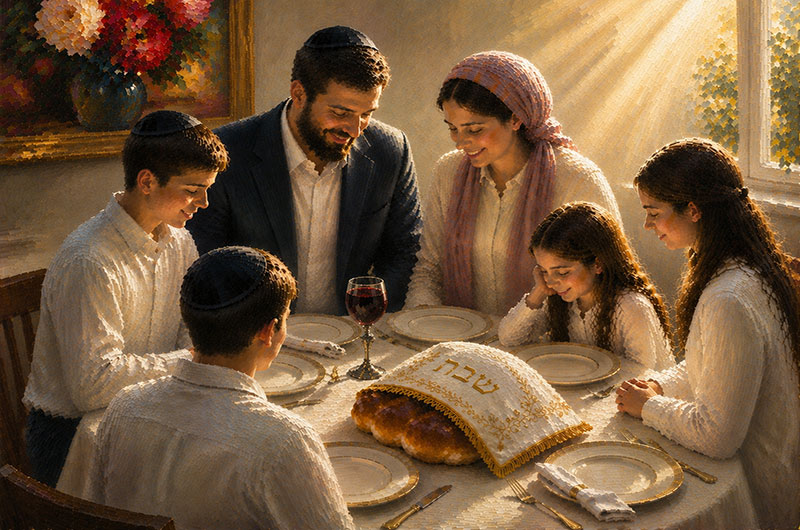
The home remains the place where Kedusha is tested most honestly. It is in the home that patience is practiced. It is in the home that children learn what matters. It is in the home that Shabbos is felt, not merely observed. It is in the home that Torah becomes tone, warmth, discipline, language, and memory. A person may be inspired in shul, but the question is whether that inspiration comes home with him.
This is one of the beautiful messages that emerges from the idea of the Bechoros. They represented Kedusha inside the family circle. They symbolized the possibility that every Jewish home could have someone who carries the mission, someone who reminds the family that life is meant to be lifted.
In a broader sense, that responsibility does not belong only to a literal firstborn. Every person can become that presence in a home. Every parent, child, sibling, or grandparent can be the one who brings more patience, more Torah, more dignity, more emunah, and more sensitivity into the family.
Moshe Rabbeinu expresses this ideal powerfully later in the parsha. When Eldad and Meidad prophesize in the camp, Yehoshua is disturbed. But Moshe responds, “Would that the entire people of Hashem could be prophets.” Moshe does not want holiness to remain limited to the few. His dream is that the spirit of Hashem should rest upon everyone.
That is the ultimate vision: not a Judaism where Kedusha is confined to official spaces and official people, but a Judaism where the presence of Hashem is felt throughout the camp, and especially in the home.
A few weeks earlier, the Torah described this dream with the words:
“I will walk among you.”
Walking together is not only about reaching a destination. It is about closeness, companionship, and a life in which Hashem is not distant, but present.
That remains our avodah.
We may not have the Mishkan today. We may not have the Levi’im singing in the Beis HaMikdash. We may not fully understand how the roles of Levi’im and Bechoros will be restored in the future. But we do know this: the dream of Kedusha in the home has never disappeared.
A Jewish home can be a place of holiness. A Shabbos table can be a place of avodah. A conversation can be a place of Torah. A parent’s patience, a child’s respect, a word of encouragement, a moment of restraint – these too are ways of bringing Hashem into the camp.
The journey of Klal Yisrael in the midbar reminds us that spiritual greatness is not only measured by what happens at the center. It is also measured by what happens around it, in the tents, in the families, and in the ordinary spaces of life.
The Mishkan stood in the middle of the camp.
But the goal was always that its light should reach every home.