 October 23, 2026
 Categories: Features / Book Reviews
Read. Translate. Understand.
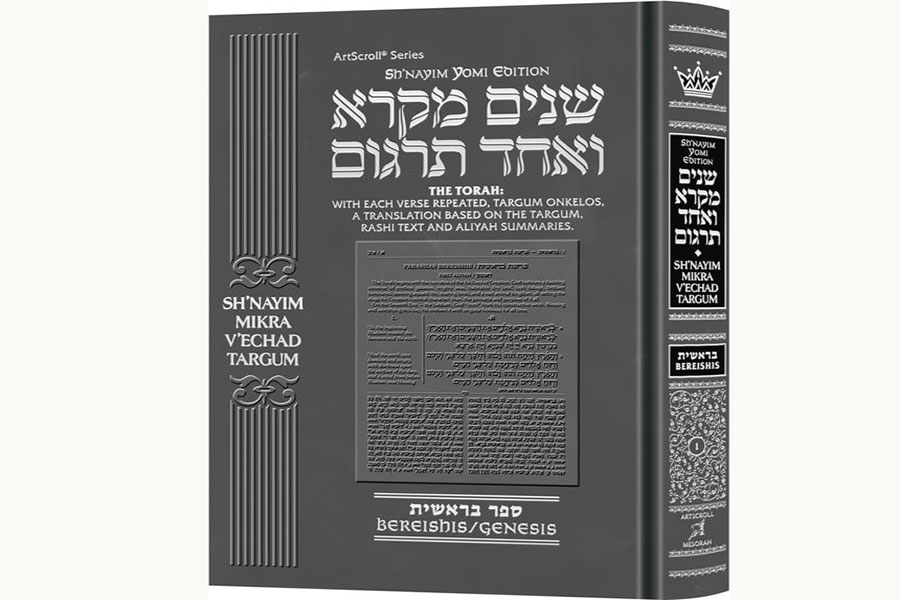


Title: Shnayim Mikra V'Echad Targum
ArtScroll Mesorah Publications
Translated and adapted by Rabbi Sheah Brander
For many people, one of the most difficult mitzvos to consistently perform is shnayim mikra v’echad targum, the obligation to read the weekly parsha twice along with the Aramaic translation and commentary of Onkelos. A friend of mine once remarked that in his opinion (and he claimed even his rabbi agreed!) this is one of the hardest mitzvos in the Torah. Although clearly codified in Shulchan Aruch – as well as all the more recent classic sifrei halacha such as Chayei Adama and Kitzur Shulchan Aruch – shnayim mikra v’echad targum is often overlooked and ignored.
Part of the difficulty is that many people struggle to understand the Aramaic of Onkelos. To that end, a few years ago Artscroll produced an excellent edition of Onkelos, including translation and interpretation of the Aramaic, along with extensive annotation. Although that earlier monumental work was well matched to the serious student of Onkelos, Artscroll’s new five-volume Shnayim Mikra V’Echad Targum is streamlined for the practical weekly fulfillment of this mitzvah.
With its user-friendly format, Artscroll’s Shnayim Mikra V’Echad Targum offers a unique layout. Each pasuk appears twice followed by its Aramaic targum, and pesukim are printed with the cantillation notes (colloquially referred to as trup) used when leining for the community. This is an important addition for those who use the trup even while performing this individual mitzvah, a practice in fact favored according to many opinions. Also, the English translation facing the pesukim is not a simple translation of the pesukim themselves, but actually a translation of Onkelos. There are even bracketed additions embedded within the English translation, so as to clarify the meaning and also allow the language to flow more naturally. The commentary of Rashi is also printed on the bottom of each page, essential for those who follow the opinion of the Shulchan Aruch that a yirei shamayim should study Rashi in addition to Onkelos.
Another strength of the new Shnayim Mikra V’Echad Targum is the presence of English introductions prior to each aliyah, which help the reader keep the larger picture of the parsha in mind instead of possibly getting lost in the details of individual pesukim. The maftir and haftaros are included in the back of each of the five volumes, both those corresponding to the parshiyos of that sefer and of rosh chodesh, as well as those for special occasions that may coincide with the time of the year that sefer is read, such as Parshas Zachor and Parshas Parah in the volume for Sefer Vayikra. This ensures that you will not also need another Chumash when in shul Shabbos morning.
The halachic introduction printed at the front of each volume is another important contribution. It carefully details the guidelines for this mitzvah, such as whether one should read each pasuk twice and then its targum, or instead complete a full section or even the whole sedra before reading the targum. This introduction also explains the various opinions regarding the mitzvah’s timing – for example, whether it should be completed before Shabbos lunch or before Shabbos Mincha when the next week’s sedra is read in shul, or according to some views by the end of the following Tuesday or even by Simchas Torah. It even mentions kabbalistic considerations, such as avoiding the read of shnayim mikra at night, except Thursday and Friday nights. Clarification of these seeming details give the work seriousness and depth, treating the mitzvah with the gravity it deserves. (Additionally, the sefer notes that the editors had asked Rav Shmuel Kamenetsky and Rav Yitzchak Yosef if one can fulfill the requirement to recite the targum on each pasuk by reading the sefer’s English translation of Onkelos, and both agreed that one indeed can – making this mitzvah now within reach even for those who find the Aramaic words to be difficult to read/pronounce.)
A separate introduction by Rabbi Moshe Bamberger offers an additional perspective, going beyond the technical halachic discussion to present the deeper meaning of shnayim mikra. Drawing from the Maharal and from an array of mussar and chassidic sources, he explains why this mitzvah is so important. One especially memorable example responds to those who claim they do not have enough time for shnayim mikra. Based on the Gemara that promises that fulfillment of shnayim mikra will merit a reward of long life, Bnei Yissasschar explains that Hashem “will grant him ample time to study everything.” In other words, the very mitzvah many avoid because of lack of time is itself a source of more time and blessing.
In the end, perhaps the only “problem” with Artscroll’s Shnayim Mikra V’Echad Targum is that it removes the excuses people offer for neglecting this important mitzvah. Its five clear, organized, and attractive volumes make it much harder to claim that shnayim mikra is too difficult or time consuming. Together with my teenage son who was also very pleased to try this new set, I eagerly await Artscroll’s completion of the cycle with the fifth and final volume of Devarim. More broadly, I applaud Artscroll for filling yet one more need, facilitating mitzvah observance in the Torah community. Many people will benefit from Shnayim Mikra V’Echad Targum, whether beginners or experienced learners, strengthening a mitzvah that was too often neglected despite its importance.