יום רביעי, י״ט תשרי תשפ״זWednesday, September 30, 2026



Follow Us


They explain that we have the tendency to drift or to veer from what our own intentions.
Most of the books I have recommended are series because they allow children to get hooked on the characters and writing style, and continue seamlessly from one to another.
The loss of a loved one is always hurtful no matter how old he or she is at the age of passing.
“Originality itself starts with creativity: generating a concept that is both novel and useful. But it doesn’t stop there. Originals are people who take the initiative to make their visions a reality…”
Dearest Fear: Creativity and I are about to go on a road trip together. I understand you’ll be joining us, because you always do.

Siegel explains that there are four ways that the brain is developing during adolescence that provide the groundwork for healthy ways of living.
We as parents need to take a step back and allow our children to make mistakes, thereby growing into independent problem-solving adults.
Most schools would have to stop doing almost everything they now do in the name of school improvement.
Resilience explains why some children overcome overwhelming obstacles...
Kriah teachers continually search for ways to combat tedium and monotony in reading practice.
Anger becomes a problem if you do not know how to handle it.
If students need to improve many of the same skills for both reading comprehension and math, teachers can borrow strategies from literacy instruction and apply them to the math classroom.
One of the key tenets in the book is that children need five things from their parents in order to have a healthy relationship:
How could they not know how we wish for a child who wakes us up in middle of the night?
Phonics is great for young children learning to read, but it can be boring and frustrating for children who have sat through the instruction for years.
In it he explains that greater creativity leads to greater happiness.
The benefits of friendship are particularly potent for women as opposed to men.
In other words, by allowing your children to experience disappointment, you are teaching them how to cope with frustration in the future.
It’s hard for us to admit when we don’t know something because we are trained to believe that knowing the right answer will get us ahead...
Why should we not carry ourselves with pride and personal power?
When dealing with a difficult situation as a leader, locate yourself above or below the line.
The ability to think socially is required prior to the production of social skills.
When does worrying become anxiety? Is it possible to overcome that anxiety?
“It is an easy mistake to think that non-talkers are non-feelers.” – Wallace Stegner “I think a lot, but I don’t say much.” – Anne Frank “Quiet people have the loudest minds.” – Stephen Hawking Are you quiet or loud? Do you like to be the center of attention or are you happy to […]
I have compiled a few questions and answers to help everyone understand how we can get boys reading up to their potential.
This scared her immensely. After all, she was terrible with numbers.
We believe that effective school change happens when all stakeholders – administrators, faculty, parents, counselors, and students – come together to identify problems and work on solutions.
Should I speak to the girls? Find out their contact information and call their parents?
What do you do with that failure? How do you learn from it and attempt the seemingly impossible again?
The best part of the toolbox (and a point that Ness emphasizes in her book numerous times) is that it’s not about innate knowledge, talent or intelligence.
While Robinson is firmly against the educational systems we have in place, I believe there is definitely value to what we do today.
Parents are frustrated by their inability to get clear information about the right thing the [X] family has apparently figured out.
He believes that the best way to get ahead in life is to build character.
We know that the child is cognitively capable, so we ask ourselves, “Why can’t he just act like everyone else?”
Understanding the hot-cold empathy gap can help those in shidduchim comprehend how their actions might influence their dates.
The brain scans of people who solved the puzzle with a flash of insight showed a burst of activity in the right temporal lobe in the moment of realization.
Siegel argues against timeouts saying that they teach children that when they are struggling they are on their own and do not have parents to help them.
If your child is upset, he will most likely not want you to ask him lots of questions or give him a lot of advice about the problem right away.
Write about your feelings. Keeping a journal can help you express exactly what you are feeling, and force you to be honest with yourself.
Unfortunately, for some children, social learning does not happen naturally, especially those with Asperger’s or other disorders on the autism spectrum.
The eight stages are usually by age (though in some cases the ages are fluid).
Each part of the brain does its own job and together they generate a coherent whole.
How often do you worry? I can’t stop worrying. I don’t really worry much at all. Not constantly, but occasionally. Pretty frequently. You might call me a worrywart. What is your typical night’s sleep like? What’s sleep? There is no way I could sleep with bills to pay and locks to check, I’m up […]
I’ve put together some of the most frequently asked questions regarding bullies, friendship and learning disabilities.
“Worrying is carrying tomorrow's load with today's strength – carrying two days at once. It is moving into tomorrow ahead of time. Worrying doesn't empty tomorrow of its sorrow, it empties today of its strength.” – Corrie ten Boom I’ve been thinking a lot about worrying. Anxiety is an issue close to my heart – […]

Dr. Yael Respler is taking a well-deserved vacation this week and asked Eilon Even-Esh to share some thoughts with her readers in her stead.
All of us wish to act in kind, compassionate and intelligent ways. We all wish to build character.
They are habits. And though each habit means relatively little on its own, over time, the meals we order... have enormous impacts on our heath, productivity, financial security, and happiness.
I've been getting a lot of questions, so I thought I would answer a few of them in this week’s column. Keep those questions coming!
What’s the difference between the first and second ten-year-old?
So, what do we do about grammar? Should we do grammar drills? Should we hope that the students pick it up from reading?
Most experts agree that with specialized coaching, a person’s social “intelligence” can be significantly raised.
Children with Attention Deficit Hyperactivity Disorder (ADHD) or Executive Function Disorder (EFD) have trouble keeping themselves organized and on-task.
We never cease to be students, even when we are no longer in school. Therefore, everyone can learn from these elements of thought.
The warm parenting style indicates to children, “I love you and will take care of you” and the firm parenting style lets children know, “I expect something from you.”
When we are faced with danger, our body goes into what scientists call “fight or flight” mode.
This doesn’t mean that anyone who occasionally has a piece of chocolate as a pick-me-up is an emotional eater.
To what extent is your child displaying defiance?

All of these small changes work their way into the framework of the elephant and the rider because they are helping the elephant move forward.

While indecision can stop you in your tracks, it’s important to point out that it’s not always bad.
How do we ensure that our students aren’t studying for the grade or the end-of-the-year pizza party? How can we get them to truly want to learn for learning’s sake?
But Pi Day is worst of all I want the extra credit bad But trying to remember many numbers makes me sad.

The teenage years are not about surviving. They are about thriving.
She wasn’t paying attention to what the child did when the mother was not in the room. Rather, her main focus was on what the child did when the mother returned.

A compulsion is a repetitive action. But what underlies the compulsion is an obsession or fear.
When any student in the building is in danger of failing, the equivalent of tornado warning sirens should wail around the school.
“If you don’t stand straight, you’ll never get a husband.”
A lot of people have heard about dyslexia, a learning disability that concerns reading.
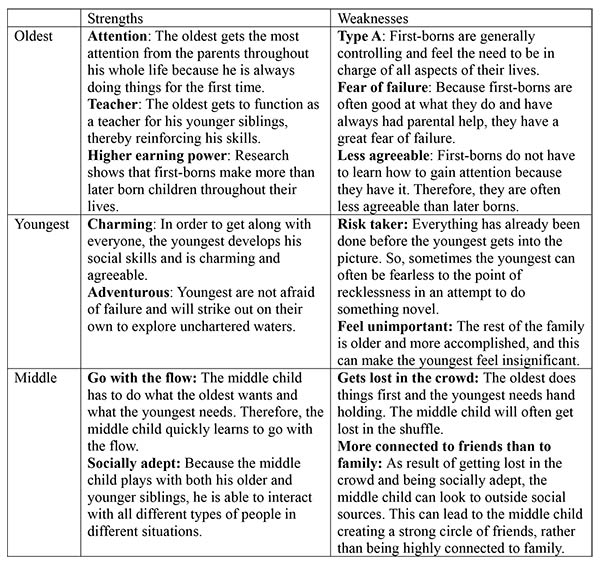
Because birth order can affect most children in similar fashion, there are things you can do to help your children overcome weaknesses that birth order has thrown their way.
Occasionally, a teacher will encounter a student who simply cannot be motivated to do his homework, finish his worksheet or study for a test.
There is a point that many parenting books miss: children do more for us than we do for them.
Tutor. Counselor. The doctor too, Sometimes it’s hard to keep up with you.

Pioneering authors Peg Dawson and Richard Guare, in their book Executive Skills in Children and Adolescents, outline the ways that we employ executive skills regularly.
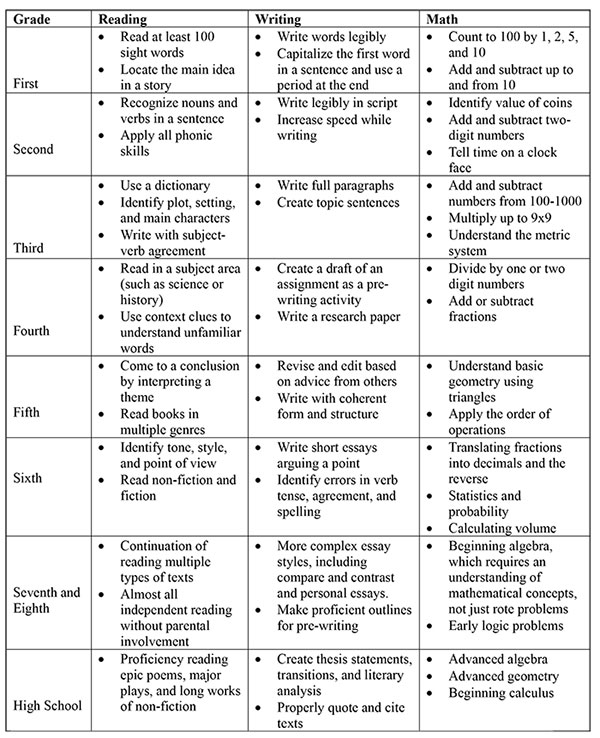
Because I get phone calls about this all the time, I have put together a quick “cheat sheet” with milestones for reading, writing, and math from first grade through high school.
The reason behind this is that when we ask our brains and bodies to make drastic changes, our fight or flight response kicks in and we become paralyzed.
Why is there such a steep learning curve for teachers? And what can we, as educators and community activists, do better in the educational system and keep first-year teachers in the job?

With so many new cases of ADHD reported each year, it is important to help children learn how to sit still.
Teens-at-risk feel alienated from their parents and often believe that no one is interested in hearing about their problems.
While encouraging your child to take responsibility for bed-wetting (like asking him to change the sheets), remember that it is important not to get angry or make him feel guilty.
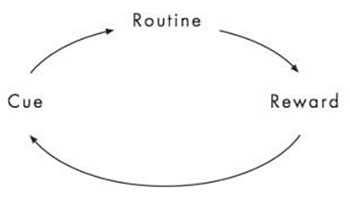
As we said, you cannot get rid of a bad habit, you can only change it. But, how?

I think a major problem within the "single" community is the pressure to get married ASAP.
In order to diagnose separation anxiety, these symptoms must not be isolated and must occur for more than four weeks consecutively.
When someone with a fixed mindset has a negative interaction with a friend or loved one, he or she immediately projects that rejection onto him or herself saying: “I’m unlovable.”
Children develop at different rates – they say their first words, take their first steps, toilet train, read their first word, and lose their first tooth at different times.

Once you understand why you are lying, you might be better able to tell the truth.
This core idea of memory is very difficult to fully comprehend; however, it is essential.
Do you love your children? Of course, who doesn’t? Maybe I should rephrase the question: Do your children feel that you love them?
“Without a high school diploma, you couldn’t work as a garbage collector in New York City; you couldn’t join the Air Force. Yet a quarter of our kids still walked out of high school and never came back.” – Amanda Ridley
Avromi often put other people’s interests before his own: he would not defend people whom he believed were guilty (even if they were willing to pay him a lot of money).
Social disabilities occur at many levels, but experts identify three different areas of learning and behavior that are most common for children who struggle to create lasting social connections.
Brown argues that this wholehearted living must extend into our parenting.
This is an important one in raising a mentsch (and maybe even in marrying off a mentsch! listening skills are on the top of the list when I do shidduch coaching).
Children with dyslexia or dysgraphia frequently have problems in social relationships.
Shame is often confused with guilt and humiliation.
Some educators today believe that Attention Deficit Hyperactivity Disorder falls into an executive function category.
Because the children suffering from this disorder generally have wonderful verbal skills, the disability can go unrecognized for many years.
People definitely had stress one hundred and fifty years ago, but it was a different kind of stress.
Time outs increases compliance and positive behavior far more than other forms of discipline
 September 25, 2026