יום רביעי, י׳ חשוון תשפ״זWednesday, October 21, 2026



Follow Us



Why did no one speak up and warn this young lady?
The inevitable conclusion of the study was that holding back, delaying gratification, leads to a more stable and positive life.
As Torahdik Jews we are expected to view every day as Parents Day.
Why does Chani have a lollipop in her mouth? I told you not to give her another one!
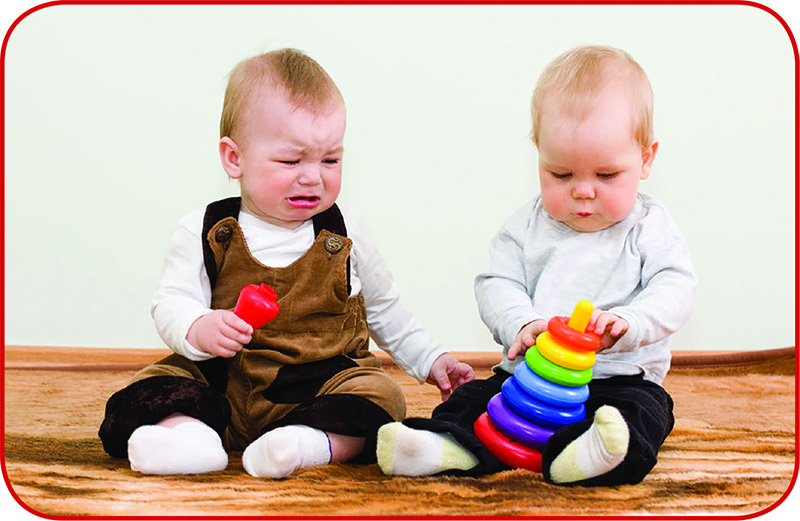
We still have an inner voice that silently screams, It's just not fair!
Purim teaches us that life is like a Ferris wheel – one moment you can be on top, and suddenly you are at the bottom.
Is there a precedent in the thousands of years since Jews accepted the Torah where there was such a widespread disdain of working?
There is no guarantee that being "pound-wise" will extend our lives, but medical science insists that it helps.
Throughout life, we will face many extremely difficult challenges - custom-made Chanukahs that Hashem tailored for us.

Pure evil speech is a weapon of mass destruction...
We tend to take our routine abilities for granted.
This can, to some extent, be achieved by having a will, letting your loved ones know where you are to be buried, and advising them of your assets and where to locate them.
I believe that the up-and-coming generations will not live in the grand single-family homes many of them grew up in.
Even a kindergarten student can understand how the pennies collectively put in the pushka can add to real money that can help a kallah buy linens or feed a family for a week.
Boaz obviously finds it necessary to reassure Rut that no one will hassle or bully her while she is gleaning wheat, and twice he admonishes his field hands not to rebuke or shame her and make her feel threatened in any way.

I can’t say for sure if my idea would work, but to me it makes sense to fill the plane back to front with the window passengers getting to their seats first, followed by the middle-seaters.
They werew great girls and were looking for that "winning" dish.
"Even when a sharpened sword is placed on your neck, do not give up on Divine Mercy."
The fact is there are so many second-time singles in heimische communities and the numbers sadly are growing each year – to such a degree that several organizations have sprung up to provide networking opportunities and social support.

Why would it be more “tznuisdik” for me to go to a Shabbat meal in a sheitel when my host thought my own hair was one?

Prayers of thanks make us focus on the reality that we do have it much better than we think we do.
As visible Jews, we have to be vigilant and very mindful of our actions.
Young people tend to be too naive and idealistic to fully fathom the implications of their actions.
Perhaps we need to review, as Jews, what defines success.

What I call verbal terrorism is tragically not rare at all.

How efficient to kill two birds with one stone – or booking. Actually three birds, since I invited a man I had commiserated with while waiting my turn to join me.

There are fathers who bravely step up to the plate and fill in the maternal vacuum with their love and devotion.
The message being conveyed is that without “flour,” without the means to support oneself and one’s family, one’s focus on Torah will be impeded by worry.

Times have changed and divorced people have sadly gone from being singularities to almost a sub-community.

The role of the rav has expanded to include situations that have nothing to do with halacha.

Parents should be quick to say something positive to a child even as they chide him or her for bad behavior.

Is the Torah offering nechama by subtly hinting that death brings reunion with loved ones who preceded you?

Was it possible that these butchers of Jewish children had been living the "good life" all these years?

Divorce from a vindictive, cruel spouse can be a lifelong nightmare when there are offspring.

I believe that each person is half a soul and marriage reunites the two.
The Presbyterian Church USA voted to divest from three companies that do business with Israel.
Sadly, there are mothers who, due to severe depression are unable or unwilling to prepare nourishing food for their children.
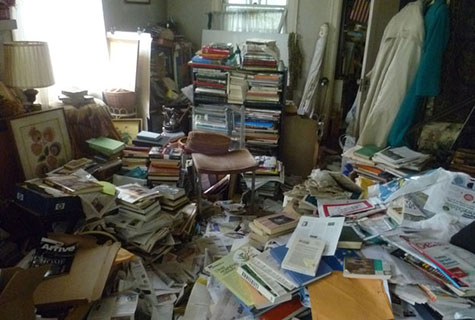
Not knowing any better, I assumed that Molly and her mother must be voracious readers.
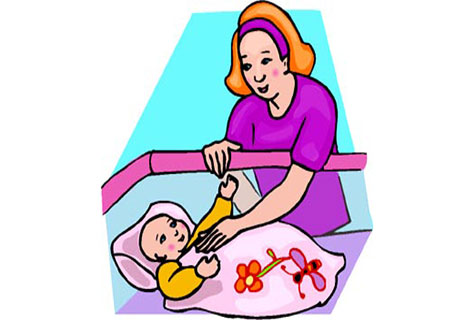
Neglect, indifference or criticism can break a person's neshama.
She told me that she was busy and that he could sit in his wet clothes for the rest of the day. It would teach him to be more careful.
Unpleasant happenings are quickly discarded if they do not affect us directly.

I have always insisted that everything that happens to anyone or anything is min Shamayim.

It is so hurtful to heighten people’s sense of inadequacy and guilt in a matzav that is already horrendous and difficult to bear.
Make no mistake: in the wrong hands cars are weapons of mass destruction.

Where once divorce in heimische communities was relatively uncommon, nowadays every family has a son, daughter, sibling cousin who is divorced – sometimes twice or even three times!

Many go about the business of living frum, observant lives, but they are only going through the motions.

Lately I have been hearing quiet grumblings from people who admit that they regret not encouraging their sons to get a post-high school education after a year or two of learning.
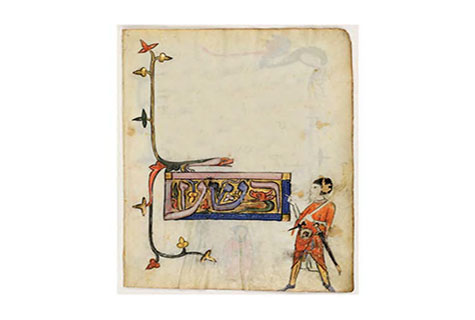
While it would seem from his question that he is being chuzpadik and dismissive, I wonder if its possible, if just maybe, he is a struggling, confused neshama who actually wants to come back to the fold.

A young lady in her early 20’s, “Sarah” was redt to “Shlomie” a boy from her home town who learned in an out-of-town yeshiva. The families know each other well, which in today’s shidduch scene is a big plus – since it was therefore unlikely the kids would “fall in” due to misinformation and misinterpretations.
I came to the conclusion a long time ago that I have to do what is right for me – as long as it’s “ halachically kosher” and doesn’t negatively impact on others – and not worry too much about what others think.
They say the road to hell is paved with good intentions, and that is precisely what almost always happens in situations where a reference knew someone had serious but hidden emotional issues, but did not reveal the information to the person making inquiries.

Time never stood still for anyone – why would I be the exception? In my hubris, I thought that somehow I would live forever – and I suspect we all have secretly felt that way, even though we know it’s a fantasy.
One can argue that forgetting something on a regular basis is a sign of advancing age and it’s time to for a neurological evaluation, but based on the number of young people who need to replace a lost smart phone (too bad it’s not smart enough to warn its owner that that they have become separated – or is there an app for that too?), I safely can say that losing “stuff” cuts across the generations.

For quite a few days in late December, Toronto was transformed into a breathtaking – literally and figuratively – frigid winter wonderland, where every twig, leaf, car door, and outdoor wire and cable was totally encased in ice. When the sun shone the landscape was blindingly brilliant as if billions of diamonds had been glued to everything the eye could see.
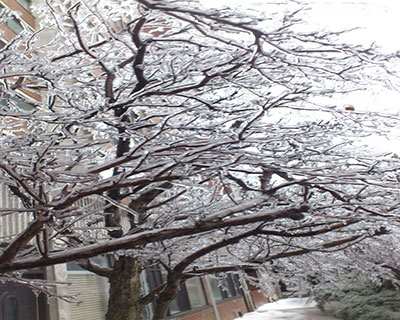
Outside is a winter-white wonderland replete with dazzling trees, wires, and sidewalks seemingly wrapped in glittery silver foil. It’s quite lovely to look at, which is about all I can do since I’m stuck indoors. Icicle-laden tree branches are bent and hunch-backed by the frozen heaviness of their popsicle-like burden, and the voices squawking from the battery-operated transistor radio I am listening to are warning people not to go out since walkways and roads are extremely slippery, and there is real danger from falling trees.
The necessity of speaking up when you “have a hunch” applies even more when it comes to shidduchim. One little girl did just that – she said something – and I was fortunate enough to be in town for the very joyful, lively wedding that resulted from her speaking up.
Let me begin by congratulating my dear machatunim, Soraya and Jay Nimaroff, on being the recipients of the Community Service Award at the Sderot Hesder Institutions 18th annual anniversary dinner.
The Hebrew month of Kislev has a special, albeit bittersweet, significance in my family, as it is the month my father was born and passed away.
But even though their medical situations were similar, how they mentally dealt with their new status quo was often as different as night and day.
How confusing it was growing up with conflicting messages. On the one hand, we were told, even admonished, to eat everything on our generously piled up plates (it was a sin to waste food), yet we were made to feel like we were a lower form of human being if we were overweight.
While in New York recently, I was invited to see a performance of "Waiting for Godot" – a multi-layered play on the human condition that I was introduced to in high school. What was fascinating and unique about this particular production was that this renowned play was being performed in Yiddish - with English and Russian subtitles beamed onto a screen for non-Yiddish speakers. (Staged by the New Yiddish Rep, at the Castillo Theatre, and directed by Moshe Yassur, it stars Shane Baker, David Mandelbaum, Rafael Goldwaser, Avi Hoffman and Nicholas Jenkins.)
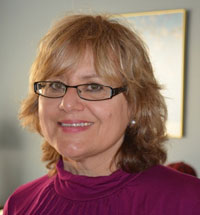
Now and then my Bubby would open up about what she went through in the camps, of what she witnessed... From time to time she would talk about her baby sisters - twins - and how she would sew them identical dresses and braid their hair the same way challenging everyone to guess who was who.
Our community has a very different mindset - we live to have children. Each child is considered a bracha - a priceless commodity to cherish and nurture.
I read an article recently that described the fascinating phenomenon of mainstream, well-educated, responsible men and women deciding not to have children. According to the article, these people have given the matter a great deal of thought and have come to the conclusion that parenting is not for them.
Now and then you read or hear of a tragedy – typically a car accident - where those involved are suffering from life-threatening injuries or unfortunately have lost their lives. Frequently, in the initial reports, the victims remain nameless “pending notification of next of kin.”
A friend of mine, a young mother, related that her oldest child, now three, was starting pre-school in a few weeks. Her voice, full of pride, quickly took on a tone of annoyance as she described the “welcome package” she had received as a new parent. Amid the rules and regulations concerning drop off and pick up was a dress code for mothers/female caregivers who brought and took home the children. One of the “requirements” was wearing closed–toed shoes. Sandals were not allowed.
Think of how you feel when you pick up a baby and she starts crying and shrieking hysterically. You can't help but feel somewhat chagrined and inadequate.
After my son Moshe got married in Israel several years ago, I decided to keep in more frequent touch with my cousin Ruzah. I would call her on a weekly basis (a good opportunity to practice the Ivrit I learned in day school), speaking to a woman who was of an older, wiser generation - rendering her more like a mother. Ruzah, like all my first cousins was indeed my parents’ age, married with children before I was born. Her experiences mirrored my father’s generation, although she really was from mine. Her mother and my father were siblings and my unknown grandparents were hers.
The 21 days of semi-mourning that is collectively referred to as the Three Weeks, culminating with the fast day of Tisha b’Av - the ultimate day of mourning in the Jewish calendar - begins in a few short days. During this period of time Jews reflect on the myriad of tragedies that have befallen us since the destruction of the Holy Temple and our subsequent exile.
A popular topic of discussion in newspapers, magazines and talk shows revolves around the management of personal finances - or rather the lack of them. In most cases, dealing with overwhelming debt is the topic de jour. Seems many people are drowning in it. Spending more than they have has mired countless consumers into a financial quicksand with maxed out credit cards and collection agencies knocking on the door. Speaking of doors, many face eviction and the loss of their home.
With the semi-mourning period of Sefira behind us, and the festival of Shavuot as well (as evidenced by the tightness of our clothing due to over-indulging in irresistible versions of cheesecake that is an integral component of celebrating our receipt of the Torah), our community can look forward to participating in joyous engagement parties and weddings.
One of the subjects I was taught as a young child in school was Tefillah. Since we spoke only Ivrit during our Limudei Kodesh and secular Hebrew studies - literature, creative writing and Jewish history - we pretty much understood the words we were davening.
Shortly before Pesach, I received a rather agitated call from a long time reader of The Jewish Press who pleaded with me to write a column regarding what she insisted was the unwarranted high cost of Pesach food – in particular shmurah matzah – and how hard it was for young families to pay what she felt were over-inflated prices in order to keep strictly kosher.
The price of deliberate obliviousness is very high - emotionally, physically, socially, and financially.
How is it possible that a person of seemingly normal intelligence (nowhere does it say he is simple) not have the ability to ask a question - to not react and enquire as to the why of the hustle and bustle around him?
It was one of those cold, rain-soaked evenings - the kind that make you look forward to a hot drink, a good book and a soft couch to curl up on. With those happy thoughts in mind, I proceeded to cross to the other side of the street.
The other day I was shopping at a large supermarket and happened to go down the frozen foods aisle, past the endless freezers containing every imaginable flavor, shape and size of ice cream. I rarely buy. Rather I am like a tourist in a museum – gawking at wondrous objects that I know I can’t take home with me.
He stood his ground despite the intense pressure to do what everyone else was doing. His integrity was more important to him than "fitting in."
There is a wise Yiddish saying that translates into this observation: "Yichus (illustrious ancestors) is like potatoes - they are both under the ground."
It truly defies logic when I am told by a relative’s machataynesta that on her block in Brooklyn there are a dozen girls in their mid to late 20’s and even 30’s who are waiting in vain for the phone to ring.
Last month, I had the privilege - and I do mean privilege – of attending an event at the Ritz Carlton Hotel in Toronto hosted by the Canadian Friends of Machon Lev, the Jerusalem College of Technology (JCT), at which an honorary degree was bestowed on John Baird, Canada’s Foreign Affairs Minister.
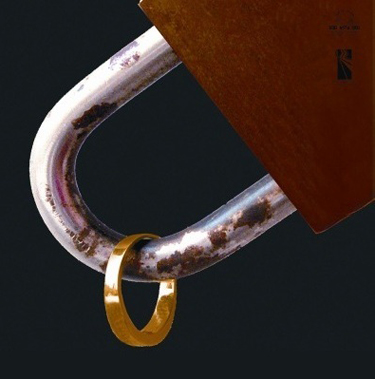
Throughout the long dark night of our exile, when we found ourselves at the precarious "mercy" of the inhabitants of the lands we were residing in, each and every Jewish community made it their utmost priority to rescue any man, woman or child who had the misfortune to be kidnapped, captured or unjustly thrown in prison. Whether these unfortunate souls were being held by bandits, landlords or greedy officials eager for ransom money, every effort was made to free them.

Chanukah is just about upon us and Jews across the planet are looking forward to family gatherings, delicious food (you can’t feel too guilty eating oily latkes and high carb donuts on the chag – hey, it’s practically a mitzvah to do so); giving and receiving gifts and in general celebrating our survival – our spiritual continuance as God-fearing Jews. (Our physical survival is an event we acknowledge on Purim.)

Dear Readers: The following short story is fictitious, but the situation of Jewish children during the Holocaust being raised by gentile families or in Catholic convents and orphanages is not. While some were re-united with family members who survived the death camps – many were not, and remain lost both physically and religiously. This story is in memory of all the lost children. May they be reunited with their families with the coming of Moshiach.

Some of you are looking at the title of my column and wondering two things - why I am writing about B'nai Brith Canada – arguably Canada’s version of the Anti-Defamation League and why would it be of interest to anyone who does not live in that country - as most of you don't.

Over the past few weeks, I, like many of you, have received wedding invitations, and I truly hope that the young couples-to-be have chosen wisely and will enjoy long and fruitful unions.

I recently read a disturbing news article about a social phenomenon that is tragic beyond words. The article stated that more people were losing their lives by committing suicide than by car crashes. This conclusion was based on a recent study by the American Journal of Public Health based on data compiled by the National Center for Health Statistics from the years 2000-2009. Why are so many people killing themselves, or attempting to, since some try but fail? I can only imagine that they are looking for a way out of lives saturated with abject misery; they feel trapped in a cage of never-ending unhappiness.

Just days ago on Yom Kipper, The Day of Judgment, Jews gathered as one in shuls, shteibels and temples and desperately and profusely promised Hashem that we would reform our ways and improve our behaviors and actions towards Him, our Father and Creator, as well as towards our fellow man, who, being made in His image, is deserving of our respect and compassion, and of being treated as an equal, no matter their social or financial status, age or gender.

Just a few short days ago we were in summer mode, vacationing in the mountains, at the cottage, or on the road visiting family, friends or sightseeing. But with the start of September and school, we become all to aware that the Yamim Noraim - the Days of Awe – are upon us, that sobering period of time when a year's worth of our actions and activities will be evaluated by our Creator. His ultimate assessment and judgement will affect the quality and quantity of the days of our lives.
Dear Readers The grass is always greener on the other side. Or is it? Below is a fictional illustration of this human foible – focusing on the perceived benefits in another person’s life while failing to appreciate your own.
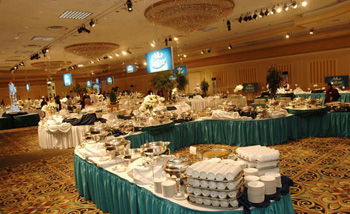
With the Three Weeks and its social restrictions as they pertain to simchas behind us, heimishe Yidden everywhere are "dusting off" their party clothes, taking their jewelry out of the safe and getting ready to attend a multitude of weddings - with some people invited out on an almost daily basis.

Dear Readers: The following short story is fictional. However, many of you will surely nod your heads in agreement as you recognize people you know - perhaps yourself - in the characters I have described. I hope in future articles, to touch on what I believe are the various psychological factors that contribute to the shidduch crisis.
Within the last few days, with weeks of summer still ahead of us, I have read and seen news reports regarding very young children who tragically drowned in backyard swimming pools, despite being in relatively close proximity to parents and other adults.

It was the Thursday before her daughter's wedding and Chana Bendiner had so much to do, so many minute details to attend to. Yet here she was in her attic, blowing the dust off a photo album that had remained buried, but not forgotten, for over 20 years. She stared at the leather-bound cover, gently caressing the embossed gold lettering, unable to open it, yet unable to put it down.
By now just about all of us are in summer mode, and Yom Tov cheesecake and blintzes are out of our minds - though not necessarily off our bodies. Nonetheless, the topic I am addressing is tied to the festival of Shavuot, as I wrote it just after the holiday had ended. (This time warp often occurs when addressing deadlines ahead of time, a necessity when I know that visiting a near minyan of pre-school grandchildren in three cities will make writing a coherent column rather challenging).

I am on a bus as I write this article and the ride will be at least 11 hours. For me, one of the big draws of traveling in a manner most would feel is quite tedious, is that several long distance bus companies offer free WIFI service. This allows me the opportunity to possibly enrich myself financially (by watching the ebb and flow of the stock market); educate myself (by reading various online newspapers, including The Jewish Press); entertain myself (downloading the many humorous, sometimes witty, satirical articles/photos/cartoons available to brighten a person’s day) or write a column, (and for a change not have the pressure of stressfully productive hours before my deadline) – all time consuming activities that should make time pass quickly.
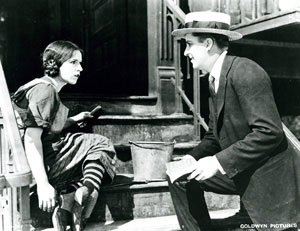
Earlier this month, members of the Toronto Jewish community were given a rare opportunity to be visually transported back in time. The film, filmed in 1922, is called Hungry Hearts, and is based on the short stories of writer Anzia Yezierska, a Jewish woman born in Poland in the 1880s whose family immigrated to New York. Many of her writings are centered on her experiences and those of other immigrants living in the Lower East Side. Like all movies made at that time, it is silent, with dialogue conveyed by cue cards.

"In every generation they try to kill us, and the Holy One, Blessed Be He, rescues us from their hands." Every year, for centuries, Jews the world over say these words at the Seder. I paid particular attention this year as this phrase was sung by the golden-voiced Dudu Fisher, a chazzan and Broadway star, who led sedarim at Kutcher's Hotel in the Catskill Mountains.

A recent article in The Jewish Press (Purim And The Tyranny of Beauty, Family Issues, March 16, 2012) written by writer and author Yitta Halberstam Mandelbaum generated, and continues to generate, quite a buzz.

The fact that you are reading this article can only mean that the gut-churning, frantic, multi-tasking marathon known as getting ready for Pesach is behind you;
 October 16, 2026