 October 23, 2026
 Categories: Headline / Holidays / Torah
Sukkos: Rooted in Harvest and Heart


I did not grow up on a farm, but agriculture was woven into the world around me. My grandfather had already retired from tobacco farming by the time I was born, yet I was raised on stories about my family working the land for generations. In South Georgia, where my mother’s family lived, farming was not a backdrop; it was a way of life. It shaped the rhythm of the seasons and the rhythm of the people. It was part of my DNA long before I ever stepped into my first sukkah.
My grandfather was a G-d‑fearing man, a deacon (the equivalent of a gabbai), and a pillar of his community. He was poor, but he carried himself with a quiet dignity that made people trust him. He had a gift for packing tobacco so tightly and precisely that it dried perfectly and fetched the best prices at market. He could have kept that skill to himself, but instead went from farm to farm, helping his neighbors pack their tobacco just as tightly so the entire community would benefit. He and my grandmother were my earliest teachers of who G-d was, of the love He has for us, and of the strength that comes from family and community. Gratitude was not something they talked about. It was something they lived.
Because of that world, the harvest season always meant something to me. You gathered what the land gave. You brought it to market. You offered thanks to G-d. While we did not bring korbanos, we brought thanksgiving, and in American culture the closest holiday we have to that is Thanksgiving. Some historians even argue that Thanksgiving was modeled on Sukkos, which makes the connection feel even more natural now.
Stepping Into the Sukkah
I grew up loving the outdoors. When I was young, my life was shaped by fishing trips, swimming, being by the ocean, long afternoons playing outdoors, and the kind of camping and hiking that teaches you how to read the sky and listen to the wind. The outdoors was not a novelty – it was love. It was where I felt steady and connected. So, stepping into a sukkah for the first time did not feel foreign in the physical sense. What felt foreign was the rhythm of this holiday, a rhythm that asks you not just to be outside but to live outside with intention.
Every morning of Sukkos begins with taking the lulav and esrog and shaking them in six directions. The movement is simple, but it carries a weight that feels ancient. You hold the esrog, bright and fragrant, and you feel the care that went into growing it. You welcome ushpizin, the spiritual guests who join you in your sukkah, and you open your temporary home to friends and visitors throughout the week. Meals happen outdoors. Conversations happen outdoors. Life happens outdoors.
Then come the hoshanos, the circling and calling out, the moment when tefillah becomes movement. Later in the week is Hoshana Rabbah, when willow branches are beaten against the ground, a ritual that looks strange until you feel the urgency behind it. After that, the community shifts into Tefillas Geshem, the prayer for rain, acknowledging that the season is turning and the land is ready to rest.
After a week of dwelling in fragility, we reach Shemini Atzeres, the day when we no longer sit in the sukkah even though it still stands beside our homes. It is a quiet pause, a day that feels like Hashem asking us to linger just a little longer. And finally comes Simchas Torah, where the joy becomes loud and overflowing. At the end of davening, all the children are gathered and tucked under the chuppah to witness the closing and the beginning of the Torah cycle. Every year it brings tears to my eyes. They are the guarantors of our future, the living reminder that our joy is meant to be carried forward. We walk out of Sukkos having danced with the Torah, and it feels as if the whole world is made of celebration.
That rhythm was unlike anything I had ever seen. It was strange, beautiful, and completely alive. And even though I was an outsider the first time I witnessed it, something in it felt like home.
Dwelling Outside and Learning What Holds Us
One of the things that struck me most during my first Sukkos was how similar the feeling of being an outsider was to the feeling of being asked to live in a temporary hut for a week. Both experiences pull you out of what feels familiar. Both ask you to step into something you do not fully understand yet. Both make you aware of how much you rely on Hashem, even before you have the words for it.
When you are new to Yiddishkeit, you spend a lot of time watching. You see rituals you do not yet know how to do. You hear tefillos you do not yet know how to say. You stand at the edges of something ancient and beautiful, hoping that one day it will feel like home. There is a vulnerability in that. A kind of spiritual openness. You learn to trust that belonging grows slowly, honestly, and in its own time.
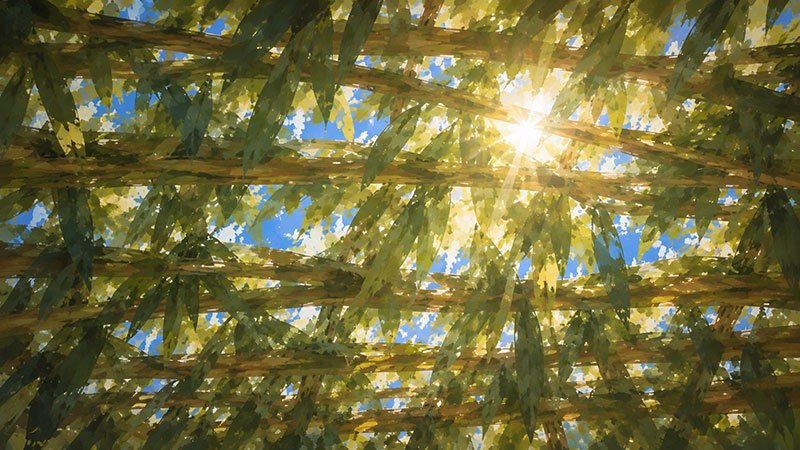
Living in a sukkah carries a similar kind of openness. The walls are thin. The roof is made of branches. The air moves through space freely. You are not protected the way you are inside your home. You are not insulated from weather or noise or the world outside. You are exposed, gently and intentionally. The sukkah reminds us that the things we think are solid are not always the things that truly hold us. It teaches us that our steadiness comes from Hashem, not from the structures we build.
And every year, no matter how long we have been Jewish, Sukkos brings us back to that truth. We step outside again. We sit under branches again. We feel the air move through space again. We remember that not everything in life is as stable as we wish it were, and that our sense of security ultimately comes from Hashem’s protection. It is a quiet reminder, gentle and timeless, to notice the blessings we have and to be mindful of how precious they are.
The first time I sat in a sukkah, I felt that outsider feeling – not unwelcome, just aware that I was stepping into something bigger than me. Now, years later, even after being Jewish longer than I was not, the sukkah still brings me back to that same place of honesty. The fragility of the structure mirrors the humility of faith. The openness of the space mirrors the openness we need to have to let Yiddishkeit shape us. And the dependence the sukkah asks of us – the trust that Hashem holds us even when the walls do not – is the same trust I learned as a giyores.
In that way, being an outsider and living in a sukkah are not separate experiences. They are the same spiritual posture. They are both ways of learning to stand in vulnerability and call it holy.
Sukkos teaches that joy is not something that arrives fully formed. It is something we build. Something we practice. Something we choose even when it feels unfamiliar or fragile. The sukkah itself is the first lesson in that practice. It is temporary. It is vulnerable. It is open to the sky. It is the opposite of the sturdy homes we spend our lives constructing. Yet we are asked to leave what feels secure and step into something that admits its own fragility. Sitting in a sukkah, you feel that truth immediately. The roof rustles. The walls breathe. It is a home that reminds you that joy does not require perfection; it requires presence.
The Lulav and Esrog in My Hands
My first Sukkos was shaped by that fragility. I was still learning the language of Jewish ritual, still trying to understand why people were waving branches in six directions and circling the bimah with a citrus fruit. And yes, shaking the lulav and esrog and the hoshanos are different practices performed on different days. The shaking is deliberate, directional, and grounded. The hoshanos are movement, circling, calling out, letting the body become part of tefillah. Both felt strange to me at first. Both felt ancient. Both felt alive. And both felt like invitations.
The lulav and esrog were the first things that caught my attention. They were held with intention, with tenderness, with a kind of embodied gratitude I had never seen before. The lulav felt like a spine, a reminder to stand upright even when life bends you. The esrog felt like a heart, something cultivated with patience and care. The hadasim and aravos added their own quiet notes. Together, they felt like a lesson in wholeness. A reminder that joy requires all of us, not just the parts that feel strong.
The hoshanos deepened that lesson. Watching people circle the bimah, calling out ancient pleas for salvation, I felt like I had stumbled into a choreography that everyone else knew by heart. The movement reminded me of the harvest world I grew up around, where gratitude was expressed through gathering, through walking fields together, through community. There was something deeply familiar in the way people moved, even if the ritual itself was new to me.
Joy That Expands
Joy on Sukkos is not quiet. It is not passive. It is not something you sit back and wait to feel. It is embodied. It is loud. It is communal. It is agricultural in its essence, rooted in the land and the labor that sustains us. When you hold the lulav and esrog, when you sit in a sukkah, when you join the hoshanos, you are not performing a ritual – you are practicing gratitude. You are acknowledging that joy grows when we participate in it.
My grandfather understood that instinctively. When he helped neighboring farms pack their tobacco tightly so they could get the best prices at market, he was practicing a form of joy. Not loud joy. Not celebratory joy. But the kind of joy that comes from lifting others, from making sure the community thrives together. Sukkos teaches the same truth: Joy expands when it is shared.
The Invitation of Sukkos
Sitting in a sukkah now, years after that first bewildering encounter, I feel the layers of my life settle into place. The harvest stories I grew up hearing. The quiet faith of my grandparents. The ocean air and the long outdoor days of my childhood. The first time I saw hoshanos and felt like an outsider watching something ancient and alive. The moment I realized that the strangeness of Sukkos was not a barrier but an invitation.
Sukkos is Z’man Simchaseinu,the season of our joy, because it teaches us how to practice joy. It teaches us to gather what we have, to acknowledge what is good, to share what we can, to dwell in fragility, to move with intention, to celebrate with others, and to trust that joy is not something we wait for but something we build. It is a harvest festival that reaches into our past and pulls us forward into our future, a holiday that teaches us to sanctify the ordinary and to find holiness in the temporary.
In the quiet of the sukkah, we learn how to be held.
In the movement of hoshanos, we learn how to return.
In the joy of SimchasTorah, we learn how to begin again.
Ribbono shel Olam, may the lessons of Sukkos stay with us.
May its gentleness steady our steps.
May its joy soften our hearts.
May its light guide us through every season ahead.
And may we always remember that the shelter You give us is the shelter we carry forward.
L’shanah haba’ah b’Yerushalayim.