יום ראשון, ט״ז תשרי תשפ״זSunday, September 27, 2026



Follow Us


By Tzvi Fishman
If the recent Sukkot overdose of Shabbat, followed by two days of Yom Tov, and another Shabbat followed by two more days of Yom Tov, isn’t enough to get Diaspora Jews to move to Israel, with its force-feeding of gefilta fish day-after-day, until gefilta fish jelly drips out of people’s noses and horseradish pours out of their ears, I don’t know what it’s going to take until Diaspora Jews are fed up with practicing Judaism in a jar.

While fear used to motivate, even inspire, mine is a generation that views threats as challenges and raises a skeptical brow at austere ultimatums. Reverence often seems a throwback to old times, and absolute authority, whether in classroom or in the synagogue, is a concept increasingly more difficult to swallow. As a counselor at an Orthodox Jewish sleep-away camp this past summer, I witnessed this phenomenon first hand. I worked with forty teenage girls, ages 15 and 16, and quickly discovered the most dependable way to get nothing done: threats.
Question: The Kitzur Shulchan Aruch states that an individual praying selichot without a minyan is not allowed to recite the Thirteen Midot or the Aramaic prayers. What is the rationale behind this halacha? Moshe Jakobowitz Brooklyn, NY
Question: The Kitzur Shulchan Aruch states that an individual praying selichot without a minyan is not allowed to recite the Thirteen Midot or the Aramaic prayers. What is the rationale behind this halacha? Moshe Jakobowitz Brooklyn, NY
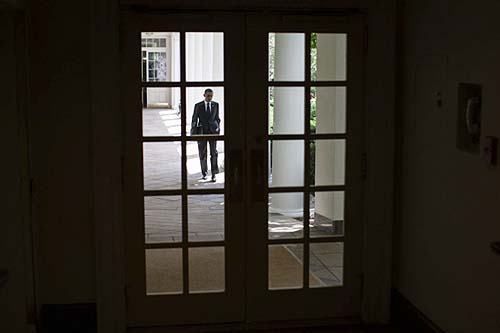
At sundown this Sunday, the Jewish community here in the United States and all over the world will celebrate the start of the new year. Rosh Hashanah and Yom Kippur mark a time of prayer and self-reflection, and offers Americans of all faiths an opportunity to focus on what unites us instead of what divides us, to work together to make this a more perfect union and to continue the work of repairing the world.
You've seen the scene before – the congregants are silent, the tension can be cut with a butter knife, all eyes are peeled on the bimah in the center, two blessings are uttered, and the silence is pierced….by the most primitive horn one could find!

By Tzvi Fishman
Rabbi Kook explains that this misplacing of priorities between the means and the goal stems from the sin of the earth during the days of Creation. By understanding the depth of this teaching, we can learn to be happy, not only when we finally attain our goals and ideals, but also at every moment of our lives.

By Tzvi Fishman
Even if you haven’t yet atoned for all of your sins, Don’t worry! Be Happy! As long as you are sincerely trying, this is what really counts.

By R. Stein
You brightened my life when you entered my world My child, my treasure, my glittering pearl. I held you and rocked you, safe in my arms Dreaming I’d keep you safe from all harm.

By Tzvi Fishman
Dear Friends, the clock is ticking down to Rosh HaShanah. You can hear the shofars blasting all over the world. T’shuva may seem like a towering mountain too high to climb, but it’s really not as hard as you think.
However remote the prospect of acquittal, a Jew must never give up. God commands us to challenge indictment with prayer. And the rabbis urge us to confront sentencing with hunger strikes. And so, the Midrash tells us, when Moses stood before God, at a loss for words with which to defend the sin of the golden calf, God Himself donned a tallit, took to the prayer stand, and showed Moses how to pray and what to say:
Question: What should the chazzan do when he reaches Kedushah and Modim? Some chazzanim say every word of Kedushah out loud and some only say the last part of the middle two phrases out loud. As far as the congregation is concerned, some congregants say every word of Kedushah and some say only the last part. Finally, some chazzanim and congregants say Modim during chazaras hashatz out loud and some say it quietly. What is the source for these various practices? A Devoted Reader (Via E-Mail)
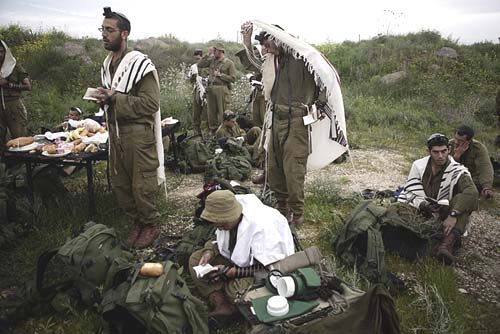
He was told that since he was wearing the uniform of the “Army of the Zionist State,” he was not permitted to enter the shul.
By JTA
A 500-year-old Sephardi women’s prayer book is being reissued in Hebrew.
Question: I understand that at a minyan, the chazzan is required to repeat Shemoneh Esreh out loud so that people who may not know how to daven can fulfill their obligation to daven with the chazzan’s repetition. What, however, should the chazzan do when he reaches Kedushah and Modim? I hear some chazzanim say every word of Kedushah out loud and some only say the last part of the middle two phrases out loud. As far as the congregation is concerned, I hear some congregants say every word of Kedushah and some say only the last part. Finally, some chazzanim and congregants say Modim during chazaras hashatz out loud and some say it quietly. What is the source for these various practices? A Devoted Reader (Via E-Mail)
Prayer is always an avenue to God. But in the month of Elul, the last month of the Jewish year, and during the ten days between Rosh Hashanah and Yom Kippur, God lends a particularly sympathetic ear.
Question: I understand that at a minyan, the chazzan is required to repeat Shemoneh Esreh out loud so that people who may not know how to daven can fulfill their obligation to daven with the chazzan’s repetition. What, however, should the chazzan do when he reaches Kedushah and Modim? I hear some chazzanim say every word of Kedushah out loud and some only say the last part of the middle two phrases out loud. As far as the congregation is concerned, I hear some congregants say every word of Kedushah and some say only the last part. Finally, some chazzanim and congregants say Modim during chazaras hashatz out loud and some say it quietly. What is the source for these various practices? A Devoted Reader (Via E-Mail)
Question: I understand that at a minyan, the chazzan is required to repeat Shemoneh Esreh out loud so that people who may not know how to daven can fulfill their obligation to daven with the chazzan’s repetition. What, however, should the chazzan do when he reaches Kedushah and Modim? I hear some chazzanim say every word of Kedushah out loud and some only say the last part of the middle two phrases out loud. As far as the congregation is concerned, I hear some congregants say every word of Kedushah and some say only the last part. Finally, some chazzanim and congregants say Modim during chazaras hashatz out loud and some say it quietly. What is the source for these various practices? A Devoted Reader (Via E-Mail)
Question: I understand that at a minyan, the chazzan is required to repeat Shemoneh Esreh out loud so that people who may not know how to daven can fulfill their obligation to daven with the chazzan’s repetition. What, however, should the chazzan do when he reaches Kedushah and Modim? I hear some chazzanim say every word of Kedushah out loud and some only say the last part of the middle two phrases out loud. As far as the congregation is concerned, I hear some congregants say every word of Kedushah and some say only the last part. Finally, some chazzanim and congregants say Modim during chazaras hashatz out loud and some say it quietly. What is the source for these various practices? A Devoted Reader (Via E-Mail)
By JTA
Some 90,000 people packed MetLife Stadium to celebrate the completion of the page-a-day Talmud cycle in the largest-ever Siyum HaShas. The gathering Wednesday evening, which was simulcast to some 60 U.S. cities and more than 20 countries, marked the completion of the 7 1/2-year cycle it takes to complete the Talmud (known collectively as Shas) […]
Question: I understand that at a minyan, the chazzan is required to repeat Shmoneh Esreh out loud so that people who may not know how to daven can fulfill their obligation to daven with the chazzan’s repetition. What, however, should the chazzan do when he reaches Kedushah and Modim? I hear some chazzanim say every word of Kedushah out loud and some only say the last part of the middle two phrases out loud. As far as the congregation is concerned, I hear some congregants say every word of Kedushah and some say only the last part. Finally, some chazzanim and congregants say Modim during chazaras hashatz out loud and some say it quietly. What is the source for these various practices? A Devoted Reader (Via E-Mail

A renewed outcry for “Temple consciousness” has arisen with a flurry of political, religious, and social activity.

A new video released on You Tube by the Temple Institute in Jerusalem definitely qualifies as viral, with 73 thousand views only 5 days after its release.
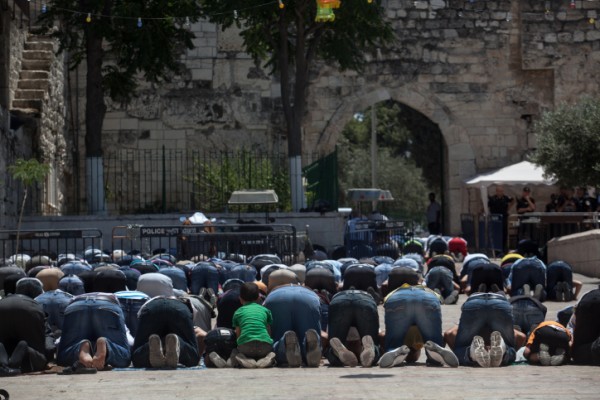
Ramadan began on Friday as 100,000 Muslims pray on the Temple Mount.

I believe that Partnership Minyanim are sourced in a culture that is foreign to Judaism - the radical feminist ideal of equating the sexes in all areas of life. In Orthodoxy that idea is doomed to failure. The mere fact that women can never be counted towards constituting a Minyan means that equality can never be fully achieved in the sense that feminism requires it. Even if there are a hundred women and 9 men, there is no Minyan.

The Baal Shem Tov was the founder and the visionary of chassidus, but the architect who built and spread the movement was Rabbi Dov Ber, the maggid of Mezeritch.
Question: I understand that at a minyan, the chazzan is required to repeat Shmoneh Esreh out loud so that people who may not know how to daven can fulfill their obligation to daven with the chazzan’s repetition. What, however, should the chazzan do when he reaches Kedushah and Modim? I hear some chazzanim say every word of Kedushah out loud and some only say the last part of the middle two phrases out loud. As far as the congregation is concerned, I hear some congregants say every word of Kedushah and some say only the last part. Finally, some chazzanim and congregants say Modim during chazaras hashatz out loud and some say it quietly. What is the source for these various practices? A Devoted Reader (Via E-Mail)
The Aleph Institute, a Chabad-Lubavitch organization catering to the needs of Jewish soldiers and their families, is helping servicemen celebrate the upcoming holiday of Shavuot with 1,000 special military edition Torah books, according to a report on Chabad.org.
Question: I understand that at a minyan, the chazzan is required to repeat Shmoneh Esreh out loud so that people who may not know how to daven can fulfill their obligation to daven with the chazzan’s repetition. What, however, should the chazzan do when he reaches kedushah and Modim? I hear some chazzanim say every word of kedushah out loud and some only say the last part of the middle two phrases out loud. As far as the congregation is concerned, I hear some congregants say every word of kedushah and some say only the last part. Finally, some chazzanim and congregants say Modim during chazaras hashatz out loud and some say it quietly. What is the source for these various practices? A Devoted Reader (Via E-Mail)

By Tibbi Singer
Christie’s New York will unveil "a rare and splendid example of Renaissance Judaica," an illuminated manuscript Machzor. With more than 400 pages, this manuscript, printed on vellum (calf's skin) is a festival prayer book written in Hebrew, created in Tuscany, and probably Florence, circa 1490. It is being offered at auction for the first time, at a value estimated between $540,000 and 800,000.
The popularity of the rise of chassidus did not go unnoticed by those who did not share the same allegiance. As long as the movement was limited to the commoner and isolated in a few pockets of Poland no one perceived it as a threat. But all of this had changed by 1772.

By Yoni Glatt
This past week I saw a video preview of an upcoming iPod app that excited and inspired me to the point of near tears. It was for RustyBrick’s jaw-dropping ArtScroll Schottenstein Talmud app. Unfortunately that app won’t be out for another few months (but take the time to check out the preview at www.rustybrick.com), yet I realized after months of writing this column that I had yet to give the due attention to RustyBrick’s Siddur app.

By Orthodox Union and Rabbinical Council of America
The Orthodox Union and the Rabbinical Council of America urge their member synagogues and member rabbis to respond to this time of formidable challenge for Jews around the world with programs of tefilla and divrei hitorerut, prayer and words of inspiration, in a manner appropriate to the severity of the situation.
Discussions follow recent legislation seeking to ban electronically-amplified muezzin calls entirely.

The Koren Mesorat HaRav Siddur, a new Hebrew/English prayer book with commentary based on the teachings of Rabbi Joseph B. Soloveitchik, has just been published by Koren Publishers Jerusalem in partnership with the OU Press. This long-awaited prayer book presents for the very first time Rabbi Solovetichik’s insights on Jewish prayer.
 September 25, 2026