 October 9, 2026
 Categories: In Print / Collecting / Features On The Jewish World
The Anti-Israel Views, Policies, and Actions of James Earl Carter
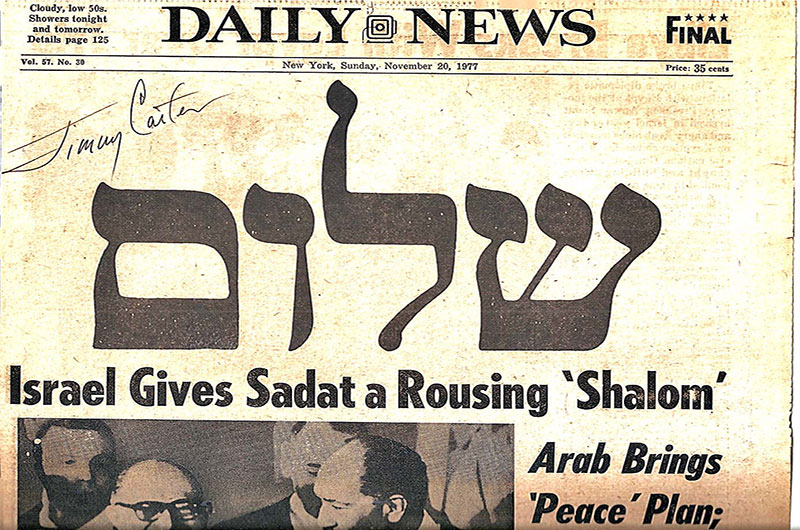


Jimmy Carter’s (1924–2024) relationship with Israel, the Jewish people, and Judaism is one of the most polarizing aspects of his political and post-political legacy. A devout Southern Baptist and self-identified born-again Christian, he infused his presidency with deeply held theological convictions, which proved far from incidental to his policymaking, particularly with respect to Israel. He was raised in the rural Deep South of Georgia, in an environment steeped in conservative Southern Baptist teachings, central to which was a theological stance known as supersessionism – the belief that the Christian Church has supplanted Israel as G-d’s chosen people. The implications of this doctrine are profound; in effect, it denies the ongoing theological significance of the Jewish people and renders Judaism a failed or incomplete faith. His writings and public statements, particularly later in life, reflect this underlying belief in Christianity as the moral successor to Judaism and, though he would occasionally speak warmly of “our Jewish friends,” his theological framework inherently placed Jews in a subordinate, outdated spiritual role. It was this doctrinal background that arguably helped to shape a lifelong antipathy for – or, at the very least, discomfort and a lack of genuine empathy with – Jewish aspirations and sensitivities.


Carter’s understanding of Christianity, which emphasized the Sermon on the Mount and its teachings of nonviolence and “turning the other cheek,” manifested itself in his foreign policy as a tendency toward moral equivalency, even when one party was demonstrably more aggressive or violent than another. When applied to the Israeli-Arab conflict in particular, this disposition often led him to treat both sides as equally culpable – or, worse, to hold Israel to a higher standard due to its identification as a Western-style democracy and a U.S. ally. For Carter, who believed deeply in moral symmetry and redemptive suffering, the image of the Palestinians as a dispossessed people meshed with his Christian ethos of ministering to “the least of these.”

Theologically, the modern State of Israel presented a challenge to Carter’s understanding of justice: it was a nation of people whom he saw as once persecuted but now in the position to abuse power. His faith demanded that he side with the perceived underdog – regardless of historical complexity or context. This moral framework contributed to an ongoing romanticization of the Palestinian cause, which Carter frequently contrasted with what he perceived as the intransigence, or even cruelty, of Israeli policy. While he is often lauded for brokering the Camp David Accords, his broader posture against Israel and the Jewish community was evident, and, in particular, his post-presidential book Palestine: Peace Not Apartheid (2006) ignited a firestorm of accusations ranging from factual distortion to outright antisemitism.

Carter’s presidency began with a clear intention to reshape American foreign policy around the principle of human rights which, in the general context of the Cold War, was a bold and often controversial stance. When it came to the Middle East, he sought to position the United States as a “neutral arbiter,” a role that required a delicate balancing act between Israel and its Arab neighbors. From the very outset of his presidency, he made clear that he would not simply rubber-stamp Israeli policy; thus, for example, in a 1977 interview, he famously stated, “The United States must be seen as an honest broker in the Middle East, not as an advocate for one side over the other.” This approach, while arguably principled in theory, quickly ran into the realities of regional politics, the interests of the American Jewish community, and America’s longstanding position as a reliable ally of Israel.
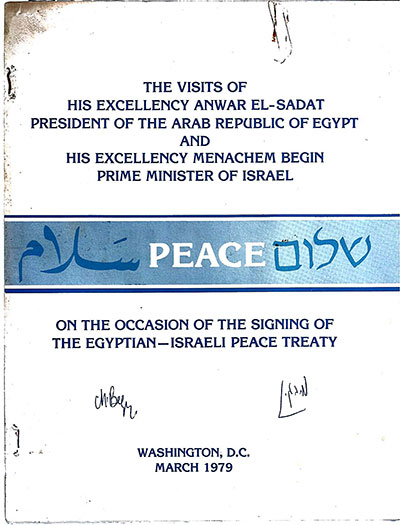
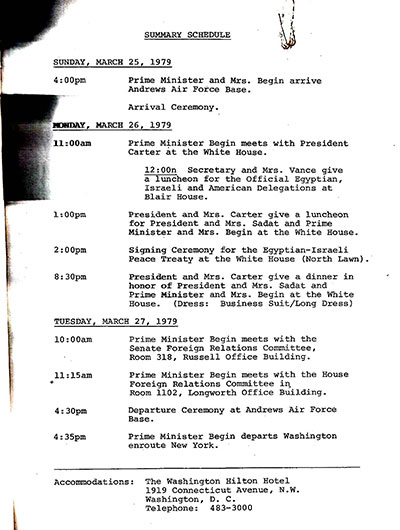
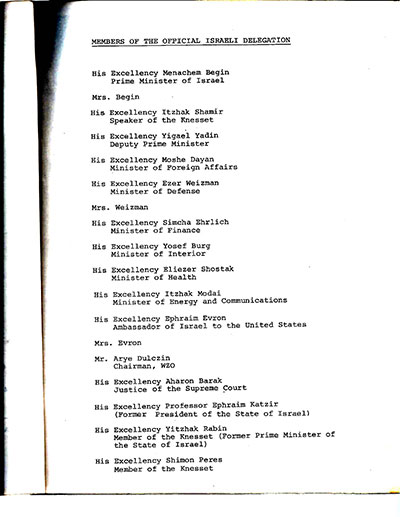
The 1978 Camp David Accords signed by Israeli Prime Minister Menachem Begin and Egyptian President Anwar Sadat, which remain Carter’s signature foreign policy achievement, marked the first peace treaty between Israel and an Arab state. His personal involvement in the negotiations was intense and hands-on, as he spent the better part of thirteen days at Camp David mediating between the two leaders, often walking alone in the woods to reflect and pray, and the image of Carter walking together with Begin and Sadat on the White House lawn became an enduring symbol of diplomacy. However, even here, his actions revealed an underlying discomfort with Israel’s foundational identity as a Jewish state, and Carter often seemed more empathetic to Egypt’s perspective, repeatedly pressuring Prime Minister Menachem Begin on settlements and resisting efforts to include explicit recognition of Israel as a Jewish homeland.
Though the accords were a triumph, Carter's internal correspondence and later recollections made clear his skepticism toward Israeli policies and leaders. Begin, in particular, became a target of the president’s ire; Carter often portrayed him as stubborn, difficult, and religiously rigid, even while glossing over Sadat’s authoritarianism and suppression of dissent. Carter’s approach to Begin was intrusive and moralizing; thus, according to one Israeli aide, Begin once remarked privately that Carter “talks to us like we are the problem.”
Indeed, Carter’s relationship with Begin was fraught with tension. Begin, a former Irgun commander and a staunch defender of Jewish settlement in the West Bank, viewed Carter’s emphasis on Palestinian rights with deep suspicion, and Carter, for his part, was frustrated by what he characterized as Israeli “intransigence.” In his memoir Keeping Faith, Carter wrote, “Begin was a man of strong convictions, but he often seemed unwilling to consider the legitimate aspirations of the Palestinian people.” This mutual distrust colored their interactions and foreshadowed the broader deterioration of Carter’s relationship with Israel.
One of the most contentious aspects of Carter’s presidency was his use of the term “homeland” in reference to the Palestinians; in a 1977 speech, he stated, “There has to be a homeland provided for the Palestinian refugees who have suffered for many, many years.” While he arguably stopped short of endorsing a Palestinian state, the language was sufficient to alarm Israel and its supporters, both Jewish and Gentile, who were furious at Carter’s legitimization of the PLO and his undermining Israel’s security. Moreover, the administration’s support for UN Resolution 465, which condemned Israeli settlements in the occupied territories, further confirmed that Carter was tilting against Israel and, although the U.S. later distanced itself from the resolution, the damage was done.

Carter’s post-presidential years saw a dramatic escalation in his criticism of Israel, with his 2006 book, Palestine: Peace Not Apartheid, constituting a shameful watershed moment. Even the title alone was incendiary, drawing a direct comparison between Israeli policies in the West Bank and the South African apartheid regime, let alone hyperbolic and offensive passages such as “When Israel does occupy this territory deep within the West Bank, and connects the 200-or-so settlements with each other, with a road, and then prohibits the Palestinians from using that road . . . this perpetrates even worse instances of apartness, or apartheid, than we witnessed even in South Africa.” Throughout this hateful book, the former president, who prided himself on being a “neutral arbiter,” completely ignored Palestinian terrorism and suicide bombings, Hamas’s genocidal charter, Palestinian rejection of Israel’s generous peace offers, and the security rationale behind many of Israel’s actions.

The backlash was swift and severe; fourteen members of the Carter Center’s advisory board resigned in protest, the Anti-Defamation League accused Carter of promoting antisemitic tropes, and even liberal Jewish commentators who had previously supported Carter condemned him. Carter’s defenders disingenuously continued to argue that that he was merely speaking uncomfortable truths, but those arguments were put to rest in Alan Dershowitz’s The Case Against Jimmy Carter, a scathing rebuttal in which he proved that Carter had omitted crucial facts, had distorted others, and had out-and-out knowingly lied.
Carter manifested a striking reluctance to condemn antisemitism in the Arab world; while eager to criticize Israel’s treatment of Palestinians, he virtually never condemned Holocaust denial, blood libels, or genocidal rhetoric prevalent in Arab media, education systems, and religious sermons. He never publicly criticized Mahmoud Abbas’s Ph.D. dissertation, which denied aspects of the Holocaust, and his Carter Center’s focus on human rights somehow never included attention to Arab antisemitism. In fact, the Carter Center received significant funding from Arab governments and pro-Palestinian sources, including Saudi Arabia, UAE, and the Zayed Center, a now-defunct think tank known for Holocaust denial and antisemitism. Critics have frequently noted that Carter’s positions often mirrored those of his donors, including advocacy for the Palestinian “right of return,” which would effectively destroy the Jewish state demographically. Criticizing Carter for lending credence to antisemitic narratives, Elie Wiesel refused to serve on the Carter Center’s board due to what he called Carter’s “demonization of Israel.”

Throughout his career, Carter repeatedly clashed with prominent Jewish leaders and organizations, and he was viewed with deep suspicion by groups like the American Jewish Committee, AIPAC, and others, particularly due to his calls to freeze arms sales to Israel and his relentless push to include the Palestinian Liberation Organization (PLO) in negotiations. Perhaps the most revealing episode occurred when he accused the U.S. Holocaust Memorial Council of being "too Jewish." According to Stuart Eizenstat, Carter’s domestic policy adviser, the president objected to the initial list of appointees because he wanted to “Americanize” the Holocaust rather than recognize its uniquely Jewish dimensions. Ostensibly concerned about inclusivity, the comment was widely interpreted as a tone-deaf and offensive attempt to downplay Jewish historical suffering.
Another controversial moment came in 1987, when Carter wrote a letter to the Justice Department urging leniency for Karl Linnas, a former Nazi concentration camp guard and accused Nazi collaborator who was facing deportation. Carter described Linnas as a “decent man” who had lived a quiet life in the U.S. for decades.
Carter repeatedly ignored or distorted UN Resolution 242, the foundational diplomatic document after the 1967 Six-Day War. While 242 generally calls for withdrawal of Israeli forces “from [unspecified] territories,” Carter insisted that Israel must return to the pre-1967 borders, disregarding the intentional ambiguity of the text, Israel’s need for secure boundaries, and the expectations that Arab states would recognize Israel. His interpretation mirrored Arab maximalist demands and undermined decades of diplomatic consensus, and he further accused Israel of occupying land “illegally,” totally ignoring legal arguments regarding defensive war and armistice lines.

In multiple venues, both during his presidency and thereafter, Carter blamed the “Jewish lobby” and American Jewish organizations for silencing debate on Israel, as he argued that peace could not come unless America was willing to resist the “powerful” “pro-Israel lobby” – as if Jewish involvement in politics were somehow illegitimate or corrupt. In a hateful 2007 interview, he stated that “there is a tremendous intimidation in our country that has silenced a lot of people . . . because of the extraordinary lobbying efforts of AIPAC”; in a 2007 Al Jazeera interview, he said that “many major Jewish organizations” make it “political suicide” for U.S. politicians to be evenhanded;” and, in a similar vein, he asserted in an NPR interview that American politicians feared criticizing Israel because it would be “suicide politically.” Furthermore, In Palestine: Peace Not Apartheid, he wrote that “voices from Jerusalem dominate our media coverage” and, in multiple writings and speeches, he implied that Jewish political power was disproportionate and detrimental to U.S. interests and that the United States had become “subservient” to Israeli interests, thereby promoting and reinforcing hateful tropes and antisemitic conspiracy theories regarding Jewish dual loyalty and domination of American policy-making.
`Carter repeatedly denounced Israel’s security barrier (the West Bank wall), characterizing it as a land grab and a form of “apartheid” while ignoring Israeli casualties and dismissing the fact that it drastically reduced suicide bombings during the Second Intifada. He likened Israeli checkpoints and counterterrorism measures to “ghettos,” not caring at all about how offensive such language was to Holocaust survivors. In statements regarding Israeli military actions (especially in Gaza), Carter had accused Israel of “war crimes” and “violations of human rights,” often before any investigation or evidence was available. In an infamous 2009 op-ed published in the Washington Post, he declared that Israel’s blockade of Gaza was a “crime and atrocity” and accused Israel of deliberately targeting civilians.
In 2008, Carter met with Hamas leader Khaled Meshaal in Damascus, despite Hamas being officially designated as a terrorist organization by the U.S., the EU, and others – a meeting that constituted a significant break with bipartisan policy and legitimized a group unambiguously committed to Israel’s destruction. He defended the meeting by arguing that peace could only be achieved through open dialogue with all stakeholders – a position that aligned with some strains of conflict resolution theory but which, in this case, was either dangerously naive or willfully provocative – but he never demanded that Hamas renounce violence or recognize Israel beforehand, and he later referred to Hamas leaders as “serious and dedicated” political figures, not terrorists. Moreover, in public comments, he routinely downplayed Hamas’s ideology and genocidal rhetoric, and, in his book, We Can Have Peace in the Holy Land (2009), he described Hamas as a group with legitimate grievances. Failing to mention that the Hamas Charter calls for Israel’s destruction and incorporates quotes from the Protocols of the Elders of Zion and Islamic hadiths calling for the murder of Jews, he instead emphasized Israeli actions as the cause of Palestinian suffering.
Not only did Carter not mention Hamas and fail to criticize Palestinian terrorism, he also consistently praised Yasser Arafat as a legitimate, even visionary, peace partner – even after the Palestinian leader’s repeated antisemitic statements, corruption, and incitement to violence and even given Arafat’s long history of Holocaust denial – e.g., his claim that no Jews were ever gassed in the Holocaust. After Arafat's death in 2004, Carter wrote a glowing tribute, calling him a “powerful human symbol and forceful advocate.” By presenting Arafat as morally equal to – or even superior to – Israeli leaders, Carter undermined the Jewish victims of terrorism and gave a free pass to antisemitism in Arab politics.
The long-term consequences of Carter’s engagement with groups like Hamas were reflected not just in diplomatic circles, but also in the shifting narratives of the Israeli-Palestinian conflict within American discourse. After Palestine: Peace Not Apartheid, Carter became a symbolic figure for critics of Israel and its government, as Pro-Palestinian activists cited his work as validation while many Jewish leaders saw him as enabling a wave of delegitimization campaigns, including the Boycott, Divestment, and Sanctions (BDS) movement. Although Carter never explicitly endorsed BDS, his rhetoric was often mirrored in those circles, lending moral weight to causes many American Jews found deeply troubling.
Had Carter secured a second term, many analysts believe, with more than ample basis, that U.S. policy toward Israel and the broader Middle East would have undergone a dramatic shift. His early support for Israel’s security – as manifested in weapons sales and strategic cooperation – had already been tempered by vicious criticism of the Likud government. Most authorities agree that a re-elected Carter would have pursued official recognition of the PLO, which at the time was still largely defined by its use of political violence and refusal to recognize Israel, and that he would have threatened or implemented diplomatic pressure on Israel, including conditioning military aid, to halt settlement activity and to force Israel to adopt a more conciliatory posture in negotiations. This potential trajectory is underscored by Carter’s own statements. In 1981, shortly after leaving office, he lamented in his memoir that Israel had “consistently obstructed” efforts to reach a broader peace settlement beyond Egypt; he blamed the Begin administration for refusing to negotiate over the West Bank and Gaza; and he suggested that Israel’s approach would doom efforts at regional stability.
The divergence between Carter and his immediate successor, Ronald Reagan, could not have been more stark. Reagan’s administration deepened ties with Israel, launched joint defense initiatives, and abandoned Carter’s balanced-broker posture in favor of a more openly pro-Israel alignment, a contrast that further colored retrospective evaluations of Carter’s Middle East policy legacy. Carter became a cautionary tale: a president who endangered key alliances by subordinating strategic clarity to moral abstraction.
Yet even in his later years, Carter’s remarks continued to spark controversy. In a 2013 interview with Haaretz, he stated, “Israel has no desire for peace,” adding that Netanyahu’s policies were designed to perpetuate occupation, a disgusting sweeping indictment that ignored the complexity of Israeli domestic politics, the fractured nature of Palestinian leadership, and the widespread trauma caused by the Second Intifada. It also hardened the perception among critics that Carter was less a neutral statesman than an ideologue unwilling to acknowledge competing narratives.

Ultimately, Carter’s legacy vis-à-vis Israel is as complicated and enduring as the conflict itself. He brokered a historic peace but failed to build broader trust; he stood for human rights but alienated millions by the way he expressed that commitment; he brought the dreams of diplomacy to Camp David, but later earned well-deserved enmity from Jews and Israel supporters. His emphasis on human rights, reconciliation, and peace was genuine, but it was also highly selective, as his empathy did not extend to Jewish historical trauma, Jewish theological self-understanding, or the practical realities of Israeli security. His inability to reconcile the rebirth of a Jewish state with his Christian pacifism led him to see Israel not as a people returning home, but as a moral transgressor blocking the path to peace. While criticism of Israel is not inherently antisemitic, when such criticism is rooted in blind moral equivalency and a pattern of rhetorical double standards, it becomes more than a policy disagreement – it becomes a reflection of deeper bias. In Carter’s case, his religious convictions helped shape not only his Middle East policies but also a legacy of alienation from the very people whose biblical heritage he claimed to revere.